
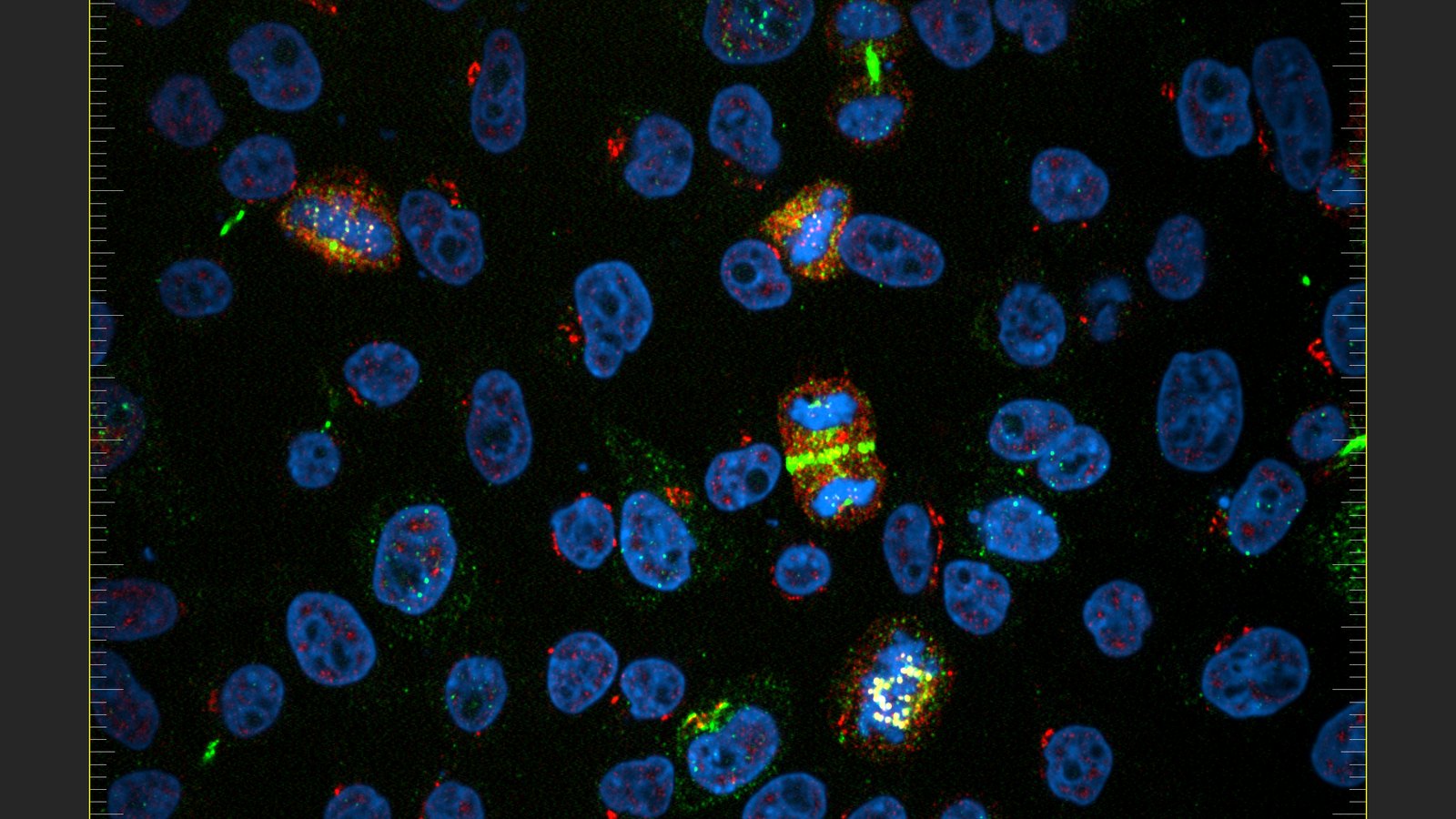
On November 16, 2026, clinical biopharmaceutical developer CG Oncology announced positive topline results from its randomized Phase 3 PIVOT-006 clinical trial, demonstrating that adjuvant intravesical cretostimogene grenadenorepvec reduced the risk of disease recurrence by 68% compared to active surveillance in patients with intermediate-risk non-muscle invasive bladder cancer following transurethral resection.
What happened
In mid-November 2026, CG Oncology announced that its registrational Phase 3 trial, known as PIVOT-006 (ClinicalTrials.gov identifier NCT06111235), met its primary efficacy endpoint. The randomized, open-label trial evaluated adjuvant intravesical cretostimogene grenadenorepvec compared with surveillance alone in adult patients diagnosed with intermediate-risk non-muscle invasive bladder cancer (NMIBC) following complete transurethral resection of bladder tumor (TURBT). Conducted across approximately 90 trial sites throughout the United States and Canada, the study enrolled 367 participants, representing one of the largest prospective randomized cohorts in this clinical setting.
At the prespecified October 26, 2026 data cutoff, reflecting a median follow-up duration of 17 months, cretostimogene achieved a statistically significant and clinically meaningful improvement in recurrence-free survival (RFS). Patients treated with the investigational oncolytic immunotherapy experienced a 68% reduction in the risk of tumor recurrence or death compared to surveillance (hazard ratio [HR] = 0.32; 95% confidence interval [CI], 0.23 to 0.45; p < 0.0001). The observed recurrence-free survival advantage remained consistent across both low-grade and high-grade disease presentations within the intermediate-risk cohort.
The safety assessment confirmed a favorable tolerability profile. Investigators reported no Grade 3 or higher treatment-related adverse events, and no participants discontinued study therapy due to treatment-related toxicity. The safety findings matched outcomes documented in earlier cretostimogene clinical trials.
Key details
The PIVOT-006 trial evaluated intermediate-risk NMIBC patients classified under American Urological Association (AUA) and Society of Urologic Oncology (SUO) criteria. Participants underwent complete macroscopic resection via TURBT with all visible tumors cleared within 90 days before randomization. Qualifying presentations included recurrent low-grade Ta lesions within 12 months, solitary low-grade Ta tumors larger than 3 centimeters, multifocal low-grade Ta tumors, or solitary high-grade Ta tumors measuring 3 centimeters or smaller.
The protocol excluded high-risk clinical features such as carcinoma in situ (CIS), stage T1 invasion, muscle-invasive bladder cancer, prior human adenovirus serotype 5–based therapy, and concurrent upper tract urothelial carcinoma. Participants were randomized 1:1 to adjuvant intravesical cretostimogene or active surveillance. Patients in the intervention group received an induction course of intravesical instillations followed by quarterly maintenance courses through month 13 for those maintaining recurrence-free status. Surveillance consisted of regular quarterly cystoscopy and urine cytology, with histological confirmation required for suspected recurrence. The composite endpoint framework tracked recurrence-free survival alongside disease progression and tolerability.
| Trial Parameter | PIVOT-006 Cretostimogene Arm | PIVOT-006 Surveillance Arm |
|---|---|---|
| Intervention | Adjuvant intravesical oncolytic immunotherapy | Active surveillance (routine observation) |
| Patient Population | Intermediate-risk and high-grade Ta NMIBC post-TURBT | Intermediate-risk and high-grade Ta NMIBC post-TURBT |
| Enrollment Size | Randomized 1:1 (total cohort: 367 patients) | Randomized 1:1 (total cohort: 367 patients) |
| Participating Sites | Approximately 90 clinical centers in US and Canada | Approximately 90 clinical centers in US and Canada |
| Median Follow-up | 17 months (data cutoff: October 26, 2026) | 17 months (data cutoff: October 26, 2026) |
| Primary Efficacy Endpoint | Recurrence-free survival: HR = 0.32 (p < 0.0001) | Recurrence-free survival (control benchmark) |
| Recurrence Risk Reduction | 68% reduction in recurrence hazard rate | Control benchmark |
| Grade 3+ Treatment Adverse Events | 0% (no Grade 3 or higher treatment-related toxicities) | Not applicable (observational arm) |
| Treatment-Related Dropouts | 0% (no treatment-related study discontinuations) | Not applicable |
Background and context
Non-muscle invasive bladder cancer comprises roughly 75% to 80% of all primary bladder cancer diagnoses, with intermediate-risk presentations representing approximately 50,000 newly diagnosed individuals each year in the United States. Following complete surgical resection by TURBT, five-year recurrence rates for intermediate-risk tumors range between 50% and 70%. This pattern results in repeated surgical interventions, repeated hospital admissions, and ongoing cystoscopic procedures that create significant physiological and financial burdens for patients and health systems.
Despite this high disease burden, intermediate-risk NMIBC has long lacked dedicated FDA-approved adjuvant therapies. Standard practice historically relied on watchful surveillance or non-standardized intravesical chemotherapies such as mitomycin C or gemcitabine, which often provide limited durability. While intravesical Bacillus Calmette-Guérin (BCG) remains the established standard for high-risk bladder cancer, ongoing global BCG supply shortages and associated local and systemic toxicities have restricted BCG distribution primarily to high-risk presentations rather than intermediate-risk cases.
Cretostimogene grenadenorepvec (formerly CG0070) is an investigational, conditionally replicating serotype 5 oncolytic adenovirus. Its viral genome incorporates a human E2F-1 promoter that restricts viral replication to malignant cells exhibiting retinoblastoma (Rb) pathway defects—an alteration identified in over 80% of human bladder urothelial carcinomas. The viral backbone also encodes human granulocyte-macrophage colony-stimulating factor (GM-CSF). As infected tumor cells lyse, the localized release of tumor neoantigens and GM-CSF secretion recruits antigen-presenting cells, initiating a broader anti-tumor immune response. CG Oncology previously obtained FDA Fast Track designation for cretostimogene in high-risk BCG-unresponsive NMIBC, and PIVOT-006 marks the therapy’s expansion into earlier, intermediate-risk disease.
Reaction
Urologic oncology leaders and company executives underscored the clinical significance of the Phase 3 PIVOT-006 outcomes. Vijay Kasturi, MD, Chief Medical Officer of CG Oncology, noted: “For patients with intermediate-risk and high-grade Ta NMIBC, reducing recurrence is a meaningful clinical objective because recurrence can bring additional invasive procedures and continued disease burden.”
Arthur Kuan, Chairman and Chief Executive Officer of CG Oncology, stated: “Today’s results highlight our differentiated clinical approach, aimed at exploring cretostimogene across the broad NMIBC spectrum and build upon our robust body of clinical evidence including what we believe to be the best-in-disease safety and tolerability profile.”
Independent urologists and oncology investigators noted that a 68% risk reduction in a randomized registrational study provides definitive evidence for an adjuvant intervention in intermediate-risk disease. Clinical commentators emphasized that achieving zero Grade 3 or higher treatment-related adverse events is particularly vital for intermediate-risk patients managed in outpatient community and academic clinics, where preserving quality of life and avoiding systemic side effects remain paramount.
What it means for researchers, universities and research offices
The PIVOT-006 trial findings carry immediate operational, regulatory, and scientific implications for academic medical centers, university cancer centers, and research administration offices. First, the anticipated regulatory review of an intravesical replicating biological vector highlights pharmacy infrastructure requirements. Oncolytic adenoviral therapies require Biosafety Level 2 containment, cold-chain monitoring, Institutional Biosafety Committee (IBC) registration, and specialized handling procedures. Academic health systems preparing for clinical adoption must verify that their clinical trial and pharmacy operations adhere to rigorous Good Clinical Practice and quality management protocols.
Second, PIVOT-006 establishes an important methodological framework for trial design in early-stage uro-oncology. Executing a 367-patient randomized Phase 3 trial in intermediate-risk NMIBC demonstrates the feasibility of employing recurrence-free survival as a registrational endpoint without prior BCG failure requirements. Biostatistical teams and translational researchers can adapt this design for future studies examining novel immunotherapies, gene delivery platforms, and intravesical drug formulations.
Third, for clinical research operations and institutional review boards (IRBs), conducting multicenter trials with biological therapeutics demands close oversight by certified clinical research professionals. Maintaining data fidelity across 90 participating trial sites involves strict protocol compliance, comprehensive adverse event monitoring, and systematic patient retention over quarterly surveillance visits. University clinical trials offices can apply the operational structure of PIVOT-006 as a reference for managing prospective adjuvant surgical-oncology protocols.
What happens next
Following the topline release, CG Oncology announced that detailed Phase 3 PIVOT-006 trial findings will be delivered as a late-breaking oral podium presentation at the Society of Urologic Oncology (SUO) Annual Meeting on December 2, 2026. The presentation will include detailed subgroup breakdowns, recurrence-free survival duration curves, and patient-reported outcomes.
From a regulatory standpoint, CG Oncology plans to submit a Biologics License Application (BLA) to the U.S. Food and Drug Administration in the second quarter of 2027 for intermediate-risk and high-grade Ta NMIBC. This filing will follow the company’s initial rolling BLA submission for high-risk BCG-unresponsive NMIBC presenting with carcinoma in situ. If granted approval, cretostimogene would represent the first FDA-approved adjuvant therapy specifically indicated for intermediate-risk non-muscle invasive bladder cancer.
Long-term clinical follow-up across the 367 randomized participants will continue through 24-month and 36-month assessment intervals. Investigators will evaluate key secondary objectives, including progression-free survival, time to radical cystectomy, and overall survival durability.
Sources
- ClinicalTrials.gov: Study of CG0070 (Cretostimogene Grenadenorepvec) in Patients With Intermediate-Risk Non-Muscle-Invasive Bladder Cancer (PIVOT-006), checked 2026-11-20
- Urology Times: Cretostimogene reduces recurrence risk by 68% in phase 3 PIVOT-006 trial in NMIBC, checked 2026-11-20
- OncLive: Cretostimogene Grenadenorepvec Improves RFS in Intermediate-Risk and High-Grade Ta NMIBC, checked 2026-11-20
- Targeted Oncology: Cretostimogene Cuts Recurrence Risk by 68% in Intermediate-Risk NMIBC, checked 2026-11-20
- BioSpace: PIVOT-006 Phase 3 Registrational Trial Demonstrates Unprecedented Improvement in Recurrence-Free Survival (RFS) for Intermediate-Risk and High-Grade Ta Non-Muscle Invasive Bladder Cancer (NMIBC), checked 2026-11-20


