
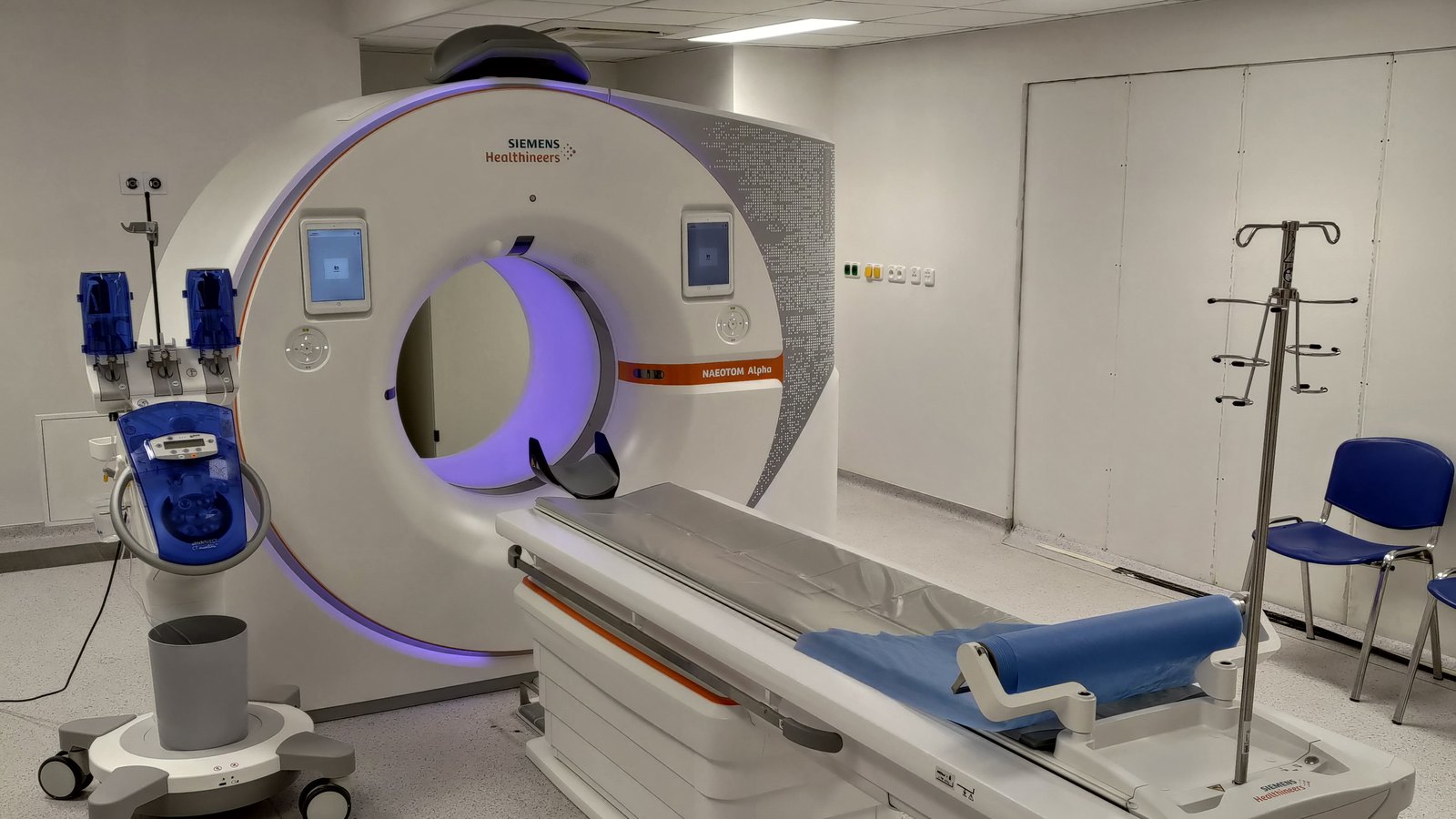
On November 24, 2026, IT consultancy CGI, Helsinki University Hospital (HUS), and medical imaging manufacturer Planmeca announced that their co-developed diagnostic software, CGI AI Head Analysis, received official Class IIb medical device certification under the European Union Medical Device Regulation (EU MDR 2017/745), establishing a verified regulatory pathway for academic medical centers and university spinouts commercializing clinical deep learning algorithms.
This page describes products and general use; it is not medical advice.
Class IIb Certification Clears Brain-Hemorrhage AI for European Clinical Deployment
The European Union Medical Device Regulation certification detailed in the CGI official announcement marks a decisive regulatory milestone for deploying deep learning diagnostics across European hospitals. Developed jointly by CGI, Helsinki University Hospital, and Planmeca, CGI AI Head Analysis evaluates non-contrast head computed tomography (CT) scans to detect spontaneous intracranial hemorrhages. The software acts as an automated secondary reader in emergency departments, highlighting acute hemorrhages directly on radiological scans so that life-threatening bleeds are not missed during high-volume triage shifts.
Under the EU MDR framework administered by national competent authorities and designated notified bodies, Class IIb clearance authorizes commercial deployment across all EU member states. Independent reporting from Unite.AI noted that regulatory clearance removes the compliance barriers that previously restricted the software to research protocols. With formal conformity to Regulation (EU) 2017/745 established, hospitals can integrate the tool directly into clinical Picture Archiving and Communication Systems (PACS) and radiology workflows.
Diagnostic Performance, Multicenter Validation and Protocol Sensitivity
The software combines four base convolutional neural networks with a metamodel trained on 300 non-contrast head CT scans. A multicenter validation study published via PubMed Central evaluated the model on 7,797 consecutive emergency head CT scans across ten Finnish hospitals, including 118 scans with verified spontaneous intracranial hemorrhages. With automated post-processing, the model achieved a case-level sensitivity of 89.8% and a specificity of 89.5%, with a median processing time of 6.7 seconds per scan volume.
The system detected all 78 hemorrhages imaged within 12 hours of symptom onset and identified five acute bleeds omitted from initial on-call radiology reports. However, external testing reported by Securities.io showed performance dependencies on acquisition hardware. Across 901 retrospective CT scans from University Hospital Zürich and Kantonsspital St. Gallen, raw specificity dropped to 47.5% in St. Gallen due to scanner parameter variations. Standardizing images to a 512-by-512 pixel matrix restored St. Gallen specificity to 74.0%, yielding 91.4% sensitivity and 85.5% overall specificity across the Swiss cohort.
The technical parameters and multicenter validation results are summarized below:
| Evaluation Metric | Finnish Multicenter Cohort | Swiss External Cohort | Operational Significance |
|---|---|---|---|
| Scans Evaluated | 7,797 emergency scans (10 hospitals) | 901 emergency scans (2 centers) | Tests generalization across varied hardware |
| Positive Hemorrhages | 118 spontaneous bleeds | 81 spontaneous bleeds | Includes subarachnoid and intracerebral bleeds |
| Case-Level Sensitivity | 89.8% overall (100% within 12 h) | 91.4% overall | High acute-phase detection for emergency triage |
| Case-Level Specificity | 89.5% with post-processing | 78.4% raw (85.5% standardized) | Requires matrix controls to minimize false alarms |
| Median Analysis Latency | 6.7 seconds per volume | Sub-10 seconds per volume | Delivers rapid secondary review before sign-off |
| Clinical Discordance | Identified 5 missed bleeds | Missed 2 acute Swiss cases | Reinforces human-in-the-loop review model |
EU MDR Rule 11 Classification and Conformity Assessment Architecture
Medical software classification in Europe is governed by Annex VIII of the European Commission Medical Device Regulation. Under Rule 11 of EU MDR 2017/745, software providing diagnostic information is classified as Class IIa, unless decisions could cause death or irreversible harm (Class III), or serious deterioration of health or surgical intervention (Class IIb). Because intracranial hemorrhages represent acute neurosurgical emergencies where diagnostic delays cause permanent brain injury or death, notified bodies classify automated triage software as Class IIb.
Securing Class IIb certification requires third-party conformity assessment under Annex IX or XI by a notified body. Academic developers must maintain a quality management system certified under ISO 13485 software validation standards. Engineering teams must also establish lifecycle processes under IEC 62304 software safety classification, applying rigorous Class C controls to critical code elements, while documenting open-source libraries under Software of Unknown Provenance guidelines.
The certification also positions the system under the EU Artificial Intelligence Act (Regulation (EU) 2024/1689). Under Annex I, medical devices requiring third-party conformity assessment fall into the high-risk AI classification. Achieving MDR Class IIb compliance satisfies core AI Act expectations regarding technical documentation, algorithmic transparency, risk management, and human oversight mechanisms.
Academic Hospital Co-Development and Clinical Stakeholder Response
CGI AI Head Analysis originated within the CleverHealth Network innovation ecosystem at HUS, pairing hospital neurosurgeons with CGI software engineers and Planmeca imaging specialists to build algorithms directly against clinical data.
Dr. Miikka Korja, Chief Physician and Associate Professor of Neurosurgery at HUS who led the clinical research, called the certification a historic achievement that proves academic-industry partnerships can produce certified diagnostic algorithms grounded in rigorous evidence. Sonja Pietilä, Vice-President Consulting Expert at CGI, stated that MDR approval confirms the solution is ready for routine clinical integration into hospital workflows and physician decision-making.
The system adheres to a strict clinician-led, human-in-the-loop workflow. Attending radiologists interpret scans independently before comparing their findings with AI-highlighted regions. This sequential review ensures diagnostic accuracy while preventing automation bias and maintaining clinical radiological oversight.
Requirements for University Radiology Departments and Academic Spinouts
For academic medical centers and university technology transfer offices, the Class IIb certification illustrates what is required to translate laboratory models into clinical practice. Technology transfer managers deciding between licensing IP and establishing independent corporate entities—as analyzed in our guide on spin-out vs spin-off structures—must incorporate medical device regulatory compliance early in development.
Academic institutions advancing AI diagnostics must document key deliverables:
- Clinical Evaluation Reports (CER): Compile clinical evidence meeting MEDDEV 2.7/1 Rev. 4 and MDCG 2020-1 standards, demonstrating analytical sensitivity and diagnostic specificity across target patient demographics.
- Scan Normalization Protocols: Implement automated input validation to address slice thickness and resolution discrepancies between scanner vendors, mitigating the specificity loss observed in external validation cohorts.
- Clinical Investigation Design: Conduct prospective validation following ISO 14155 and MDR Annex XV standards for medical device clinical trials to document real-world utility.
- Change Control Management: Establish predetermined change control plans to maintain algorithmic performance across updates without invalidating existing notified body certificates.
Prospective Clinical Workflow Trials and Post-Market Follow-Up Milestones
CGI and HUS are initiating deployments across Nordic healthcare networks and expanding into broader European hospital systems through 2027. Under EU MDR Article 61 and Annex XIV, Class IIb certified software requires active Post-Market Clinical Follow-Up (PMCF). Developers must systematically track diagnostic concordance, false-positive alert rates, and clinical user feedback in live production environments.
Research teams are also preparing prospective workflow studies to assess whether automated secondary reads measurably reduce time-to-treatment for acute surgical interventions. European notified bodies will continue monitoring software updates to ensure ongoing compliance with medical device regulations and evolving EU AI Act standards.
Sources
- CGI: CGI and HUS’s AI solution certified as EU MDR medical device for brain hemorrhage detection, checked 2026-11-24
- European Commission: Medical Devices – New regulations – Public Health, checked 2026-11-24
- Unite.AI: CGI Brain-Hemorrhage AI Receives EU Medical Device Certification, checked 2026-11-24
- Securities.io: CGI Brain Hemorrhage AI Receives EU Class IIb Certification, checked 2026-11-24
- PubMed Central: High sensitivity in spontaneous intracranial hemorrhage detection from emergency head CT scans using ensemble-learning approach, checked 2026-11-24






