
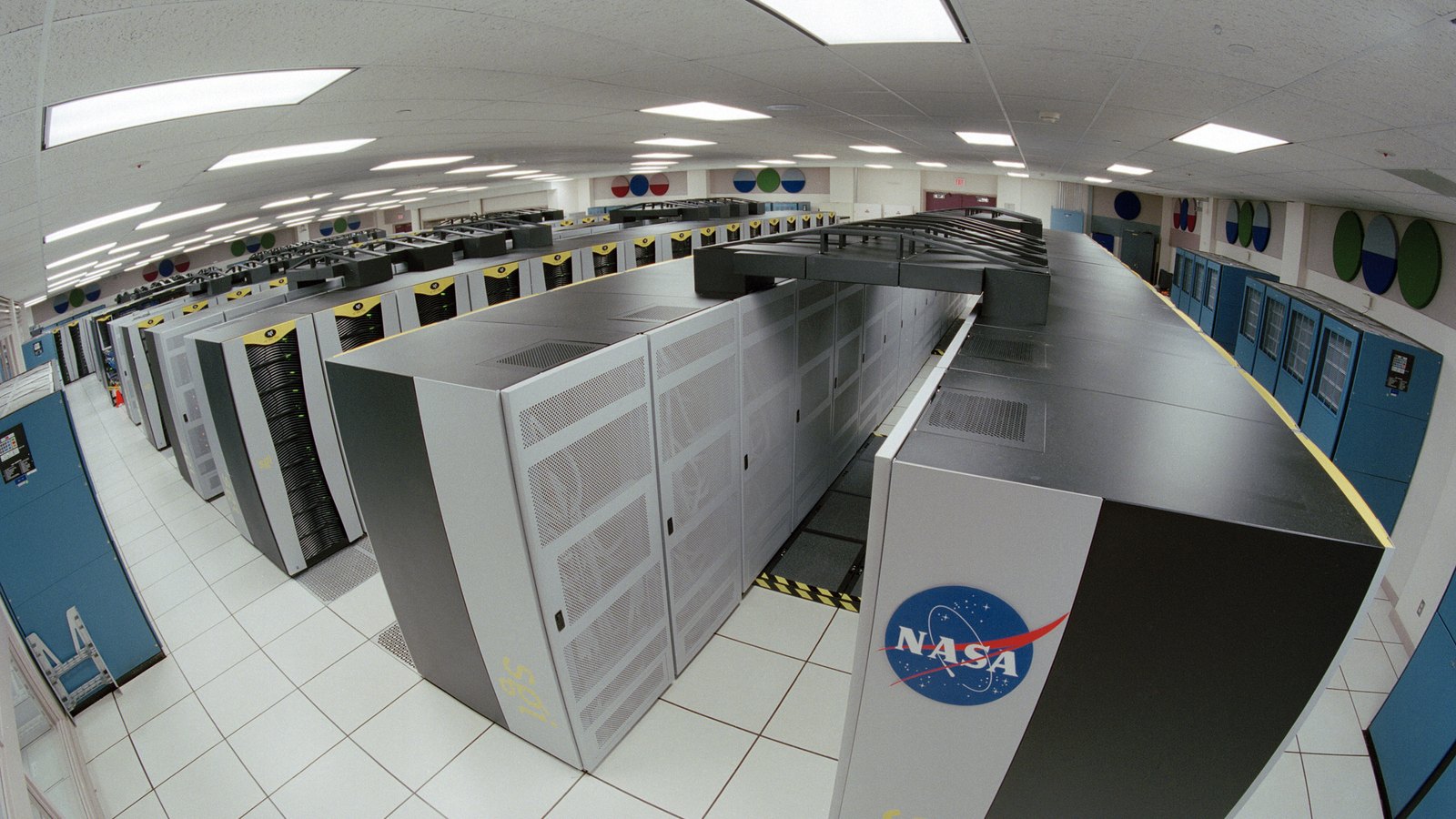
On November 23, 2026, Cisco and OpenAI jointly launched Shirudo, an open-source runtime using Extended Berkeley Packet Filter (eBPF) technology to shield Linux servers and autonomous AI workloads from critical vulnerabilities without requiring system reboots. For university supercomputing centers and academic high-performance computing facilities managing long-lived multi-node GPU jobs, the tool mitigates newly disclosed security flaws while critical scientific training runs continue uninterrupted.
What happened
On November 23, 2026, enterprise networking provider Cisco Systems and artificial intelligence developer OpenAI released Shirudo, an open-source project designed to protect running Linux systems at machine speed. Published simultaneously on OpenAI’s announcement portal, Shirudo—derived from the Japanese term for “shield”—addresses the vulnerability gap that emerges between the public disclosure of a security flaw and the deployment of permanent vendor patches.
Under conventional maintenance regimes, resolving Linux kernel vulnerabilities, container runtime flaws, or library bugs requires restarting services or rebooting servers. In high-density AI environments and distributed research clusters, reboots disrupt active workloads, terminate multi-day model training passes, and trigger cascading failures across interconnected nodes. Released as open source software under the BSD 2-Clause license on GitHub, Shirudo inserts temporary runtime mitigations directly into live operating systems without downtime.
Key details
Rooted technologically in Tetragon—the eBPF-based security runtime created by Isovalent prior to its acquisition by Cisco—Shirudo redesigns kernel defense for autonomous software agents. In an architecture review by Cisco Isovalent, engineers noted that conventional tools force agents to interact through human consoles or static policies. Shirudo instead provides code-level interfaces that artificial intelligence models can inspect, compile, and execute directly.
According to technical reporting from Unite.AI, Shirudo operates an autonomous defense loop driven by OpenAI Codex models. When a vulnerability is identified, the control plane synthesizes an exploit reproducer in a sandbox, evaluates mitigation points, and drafts targeted code called a “shield.” The platform relies on four core mechanisms:
- Kernel eBPF Probes: Sandboxed eBPF programs attach to kernel tracepoints and system calls, blocking exploit paths before kernel memory is corrupted.
- Runtime Bytecode Hot-Patching: For application flaws outside kernel scope, Shirudo injects dynamic validation logic directly into user-space runtimes, including Java virtual machines.
- Daemonless Architecture: A one-shot command-line interface deploys mitigations without persistent background daemons, anchoring control in boot-time eBPF hooks.
- Hardware-Backed Attestation: Shields are packaged as signed
.beecontainers distributed via OCI registries, with target nodes logging state changes in a TPM 2.0 measurement chain.
In validation tests on Java4Shell, a Codex-generated shield attached to an active Elasticsearch 9.5.5 instance, installing a Base64 guard on java.util.Base64$Decoder.decode0 to stop memory overwrites while search queries continued uninterrupted. Similar zero-downtime mitigations blocked critical remote code execution vectors in PHP environments.
| Operational Parameter | Traditional Livepatch (kpatch / kexec) | Static eBPF Security (Tetragon / Falco) | Shirudo Runtime (Cisco / OpenAI) |
|---|---|---|---|
| Mitigation Mechanism | Binary symbol replacement in memory | Rule-based syscall filtering and alerting | Agent-generated eBPF probes and bytecode |
| Reboot Requirement | No reboot for minor flaws; reboot for major updates | No reboot; requires service restarts to remediate | Zero reboots; zero application restarts |
| Agent Integration | None; manual compilation by kernel engineers | Static YAML configuration authored by operators | Native code API designed for autonomous AI agents |
| Validation Lifecycle | Vendor QA cycles lasting weeks or months | Manual ruleset testing against staging logs | Shadow traffic evaluation and automated reproducers |
| Hardware Attestation | Secure Boot signature checking during boot | Standard host access controls | TPM 2.0 runtime cryptographic measurement chain |
| Workload Impact | Kernel freeze during symbol patching | Continuous monitoring overhead on system calls | Targeted interception with automatic shield retirement |
Background and context
The release of Shirudo reflects mounting operational tension between software patch lifecycles and modern compute architectures. As reported by The Fast Mode, perimeter defenses and monthly maintenance windows are ill-suited to continuous cloud and AI systems. While live kernel patch utilities emerged to deploy emergency fixes, they demand complex binary diffs and kernel maintenance expertise, leaving many vulnerability classes unaddressed until nodes reboot.
For organizations operating large AI clusters, restarts impose steep computational penalties. Training runs and inference pipelines frequently span thousands of synchronized GPUs across high-speed fabrics. Evicting jobs or rebooting nodes to remediate Common Vulnerabilities and Exposures (CVEs) disrupts training checkpoints and undermines sustainable HPC operations by burning redundant power during restarts.
Compounding this is the shifting economics of exploitation. Cisco and OpenAI researchers observed that the mean time to exploitation (MTTE) has compressed and frequently turned negative, as threat actors weaponize undisclosed flaws before vendor patches appear. With AI models accelerating exploit discovery, the window between bug disclosure and patching poses severe risks to digital infrastructure.
Reaction
Executive leadership at both companies framed Shirudo as a foundational step toward self-defending digital infrastructure. Jeetu Patel, President and Chief Product Officer at Cisco, highlighted the necessity of matching AI attack speeds:
“There is nothing more important than giving security teams the tools they need to match the speed of the AI-driven threats they are facing. We need self-defending infrastructure that acts at the speed of code, learns in real time, and shields itself until patches are safely rolled out.”
Greg Brockman, President and Co-founder of OpenAI, emphasized the value of open-source collaboration across shared software dependencies:
“We’re giving defenders better models and tools to find and fix vulnerabilities faster, but finding a bug today doesn’t mean you can patch every system tomorrow. We are partnering closely with Cisco on Shirudo to help teams protect the systems they need to keep running while they build and roll out a fix.”
Thomas Graf, Chief Technology Officer and Co-Founder of Isovalent and Vice President of Engineering at Cisco Security, noted that enabling AI models to interact with operating systems via code rather than legacy configuration files represents a necessary shift for systems engineering. Additional coverage from Emergent noted that while human operators hold deployment keys, automated shield synthesis enables defenders to counter automated botnet exploits.
What it means for researchers, universities and research offices
For university research computing directorates and academic supercomputing centers, Shirudo resolves friction between cybersecurity compliance and research continuity. Cluster administrators managing workloads across SLURM or Kubernetes frequently support multi-week molecular dynamics, climate simulations, and astrophysical modeling runs. Forcing a reboot across shared compute partitions to address a kernel vulnerability cancels queued jobs and rolls back uncheckpointed simulation steps. Shirudo provides research computing engineers a framework to deploy signed runtime mitigations that insulate host nodes while scientific jobs finish execution.
The announcement carries direct governance and compliance implications for institutional research offices. Under expanding national security guidelines, including National Security Presidential Memorandum 33 (NSPM-33), universities must maintain robust research security postures across sensitive scientific computational facilities. Academic institutions receiving major federal science awards are obligated to designate a certified research security officer responsible for safeguarding high-value datasets and dual-use technological assets. Implementing verified, TPM-attested runtime shields allows universities to satisfy strict compliance deadlines for newly identified zero-day vulnerabilities without breaching researcher service-level agreements.
Furthermore, academic laboratories developing autonomous AI agents must safeguard host environments running containerized model workloads. Under emerging regulatory frameworks such as the EU AI Act Article 53 obligations, developers and deployers of general-purpose AI models are required to implement systematic risk management and cybersecurity protections across model training infrastructure. Shirudo ensures that autonomous agents operating in academic environments cannot be hijacked through container breakout vulnerabilities to compromise host clusters or peer research facilities.
What happens next
Cisco and OpenAI have released Shirudo as an active open-source project and invited developers, systems engineers, and academic researchers to contribute to the code repository on GitHub. The project consortium is soliciting community contributions across three core areas: developing standardized vulnerability reproducers, evaluating eBPF shield stability across specialized enterprise and academic Linux kernel distributions, and identifying edge cases where bytecode shields might impact legitimate production traffic.
To support community onboarding and technical review, Cisco Isovalent and OpenAI announced a joint technical deep-dive webinar scheduled for December 15, 2026. The session will feature engineering architects demonstrating live exploit mitigation, reviewing TPM measurement integration, and examining the signed-loader application binary interface. Development will focus on expanding native container orchestrator integrations and refining automated shadow evaluation pipelines prior to broader production hardening.
Sources
- Cisco: Cisco and OpenAI Launch Shirudo, A New Project to Safeguard Agentic AI, checked 2026-11-23
- OpenAI: OpenAI and Cisco introduce Shirudo, checked 2026-11-23
- Isovalent: Cisco and OpenAI introduce Shirudo, checked 2026-11-23
- Unite.AI: OpenAI Launches Shirudo to Protect Running Linux Systems, checked 2026-11-23
- The Fast Mode: Cisco, OpenAI Launch Shirudo to Strengthen AI Infrastructure Security, checked 2026-11-23
- Emergent: OpenAI, Cisco Launch Shirudo to Safeguard Linux Infrastructure for Agentic AI, checked 2026-11-23






