
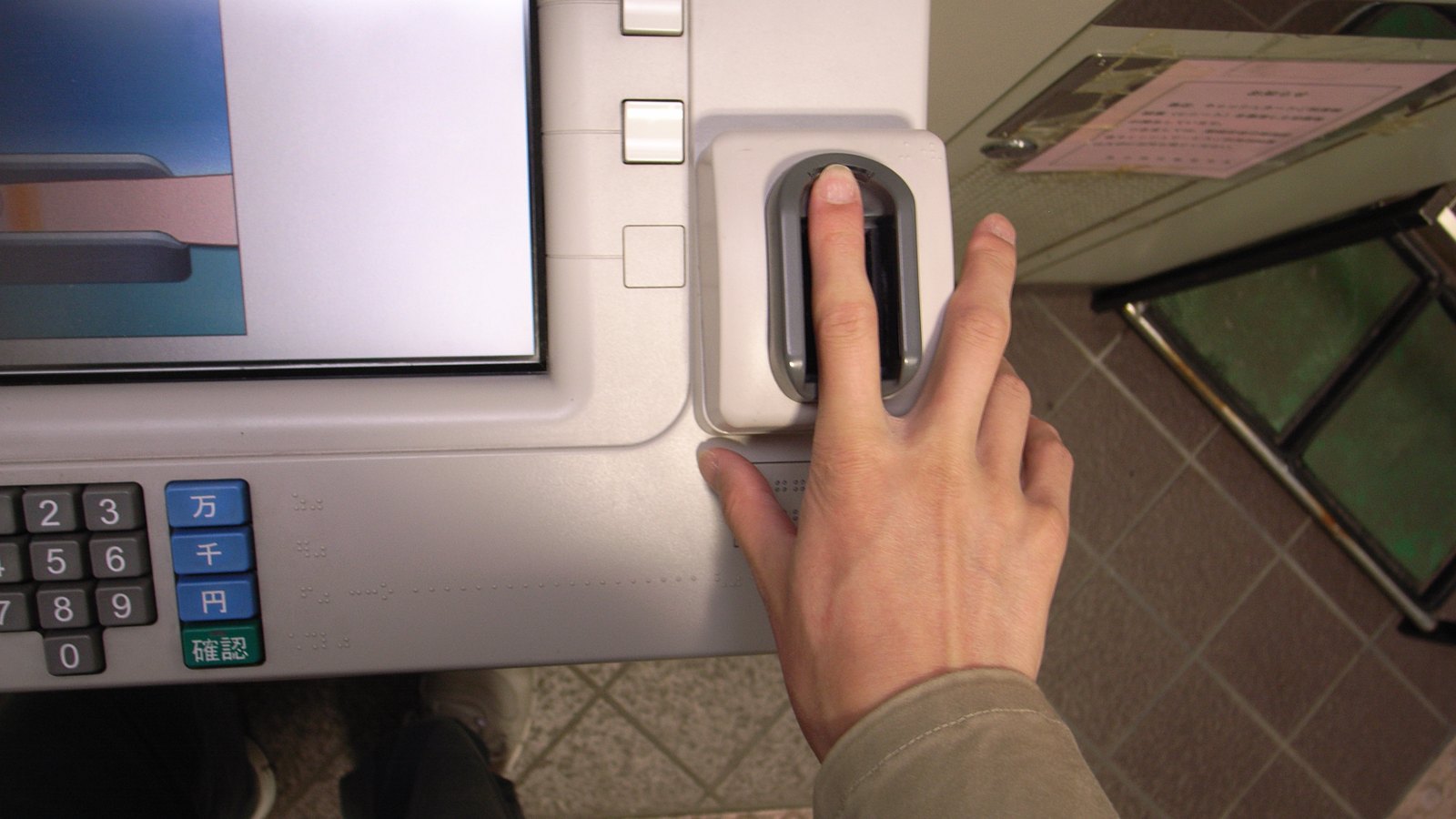
Major academic publishers Elsevier and the Institute of Electrical and Electronics Engineers have initiated formal publishing-ethics investigations into more than a dozen peer-reviewed papers claiming artificial intelligence models can predict human blood types from fingerprint scans with over 90% accuracy, after independent researchers demonstrated on November 23, 2026, that the underlying training datasets were derived from artificially clustered biometric images that contained no biological data.
Publishing Ethics Inquiries Opened Across Academic Journals and Conferences
Academic publishing houses Elsevier and the Institute of Electrical and Electronics Engineers (IEEE) have launched formal integrity inquiries into artificial intelligence papers published since 2023. As reported by Retraction Watch, more than a dozen journal articles and conference proceedings claimed that deep-learning models could determine an individual person’s ABO and Rh blood groups from fingerprint images with classification accuracy exceeding 90%.
The inquiries focus on publications in prominent venues, including a December 2025 study in Elsevier’s open-access journal Franklin Open by computer scientist Sanivarapu Prasanth Vaidya and co-authors Akansha Tyagi, Ashok S., Naga Satish G., and Meenakshi R. The paper, titled “Advancements in hemotype identification: Fingerprint analysis for blood group determination”, is the primary paper under investigation in Elsevier’s Franklin Open. Elsevier communications director Rebecca Clear confirmed an ethics investigation is underway.
Parallel evaluations are advancing across conference proceedings on IEEE Xplore, including studies such as the IEEE Xplore conference proceedings led by Krisha R. An IEEE publishing ethics spokesperson confirmed the organization is formally evaluating the flagged papers.
Cryptographic Hashing Traces Training Benchmarks to Unlabelled SOCOFing Images
The concerns originated from an independent forensic analysis by Lars Kooijman, an adjunct engineering research fellow at Monash University in Melbourne, and Stephanie Summersby, an adjunct associate lecturer in psychology at the University of New South Wales. While reviewing fingerprint image quality research, the pair grew suspicious of papers claiming over 90% accuracy for biological classification, noting that biological systems contain too much noise for such precision.
Kooijman and Summersby audited the public Kaggle datasets cited across the papers, including the “Fingerprint Blood Group Classification Dataset”. By applying cryptographic hashing across approximately 6,000 image files, the researchers generated deterministic digital signatures for each file to track image provenance across repositories.
The audit revealed more than 6,000 exact cryptographic hash matches to the Sokoto Coventry Fingerprint Dataset (SOCOFing), an academic benchmark created at Coventry University and Sokoto for general biometric identification. Coventry University co-creator Vasile Palade confirmed to investigators that the SOCOFing project never collected, recorded, or predicted blood type from donors. Derivative Kaggle uploaders had simply clustered the unlabelled SOCOFing images into eight blood-type folders, even leaving the word “Cluster” in the image filenames.
| Dataset / Venue | Claimed Biological Label | Actual Data Origin | Verification Method | Current Status |
|---|---|---|---|---|
| SOCOFing (Coventry University) | None (Biometric Identification) | Sokoto Donor Cohort | Original Academic Ground Truth | Active Benchmark |
| Kaggle Blood Group Datasets | Eight ABO / Rh Blood Groups | Clustered SOCOFing Files | Cryptographic Hashes (6,000+ Matches) | 7 Removed; 2 Copies Online |
| Franklin Open (Elsevier, 2025) | Over 90% Hemotype Accuracy | Clustered Kaggle Repository | Author Confirmation of Dataset | Ethics Investigation Underway |
| IEEE Xplore Proceedings (2024–2026) | High-Accuracy Deep Learning | Clustered Kaggle Repository | Independent Forensic Audit | Publishing Ethics Evaluation |
Scientific Literature on Dermatoglyphics and Deep Learning Failure Modes
The premise of predicting blood groups from fingerprints conflates broad population associations with clinical individual diagnostics. In dermatoglyphics, observational studies have long examined weak statistical distributions between ridge patterns and systemic traits. For example, a 2018 study in PubMed Central documented minor pattern variations across blood groups in Nepalese medical students, but emphasized that patterns cannot serve as individual diagnostic markers.
Subsequent forensic research in Nature Scientific Reports similarly established that ridge patterns cannot determine an individual’s blood group. Despite this biological reality, the investigated machine-learning models reported near-perfect accuracy because deep neural networks fitted to arbitrary clustering boundaries, background illumination differences, and synthetic folder partitions rather than genuine physiological signals.
The episode echoes provenance vulnerabilities documented in CASRAI coverage of Kaggle dataset provenance and retractions, where unverified public datasets entered peer-reviewed literature without data validation. Kooijman and Summersby noted that no papers claiming fingerprint-to-blood-group predictions appeared before 2023, suggesting generative AI coding tools may have accelerated the production of these flawed studies.
Publisher Responses, Author Statements, and Platform Removals
Lead author Sanivarapu Prasanth Vaidya acknowledged to Retraction Watch that his team used the Kaggle dataset in good faith without independently collecting blood samples or conducting laboratory serology. Vaidya stated his team did not know the images originated from SOCOFing or that the labels were synthetic clusters. Addressing why the Kaggle dataset showed an upload date of July 2026 while his paper was published in December 2025, Vaidya explained the platform date likely reflected a subsequent repository update.
Krisha R., lead author of two IEEE papers, stated their team performed no clinical blood tests and said it was premature to determine whether retractions or corrections were necessary. Kaggle subsequently removed seven derivative datasets after Kooijman reported them for plagiarism, though at least two copies remained online.
Kooijman and Summersby warned of the risks of circulating fabricated scientific data. “The papers are produced under false pretence with fake data and should therefore be retracted,” the pair stated, expressing concern over the safety implications if automated blood-typing systems were ever introduced into clinical environments.
Implications for University Integrity Offices, Peer Reviewers, and AI Labs
The controversy highlights persistent gaps in the peer review of machine-learning literature. Reviewers frequently evaluate neural network architectures and loss curves while failing to scrutinize data provenance, specimen collection protocols, or institutional ethics approvals for claimed biological samples.
For institutional governance, the case underscores the need for clear oversight frameworks. University research administrators can consult guidance comparing university research-integrity offices versus journal editorial bodies to coordinate investigations between institutional integrity committees and publishing houses.
Addressing these vulnerabilities requires proactive defenses against peer-review fraud and automated paper generation. When investigations substantiate fabricated or misattributed training data, publishers and indexing agencies must issue standardized bibliographic notices conforming to NISO CREC guidelines, ensuring that every formal retraction statement is promptly indexed across scholarly search engines.
Next Steps in the Publishing Ethics Review
Elsevier’s ethics committee and the editorial board of Franklin Open are conducting their formal inquiry under Committee on Publication Ethics guidelines. The review will determine whether to issue retractions or expressions of concern for the December 2025 paper.
IEEE is conducting ethics reviews across the identified conference proceedings indexed in IEEE Xplore. Research integrity specialists are continuing to audit public machine-learning repositories to identify other derivative datasets, while universities implement stricter provenance verification requirements for student and faculty AI research.
Sources
- Elsevier Franklin Open: Advancements in hemotype identification: Fingerprint analysis for blood group determination, checked 2026-11-23
- Retraction Watch: Two publishers investigating studies claiming to predict blood type from fingerprints, checked 2026-11-23
- IEEE Xplore: Classification of Blood Group Using Non-Invasive Fingerprint Imaging via CNN-Swin, checked 2026-11-23
- PubMed Central: Qualitative Analysis of Primary Fingerprint Pattern in Different Blood Group and Sex in Nepalese Medical Students, checked 2026-11-23
- Nature Scientific Reports: Forensic examination to determine the correlation between fingerprint patterns and blood groups, checked 2026-11-23
- Kaggle: Sokoto Coventry Fingerprint Dataset (SOCOFing), checked 2026-11-23






