
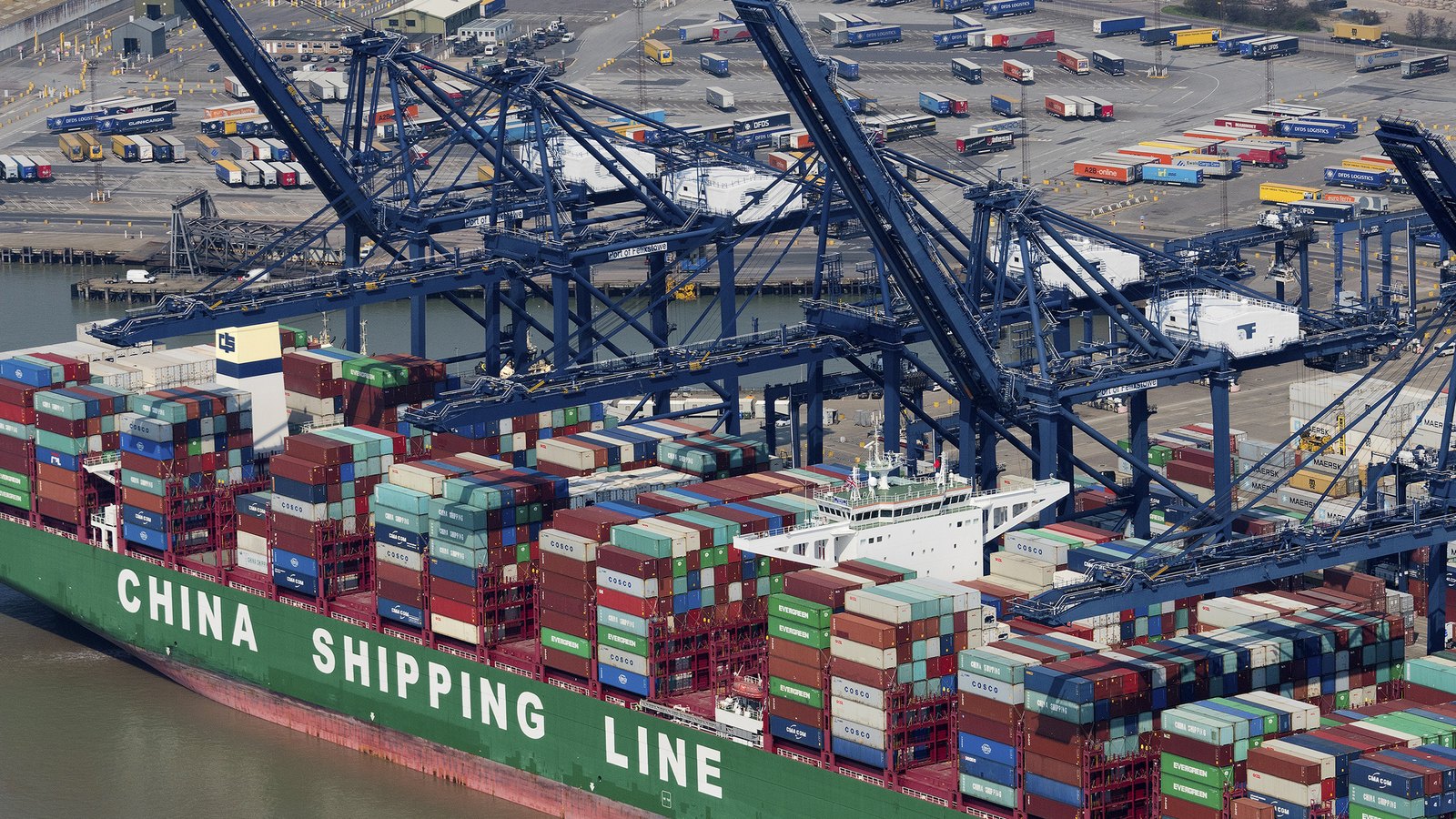
On 26 November 2026, the UK government released findings from the 2024 International Buyers and Investors Study, reporting that 37 percent of 4,035 global corporate leaders plan to invest in the United Kingdom over the next three years. Conducted across sixteen markets, the research identifies infrastructure quality and skilled labour as core investment drivers, signalling valuable industry partnership opportunities for university research offices.
Key Survey Findings and Global Investment Intentions
Commissioned by the Department for Business and Trade (DBT) and executed through fieldwork by market research consultancy Yonder, the research evaluated the sentiment of 4,035 senior commercial decision-makers between 21 October 2024 and 10 February 2025. Across the sixteen surveyed international economies, 50 percent of corporate respondents reported clear awareness of direct investment opportunities in the United Kingdom, positioning the country second overall behind the United States at 62 percent and ahead of Germany at 46 percent.
When assessing forward-looking capital deployment across a three-year horizon, 37 percent of participating commercial investors confirmed plans to establish or expand operations within the UK. This places the British economy as the second most favoured global destination for corporate expansion, closely following the United States at 42 percent while outpacing Germany at 27 percent and the Republic of Ireland at 16 percent. Among commercial buyers, 38 percent stated an intention to purchase or import British goods and professional services, trailing China at 43 percent and the United States at 42 percent.
Corporate sentiment towards the United Kingdom remains broadly favourable, with 62 percent of international decision-makers expressing positive overall attitudes toward commercial engagement with the country. Overall favorability reached 81 percent among respondents in Nigeria and 76 percent in China. Among firms actively exposed to the British government’s GREAT marketing initiatives, buying propensities rose noticeably to 47 percent, compared to 33 percent among non-recognisers.
Comparative Metrics Across Major Trade and Investment Partners
The study introduced granular benchmarking across nine critical investment variables, evaluating how international decision-makers rate competing destinations on infrastructure, operational costs, macroeconomic predictability, and human capital. For multinational investors, high-quality and reliable infrastructure ranked as the single most critical factor, cited by 63 percent of respondents as essential (scoring 8 to 10 on a 10-point scale), closely followed by a credible long-term plan for economic stability at 61 percent and return potential at 60 percent.
When evaluated against European peers, British firms maintained decisive perceptual advantages in technical reputation and market accessibility. Compared to German competitors, international enterprises associated the UK more strongly with being an important business centre for their sector (50 percent for the UK against 37 percent for Germany) and being open and welcoming to international business (49 percent against 38 percent). Against France, the UK held leads across every single surveyed factor, including infrastructure reliability (60 percent versus 45 percent) and access to relevant skills and labour (51 percent versus 35 percent).
| Investment Decision Factor | Global Importance Rating (8-10) | UK Association (Non-EU Investors) | Germany Association | France Association |
|---|---|---|---|---|
| High-quality, reliable infrastructure | 63% | 60% | 61% | 45% |
| Credible long-term plan for stability | 61% | 57% | 56% | 40% |
| Potential to generate high financial returns | 60% | 49% | 39% | 36% |
| Open and welcoming business climate | 59% | 49% | 38% | 37% |
| Access to relevant skills and specialised labour | 55% | 51% | 48% | 35% |
Free Trade Agreements (FTAs) emerged as an active catalyst for capital allocation. Among non-EU markets possessing ratified bilateral trade pacts with the UK, including Australia, Japan, South Korea, and Canada, 51 percent of businesses confirmed that the presence of an FTA made them directly more likely to invest capital in Britain, while 50 percent reported an increased likelihood of commercial procurement.
Policy Evolution and Institutional Restructuring
The publication marks an important baseline during an active structural transformation of British industrial administration. In July 2026, the British government consolidated the Department for Business and Trade with elements of the Department for Science, Innovation and Technology (DSIT) and the Investment Security Unit to establish the Department for Business, Innovation, Science and Trade (BIST). This unified machinery integrates national export promotion, science policy, domestic manufacturing strategy, and inward investment screening under a coordinated cabinet structure.
The 2024 study represents the fifth wave of the International Buyers and Investors Study series, maintaining long-term trend data across eleven continuous benchmark markets since 2020: France, Germany, the United States, South Africa, India, Japan, China, Brazil, the United Arab Emirates, Turkey, and Canada. By comparing multi-wave responses against national macroeconomic balances documented in the Office for National Statistics foreign direct investment bulletins, departmental analysts identified structural shifts in how corporate investors value sovereign research clusters and academic technical capability. Understanding these shifting asset classes requires institutional planners to master foundational accounting models, such as the international investment position framework that governs cross-border asset and liability flows.
Stakeholder Perspectives and Market Perceptions
The survey data underscores divergent regional priorities that dictate where multinational enterprises direct cross-border research and development budgets. In emerging industrial economies such as Nigeria (82 percent), South Africa (80 percent), and India (72 percent), the availability of robust digital and physical research infrastructure was overwhelmingly prioritized. Conversely, corporate decision-makers in established manufacturing hubs like Japan (51 percent), France (48 percent), and Germany (47 percent) placed greater relative weight on regulatory alignment and bilateral intellectual property protections.
External economic analyses published in the Bank of England Monetary Policy Reports note that sustained corporate capital formation increasingly relies on non-tangible assets, including enterprise software, patented engineering designs, and proprietary pharmaceutical formulations. Furthermore, the UK continues to hold top-tier rankings for knowledge creation and patent density within the annual Global Innovation Index published by the World Intellectual Property Organization, validating the survey finding that international buyers perceive British suppliers as global leaders in quality, innovation, and technical efficiency.
Strategic Implications for Universities and Research Organisations
For university technology transfer offices, contract research managers, and academic enterprise units, the DBT research delivers valuable intelligence on global capital appetite. Because 51 percent of international investors identify the UK’s skilled labour base as a primary asset, higher education institutions stand as the foundational engine sustaining this global competitive advantage. University research leaders can leverage this sustained commercial interest to expand sponsored research agreements, co-funded research hubs, and doctoral training partnerships with foreign industry sponsors.
Research commercialisation offices actively scaling university spinouts must integrate these international investment trends into institutional venture pipelines. As explored across CASRAI’s dedicated technology transfer resources, attracting international venture capital requires transparent equity models and clear intellectual property licensing terms. Early-stage academic ventures can draw inspiration from collaborative seed-stage funding vehicles, such as the Small Business Technology Transfer framework, to bridge laboratory proof-of-concept projects toward multinational commercial investment.
Concurrently, the integration of the Investment Security Unit within the newly created Department for Business, Innovation, Science and Trade reinforces the necessity of rigorous research security protocols. Higher education institutions securing overseas corporate capital must maintain vigilant compliance with foreign ownership screening and cross-border technology export mandates, adhering closely to principles established under the Export Control Reform Act and allied international dual-use export control regimes.
Regulatory Implementation and Future Timelines
The Department for Business, Innovation, Science and Trade will deploy the 2024 survey findings to calibrate future iterations of the GREAT Trade and Investment campaign through the 2026-2027 fiscal cycle. Targeted promotional campaigns will focus specifically on life sciences, advanced clean energy manufacturing, and artificial intelligence infrastructure across high-propensity markets including South Korea, Australia, India, and the United States.
Fieldwork for the next consecutive cycle of the International Buyers and Investors Study is scheduled to commence in late 2026, tracking how post-merger departmental policies and revised free trade agreement frameworks alter global commercial sentiment. Institutional research administrators should expect updated guidance on international research commercialisation partnerships as BIST finalises its comprehensive national industrial strategy in early 2027.
Sources
- GOV.UK: International buyers and investors study 2024, checked 2026-11-26
- Office for National Statistics: Foreign direct investment involving UK companies, checked 2026-11-26
- World Intellectual Property Organization: Global Innovation Index, checked 2026-11-26
- Bank of England: Monetary Policy Reports, checked 2026-11-26






