
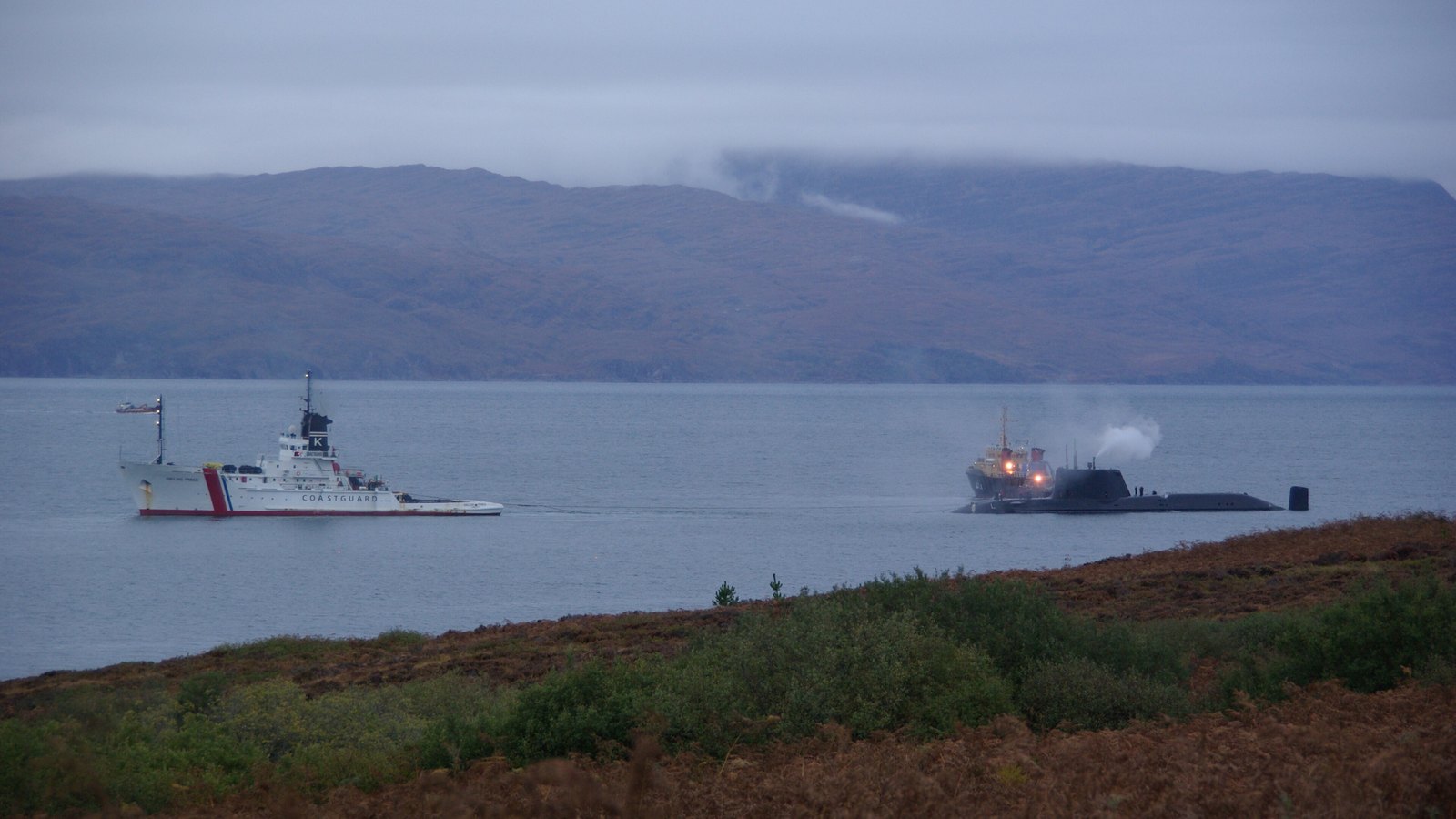
On 26 November 2026, the UK Ministry of Defence awarded an £8 billion commercial contract to British engineering firm Babcock International to overhaul nuclear submarine maintenance infrastructure and accelerate fleet availability across key naval dockyards. The agreement establishes an integrated operating model for waterfront operations while funding major capacity expansions that directly impact academic engineering partnerships, advanced manufacturing research, and research security compliance for university research offices.
Gateway Agreement Awards £8 Billion for Submarine Support
The UK Ministry of Defence confirmed the formal signature of the £8 billion commercial contract, designated the Gateway Agreement, during a ministerial visit to His Majesty’s Naval Base Devonport in Plymouth on 26 November 2026. The arrangement constitutes the second major multi-billion-pound submarine infrastructure commitment delivered under the national Defence Investment Plan, aiming to overcome chronic maintenance bottlenecks and step up the warfighting readiness of the Royal Navy’s undersea forces.
Under the five-year agreement, which begins on 1 December 2026, Babcock International will direct deep maintenance, refits, and dockside support across HMNB Devonport in Plymouth and HMNB Clyde at Faslane in Scotland, supported by engineering design teams in Bristol. The framework incorporates delivery incentives structured to shorten maintenance layovers, accelerating the return of ballistic missile and attack submarines to operational patrols.
Official contract terms confirm that the deal safeguards 8,500 existing industrial jobs while establishing 3,000 new technical positions. The agreement also creates 2,500 apprentice and graduate opportunities, targeting skill shortages across naval architecture and systems engineering.
Contract Specifications and Industrial Resource Allocation
The Gateway Agreement consolidates waterfront engineering previously managed across multiple separate contracts, including the Future Maritime Support Programme. In a corporate announcement, Babcock International confirmed that the initial five-year framework includes extension options up to 15 aggregate years, with a total framework potential reaching £8.7 billion when auxiliary operational taskings are incorporated.
The commercial framework commits approximately £2.4 billion in direct expenditure throughout the domestic supply chain, targeting £1 billion specifically at small and medium-sized enterprises. This spending accelerates the procurement of diagnostic instrumentation, automated inspection tools, and specialised capital equipment for dry-dock facilities.
The following table outlines key contract metrics, workforce targets, and operational commitments established under the agreement:
| Metric / Programme Element | Contract Value / Commitment | Operational Objective |
|---|---|---|
| Initial Contract Duration | 5 years (effective 1 December 2026) | Options for aggregate extension up to 15 years |
| Core Agreement Commitment | £8.0 billion (£8.7 billion framework potential) | Consolidated dockyard maintenance and engineering services |
| Workforce Allocations | 8,500 retained; 3,000 new technical roles | Capacity expansion across Plymouth, Clyde, and Bristol |
| Early-Career Placements | 2,500 apprentice and graduate opportunities | Expansion of degree apprenticeships and technical skills |
| Supply Chain Expenditure | £2.4 billion (£1.0 billion targeted to SMEs) | Domestic supply chain subcontracting and instrumentation |
| Key Naval Operating Hubs | HMNB Devonport and HMNB Clyde | Round-the-clock dry-dock operation and reduced layover times |
Strategic Modernisation Across the Defence Nuclear Enterprise
The Defence Nuclear Enterprise coordinates the lifecycle of the UK strategic deterrence capability, encompassing submarine propulsion, warheads, and naval support. Operating the Continuous At-Sea Deterrent relies on four Vanguard-class ballistic missile submarines, alongside Astute-class fleet attack submarines. Prolonged operational cycles have placed heavy mechanical demands on hull structures and onboard systems, making dockyard throughput critical.
The Gateway Agreement operates alongside Project Royal Oak, a wider £26 billion ten-year infrastructure programme modernising HMNB Devonport, HMNB Clyde, and HMNB Portsmouth. As reported by The Defense Post, these investments upgrade facilities into resilient round-the-clock installations supporting NATO operational tasks and trilateral AUKUS commitments.
At HMNB Clyde, the Clyde Transformation Programme will deliver Programme Euston, creating an out-of-water engineering facility operational in the 2030s to support the transition from Vanguard to Dreadnought-class submarines. In its landscape review, the National Audit Office evaluated the enterprise’s capital requirements, noting that infrastructure bottlenecks directly compound fleet maintenance backlogs and legacy vessel defueling delays.
Government and Industry Perspectives on Deterrence Readiness
Ministers framed the investment as a dual commitment to national security and regional economic growth. Prime Minister Andy Burnham stated that the agreement invests in national defence while expanding employment opportunities for young people across Plymouth, Clyde, and beyond.
Defence Secretary Wes Streeting MP emphasised the strategic imperative at Devonport: ‘Our nuclear submarines are the cornerstone of our national security. Every minute of every day, they deter our adversaries and keep our country safe. The deterrent is only as strong as our ability to keep it at sea. We are not going to repeat the mistakes of the past, where investment in our nuclear capability was delayed. Even when we have to move funding from other departments, we will prioritise our nuclear deterrent and getting Britain warfighting ready.’
First Sea Lord General Sir Gwyn Jenkins affirmed that the agreement backs waterfront personnel and tackles maintenance delays to return submarines to sea quicker. Babcock Chief Executive Officer Harry Holt highlighted the group’s long-term commitment to sustaining the deterrent, reinforcing sovereign industrial resilience, and developing advanced technical capabilities across the maritime supply chain.
Reporting from Defense Mirror highlighted that the framework restructures the commercial relationship between the Ministry of Defence and commercial contractors, using performance incentives to cut dockyard turnaround times.
Implications for University Research Offices, Engineering, and Security Compliance
The £8 billion investment carries direct operational implications for higher education institutions, sponsored research offices, and academic engineering laboratories. Nuclear submarine sustainment relies extensively on materials science, robotic non-destructive testing, acoustic monitoring, and autonomous inspection systems, requiring research partnerships between universities and defence contractors.
Research administrators managing sensitive maritime propulsion or naval engineering projects must enforce strict adherence to institutional research security policies. These compliance standards govern foreign national laboratory access, secure computing facilities, and cybersecurity measures protecting technical design data.
Academic teams working on naval alloys, fluid mechanics, or structural health monitoring must also maintain compliance with UK strategic export controls governing export-controlled research. Investigators must coordinate with university compliance officers to prevent unauthorized transfer of sensitive dual-use naval technologies.
Furthermore, the £2.4 billion supply chain commitment provides contracting opportunities for university laboratories. Research offices must delineate the terms of a subaward vs. subcontract to ensure intellectual property rights, indirect cost recovery, and auditing protocols comply with single-source defence procurement rules. Concurrently, the creation of 2,500 apprentice and graduate roles will drive university partnerships in degree apprenticeships and doctoral engineering programmes.
Implementation Timelines and Future Capability Milestones
The Gateway Agreement takes effect on 1 December 2026, initiating its initial five-year term. Waterfront priorities focus on reducing maintenance backlogs across Astute-class submarines and accelerating major refits for operational Vanguard-class ballistic missile submarines at Devonport.
Workforce recruitment for the 3,000 new technical roles and 2,500 early-career positions will expand across 2027 and 2028, supporting a sector workforce projected to reach 65,000 personnel by 2030. Infrastructure construction under Project Royal Oak will advance concurrently across Devonport, Clyde, and Portsmouth.
Milestones for Programme Euston at HMNB Clyde will progress toward operational deployment in the early 2030s. This out-of-water engineering facility will support the operational introduction of the four Dreadnought-class submarines, sustaining the UK strategic deterrent patrols into the 2060s.
Sources
- UK Ministry of Defence: Major £8 billion investment to upgrade UK nuclear submarine availability and warfighting readiness, checked 2026-11-26
- Babcock International: Babcock signs record £8.7 billion Gateway Agreement to strengthen the UK Submarine Enterprise, checked 2026-11-26
- The Defense Post: UK Signs $10.5B Babcock Deal to Speed Up Nuclear Submarine Maintenance, checked 2026-11-26
- Defense Mirror: Babcock Signs Record £8.7B Submarine Support Deal with U.K. Government, checked 2026-11-26
- National Audit Office: The Defence Nuclear Enterprise: a landscape review, checked 2026-11-26






