
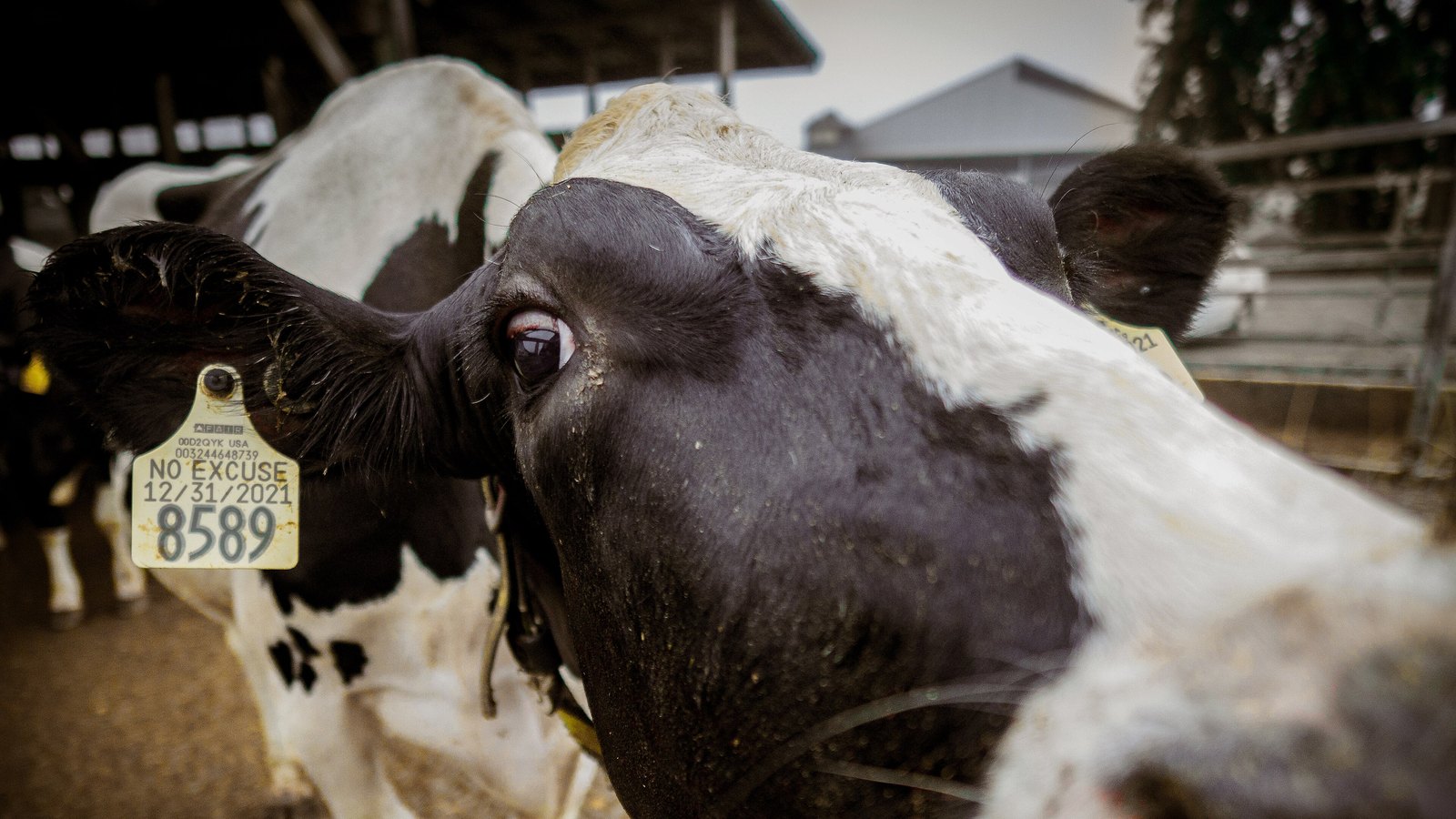
The UK Department for Environment, Food and Rural Affairs published an updated policy paper on 24 November 2026 establishing the operational framework for England’s Livestock Information Transformation Programme, formally aligning multispecies traceability and bovine electronic identification with 2028 international sanitary agreements and reshaping compliance obligations for university research farms, veterinary trials, and academic animal facilities.
Policy Paper Formalises Digital Traceability Architecture
The UK Department for Environment, Food and Rural Affairs (Defra) has released an updated policy paper on the Livestock Information Transformation Programme (LITP), outlining the digital infrastructure designed to overhaul livestock traceability across England. LITP replaces fragmented legacy databases with a unified multispecies platform enabling near real-time tracking from farm to abattoir. By modernising reporting mechanisms, Defra aims to accelerate biosecurity intervention speeds during disease outbreaks, enhance food safety assurances, and support agricultural trade under evolving international standards.
Central to the transition is the retirement of the Cattle Tracing System (CTS), operated since 1998 by the British Cattle Movement Service (BCMS) within the Rural Payments Agency (RPA). CTS relies on paper passports and manual notifications, creating reporting latency during epidemiologic tracing. Under LITP, cattle tracking transitions to digital records linked to electronic ear tags, embedding animal movements into automated lot traceability frameworks that eliminate manual transcription errors.
Defra confirmed that LITP is funded through the core farming budget. In mid-2026, platform development was transferred in-house to Defra’s Digital, Data, Technology and Security (DDTS) team. Working alongside the Animal and Plant Health Agency (APHA) and the RPA, DDTS is engineering cloud services to ingest high-throughput movement notifications from farmers, livestock marts, and academic research centres.
Key Technical Specifications and the 2028 Transition Matrix
The technical core of the policy centres on Bovine Electronic Identification (BEID), which embeds a radio-frequency identification (RFID) transponder into an animal’s ear tag. Defra reaffirmed its selection of Low Frequency (LF) technology at 134.2 kHz, matching the standard used for UK sheep electronic tagging since 2010. While LF tags require close-proximity scanning, Defra selected the standard to maintain compatibility with existing market scanners and tag supply chains.
Mandatory BEID takes effect across England during 2028 for all newborn calves. Keepers will not be required to retag the existing herd. Instead, Defra is introducing a multi-year dual-reporting window where electronically tagged and visually tagged cattle co-exist, with movements reported via BEID scans, passport barcodes, or visual tag reads.
The service expands upon earlier rollouts coordinated with the Agriculture and Horticulture Development Board (AHDB) livestock information portal. In 2022, the Livestock Information Service (LIS) replaced the Animal Reporting and Movement Service (ARAMS) for sheep, goats, and deer. The pork sector’s eAML2 portal, managed by AHDB, will continue operating until cattle migration is complete.
| System Parameter | Legacy Architecture (CTS / ARAMS) | LITP Digital Transformation Framework |
|---|---|---|
| Species Focus | Cattle (CTS); Sheep/Goats (ARAMS) | Unified multispecies platform (Cattle, Ovine, Porcine) |
| Identification Hardware | Visual ear tags; paper passports | Low Frequency (LF) RFID transponders in tags |
| Reporting Latency | 3 to 7 days via paper or web forms | Near real-time reporting via cloud APIs and mobile tools |
| Herd Transition | Mandatory paper passport per animal | Mandatory BEID for 2028 calves; no herd retagging |
| Technical Governance | Legacy outsourced maintenance | Defra in-house DDTS digital delivery with APHA and RPA |
| Cross-Border Exchange | Manual file transfers | Automated federated integration via UK View data hub |
Programme Governance and Federated UK Infrastructure
Because animal health and agricultural policy are devolved competencies, livestock traceability requires coordinated governance across four administrations. Alignment in England is steered by the Traceability Design User Group (TDUG), an advisory body uniting over 25 industry, academic, and government specialists across livestock, meat processing, and veterinary sectors to evaluate platform usability and data governance protocols.
Each devolved administration operates technical infrastructure aligned with regional needs. Scotland manages tracking through the ScotEID traceability platform, developed by the Scottish Agricultural Organisation Society (SAOS) with the Scottish Government. Wales operates EIDCymru, while Northern Ireland utilises NIFAIS under DAERA. To prevent borders becoming data blindspots, Defra and devolved authorities share intelligence via the “UK View” data exchange.
This federated architecture ensures cattle moving across borders retain continuous digital traceability. For academic institutions, this illustrates the practical execution of persistent identifier federation across research infrastructure, where disparate jurisdictional systems synchronize movement events into a unified national epidemiological registry.
Stakeholder Responses and Inter-Jurisdictional Technical Debate
The policy publication follows extensive consultation between government and agricultural bodies. Reporting by Farmers Weekly reporting on Defra traceability revisions noted industry frustration with prior delivery delays, observing that timelines were recalibrated to accommodate in-house software development and trade coordination. Farming unions emphasized that producers need stable lead times to invest in electronic tag scanners, handling races, and updated farm software.
A key technical divergence exists between England and Scotland over RFID frequency selection. While Defra chose Low Frequency, industry leadership in Scotland advocated for Ultra-High Frequency (UHF). In representations cited in NFU Scotland statements on bovine electronic identification, the union highlighted field trials across 400 holdings and marts showing UHF enables rapid multi-animal read rates in handling races. Scottish leaders petitioned ministers to examine dual-frequency compatibility.
Defra nonetheless confirmed LF technology for England, pointing to direct compatibility with established sheep tagging, international ISO 11784 and 11785 standards, and lower capital equipment costs for smallholders. Approved LF tags will be distributed via the Livestock Unique Identification Service (LUIS) gateway.
Implications for University Research Facilities and Agricultural Trials
The LITP transition carries immediate compliance implications for veterinary schools, agricultural universities, and trial facilities. Institutions including the Royal Veterinary College, Edinburgh, Nottingham, Harper Adams, and SRUC manage experimental dairy and beef herds for nutritional research and veterinary training, requiring internal workflows to connect directly to new national reporting endpoints.
University holding managers must update on-farm data capture procedures. Research herds experience frequent movements between paddocks, metabolic units, and isolation pens. While movements within a contiguous holding register remain internal, transfers between distinct holding identifiers (CPH numbers) must be electronically recorded. Facility managers will need to integrate electronic tag readers into experimental crushes to maintain compliance without slowing research.
At an institutional level, near real-time movement reporting strengthens biosafety and biosecurity containment across research herds. During incursions of pathogens such as Bluetongue Virus (BTV-3) or Foot-and-Mouth Disease, APHA can rapidly trace contact networks, providing research institutes early warnings to protect high-value genetic cohorts.
Finally, researchers managing livestock trials funded by UKRI and BBSRC must maintain rigorous data standards. Tag IDs provide unique keys linking phenotypic, genomic, and health metrics directly to movement histories. Adopting robust data provenance protocols ensures longitudinal findings remain verifiable across the research data lifecycle.
Regulatory Timelines and International SPS Alignment
Defra’s policy update explicitly ties programme delivery to international trade milestones. The revised rollout for the cattle service and mandatory calf BEID aligns with the UK-EU Sanitary and Phytosanitary (SPS) Agreement, scheduled to take effect from 1 March 2028 subject to bilateral ratification procedures. Synchronising livestock digital systems with SPS milestones ensures British livestock products satisfy European import verification standards.
In the lead-up to 2028, Defra and DDTS will execute phased testing with commercial farm software vendors and pioneer holdings to validate API performance in rural areas. Defra confirmed that livestock keepers do not need to alter current reporting routines immediately, with technical guidance and onboarding support scheduled ahead of each species rollout.
Sources
- UK Department for Environment, Food and Rural Affairs: Livestock Information Transformation Programme (LITP), checked 2026-11-27
- Agriculture and Horticulture Development Board: Livestock Information Transformation Programme (LITP), checked 2026-11-27
- Farmers Weekly: Defra Delays Cattle Traceability Overhaul to 2027, checked 2026-11-27
- NFU Scotland: NFU Scotland Calls for Electronic Identification of Cattle to Be in Place, checked 2026-11-27
- ScotEID: The Heart of Livestock Integrity, checked 2026-11-27






