
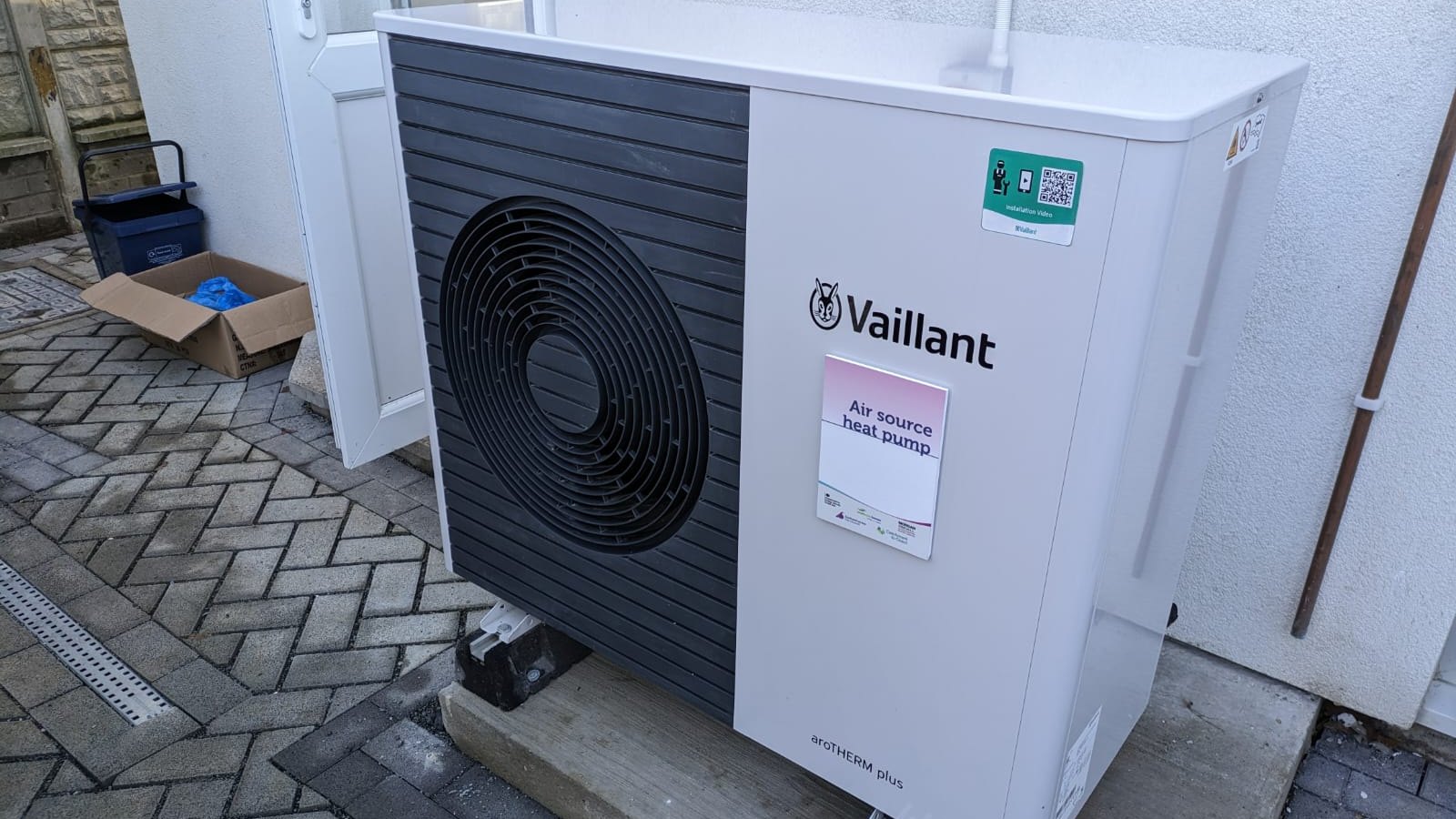
On November 26, 2026, the UK Department for Energy Security and Net Zero published comprehensive Stream 3 evaluation outputs, thematic synthesis reports, and Stream 2 Wave 2 applied research case studies from its £60 million Heat Pump Ready Programme. The publication consolidates operational findings across 45 funded consortia, providing essential engineering data, financial delivery models, and high-density deployment architectures for academic researchers, engineering faculties, and university research offices advancing clean heat innovation.
Programme Update and Stream 3 Evaluation Release
The UK Department for Energy Security and Net Zero updated its official Heat Pump Ready Programme: successful projects collection, publishing the final programme-level evaluation and thematic synthesis reports produced by the Carbon Trust consortium under Stream 3. The newly published documentation synthesises cross-cutting evidence across 45 individual innovation projects funded through the £60 million initiative, part of the UK government’s £1 billion Net Zero Innovation Portfolio.
Alongside the portfolio analysis, the department published project-level case studies for Stream 2 Wave 2 awards, documenting field performance, modular manufacturing methods, and consumer engagement protocols. The Heat Pump Ready Programme: Stream 3 programme outputs provide academic investigators, local authorities, and grid planners with empirical datasets covering low-carbon heating installations across varied UK housing archetypes.
Stream Architecture and Grant Allocations
The Heat Pump Ready Programme was structured across three streams to tackle technical, economic, and operational barriers to domestic heat pump adoption across Great Britain.
Under Stream 1 Phase 1, the government awarded £2,055,202.43 across 11 feasibility studies to develop high-density neighbourhood deployment models in localities including Newcastle, Sunderland, Leeds, Oxford, Greenwich, Bristol, Teignbridge, Fenland, Blairgowrie, Cherwell, and Bridgend. Four trial projects subsequently progressed into Stream 1 Phase 2, securing £9,746,535.60 to execute street-level installations in Oxford (£3.21 million), Bristol (£2.93 million), Fenland (£1.82 million), and Cherwell (£1.80 million).
Stream 2 funded technology and tool development across two competitive rounds. Wave 1 awarded £15,030,944.72 across 24 projects exploring measured building performance, automated survey tools, and smart home energy management, with project outcomes catalogued under the Heat Pump Ready Programme: Stream 2 projects directory. Wave 2 committed over £7.5 million across 13 applied R&D projects pairing technology innovators with academic laboratories, including distress-purchase replacements, natural refrigerant systems, and multi-family communal heating hubs.
| Stream and Phase | Focus Area | Grant Total | Key Projects and Academic Partners |
|---|---|---|---|
| Stream 1 Phase 1 | High-density deployment feasibility across 11 UK locations | £2,055,202.43 | Oxford Brookes University, Leeds Beckett University, University of Strathclyde |
| Stream 1 Phase 2 | High-density neighbourhood trials in Oxford, Bristol, Fenland, Cherwell | £9,746,535.60 | Clean Heat Streets (Samsung), Bristol City Council, City Science Corporation |
| Stream 2 Wave 1 | Tools and technology development (24 R&D projects) | £15,030,944.72 | University of Sheffield, University of Salford, Build Test Solutions, Passiv |
| Stream 2 Wave 2 | Applied technology R&D (13 innovation projects) | £7,500,000+ | Nusku with University of Salford, Clear Blue Energy with University of Liverpool, Vital Energi with University of Birmingham |
| Stream 3 | Programme evaluation, trial support, and knowledge sharing | Consortium Contract | Carbon Trust consortium synthesising outputs across all 45 projects (2022–2026) |
Policy Context and Decarbonisation Targets
Domestic heating accounts for approximately 14% of UK greenhouse gas emissions, making the rapid decarbonisation of residential buildings a central objective for the Department for Energy Security and Net Zero. The government maintains a statutory installation target of 600,000 heat pumps annually by 2028, requiring significant acceleration from historic installation rates.
Analysis from the International Energy Agency highlights that meeting net-zero building benchmarks demands integrated retrofits, flexible electrical tariffs, and accelerated supply-chain maturation. The Heat Pump Ready Programme was established to bridge the gap between bench-scale engineering and neighborhood-scale execution. Researchers assessing how European innovation frameworks structure equivalent multi-stakeholder energy transitions can examine parallel Climate-KIC innovation programmes.
Thematic Synthesis Findings and Sector Reactions
The Stream 3 synthesis integrates findings across six core areas: smart and flexible heat pumps, survey and design, innovative financial models, customer journey, innovation in heat pump technology, and high-density deployment.
In technological performance, Stream 2 trials demonstrated that compact form factors and pre-configured hydraulic cassettes significantly reduce installation complexity in solid-wall properties. Independent testing of the Nusku distress heat pump inside the University of Salford Energy House validated all-in-one outdoor configurations capable of direct boiler replacement without extensive indoor modifications.
Regarding market uptake, research from innovation foundation Nesta underscores that consumer confidence hinges on streamlined quoting processes, skilled installers, and competitive operating costs. The Carbon Trust evaluation noted that Heat-as-a-Service subscriptions and performance guarantees help overcome upfront capital constraints. Energy researchers tracking national engineering investments through the Engineering and Physical Sciences Research Council can reference guidance on EPSRC research grant funding to evaluate how responsive-mode calls align with ministerial net-zero initiatives.
Implications for University Research Offices and Engineering Faculties
The Stream 3 synthesis provides direct operational insights for academic engineering departments and university research offices participating in publicly funded net-zero programmes.
First, project results demonstrate the strategic value of university living-lab infrastructure. Test facilities like the University of Salford Energy House proved instrumental in advancing prototype heating systems from mid-level readiness (TRL 5) to field validation (TRL 7 and 8). Research offices should position university campus estates and simulation chambers as demonstrator testbeds when building competitive industrial grant consortia.
Second, collaborative innovation competitions run by ministerial departments demand specialized grant management. Unlike standard dual-support awards, departmental innovation challenges blend academic overhead recoveries with commercial co-funding requirements. Institutional teams must align project budgets with UK TRAC costing frameworks while maintaining expenditure reporting compliant with actual-cost grant administration rules.
Third, large-scale domestic heat pump trials generate complex multi-sensor telemetry, smart meter data, and occupant behavioural records. University researchers must implement stringent research data management protocols to facilitate open-science data sharing while safeguarding participant privacy.
Next Steps for Clean Heat Innovation and Policy Implementation
Stream 3 knowledge synthesis activities will formally wrap up in March 2026, directly informing statutory policy mechanisms including the Clean Heat Market Mechanism, local energy planning frameworks, and the forthcoming Home Energy Model.
For higher education institutions and industrial consortia, the published case studies establish technical benchmarks for upcoming funding competitions under the Net Zero Innovation Portfolio. DESNZ and UKRI plan further collaborative funding calls addressing electrical grid flexibility, thermal storage, and automated retrofit surveying, offering ongoing opportunities for academic energy research teams.
Sources
- Department for Energy Security and Net Zero: Heat Pump Ready Programme: successful projects, checked 2026-11-26
- Department for Energy Security and Net Zero: Heat Pump Ready Programme: Stream 3 programme outputs, checked 2026-11-26
- Department for Energy Security and Net Zero: Heat Pump Ready Programme: Stream 2 projects, checked 2026-11-26
- Department for Energy Security and Net Zero: Department overview and net zero priorities, checked 2026-11-26
- Engineering and Physical Sciences Research Council: Research and innovation priorities, checked 2026-11-26
- Nesta: A sustainable future mission, checked 2026-11-26
- International Energy Agency: Buildings – Energy consumption and efficiency data, checked 2026-11-26






