
On November 26, 2026, the UK Government Office for Science published an updated, comprehensive Academic Engagement Toolkit alongside a dedicated infrastructure case study, establishing modern operational protocols for civil servants to collaborate with university researchers, streamline policy impact pathways, and integrate academic evidence directly into major national infrastructure decisions.
New Operational Framework for UK Policy-Research Collaboration
The newly published guidance updates central government procedures for academic collaboration, replacing the 2013 Civil Service guidelines with an eleven-module operational toolkit. Developed under Government Chief Scientific Adviser Professor Dame Angela McLean, the framework addresses systemic friction between Whitehall policymaking cycles and university research structures. The publication formalises operational mechanisms for departmental policy teams to commission research, convene expert roundtables, manage intellectual property, and recognise academic contributions fairly within policy formulation.
Central to the toolkit is a shift toward structured institutional engagement rather than reliance on informal personal contacts. Government departments are instructed to route external queries through departmental Chief Scientific Adviser offices, utilise published Areas of Research Interest, and collaborate with knowledge exchange networks such as the Universities Policy Engagement Network, connecting more than 120 universities across the United Kingdom. By sharing the guidance openly across government and higher education, GO-Science aims to create bilateral transparency regarding how research informs policy decisions.
Core Engagement Mechanisms and Administrative Pathways
The toolkit categorises engagement mechanisms by lead time, administrative complexity, and resource investment across the policy lifecycle. For rapid departmental queries, civil servants can deploy targeted roundtables or direct expert interviews while ensuring diverse institutional representation. Longer-term priorities are organised around published Areas of Research Interest, calls for evidence, and formal inward secondments, including UKRI Policy Fellowships and the cross-government STEM Futures scheme.
| Mechanism | Primary Policy Purpose | Lead Time | Administrative Framework | Academic Impact Pathway |
|---|---|---|---|---|
| Direct Advice | Rapid sense-checking of emerging evidence | Days to 2 weeks | Informal terms; clear scoping notes | Advisory acknowledgement; policy insight |
| Areas of Research Interest | Signalling strategic evidence gaps across departments | Ongoing curation | Central database tracking at ari.org.uk | Informs grant proposals and research agendas |
| Roundtables and Workshops | Structured expert challenge and multi-perspective testing | 3 to 8 weeks | Facilitated sessions; expenses or honoraria | Ministerial briefing citations; documented advice |
| Secondments and Fellowships | Embedding academic capability into policy units | 3 to 9 months | Institutional agreements; security clearances | High-value co-production evidence for assessment |
| Commissioned Research | Independent evaluations and formal evidence synthesis | 3 to 12 months | Competitive procurement; Crown contracts | Funded contract research; peer-reviewed outputs |
The guidance sets clear rules for remuneration, expenses, and formal letters of support. While routine knowledge sharing proceeds without payment, formal advisory panels, Science Advisory Councils, and departmental Colleges of Experts provide clear remuneration reflecting time commitments. For competitive grants, the toolkit clarifies how civil servants should assess requests for departmental letters of support, distinguishing open grant calls from targeted procurement contracts.
Background: Modernising the 2013 Civil Service Academic Guidance
The UK civil service published its initial “Engaging with academics: guide for civil servants” in 2013 to encourage departments to draw upon university research. Over the subsequent thirteen years, the research landscape evolved with the creation of UK Research and Innovation, structured public engagement standards, and rigorous institutional evaluation frameworks. Researchers seeking science communication and public engagement grants have increasingly required traceable evidence demonstrating policy translation.
Simultaneously, departmental procurement rules and research security protocols tightened across government. Civil servants required consistent guidance to navigate confidentiality agreements, open research mandates, and intellectual property terms when engaging academic specialists. The revised 2026 toolkit establishes clear standards for data governance and attribution, protecting researchers’ academic publishing rights while respecting confidential policy deliberations.
Case Study: Social Science Evidence in National Electricity Grid Transformation
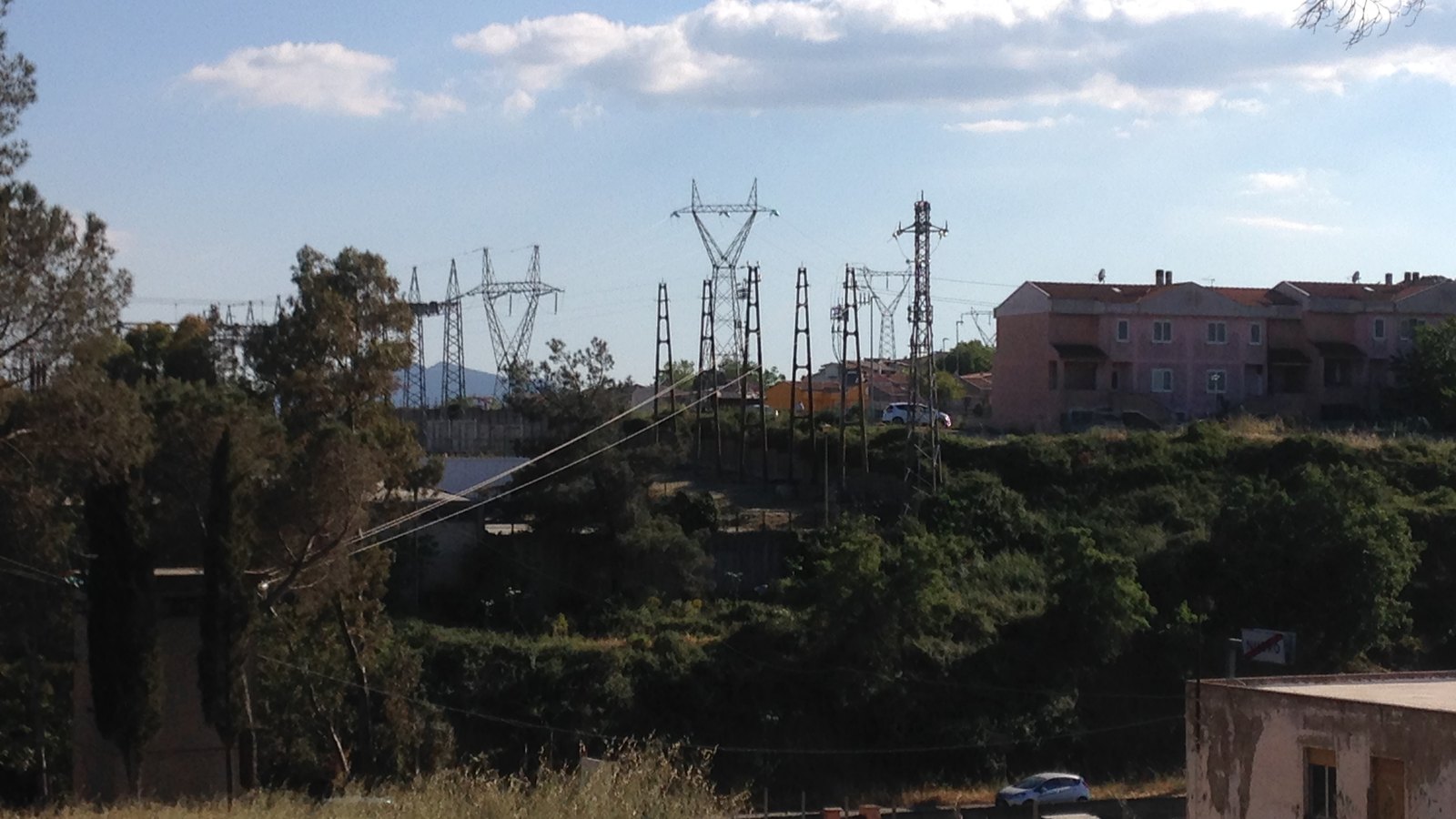
Alongside the toolkit, GO-Science issued a companion case study titled Working with social science experts to shape electricity grid transformation. Developed by the Climate, Energy and Environment team within GO-Science, the project addressed human and societal factors surrounding the expansion of electricity transmission infrastructure required for net zero delivery.
Although power grid modernisation is commonly framed as an engineering challenge supported by EPSRC funding mechanisms, officials encountered local community concerns and planning obstacles regarding overhead lines and substations. A senior social science adviser at GO-Science explained that policymakers faced fragmented social science evidence and lacked collaborative venues to work through socio-technical trade-offs with external specialists.
GO-Science established a Community of Practice that expanded over two years from 50 to more than 170 members, uniting officials from the Department for Energy Security and Net Zero, Ofgem, the Cabinet Office, the Scottish Government, and the Welsh Government with researchers and practitioners. Convening quarterly online, the group produced shared principles on the social dimensions of infrastructure transformation. These principles were subsequently incorporated into the national Energising Britain policy plan, informed a rapid ministerial roundtable, and were cited in a House of Commons debate.
Cross-Sector Reactions and Practical Ways of Working
The toolkit and case study highlight the importance of bridging operational differences between Whitehall and higher education. Academics operate on publication timetables, competitive grant milestones, and undergraduate teaching schedules, whereas civil servants respond to rapid parliamentary and policy demands that require concise briefings.
The Deputy Director for Climate, Society and International at GO-Science stressed that pragmatism must underpin evidence integration, noting that the most effective academic contributions are structured to be actionable within existing government administrative machinery. Civil servants are advised to establish clear expectations regarding deliverables and decision-making parameters, while academics are encouraged to recognise that policy impact often follows incremental pathways.
Implications for University Research Offices, Funders, and REF 2029
For higher education institutions, the toolkit provides concrete mechanisms to substantiate research impact. A dedicated module guides civil servants on supplying formal documentation for research assessment, noting that policy influence directly shapes funding allocations under the forthcoming REF 2029 exercise managed by Research England and devolved funding bodies. Through formal letters of acknowledgement, co-authored reports, and citations in government publications, researchers gain audit-ready evidence for institutional impact case studies.
The framework also supports alignment with UK Research and Innovation programmes, coordinating with bodies such as the Economic and Social Research Council to expand policy fellowships alongside established ESRC funding schemes. By linking departmental Areas of Research Interest with the UKRI Gateway to Research and institutional knowledge brokers, universities can orient research bids toward documented policy gaps. In addition, university research offices managing Knowledge Transfer Partnerships and outward secondments can utilise the toolkit’s exchange models to embed researchers in government teams.
Next Steps, Planned Toolkit Modules, and Policy Horizons
GO-Science confirmed that the November 2026 release represents the first phase of an expanding guidance resource. The Government Office for Science and departmental Chief Scientific Adviser teams will introduce further procedural guides throughout 2027, focusing on commissioning rapid evidence syntheses, research security screening, and regional academic engagement across Scotland, Wales, and Northern Ireland.
Civil servants and university research leaders are encouraged to provide feedback and submit prospective case studies. As UK departments implement major infrastructure and policy reforms, the operational toolkit will serve as Whitehall’s central standard for integrating academic research into public decision-making.
Sources
- Government Office for Science: Academic Engagement Toolkit, checked 2026-11-26
- Government Office for Science: Working with social science experts to shape electricity grid transformation, checked 2026-11-26
- Government Office for Science: Official Organisation Profile and Science System Guidance, checked 2026-11-26
- Economic and Social Research Council (ESRC) – UKRI: Social Science Research and Policy Fellowships, checked 2026-11-26






