
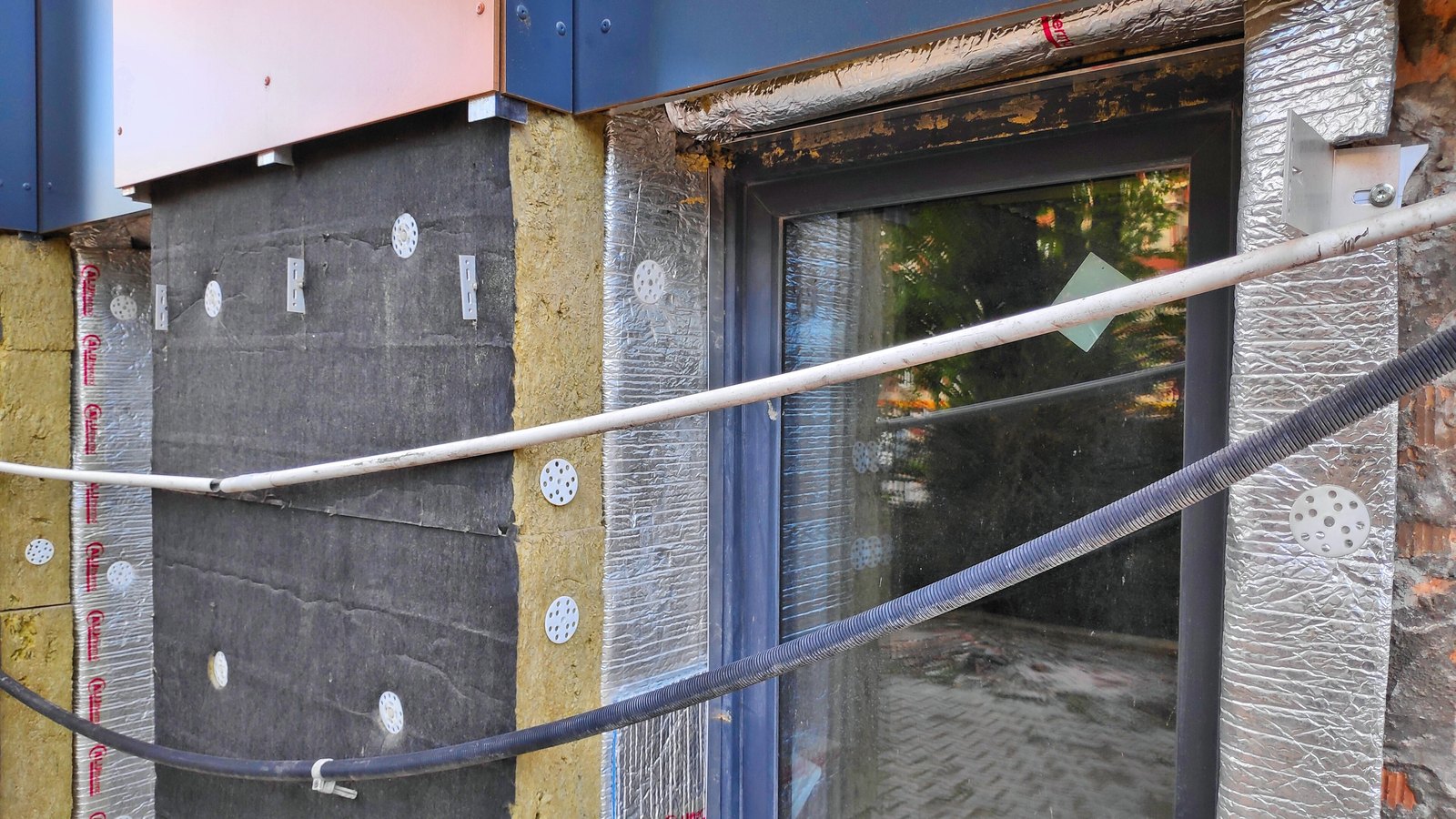
On 26 November 2026, the Department for Energy Security and Net Zero released official performance statistics for the Social Housing Decarbonisation Fund across England, revealing that 165,700 energy efficiency retrofit measures have been installed in 75,500 social homes through September 2026, providing crucial empirical benchmarks for university estate managers, built environment researchers, and public grant administrators.
Retrofit Delivery Milestones Across English Social Housing
Official monitoring data published by the Department for Energy Security and Net Zero shows steady cumulative progress in upgrading the energy efficiency of English social housing. According to the latest Social Housing Decarbonisation Fund statistics for November 2026, 165,700 energy efficiency measures have been installed across 75,500 households through September 2026. The monthly release reflects active reporting two months in arrears across successive grant funding waves.
Wave 2.1 represents the largest share of delivery to date, accounting for 122,100 installed measures in 54,300 homes. The smaller Wave 2.2 stream contributed 11,900 measures across 5,200 households, while the closed Wave 1 initiative accounted for 31,700 measures in approximately 20,000 properties.
Crucially, nearly 100% of upgraded dwellings with known baseline assessments reached Energy Performance Certificate (EPC) band C or higher. Under Wave 2.1, 47,300 households achieved this standard out of 47,400 evaluated properties with baseline ratings of band D or lower (an 87% reporting sample). Wave 2.2 recorded 4,250 households reaching band C out of 4,270 evaluated dwellings (82% sample). Net upward revisions from grant recipient audits added 1,450 measures and 490 households to Wave 2.1, alongside 490 measures and 100 households to Wave 2.2.
Technical Measures, Housing Typologies, and Regional Allocation
Fabric-first thermal improvements dominated across all funding streams. Under Wave 2.1, insulation accounted for 51% of all installations (62,200 measures), followed by solar photovoltaics and clean electricity at 23% (28,300 measures), and glazing upgrades at 16% (20,000 measures). Wave 2.2 exhibited a similar mix: insulation comprised 48% (5,700 measures), solar PV 25% (3,000 measures), and window and door replacements 16% (1,900 measures). Loft insulation remained the single most common measure across all waves, representing 23% in Wave 1, 25% in Wave 2.1, and 26% in Wave 2.2.
Low-carbon heating technologies—including air source heat pumps (ASHP), ground source heat pumps (GSHP), and digital heating controls—represented smaller but strategically vital shares. Single-family houses received 78% of measures under Wave 2.1 and 81% under Wave 2.2, with bungalows comprising 13% and flats between 5% and 8%. Maisonettes accounted for under 1%.
Regional distribution varied significantly, as summarised below. Analysts examining these allocations often compare regional delivery rates using benchmarks from research grant funding statistics to account for regional housing density differences.
| Scheme Phase | Grant Funding | Active Recipients | Households Upgraded | Total Measures | Top Delivery Region |
|---|---|---|---|---|---|
| Wave 1 (Closed) | £179m | 62 local authorities | ~20,000 | 31,700 | National pilot coverage |
| Wave 2.1 (Active) | £778m | 102 recipients (91 completed) | 54,300 | 122,100 | North West (23%, 12,200 homes) |
| Wave 2.2 (Active) | £80m | 38 recipients (33 completed) | 5,200 | 11,900 | South East (25%, 1,300 homes) |
Wave 2.1 delivery concentrated in the North West (12,200 households, 23%), the West Midlands (7,200 households, 13%), and Yorkshire and The Humber (5,900 households, 11%). Wave 2.2 delivery was led by the South East (1,300 households, 25%), the West Midlands (860 households, 17%), and the East of England (820 households, 16%).
Policy Framework, Statutory Budgets, and the Warm Homes Transition
The Social Housing Decarbonisation Fund is integral to meeting the legally binding carbon budgets established by the Climate Change Act 2008 statutory carbon budgets, which require net-zero greenhouse gas emissions by 2050. Residential space heating generates significant direct emissions, making housing retrofits a core policy priority.
Wave 1 launched in August 2021 with £179 million, followed by £778 million for Wave 2.1 in March 2023 and £80 million for Wave 2.2 in April 2024. Both active waves are now concluding operational delivery, with reporting transitioning into the government’s Warm Homes Plan. This evolution includes the Warm Homes: Social Housing Fund, monitored in the parallel Warm Homes Social Housing Fund statistics published by DESNZ.
Administrative processes governing these figures are set out in the Warm Homes statistics methodology and background note. National housing stock context from the Office for National Statistics on UK housing energy efficiency and stock statistics confirms that while social housing outperforms private tenures, widespread retrofits remain necessary to hit decarbonisation targets. Managing these building datasets requires consistent curation, adhering to standards for research data across public sector energy monitoring.
Sector Perspectives and Retrofit Supply Chain Delivery Dynamics
Social housing providers, local authority consortium leads, and retrofit contractor networks have highlighted clear operational lessons from Waves 2.1 and 2.2. Housing associations welcomed the near-universal achievement of EPC band C, confirming that whole-dwelling retrofit standards can effectively lift poorly insulated properties above statutory thresholds.
However, recipients reported substantial reporting lags stemming from post-installation EPC lodgements and PAS 2035 compliance audits. To coordinate multi-partner verification and compliance documentation, managing authorities increasingly deploy solutions highlighted in reviews of regulatory compliance software. Furthermore, contractors encountered significant supply bottlenecks in specialised trades, particularly certified heat pump installers and external wall insulation crews, explaining why fabric insulation and solar PV advanced faster than electrified heat installations.
Implications for University Estates and Built Environment Research Teams
The SHDF empirical dataset provides vital strategic benchmarks for higher education institutions. Universities operate substantial residential estates, student accommodation portfolios, and campus buildings subject to public sector decarbonisation requirements.
Estates teams can use the SHDF findings to plan capital investment cycles. The heavy reliance on loft insulation and glazing underscores the necessity of a fabric-first approach before sizing heat pumps, preventing electrical infrastructure overloads. For built environment and energy researchers, the 165,700 installed measures offer an invaluable real-world testbed for assessing in-situ thermal performance versus modeled projections. When managing institutional building sensor and occupancy data, research offices must align data governance with the Concordat on Open Research Data to ensure research outputs remain transparent and reusable.
Future Reporting Timelines and Strategic Policy Next Steps
The Department for Energy Security and Net Zero has scheduled the next Social Housing Decarbonisation Fund statistical release for 09:30am on Thursday 25 February 2027. That report will encompass installations through December 2026 and incorporate further retrospective revisions.
Concurrently, local authorities and housing providers are transitioning into larger capital deployments under the multi-billion Warm Homes: Social Housing Fund. Stakeholders are expanding certified contractor frameworks and integrating automated monitoring to support the next generation of retrofit initiatives across England.
Sources
- Department for Energy Security and Net Zero: Social Housing Decarbonisation Fund statistics: November 2026, checked 2026-11-27
- Department for Energy Security and Net Zero: Warm Homes Social Housing Fund statistics November 2026, checked 2026-11-27
- Department for Energy Security and Net Zero: Warm Homes statistics methodology and background note, checked 2026-11-27
- Office for National Statistics: UK Housing energy efficiency and stock statistics, checked 2026-11-27
- UK Parliament: Climate Change Act 2008 statutory carbon budgets, checked 2026-11-27






