
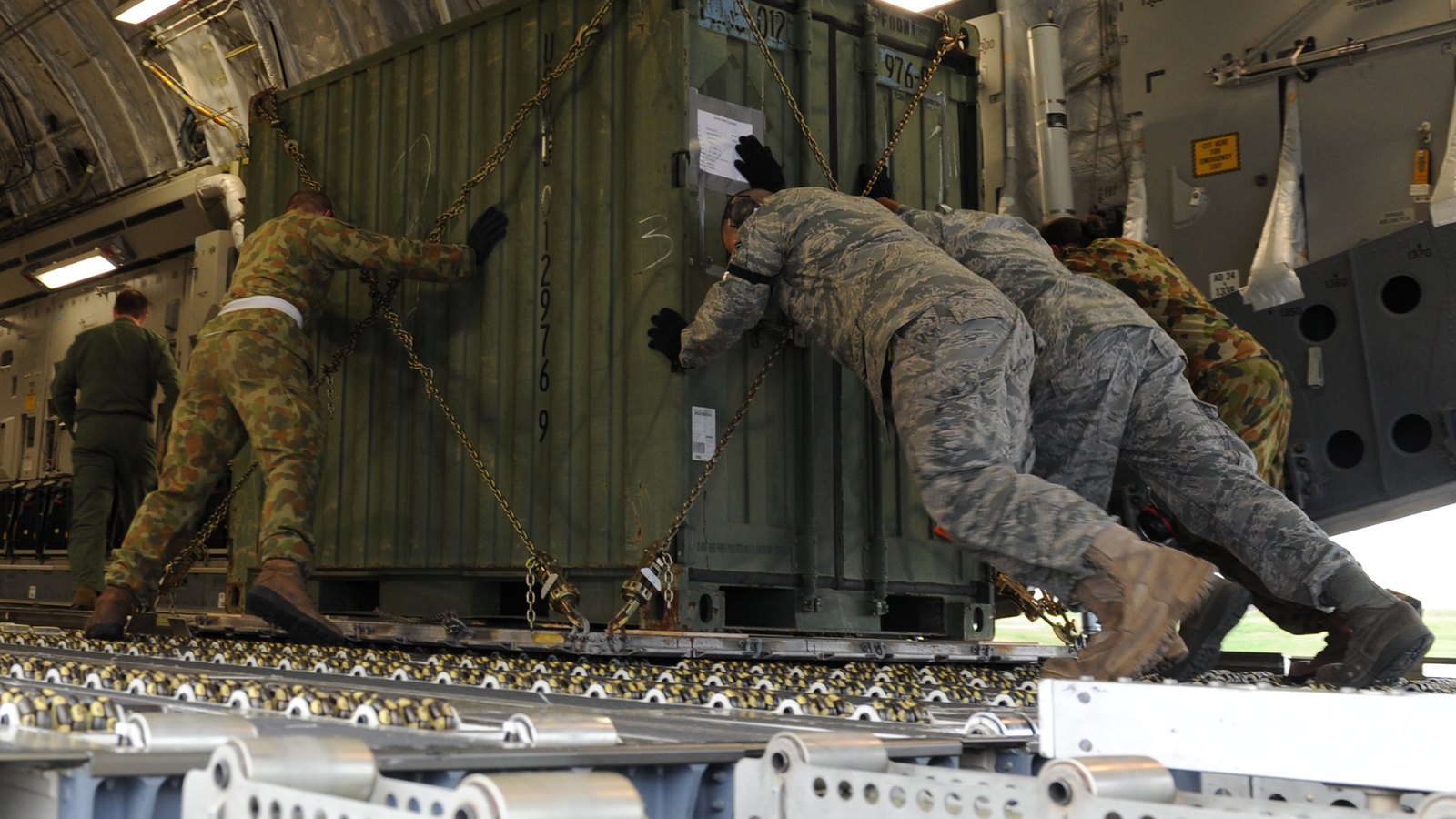
On November 24, 2026, the Department of Defense officially submitted an information collection extension to the Office of Management and Budget for the Global Air Transportation Execution System, published in the Federal Register under Docket ID DOD-2026-OS-2081. The clearance renewal governs port processing, cargo tracking, and passenger manifesting protocols that directly affect academic researchers, defense contractors, and university research personnel traveling aboard military airlift or transporting specialized scientific equipment to overseas field stations.
What the GATES Information Collection Extension Entails
Under the provisions of the Paperwork Reduction Act, the Office of the Secretary of Defense announced that the United States Transportation Command, a unified combatant command of the Department of Defense, submitted a 30-day notice for clearance to the Office of Management and Budget. The submission requests an extension without change for OMB Control Number 0704-0530, covering the Global Air Transportation Execution System (GATES). Document number 2026-23927, issued by Alternate OSD Federal Register Liaison Officer Aaron T. Siegel, formalizes the federal review process and establishes a public comment deadline of December 24, 2026.
The collection captures passenger and cargo manifesting data across aerial ports of debarkation and embarkation globally. Agency estimates indicate the collection affects 568,879 respondents annually, each submitting a single voluntary response. With an average response burden of approximately two minutes, the collection represents a total annual reporting burden of 18,963 hours across defense contractors, traveling personnel, and affiliated researchers.
GATES operates as the Department of Defense’s single enterprise port processing and manifesting system. The platform coordinates global passenger and materiel movements, tracking assets from port to port across aerial and surface logistics hubs. In addition to manifesting, the system facilitates administrative billing reconciliation for the Transportation Working Capital Fund, which finances defense mobility missions worldwide.
Key Operational and Technical Parameters
The GATES platform maintains operational interfaces across military logistics directorates, linking Air Mobility Command terminal operations (AMC/A4T) with the Military Surface Deployment and Distribution Command (SDDC/G3) and Defense Courier Divisions. System architecture enables terminal operators to process reservations, manifest cargo pallets, generate customs documentation, and track sensitive payloads in real time.
The operational scope and certified administrative figures for OMB Control Number 0704-0530 are detailed in the comparison table below:
| Metric / Parameter | Agency Certification | Operational Significance |
|---|---|---|
| OMB Control Number | 0704-0530 | Standard federal paperwork clearance tracking identifier |
| Federal Register Docket | DOD-2026-OS-2081 (Doc. 2026-23927) | Official 30-day review publication in Volume 91 |
| Operating Agency | USTRANSCOM / Air Mobility Command | Single manager for defense distribution and aerial ports |
| Annual Respondent Count | 568,879 respondents | Civilian, military, and contractor individuals manifested |
| Burden Per Response | 2 minutes | Standard passenger and cargo manifest entry time |
| Total Annual Burden Hours | 18,963 burden hours | Aggregate sector documentation time across all terminals |
| Obligation to Respond | Voluntary | Required only when utilizing military air transportation |
| Public Comment Deadline | December 24, 2026 | Final date for submitting formal comments to OMB |
The system collects identity, travel order, and customs details directly from individuals or institutional sponsors prior to embarkation. While categorized as voluntary under federal reporting standards, submitting the requested information is a mandatory prerequisite for obtaining boarding clearance or cargo authorization aboard military aircraft.
Statutory Framework and Regulatory Background
The operational authority for DoD passenger manifesting and cargo transit originates from statutory mandates governing military airlift. Under statutory guidelines compiled by the Cornell Law School Legal Information Institute, Title 10 of the United States Code, Section 2649 outlines legal parameters under which civilian passengers and commercial cargoes may be transported aboard Department of Defense vessels, vehicles, and aircraft. These provisions mandate accountability, cost recovery, and passenger tracking to safeguard flight safety and national security.
Originally developed in the 1990s as Air Mobility Command’s core terminal management system, GATES was expanded into a joint-service platform. In accordance with command directives documented by the U.S. Transportation Command, GATES unifies aerial port operations with surface distribution networks, integrating legacy systems such as the Worldwide Port System. This unified architecture feeds real-time transit data into the Global Transportation Network, providing in-transit visibility across defense logistics pipelines.
The collection also aligns with federal financial governance. Under Transportation Working Capital Fund accounting regulations, USTRANSCOM operates as a cost-recovery revolving fund. Every manifested passenger, research payload, and pallet tracked through GATES generates billing records utilized to invoice customer military branches, federal agencies, and contracted academic research programs.
Implications Across Defense Research and Logistics Sectors
The renewal of GATES manifests carries direct implications across the defense enterprise, national laboratories, and universities. For scientific programs engaged in remote fieldwork, such as atmospheric monitoring, oceanographic expeditions, and polar research, military airlift operated by Air Mobility Command frequently represents the only viable mode of deployment. Academic principal investigators, field engineers, and specialized research equipment must pass through GATES terminal screening before departing military airfields.
The Council on Governmental Relations (COGR), an association representing leading research universities, monitors federal compliance standards affecting academic research. Member institutions coordinating with defense sponsors must ensure that academic personnel deployed overseas maintain compliant travel documentation, export authorizations, and personnel vetting profiles. Predictable manifest processing through GATES prevents mission delays during time-sensitive scientific deployments.
Furthermore, the collection intersects with federal data governance initiatives. The system captures Controlled Unclassified Information, export-controlled technical data associated with scientific payloads, and sensitive personal identifiable information. As federal agencies intensify oversight of global supply chains and international travel, GATES functions as a vital checkpoint ensuring that only authorized personnel and vetted payloads enter military transit corridors.
What It Means for Universities and Research Administration Offices
For university research offices, sponsored project administrators, and principal investigators, the GATES information collection extension establishes operational compliance obligations. Research teams collaborating on defense awards must coordinate with export control and research security officers whenever project work requires deployment on military flights or shipment of scientific instruments through military air terminals. Compliance teams must verify that all personnel manifested through GATES possess valid credentials, travel clearances, and export authorizations for field equipment.
From an award management perspective, transportation fees incurred through the Defense Transportation System follow strict post-award principles. Universities managing federal awards under 2 CFR 200 Subpart D post-award requirements must ensure that military transportation billings reconciled through the Transportation Working Capital Fund are properly documented, allowable, and allocable to the sponsoring grant. Failure to retain corresponding manifest copies and flight orders can trigger questioned costs during Single Audit reviews.
Additionally, research administration offices should incorporate GATES documentation into internal audit procedures. Auditors reviewing university compliance against the OMB Compliance Supplement examine travel records and equipment provenance to confirm federal funds are expended in accordance with statutory guidelines. Coordinating with the institution’s cognizant federal agency ensures that indirect cost rates and travel direct charges reflect negotiated allowances, minimizing audit disallowance risks.
Public Comment Procedures and OMB Review Timelines
Following publication in the Federal Register, the proposed GATES collection extension entered a 30-day public comment window that concludes on December 24, 2026. Interested stakeholders, including university research consortia, scientific organizations, and defense contractors, are invited to submit comments regarding whether the collection is necessary for agency functions, the accuracy of the estimated burden, and methods to minimize reporting burden through automated submission techniques.
Written comments must be submitted directly to the Office of Information and Regulatory Affairs within OMB through the federal regulatory portal at reginfo.gov, referencing OMB Control Number 0704-0530 and Docket ID DOD-2026-OS-2081. Inquiries regarding DoD clearance procedures may also be directed to DoD Clearance Officer Reginald Lucas at Washington Headquarters Services.
Following the comment window close on December 24, 2026, OMB will conduct its final review under the Paperwork Reduction Act. Upon approval, OMB will issue a clearance notice extending the authorization of GATES manifesting procedures for an additional three-year operational cycle, ensuring continuity for defense logistics and research transit worldwide.
Sources
- Federal Register: Submission for OMB Review; Comment Request, checked 2026-11-29
- U.S. Transportation Command: About USTRANSCOM, checked 2026-11-29
- Cornell Law School Legal Information Institute: 10 U.S. Code Section 2649, checked 2026-11-29
- Council on Governmental Relations: About COGR, checked 2026-11-29






