
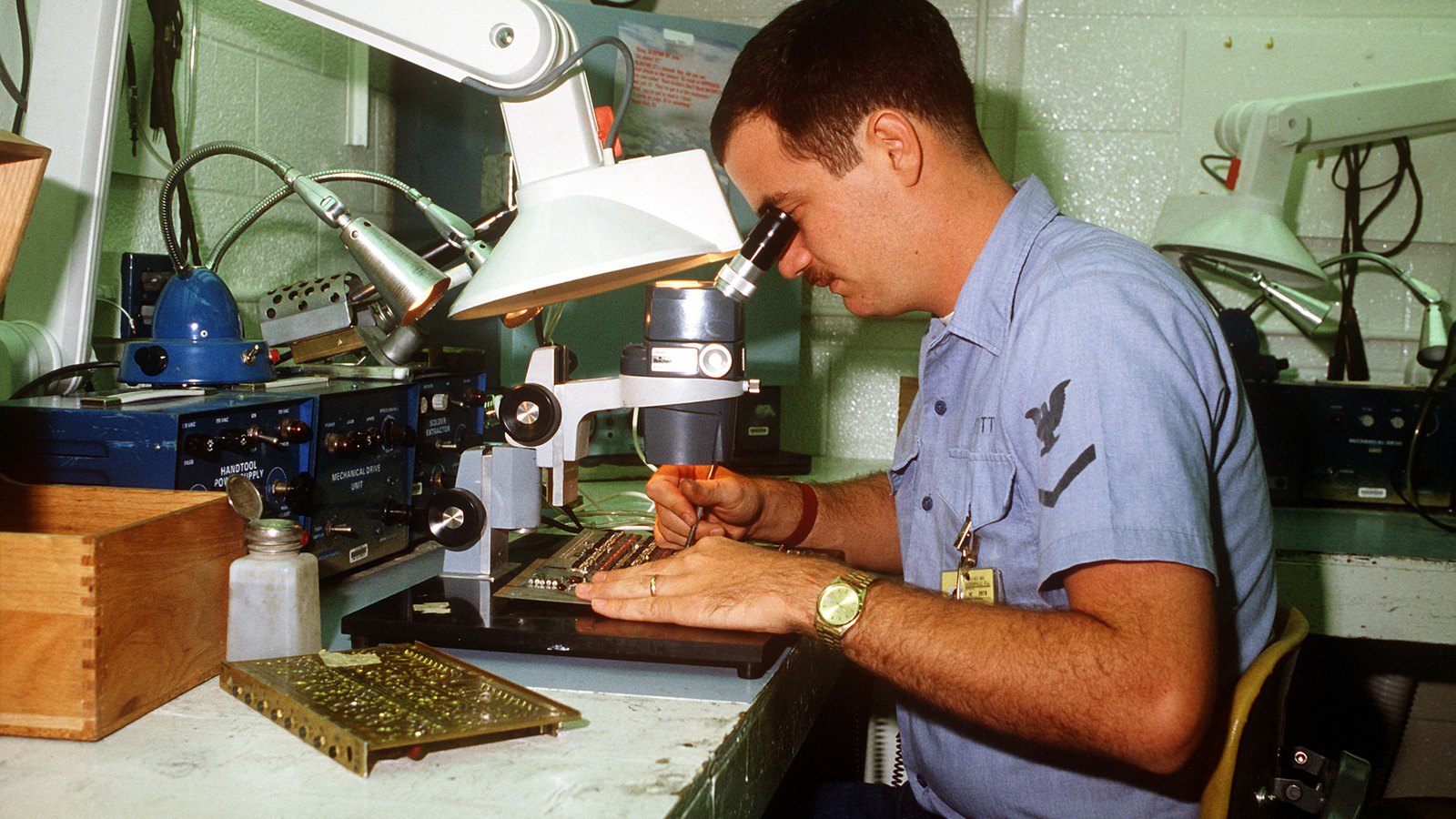
On November 24, 2026, the Department of Defense published official notice that it has renewed the federal advisory charter for the Department of Defense Wage Committee, sustaining the statutory body that oversees prevailing rate wage surveys and compensation schedules for over 240,000 trade and technical personnel across military installations, naval engineering facilities, and defense research laboratories, with direct consequences for defense contract costing and academic research facility recharge rates.
Charter Renewal and Federal Register Notice Details
The formal renewal was published in Federal Register Document Number 2026-23946 (Volume 91, pages 75836–75837) by the Office of the Secretary of Defense, signed by Alternate OSD Federal Register Liaison Officer Aaron T. Siegel. The action renews the Department of Defense Wage Committee as a discretionary federal advisory committee under Chapter 10 of Title 5 of the United States Code, commonly cited as the Federal Advisory Committee Act (FACA), and Title 41 Code of Federal Regulations Part 102-3.
Under federal consultation mandates, agency leadership submitted a formal public interest determination to the General Services Administration Committee Management Secretariat, with a copy to the Office of Management and Budget. The determination certifies that the committee performs essential advisory duties that cannot be duplicated by any other federal body or cost-effective mechanism. Public and institutional input is coordinated through Designated Federal Officer Karl Fendt and Advisory Committee Management Officer Jim Freeman, allowing universities, contractors, and labor organizations to submit written statements regarding survey specifications before bi-weekly meetings.
Operating Budget, Membership Structure, and Governance Metrics
Operating with an annual budget of $54,896.54, the committee maintains a highly cost-efficient structure while governing pay scales across 240,000 positions. Direct federal personnel expenses comprise 0.3 full-time equivalent staff support totaling $47,160.87 in basic pay and cost of living allowances. Program element contract support requires $5,592.00, while staff and member travel reimbursements total $2,143.67. Under Section 173 of Title 10 of the United States Code, committee members receive no salary or professional stipends, receiving only standard travel and per diem reimbursements.
The committee consists of not more than five members. The chair and two members are designated by agency leadership, while two members are designated by the two labor organizations representing the largest numbers of defense wage employees under exclusive recognition.
| Governance Metric | Operational Specification | Statutory or Regulatory Authority |
|---|---|---|
| Advisory Classification | Discretionary Federal Advisory Committee | 5 U.S.C. Chapter 10 and 41 CFR Part 102-3 |
| Annual Operating Cost | $54,896.54 total estimated annual expenditure | Federal Register Public Interest Determination |
| Personnel Commitment | 0.3 Full-Time Equivalent ($47,160.87 annual cost) | DoD FY Operating Budget Allocation |
| Contract Support | $5,592.00 annual program support contract costs | DoD Program Element Line Item |
| Travel and Per Diem | $2,143.67 reimbursable expenses for staff and members | 10 U.S.C. 173 Travel Reimbursement Authority |
| Membership Composition | 5 members (Chair and 2 agency appointees, 2 labor appointees) | 5 CFR 532.227(b) and 5 CFR 532.227(b)(1) |
| Covered Workforce | 240,000+ blue-collar crafts and trades employees | 5 U.S.C. 5343 Prevailing Rate Provisions |
| Jurisdictional Scope | 131 Appropriated Fund and 118 Nonappropriated Fund wage areas | DoD Wage Survey Directory and DCPAS Schedules |
| Meeting Cadence | Bi-weekly schedule (approximately 24 meetings annually) | 5 CFR 532.227 Operational Timetable |
Statutory Framework of the Federal Wage System and Advisory Rules
The substantive mandate of the committee is anchored in the statutory architecture of the Federal Wage System codified at 5 U.S.C. 5341–5349. Under Section 5343(a)(3), Congress designated the Department of Defense as the lead agency responsible for conducting local wage surveys, analyzing economic compensation data, and developing prevailing rate pay schedules for trade and craft occupations across executive agencies. This framework ensures public-sector craft pay maintains geographic parity with private-sector rates.
Government-wide classification standards and survey policies are directed by the U.S. Office of Personnel Management Federal Wage System framework, supplemented by the OPM Operating Manual S3-2. These rules require lead agencies to conduct recurring surveys across defined wage areas. Specific procedural requirements are codified under Electronic Code of Federal Regulations 5 CFR 532.227 agency wage committee rules, which mandate formal committee consideration before the agency may issue wage schedules or commence wage change surveys.
Labor Representation and Interagency Compensation Administration
The statutory bipartite composition established under 5 CFR 532.227(b)(1) ensures direct labor-management participation in prevailing rate setting. Two members represent the labor organizations with the largest exclusive recognition units within the defense establishment, traditionally including the American Federation of Government Employees and the International Association of Machinists and Aerospace Workers. Although a majority vote constitutes an official committee recommendation, individual members retain the statutory right to file formal minority reports regarding disputed survey boundaries or statistical adjustments.
Approved schedules are administered by the Defense Civilian Personnel Advisory Service compensation policy directorate. These adjustments are distributed each pay period for implementation across all executive departments employing prevailing rate personnel, including the Department of Energy, NASA, and the Department of Veterans Affairs. This interagency distribution conforms to U.S. General Services Administration Committee Management Secretariat rules under Title 41 of the Code of Federal Regulations, ensuring governance transparency across the federal government.
Implications for Defense Research Facilities, University Contracts, and Cost Accounting
Although federal wage schedules are widely associated with logistics complexes and shipyards, they govern specialized technicians across major defense research laboratories. Facilities such as the Naval Research Laboratory, the Army Research Laboratory, and the Air Force Research Laboratory employ precision instrument machinists, experimental fabricators, wind tunnel technicians, and research vessel crews classified under prevailing rate schedules.
When universities collaborate with defense laboratories on cooperative agreements, university-affiliated research center task orders, and joint facility arrangements, federal wage scales serve as crucial cost baselines. Specialized technician and engineering support salaries are budgeted as direct costs in sponsored research agreements. Adjustments in regional prevailing rates directly alter baseline labor projections for multi-year defense development programs.
Academic institutions collaborating with federal laboratories must also maintain strict compliance with sponsored project accounting rules. Shared technical facility personnel require meticulous time and effort reporting to confirm that labor charges reflect actual project contributions during federal audit examinations.
Furthermore, prevailing wage shifts alter operating costs for university recharge centers, cleanrooms, and testing facilities. Because technical support expenses feed into institutional overhead pools, changes in federal wage benchmarks influence institutional calculations for indirect cost recovery. During rate negotiations, the assigned cognizant federal agency—such as the Office of Naval Research for defense-focused universities—evaluates local prevailing wage benchmarks to verify the reasonableness of proposed institutional labor and service center recharge allocations.
Operational Schedule, Public Participation, and Next Steps
The Department of Defense Wage Committee convenes approximately 24 times annually on a bi-weekly cadence. This operational schedule ensures that wage survey specifications, local survey reports, and pay schedule adjustments for 131 Appropriated Fund and 118 Nonappropriated Fund areas are reviewed and authorized without delay across the 240,000-employee workforce.
Adjusted wage schedules will continue to be issued on a pay-period basis through DCPAS. Higher education research administrators, labor representatives, and contractors may submit written feedback on survey specifications or dominant industry determinations to Designated Federal Officer Karl Fendt at (571) 372-1618 or via email at [email protected]. As a discretionary advisory committee, the charter remains subject to biennial GSA Secretariat reviews and FACA transparency standards.
Sources
- Federal Register: Renewal of Department of Defense Federal Advisory Committees-Department of Defense Wage Committee, checked 2026-11-29
- Electronic Code of Federal Regulations: 5 CFR 532.227 — Agency wage committee, checked 2026-11-29
- Defense Civilian Personnel Advisory Service: Federal Wage System-Compensation-Policy, checked 2026-11-29
- U.S. Office of Personnel Management: Federal Wage System, checked 2026-11-29
- U.S. General Services Administration: Federal Advisory Committee Act, checked 2026-11-29






