
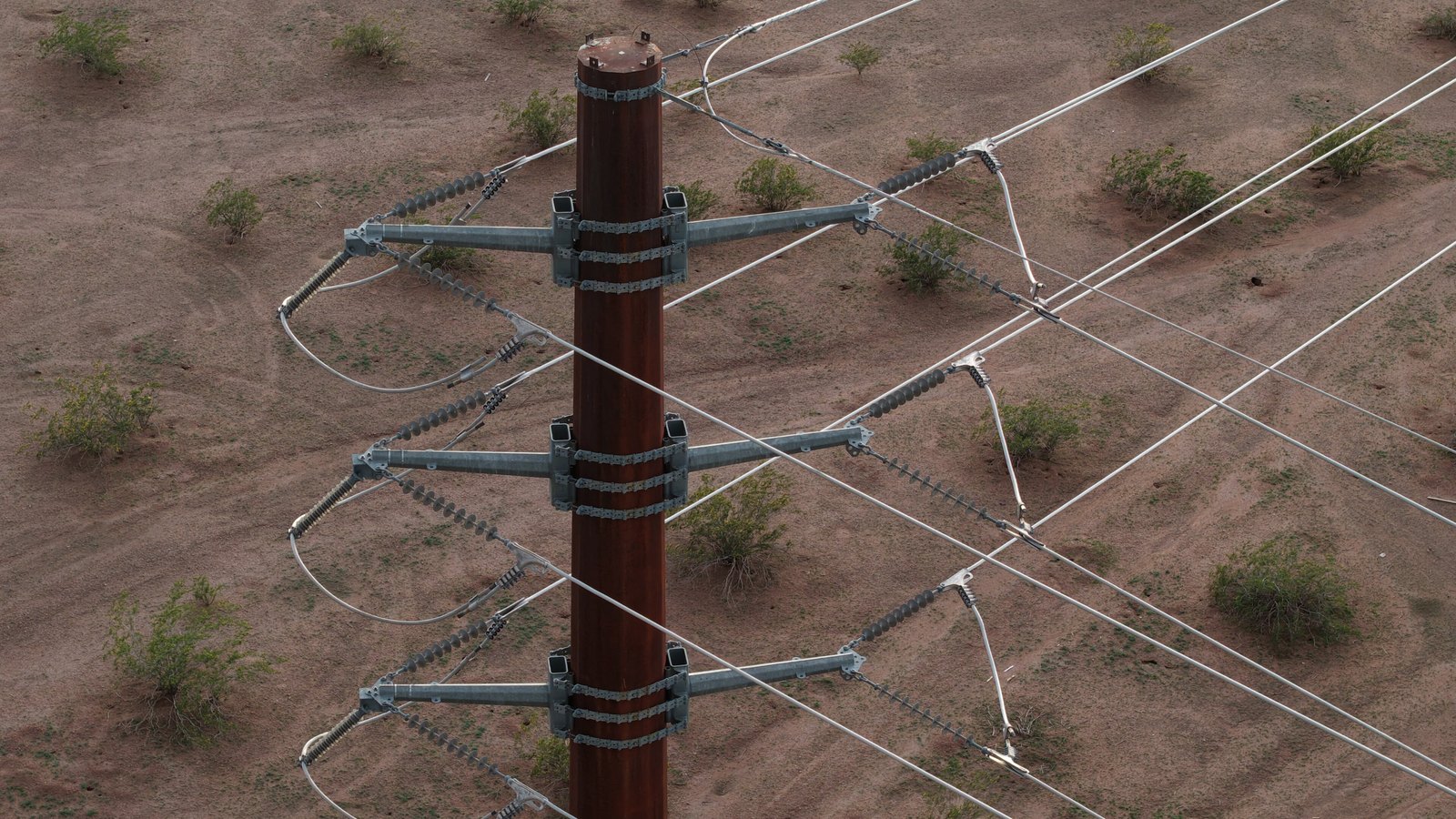
On November 27, 2026, the US Department of Energy Office of Electricity docketed an application from Hill County Electric Cooperative, Incorporated (Docket No. EA-118-A, FR Doc. 2026-24273) to amend its presidential permit authorization to transmit electric energy from Montana across the international border to Canada. The proposed amendment expands authorized export capacity from 6 MW to 8 MW, establishing notable operational and compliance precedents for distribution systems, international grid interconnections, and cross-border energy researchers.
Application Scope and Transmission Specifications
Hill County Electric Cooperative, Incorporated (HCE), an electric distribution cooperative based in Havre, Montana, applied to the US Department of Energy (DOE) for an amendment to its existing cross-border export authorization. Originally granted under Order No. EA-118 and Presidential Permit PP-118 on February 6, 1997, the authorization governs power delivery over an international 69-kilovolt (kV) transmission line in northern Montana. HCE filed its initial amendment request on August 20, 2026, followed by a revised submission on September 30, 2026.
The transmission line delivers electric energy across the United States–Canada border to the Wildhorse pumping station in Alberta, Canada. The Wildhorse facility is operated by Express Pipeline Ltd., an operating subsidiary of Enbridge Inc. Enbridge requested the capacity increase to support potential throughput expansion along the Express Pipeline crude oil transportation system, which imports Canadian crude oil directly into United States refining markets.
HCE seeks to raise its authorized export capacity across the existing border facilities from 6 megawatts (MW) to an instantaneous transmission capacity of up to 8 MW. This net 2 MW expansion requires affirmative federal regulatory approval under the Federal Power Act to ensure domestic reliability and statutory compliance.
Technical Parameters and Upper Missouri Zone Criteria
In evaluating cross-border export amendments, regulators prioritize whether additional export commitments jeopardize service to domestic consumers or strain regional transmission networks. HCE conducted an engineering load flow analysis concluding that the proposed 2 MW increase falls well within its existing system capability and will not adversely affect its ability to reliably serve native load requirements in Montana.
The technical filing also addressed regional reliability benchmarks under the Upper Missouri Zone (UMZ) Zonal Planning Criteria. The UMZ guidelines establish that load growth exceeding 4 MW qualifies as an unplanned load requiring formal balancing authority approval. Because HCE’s proposed 2 MW expansion remains below this 4 MW screening threshold, the addition is classified as planned load growth, exempting the cooperative from separate balancing authority pre-authorization prior to federal review.
The table below summarizes the operational metrics and regulatory baselines governing Docket No. EA-118-A:
| Operational Parameter | Current Baseline (Order EA-118) | Proposed Amendment (Docket EA-118-A) | Regulatory and Engineering Benchmark |
|---|---|---|---|
| Instantaneous Export Capacity | 6 MW | 8 MW | Federal Power Act Section 202(e) reliability ceiling |
| Incremental Capacity Change | 0 MW (Established 1997) | +2 MW (+33.3% expansion) | Below UMZ 4 MW unplanned load threshold |
| Transmission Voltage Level | 69 kV line | 69 kV line | Presidential Permit Docket PP-118 facility specification |
| Border Destination | Wildhorse Station, Alberta | Wildhorse Station, Alberta | Enbridge Express Pipeline crude oil transport infrastructure |
| Regional Planning Zone | Upper Missouri Zone (UMZ) | Upper Missouri Zone (UMZ) | UMZ Zonal Planning Criteria screening standards |
| Statutory Authority | FPA Section 202(e) | FPA Section 202(e) | 10 CFR 205.300 and Redelegation Order S3-DEL-OE1-2026 |
HCE affirmed that all exports will comply with applicable interconnection, transmission, scheduling, and reliability standards. The cooperative confirmed that operations at 8 MW will not disrupt the coordinated operation of the bulk power network or reduce electricity availability to domestic customers.
Regulatory Framework Under the Federal Power Act and NEPA
Electricity exports from the United States are governed by Section 202(e) of the Federal Power Act (FPA), codified at 16 U.S.C. 824a(e). Originally vested in the Federal Power Commission, regulatory jurisdiction was transferred to the Secretary of Energy under Sections 301(b) and 402(f) of the Department of Energy Organization Act (42 U.S.C. 7151(b), 7172(f)). Export authorization rules are established at 10 CFR Part 205.
Pursuant to Redelegation Order No. S3-DEL-OE1-2026, executed on January 8, 2026, the Secretary of Energy delegated export authorization authority to the Assistant Secretary for the Office of Electricity. Catherine Jereza, Assistant Secretary for the Office of Electricity, signed the notice on November 24, 2026, and Alternate Federal Register Liaison Officer Jennifer Hartzell authorized electronic filing on November 25, 2026.
Under Section 202(e), the DOE must determine that the proposed export does not impair the sufficiency of domestic electric supply or impede the coordinated use of the electric transmission grid. The agency will also complete an environmental review under the National Environmental Policy Act of 1969 (NEPA; 42 U.S.C. 4321 et seq.), 10 CFR Part 1021, and DOE’s June 2026 Implementing Procedures.
System Reliability Analysis and Cross-Border Energy Flows
Administered through the DOE Office of Electricity International Electricity Regulation program, cross-border authorizations balance commercial energy demand against localized grid integrity. Unlike bulk high-voltage transmission interconnects operating at 230 kV or 500 kV, HCE’s facility represents a radial 69-kV line dedicated to energizing industrial pumping loads across the international boundary.
In rural northern Montana, distribution feeders span wide distances with limited alternate routing. Engineering assessments indicate that radial cross-border connections require continuous monitoring to ensure voltage stability and thermal line limits are maintained during seasonal peak demand. DOE authorization conditions mandate that domestic retail customers retain service priority, ensuring that cross-border exports remain interruptible during domestic grid emergencies.
Implications for Power System Researchers and Regulatory Affairs
The proceeding yields practical relevance for researchers, academic centers, and utility analysts tracking cross-border energy flows and regulatory compliance. Power systems researchers examining regional infrastructure rely on spatial transmission datasets such as the EIA Energy Atlas to map border crossings, substation connections, and capacity bottlenecks.
For research teams using open-source power network modeling tools such as PyPSA, the HCE docket provides real-world parameters for modeling international feeder constraints, pipeline pumping loads, and boundary transfer limits. Simulating cross-border distribution ties enables researchers to evaluate how localized export loads interact with regional wholesale power markets and balancing areas.
Scholars publishing in journals such as Sustainable Energy, Grids and Networks analyze how regulatory thresholds shape utility operations. University administrators in regulatory affairs view Docket EA-118-A as a model for navigating administrative delegations, environmental reviews, and technical criteria. Furthermore, research compliance officers managing export control and international collaboration distinguish between physical energy exports authorized under the FPA and technical data exchanges regulated under national security export controls.
Public Comment Timeline and Next Procedural Steps
Following public inspection on November 27, 2026, the application notice will be published in the Federal Register on November 30, 2026 (Document No. 2026-24273). This publication initiates a 30-day public comment and intervention period, establishing December 30, 2026, as the deadline for public and stakeholder input.
Comments and petitions to intervene must be submitted electronically to [email protected], marked with OE Docket No. EA-118-A. Filings will be posted on the DOE pending applications website. Following the close of the comment window, the Office of Electricity will finalize its NEPA review and grid reliability evaluation prior to issuing a final determination.
Sources
- Federal Register: Application to Amend Authorization to Export Electric Energy; Hill County Electric Cooperative, Incorporated, checked 2026-11-28
- Department of Energy Office of Electricity: International Electricity Regulation, checked 2026-11-28
- Legal Information Institute: 16 U.S. Code Section 824a – Interconnection and coordination of facilities; emergencies; transmission to foreign countries, checked 2026-11-28
- Legal Information Institute: 10 CFR Part 205 – Administrative Procedures and Sanctions, checked 2026-11-28






