
In a dual filing (FR Docs. 2026-24275 and 2026-24276, Dockets EA-491-A and EA-490-A) placed on public inspection November 27, 2026, the Department of Energy docketed applications from Trafigura Trading LLC to renew cross-border electricity export authorizations to Mexico and Canada. The proceedings establish open-access transmission conditions and grid reliability reviews informing university power-systems modeling and cross-border energy research.
Dual Export Renewal Filings Docketed by the Office of Electricity
On November 27, 2026, the United States Department of Energy (DOE) Office of Electricity published formal inspection notices for two renewal applications submitted by Trafigura Trading LLC. The companion filings request renewed five-year authorizations to export wholesale electric energy across the southern and northern United States borders. Designated as OE Docket No. EA-491-A for exports to Mexico and Docket EA-490-A for exports to Canada, the applications follow initial filings submitted on October 2, 2026, with official Federal Register publication scheduled for November 30, 2026.
The companion Canadian proceeding is detailed under DOE Docket No. EA-490-A for Trafigura Trading LLC electricity exports to Canada. Trafigura Trading LLC is a Delaware limited liability company based in Houston, Texas, holding market-based wholesale power sales authority from the Federal Energy Regulatory Commission (FERC). Trafigura previously received five-year export permits on December 3, 2021, under Orders EA-491 and EA-490. In its filings, Trafigura disclosed that its ultimate controlling entity is the Farringford Foundation, a Panamanian private interest foundation.
The docketing follows a separate cross-border filing by SociVolta Inc. under Docket EA-492-A (FR Doc. 2026-24272), underscoring active market participation across North American interconnections governed by federal electricity trade regulations.
Application Terms, Interconnection Facilities, and Open-Access Standards
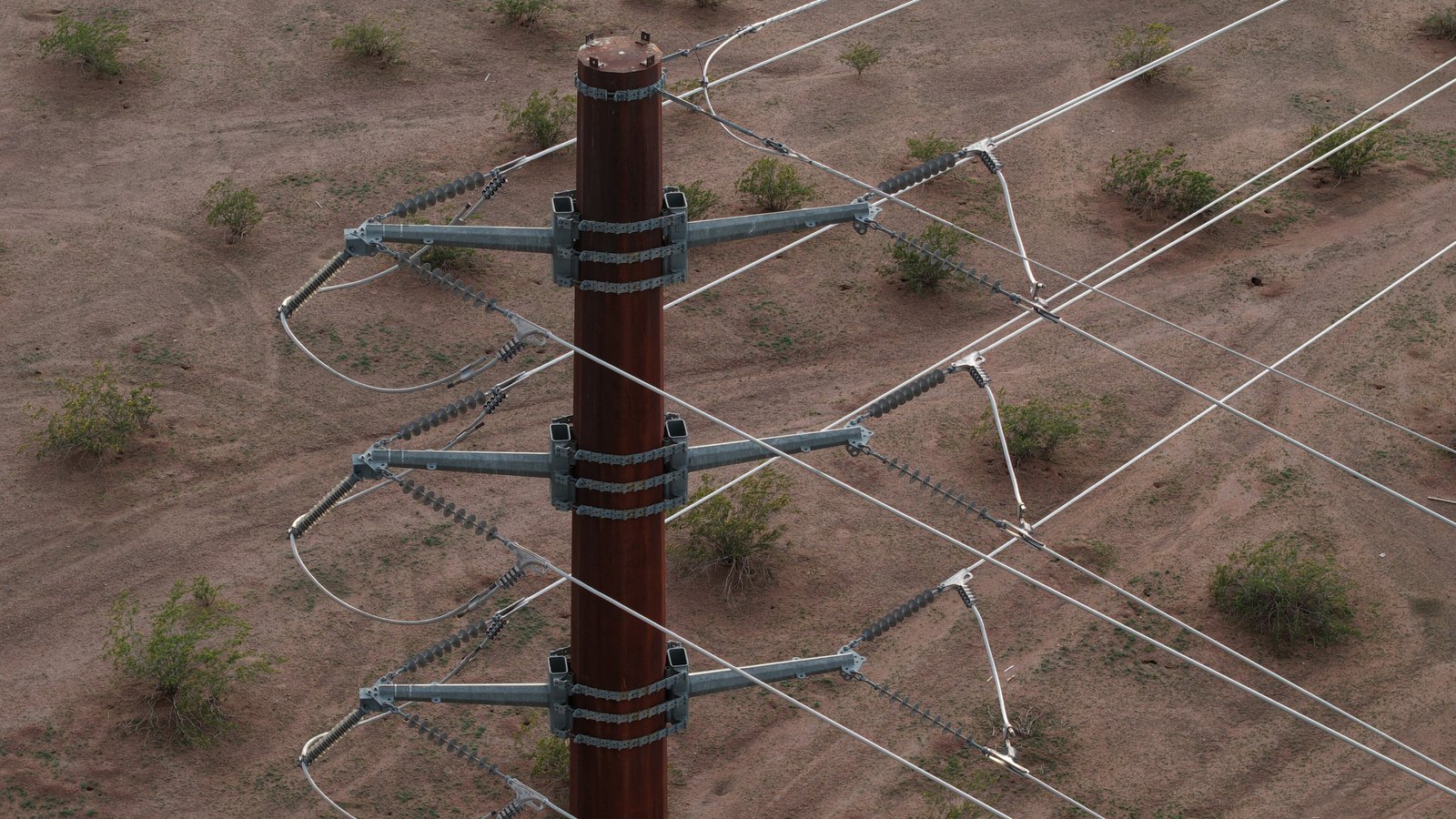
Trafigura’s export applications do not propose the construction of new transmission infrastructure. Disclosures indicate that beyond affiliations with Wolverine Fuels, LLC and Mountain Creek Power, LLC, Trafigura owns or controls no physical generation or transmission assets, nor does it operate as an electric utility. All exports will rely on existing international transmission lines previously authorized by Presidential permits issued under Executive Order 10485, as amended, and operated for open-access third-party transmission.
The table below summarizes the key legal, administrative, and procedural metrics governing the companion dockets:
| Regulatory Provision | Mexico Export Docket (EA-491-A) | Canada Export Docket (EA-490-A) | Statutory Authority and Administrative Baseline |
|---|---|---|---|
| Docket Identifier | OE Docket No. EA-491-A | OE Docket No. EA-490-A | DOE Office of Electricity proceeding designation |
| Federal Register Document | FR Doc. 2026-24275 | FR Doc. 2026-24276 | Scheduled publication: November 30, 2026 |
| Statutory Authority | Federal Power Act Section 202(e) | Federal Power Act Section 202(e) | 16 U.S.C. 824a(e); 10 CFR 205.300 et seq. |
| Authorization Period | 5-year renewal term | 5-year renewal term | Standard maximum authorization duration |
| Border Facilities Used | Authorized facilities under EO 10485 | Authorized facilities under EO 10485 | Existing open-access international transmission lines |
| Delegated Authority | Assistant Secretary, Office of Electricity | Assistant Secretary, Office of Electricity | Redelegation Order No. S3-DEL-OE1-2026 |
| Intervention Filing Fee | $15 formal motion fee | $15 formal motion fee | DOE administrative procedural requirement |
Power transfers must conform to regional transmission organization (RTO) scheduling tariffs, existing transmission reservations, and line loading limits to prevent localized transmission congestion.
Statutory Architecture and Cross-Border Interconnection Framework
Regulation of cross-border electricity flows is grounded in 16 U.S.C. 824a, the statutory authority for interconnection and transmission coordination under the Federal Power Act. Section 202(e) establishes that no entity may transmit electric energy from the United States to a foreign country without an order from the Department of Energy. Regulatory authority originally held by the Federal Power Commission was transferred to DOE under Sections 301(b) and 402(f) of the DOE Organization Act (42 U.S.C. 7151(b) and 7172(f)), and subsequently redelegated to the Assistant Secretary for Electricity on January 8, 2026, under Redelegation Order No. S3-DEL-OE1-2026.
As outlined on the DOE Office of Electricity Federal Power Act Section 202(e) program overview, approval requires satisfying a two-prong statutory sufficiency standard: the proposed export must not impair the sufficiency of electric supply within the United States, and it must not impede or tend to impede the coordinated use of regional transmission facilities. This review ensures domestic reliability margins remain intact during peak demand conditions.
Applications also undergo environmental review pursuant to the National Environmental Policy Act (NEPA) of 1969 (42 U.S.C. 4321 et seq.), DOE NEPA regulations at 10 CFR Part 1021, and DOE Implementing Procedures issued in June 2026. Because power marketers utilize pre-existing physical transmission corridors, these authorizations qualify for categorical exclusions provided flows stay within rated physical capacities.
Grid Reliability Oversight and Industry Perspectives
Cross-border power transfers require ongoing technical coordination between federal regulators, system operators, and reliability coordinators. Bulk power system operations across North America are evaluated in North American Electric Reliability Corporation Reliability Assessments for international interconnections, which track seasonal adequacy, transfer capabilities, and voltage stability across regional interconnections.
System planners emphasize that while international power transactions support market liquidity and regional supply balancing, operational safeguards remain essential. System operators retain full curtailment authority to interrupt export schedules if emergency conditions or contingency events threaten domestic grid stability. Legal observers note that the Section 202(e) docketing process provides essential transparency, ensuring wholesale power marketers operate within public open-access standards.
Implications for Power-Systems Research and University Modeling
The public docketing of cross-border export permits provides critical operational parameters for computational researchers, university energy institutes, and power-systems engineers. Open-source grid modeling frameworks such as PyPSA (Python for Power System Analysis), GridPath, and MATPOWER require accurate representations of international transfer capabilities and export restrictions. Tracking Section 202(e) dockets enables researchers to calibrate multi-regional capacity expansion models and simulate cross-border power exchanges under varying decarbonization scenarios.
In academic energy-policy research, cross-border transmission flows represent a vital empirical component of continental grid planning. Studies evaluating renewable integration often draw structural assumptions from the EIA Annual Energy Outlook, where international electricity exchanges with Canada and Mexico shape long-term generation capacity projections. Peer-reviewed research in journals such as Sustainable Energy, Grids and Networks demonstrates that cross-border transmission coordination substantially lowers the balancing costs of intermittent wind and solar generation across national boundaries.
In addition, university research offices and energy testbed managers must differentiate between commercial electricity transactions and institutional compliance mandates. While academic research laboratories testing grid hardware do not export bulk wholesale energy, international collaborations that share proprietary telemetry, power flow algorithms, or critical infrastructure datasets require rigorous compliance. Institutional compliance officers frequently determine when software models require a formal export license, while university research security staff apply research security standards to protect proprietary power-systems code from unauthorized foreign dissemination.
Public Comment Deadlines and Procedural Schedule
Following publication on public inspection, official notices for Dockets EA-491-A and EA-490-A will appear in the Federal Register on November 30, 2026. This initiates a 30-day public comment and intervention period that closes on December 30, 2026.
Interested parties wishing to participate must file electronic comments or petitions to intervene with the Office of Electricity at [email protected], referencing the relevant docket number. Formal motions to intervene require the standard $15 administrative filing fee. Following the comment window, DOE will complete its reliability and environmental evaluations prior to issuing five-year export authorization orders.
Sources
- Federal Register: Public Inspection: Importation or Exportation of Liquified Natural Gas or Electric Energy; Applications, Authorizations, etc.: Trafigura Trading LLC, checked 2026-11-28
- Federal Register: Public Inspection: Importation or Exportation of Liquified Natural Gas or Electric Energy; Applications, Authorizations, etc.: Trafigura Trading LLC, checked 2026-11-28
- Department of Energy Office of Electricity: International Electricity Regulation, checked 2026-11-28
- Legal Information Institute: 16 U.S. Code Section 824a – Interconnection and coordination of facilities; emergencies; transmission to foreign countries, checked 2026-11-28
- North American Electric Reliability Corporation: Reliability Assessments, checked 2026-11-28






