
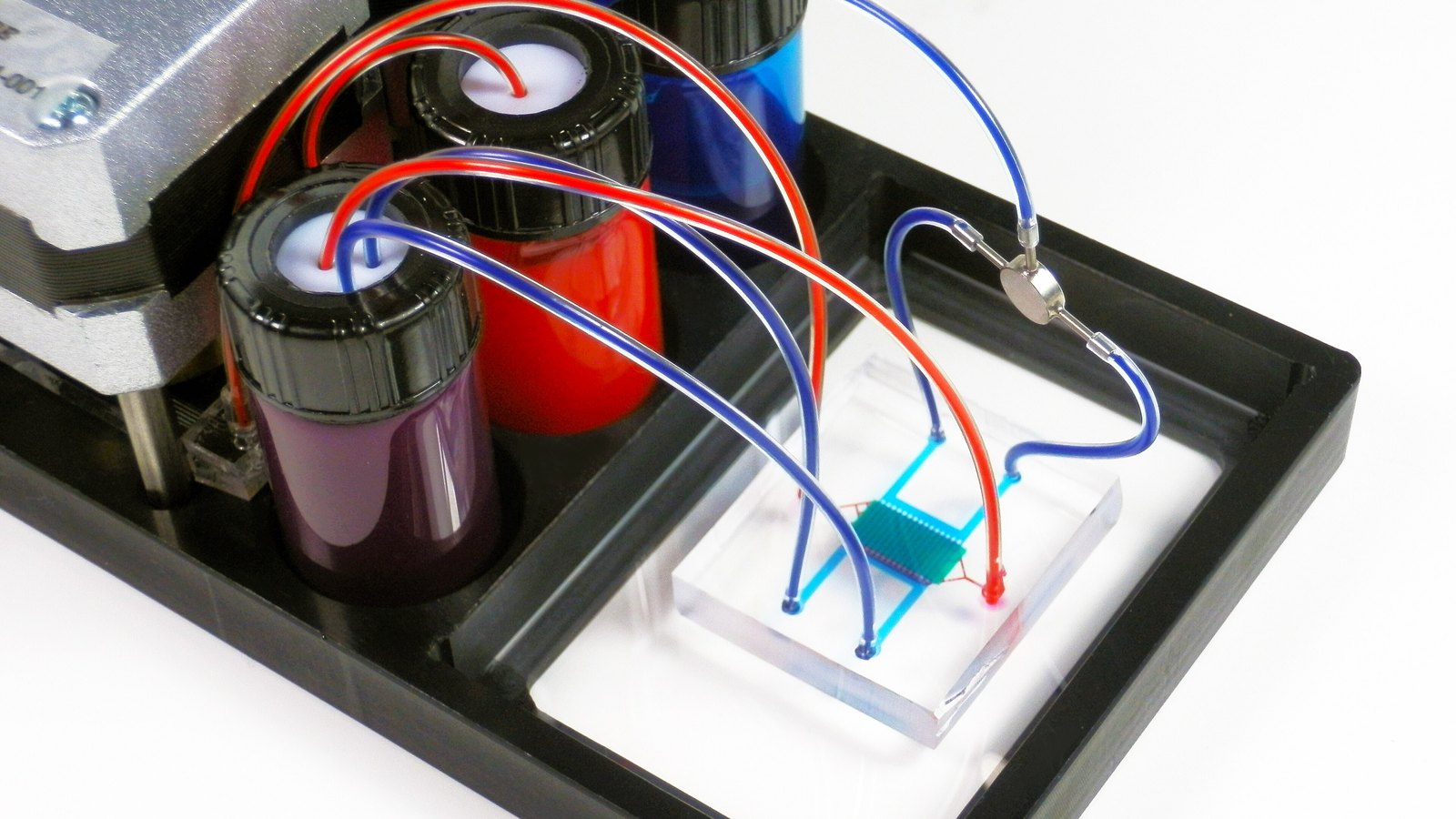
Following its decision earlier today to establish the Alternative Methods Expert Committee, covered in CASRAI’s report on the Animals in Science Committee recommendations, the UK Government published its formal one-year progress report on the Replacing Animals in Science Strategy on 27 November 2026, detailing operational progress across all 26 strategy commitments and confirming the full domestic phase-out of all eight initial animal testing targets for regulatory safety.
First-year milestones and delivery across 26 commitments
The report, published jointly by the Department for Science, Innovation and Technology (DSIT) and the Home Office, reviews delivery since the UK national strategy launched in November 2025. Across the 26 cross-governmental commitments, the review confirms that five commitments have been completed, ten remain on track against published schedules, and eleven have achieved intermediate milestones while shifting completion horizons into 2027.
Completed commitments include annual quantification of second-species testing, cross-departmental ministerial leadership, formal DSIT involvement in commissioning scientific advice, the resumption of the public attitudes survey on animal research, and the rollout of an outcome-focused KPI scorecard. This framework operationalises non-animal technologies (NATs) across universities, research institutes, and regulatory authorities.
Crucially, the report confirms the domestic phase-out of animal testing across all eight procedures in “Basket 1”. UK regulators—including the MHRA, the Health and Safety Executive, the Environment Agency, and the Veterinary Medicines Directorate—verified that animal testing is no longer required for domestic approvals in skin irritation, eye irritation, skin sensitisation, and pyrogenicity. The rabbit pyrogen test was deleted from the British Pharmacopoeia in 2025, and regulators confirmed that in vivo batch potency testing for botulinum toxin and adventitious agent testing for human biologicals are no longer conducted for UK release.
Baskets framework progress and regulatory testing transitions
The UK strategy groups animal procedures into a tiered “baskets” framework based on scientific readiness, technical validation, and international alignment. Basket 1 covers near-term replacements, Basket 2 targets medium-term phase-outs through 2030, and Basket 3 addresses long-term systemic testing challenges extending to 2035.
In Basket 2, the Home Office confirmed that zero active project licences authorise the forced swim test (FST) for depression modelling, with a policy against issuing future licences. Collaborative work with the NC3Rs aims to validate alternative neurobiological assays for antidepressant screening by the end of this parliament. In pharmaceuticals, NC3Rs and Innovate UK awarded £2 million in 2026 for artificial intelligence and organ-on-a-chip systems to reduce dog and non-human primate use in pharmacokinetic studies by 35% and cardiovascular safety studies by 50% by 2030.
The table below summarizes the core commitments, target timelines, and delivery statuses across the three baskets:
| Strategy basket | Targeted procedure | Timeline | Status | Current delivery milestone |
|---|---|---|---|---|
| Basket 1 (Short-term) | Pharmacopeial pyrogen testing | End of 2025 | Achieved | Rabbit pyrogen test removed from British Pharmacopoeia; in vitro monocyte activation tests adopted. |
| Basket 1 (Short-term) | Skin, eye, and sensitisation testing | End of 2026 | Achieved | All UK regulators confirmed non-animal methods satisfy domestic regulatory requirements. |
| Basket 1 (Short-term) | First-in-human biologicals guidance | End of 2026 | Achieved | MHRA guidance permits clinical trial filings supported solely by non-animal data. |
| Basket 1 (Short-term) | Botulinum toxin potency testing | End of 2027 | Achieved | Home Office confirmed zero in vivo LD50 batch testing conducted for commercial product release. |
| Basket 2 (Medium-term) | Forced swim test (FST) | End of parliament | Ongoing | Zero active depression licences; alternative antidepressant screening assays in validation. |
| Basket 2 (Medium-term) | Fish acute toxicity (UK REACH) | End of 2028 | Ongoing | NC3Rs roundtable established roadmap to replace fish toxicity testing with cell-based assays. |
| Basket 2 (Medium-term) | Dog and primate PK studies (-35%) | 2030 | Ongoing | £2 million deployed across microfluidic organ-chips and computational ADME predictive platforms. |
| Basket 2 (Medium-term) | Primate and dog cardiovascular (-50%) | 2030 | Ongoing | Consortia developing human stem cell-derived cardiomyocytes and in silico electrophysiology. |
| Basket 2 (Medium-term) | Polyclonal antibodies (pAbs) | 2030 | Ongoing | Transition roadmap established with Only Good Antibodies for recombinant affinity reagents. |
| Basket 3 (Long-term) | Fish endocrine disruption testing | End of 2035 | Ongoing | UKCVAM collaborating with OECD partners to develop validated non-animal endocrine screening tools. |
Alongside testing targets, the report outlines baseline figures from the scorecard. Government investment in alternative methods managed by UK Research and Innovation (UKRI) reached £11,671,141 for 2025–2026. On regulatory adoption, the NC3Rs regulatory methods database launched with 54 alternative methods accepted by UK authorities, while 45 alternative test guidelines are recognized internationally by the OECD. Based on official animal research statistics from 2025, licensed establishments in Great Britain completed 2.54 million scientific procedures, including 712,699 in basic research, 340,253 in translational research, and 246,270 in regulatory testing.
Evolution of UK animal research policy and the 2025 national strategy
The UK regulates laboratory animal use under the Animals (Scientific Procedures) Act 1986 (ASPA), permitting animal procedures only when no scientifically valid non-animal alternatives exist. Despite this requirement, researchers long faced the “3Rs validation valley of death,” where laboratory-developed alternative models struggled to secure regulatory qualification.
In November 2025, the government launched the Replacing Animals in Science Strategy backed by £75 million to build national validation infrastructure. A central initiative is the UK Pre-Clinical Translational Models Hub at the Cambridge Stem Cell Institute, awarded £20 million by the Medical Research Council in August 2026 and opening in November 2026, supplemented by £10 million for translational networks linking organoids with NHS patient data. Governance expanded on 27 November 2026 with the formal creation of the Alternative Methods Expert Committee (AMEC), alongside UKRI’s consultation on areas of research interest for alternative methods.
Stakeholder perspectives from research institutes and industry
Scientific societies, industry associations, and animal protection organisations engaged closely with the progress report, welcoming regulatory removals while noting the technical complexities of systemic disease replacement.
In an official statement, Understanding Animal Research commended the government’s structured approach, noting that transparent timelines provide clarity for developers and contract research organisations adopting New Approach Methodologies (NAMs). UAR observed that validation hubs will accelerate replacement where viable, while maintaining animal models for complex physiology where non-animal tools are not yet mature.
The Association of the British Pharmaceutical Industry (ABPI) and academic researchers welcomed the MHRA’s early-advice process, emphasising that regulatory flexibility for first-in-human biological trials gives sponsors confidence to submit non-animal packages without risking approval delays.
Impact on university research offices, licence holders and funding applications
The one-year report establishes immediate operational and compliance obligations across academic institutions and research offices:
- Grant applications and peer review: UKRI and MRC grant applications now incorporate enhanced assessment criteria. Applicants must document why organoid cultures, microfluidics, or computational models cannot replace animals in experimental protocols.
- Licence compliance and AWERB scrutiny: Institutional Animal Welfare and Ethical Review Bodies (AWERBs) must reject project licence proposals requesting animal use for Basket 1 procedures. Protocols involving the forced swim test for depression will be declined by the Home Office, following the standards in our Home Office animal research licensing compliance guide.
- Study reporting standards: Academic authors publishing in vivo findings must align with the ARRIVE 2.0 guidelines, ensuring transparent justification of animal cohorts and 3Rs implementation.
- Early regulatory dialogue: University spinouts developing biologics can access the MHRA’s early review mechanism to confirm the validity of non-animal preclinical data prior to formal clinical trial applications.
Next steps, training rollouts and 2027 delivery milestones
Looking forward to 2027, the UK Government and delivery partners have scheduled several core operational milestones:
- National ECR training rollout: In December 2026, NC3Rs will launch pilot e-learning modules on alternative methods with selected universities, preceding a full national rollout to PhD students and early-career researchers in 2027.
- Operational launch of UKCVAM: The UK Centre for the Validation of Alternative Methods will become fully active in 2027 under NC3Rs leadership, providing validation pipelines and accelerator funding for non-animal testing tools.
- AMEC commencement: The Alternative Methods Expert Committee will begin formal advisory meetings in early 2027, advising ministers on emerging technologies suitable for inclusion in national testing baskets.
- In silico toxicology group: NC3Rs will establish an AI and In Silico Toxicology Expert Advisory Group in 2027 to develop data-sharing standards and curate safety databases across industry and academia.
- Biennial basket review: Delivery partners will initiate the first two-year review of the baskets framework in 2027 to assess candidate tests for accelerated phase-out.
Sources
- Department for Science, Innovation and Technology and Home Office: Replacing animals in science strategy: one year on, checked 2026-11-27
- NC3Rs: Supporting the use of replacement approaches in regulatory safety assessment – delivering the Government’s strategy on replacing animals in science, checked 2026-11-27
- Cambridge Stem Cell Institute: UK Pre-Clinical Translational Models Hub, checked 2026-11-27
- Understanding Animal Research: Government publishes alternatives strategy, checked 2026-11-27
- UK Research and Innovation: Identifying areas of research interest for alternative methods – supporting the Government’s strategy, checked 2026-11-27






