
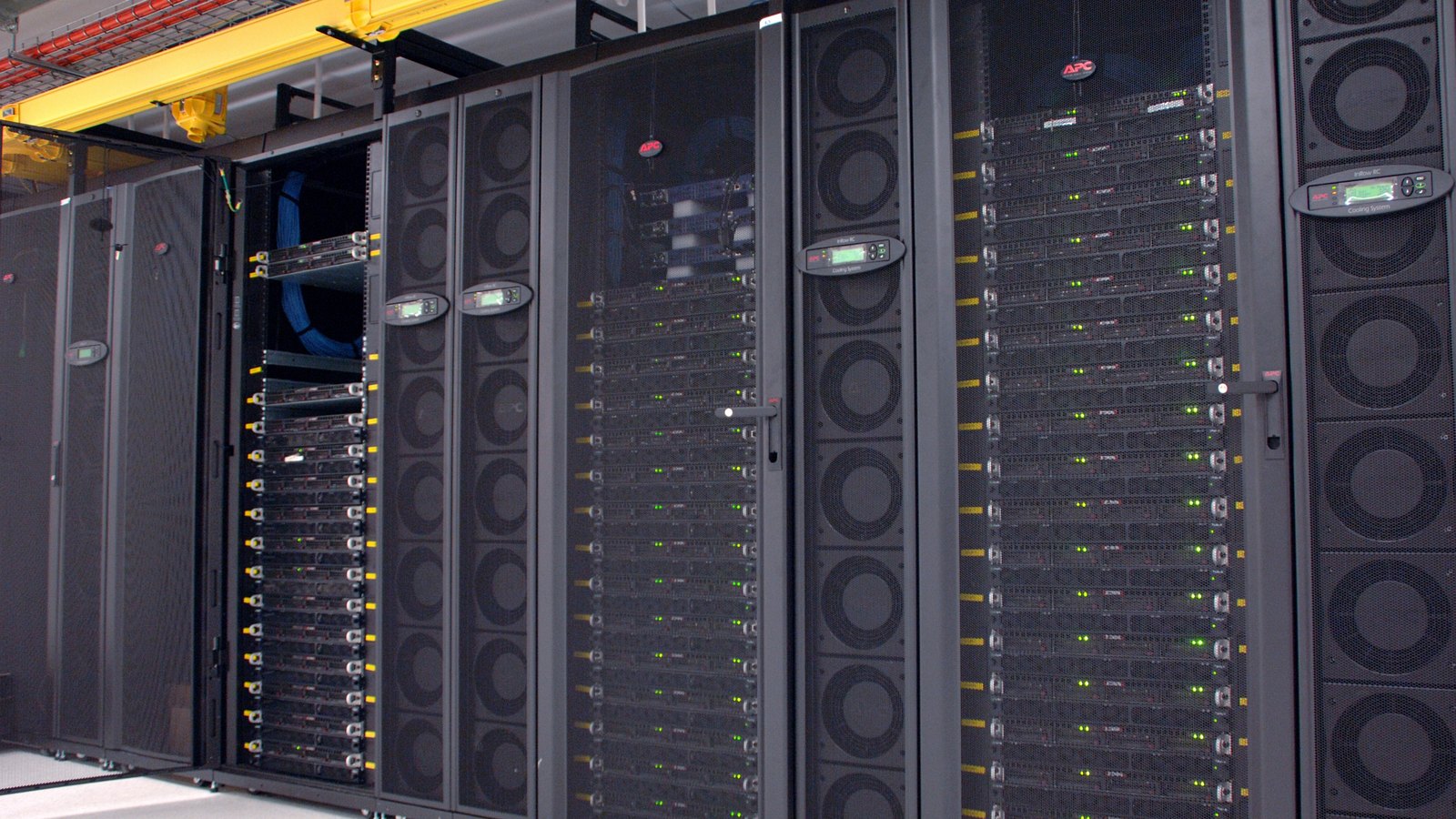
On November 26, 2026, the UK government published companion studies on national artificial intelligence infrastructure, releasing quantifying artificial intelligence compute user demand and an economic return-on-investment evaluation. Following recent analyses of the digital sector, the reports establish that academic researchers face surging computational requirements, reshaping university infrastructure planning, public grant budgeting, and secure data access across higher education.
Independent Assessments Quantify National AI Compute Demand and Returns
The companion reports, commissioned by the Department for Business, Innovation, Science and Trade (BIST)—formerly the Department for Science, Innovation and Technology (DSIT)—deliver the first systematic empirical assessment of UK advanced computing requirements and economic returns. Prepared by Technopolis, the demand study synthesises a survey of high-performance computing (HPC) facilities, bibliometric data across UK research publications, and projections through 2031. Concurrently, the benefits realisation report, delivered by London Economics with IFF Research, evaluates the return on investment of the national AI Research Resource (AIRR), including the Isambard-AI facility at the University of Bristol and the Dawn cluster at the University of Cambridge.
Technopolis estimates current UK artificial intelligence compute demand at 33 to 40 billion H100-equivalent Graphics Processing Unit (GPU) hours annually. Fulfilling this baseline continuously would require the simultaneous operation of approximately 750 Isambard-AI supercomputers across a full year. In energy terms, this translates to 5.1 to 6.1 gigawatts (GW) of electrical power draw, representing roughly 12% of UK peak electricity demand and 5% of installed national generation capacity. Because domestic capacity satisfies only a fraction of this volume, a substantial share of workloads currently runs in overseas commercial data centres, creating strategic vulnerabilities around data sovereignty and research governance.
Key Projections, Sovereign Requirements, and Economic Returns
The companion UK AI compute benefits realisation report provides econometric modelling of public capital allocations into national high-performance infrastructure. The central economic valuation identifies a return on investment (RoI) of £6.00 for every £1.00 of public funding invested across the operational lifecycle of AIRR facilities, spanning a sensitivity range from £4.20 to £20.20 per pound committed. Discounted to 2025/26 values, total expected societal and economic benefits reach £12.05 billion against £2.0 billion in capital and operational expenditure over a ten-year appraisal period, generating approximately £1.2 billion in annualised value.
Under the baseline high-growth trajectory, UK AI compute demand is projected to reach up to 1,142 billion GPU hours annually by 2031, requiring 11 to 21 GW of electrical power by 2030. Crucially, 76% of projected demand requires sovereign provision constrained to UK-hosted infrastructure within Trusted Research Environments (TREs), driven by 83% of industrial users and 82% of public-sector researchers mandating domestic data residency.
| Metric and Evaluation Dimension | Baseline / Central Value | Upper / Projected Horizon | Operational Scope and Source Focus |
|---|---|---|---|
| Current Annual AI Compute Demand | 33 to 40 Billion GPU Hours | Equivalent to 750 Isambard-AI clusters | National user demand across academia, industry, and public sector |
| Projected 2031 Compute Demand | 1,142 Billion GPU Hours | 110% annual growth in fastest fields | High-growth demand scenario modelled by Technopolis |
| Current and Projected Power Draw | 5.1 to 6.1 GW (12% peak UK grid) | 11 to 21 GW by 2030 | Combined GPU acceleration and cooling infrastructure |
| Sovereign Infrastructure Requirement | 76% of Total Demand | 444 Billion GPU Hours by 2030 | Workloads requiring UK Trusted Research Environments (TREs) |
| Economic Return on Investment (RoI) | £6.00 per £1.00 invested | £4.20 to £20.20 per £1.00 range | London Economics evaluation of public AIRR allocations |
| Total Lifetime Economic Benefit | £12.05 Billion (discounted) | £64.3 Billion high-impact scenario | Net present value across a 10-year operational timeframe |
| Wider Economic Impacts Share | £8,440 Million (70% of total) | Spillover productivity gains | Diffusion of AI research tools into broader economic sectors |
| Compute Cost Savings for Users | £1,145 Million (10% of total) | Direct subscription displacement | Savings relative to commercial cloud hyperscaler list prices |
Beyond capacity, the demand study reveals that 69% of surveyed users report their analytical workflows are fully or mostly locked into a single GPU hardware manufacturer, primarily Nvidia. This concentration stems from hardware architectural capabilities rather than software preference, posing challenges for multi-vendor diversification.
Strategic Evolution of Sovereign Infrastructure and International Context
The publication of these findings marks an important milestone in executing the UK Compute Roadmap, developed collaboratively by BIST and UK Research and Innovation (UKRI). In recent years, sovereign supercomputing policy has transitioned from disparate institutional clusters toward consolidated national computing facilities capable of foundation model training and exascale simulation.
Phase 1 of the AIRR programme established two flagship supercomputers: the Bristol Centre for Supercomputing hosting Isambard-AI, and the West Cambridge Data Centre hosting the Dawn supercomputer. Isambard-AI, equipped with 5,448 Nvidia GH200 Grace Hopper superchips, provides approximately 21 exaFLOPs of AI processing power, ranking among Europe’s most powerful research engines. Cambridge’s Dawn cluster incorporates over 1,000 Intel Data Centre GPU Max accelerators, supporting advanced computational physics, materials discovery, and nuclear fusion research with the UK Atomic Energy Authority.
Internationally, the European Union has deployed EuroHPC facilities and initiated dedicated AI Factories under the EU AI Act. In the United States, federal research access has been coordinated through the NAIRR pilot alongside agency frameworks such as the NIH AI policy. The UK evaluations underline that expanding sovereign capacity by twentyfold before 2030 is essential to avoid severe offshore dependency and international compliance bottlenecks.
Institutional Reactions and Scientific Community Perspectives
University leadership and computational researchers have welcomed the empirical clarity provided by the reports. Academic groups emphasise that AI has transitioned from a specialized computational niche into a universal research methodology. Bibliometric data indicates that UK academic publications employing AI methods increased from 9.5% in 2021 to 14.4% in 2025, with disciplines outside computer science recording adoption growth above 110% per year.
Supercomputing leaders at Bristol and Cambridge stressed that public facilities generate benefits far beyond direct commercial subscription savings. The London Economics evaluation attributes £930 million to direct private benefits for researchers and spin-outs, alongside £870 million in specialized training and skills development for research technical professionals. However, sector stakeholders also highlighted logistical challenges: 50% of survey respondents classify low latency as critical to their interactive research, and supplying 6.2 GW of sovereign electrical power by 2030 requires substantial grid capacity upgrades.
Operational Implications for Research Offices, PIs, and Grant Administrators
The findings carry practical consequences for university research operations, principal investigators (PIs), and sponsored research administrators:
- Grant Costing and Resource Portals: Research administrators should evaluate whether project computational needs can be served through national AIRR allocations rather than commercial cloud budgets, using persistent identifiers such as a grant DOI to link funded resources to research outputs.
- Sovereign Data Compliance: With 76% of projected compute demand subject to domestic residency rules, teams handling sensitive clinical data, administrative records, or commercial IP must ensure environments meet accredited Trusted Research Environment criteria rather than exporting workloads to foreign cloud regions.
- Output Validation and Multi-Vendor Portability: Given that 69% of UK scientific workflows rely on single-vendor architectures, research groups must establish rigorous AI output verification procedures to ensure numerical reproducibility across heterogeneous platforms.
- Broadening Institutional Access: Research offices should support non-STEM faculties—including public health, social sciences, and environmental policy—in applying for national Tier-1 and Tier-2 compute allocations.
Implementation Timelines and Future Resource Allocations
Following the release of the two reports, the UK government and UKRI are aligning policy with the empirical demand baseline. Anticipated next steps include:
- Allocation Policy Finalisation: Through early 2027, BIST and UKRI will refine allocation criteria balancing academic, clinical, and industrial SME access across national facilities.
- AIRR 20x Expansion Procurement: Infrastructure leads will advance phased procurement to deliver the twentyfold capacity expansion committed under the UK Compute Roadmap by 2030.
- Unified Portal Rollout: UKRI will complete the implementation of the centralized AIRR Portal and MyAccessID federated login, providing unified application workflows across Isambard-AI and Dawn.
- Annual Benefits Monitoring: Government will track ongoing scientific outputs, patent filings, and spin-out formation using the London Economics evaluation framework.
Sources
- Department for Business, Innovation, Science and Trade: Quantifying artificial intelligence (AI) compute user demand, checked 2026-11-26
- Department for Business, Innovation, Science and Trade: UK AI compute benefits realisation report, checked 2026-11-26
- UK Research and Innovation: Digital Research Infrastructure Programme, checked 2026-11-26
- University of Bristol: Bristol Centre for Supercomputing (BriCS), checked 2026-11-26
- University of Cambridge: Under the bonnet at Dawn, the UK’s fastest AI supercomputer, checked 2026-11-26






