
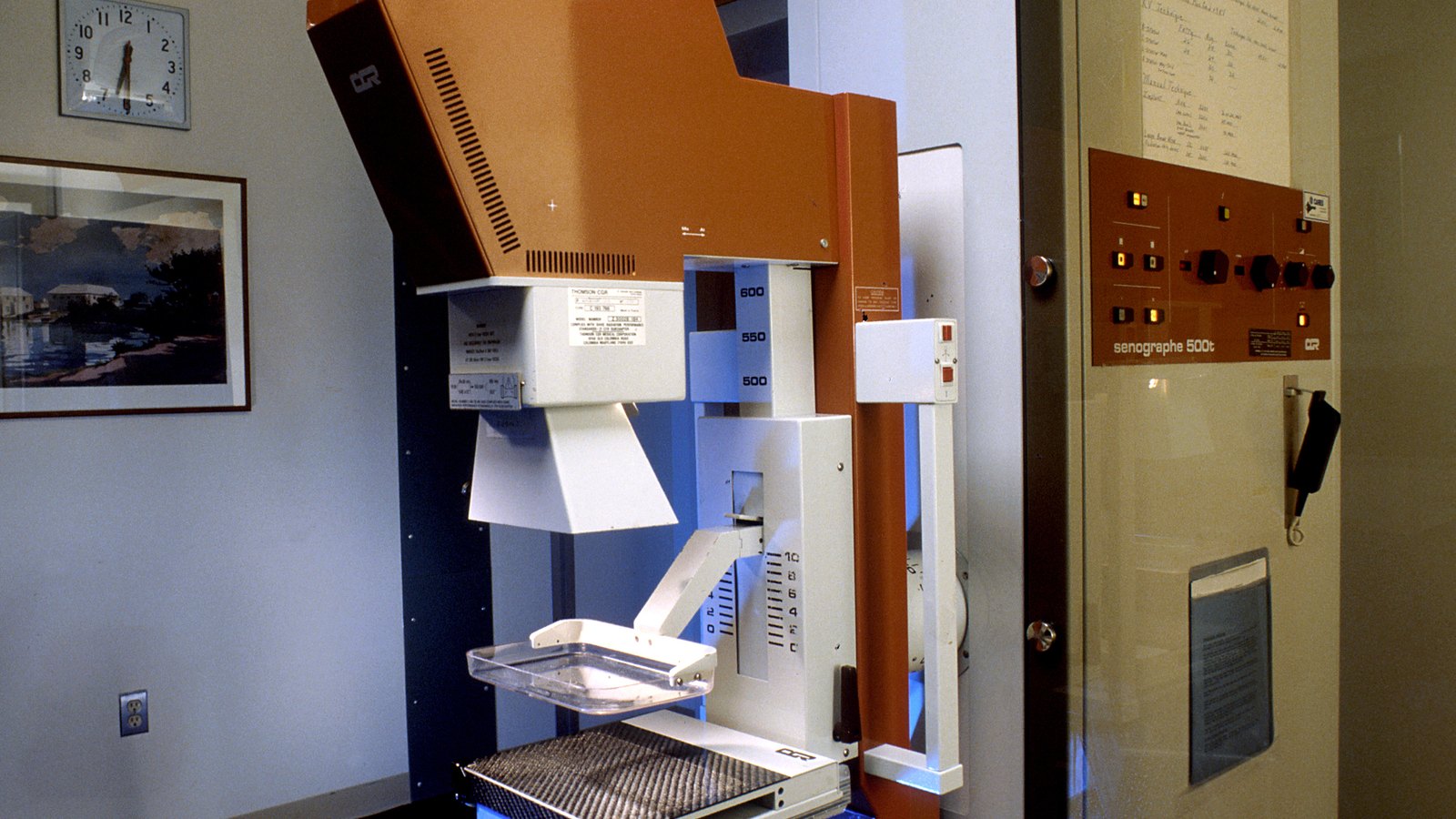
On 23 November 2026 the NHS began inviting women to join EDITH, a national trial of an AI-assisted tool for reading breast screening mammograms, with recruitment opening at Cambridge University Hospitals, the first of about 30 UK sites. Funded by the National Institute for Health and Care Research (NIHR) and co-led by the University of Warwick and the University of Cambridge, it is described as the largest trial of its kind and expects nearly 700,000 participants.
What happened
Cambridgeshire is the first location to launch the trial, and the University of Cambridge says EDITH will soon run at 30 breast screening sites across the UK. To mark the opening, Health and Social Care Secretary Yvette Cooper visited the Breast Unit at Addenbrooke’s Hospital in Cambridge and met the two co-chief investigators, Professor Fiona Gilbert of the University of Cambridge and Addenbrooke’s Hospital, and Professor Sian Taylor-Phillips of the University of Warwick.
Cooper called it the biggest AI breast cancer trial in the world and said it is backed by government investment to speed up diagnosis. She added that “we also need proper safeguards in place to make sure we’re using it safely and effectively to improve treatment and research.” BBC News reported that she told the broadcaster AI has huge potential to improve treatment, which is why trials such as this are needed to establish the most effective way to use it.
The trial was first announced on 4 February 2025. At that point the UK government said nearly 700,000 women across the country would take part. The November 2026 opening is the start of recruitment, when eligible women begin receiving invitations.
Key details of the trial
- Who is eligible: women aged 50 to 71, who are invited for NHS breast screening every three years. About 2.1 million women in the UK are screened each year, and screening helps prevent around 1,300 deaths, according to the University of Cambridge.
- What is tested: an AI-assisted mammogram-reading tool used alongside specialists. Today each mammogram is reviewed by two specialist radiologists, and fewer than 1% of mammograms show signs of cancer, so much reading time goes on negative images.
- Two ways of using the AI: BBC News reports that in one arm of the trial an AI programme grades images before they go to NHS experts, and in another it reviews them afterwards.
- Human oversight: the University of Cambridge states that every mammogram will still be reviewed by at least one human radiologist, and that the screening appointment itself does not change. Tech Times reports that clinical decisions remain with NHS staff.
- Opting out: details of the trial are included in the letter sent to eligible women when they are invited for screening, with instructions for anyone who does not want to take part.
- Duration and scale: Tech Times describes a three-year study across 30 sites in the UK, with further locations expected to open in the coming months.
- Funding: the University of Cambridge describes a £10 million NIHR-funded trial, while BBC News gives the figure as £11 million. NIHR worked closely with NHS England and the UK National Screening Committee, which helped shape the study design.
Background and context
Breast screening in the UK depends on radiologist capacity. Professor Gilbert told the BBC there is a “huge shortfall” of radiologists and that the number of imaging examinations is increasing by 8% a year. BBC News also reports that breast cancer is the most common cancer among women in the UK, with around 59,000 cases diagnosed each year, about a third of them found through routine mammograms, usually at an early stage.
BBC News notes that several smaller studies have already suggested AI can improve cancer detection rates, and that the researchers running EDITH say they need to be sure the approach does not cause harm by recalling women unnecessarily for further tests. Professor Taylor-Phillips said AI-assisted technology could help improve early detection, but that the team wants to avoid overdiagnosis of milder disease that would never have caused symptoms.
The trial is supported by an AI research screening platform, AIR-SP, which NHS England built with nearly £6 million of government funding. The University of Cambridge says it is designed to make it easier for NHS trusts to join AI screening trials. According to Tech Times, Professor Taylor-Phillips said four AI systems had been rigorously tested for accuracy.
Reaction
Professor Gilbert said that millions of women have a mammogram each year and fewer than one in 100 will be diagnosed with cancer, and that EDITH will test whether an AI-assisted tool can help experts review images more efficiently while maintaining professional oversight and the standards women expect from NHS breast screening. Professor Lucy Chappell, chief executive of NIHR and Chief Scientific Adviser to the Department of Health and Social Care, said EDITH will generate vital evidence on whether the technology could transform how cancer is detected and diagnosed.
Professor Peter Johnson, NHS England’s national clinical director for cancer, urged every woman invited to take part, saying every scan will still be seen by a specialist and that, if proven effective, the approach could ensure women get the diagnosis and treatment they need sooner. Kanishka Narayan, the UK Minister for Artificial Intelligence, said the trial puts AI to work alongside expert radiologists to test whether it can spot warning signs sooner and free specialists for direct patient care.
What it means for researchers, universities and research offices
EDITH is a pragmatic, NHS-embedded trial led jointly by two universities and a hospital trust, which makes it a reference case for research offices that sponsor or co-sponsor large clinical studies of AI. The University of Cambridge says the NHS will only change how screening works if the evidence shows the tool is as safe and effective as current care, which frames the trial as a test of equivalence in safety and effectiveness, not simply of speed.
For teams planning their own AI evaluation studies, the design is instructive: participants are informed through their routine invitation letter and given an opt-out, the AI is tested alongside the existing process, and a shared national platform, AIR-SP, is intended to lower the cost of adding sites. Research offices can compare this approach with the reporting expectations summarised in our guide to CONSORT-AI and the wider overview of AI reporting guidelines.
Institutions running or supporting AI-enabled trials may also find useful background in our guides to AI in clinical trials, MHRA and AI in UK clinical research and AI governance in healthcare. Imaging and radiology groups should note the workforce framing: the stated aim is to test whether reading workload can be reduced while specialists spend more time on diagnosis and on caring for women with cancer.
What happens next
Recruitment has begun at Cambridge University Hospitals, and Tech Times reports that further locations are expected to open in the coming months, with thousands more women set to receive invitations. The study is planned to run for about three years across the 30 sites. Researchers will assess the potential benefits across participating sites, and the NHS has said it will change how screening works only if the evidence shows the AI-assisted approach is as safe and effective as the care women receive now. Women who receive an invitation can use the instructions in their letter to opt out of the trial.
Sources
- University of Cambridge: Cambridge co-leading world’s largest trial to use AI to help detect breast cancers earlier (adapted from a Cambridge University Hospitals NHS Foundation Trust release), 23 November 2026
- BBC News: Can AI spot breast cancer earlier? NHS launches world’s largest trial to find out, 23 November 2026 (syndicated on Yahoo News)
- Tech Times: 700,000 Women Could Benefit From NHS Trial Bringing AI Into Breast Cancer Screening, 23 November 2026
- GOV.UK: World-leading AI trial to tackle breast cancer launched, 4 February 2025






