
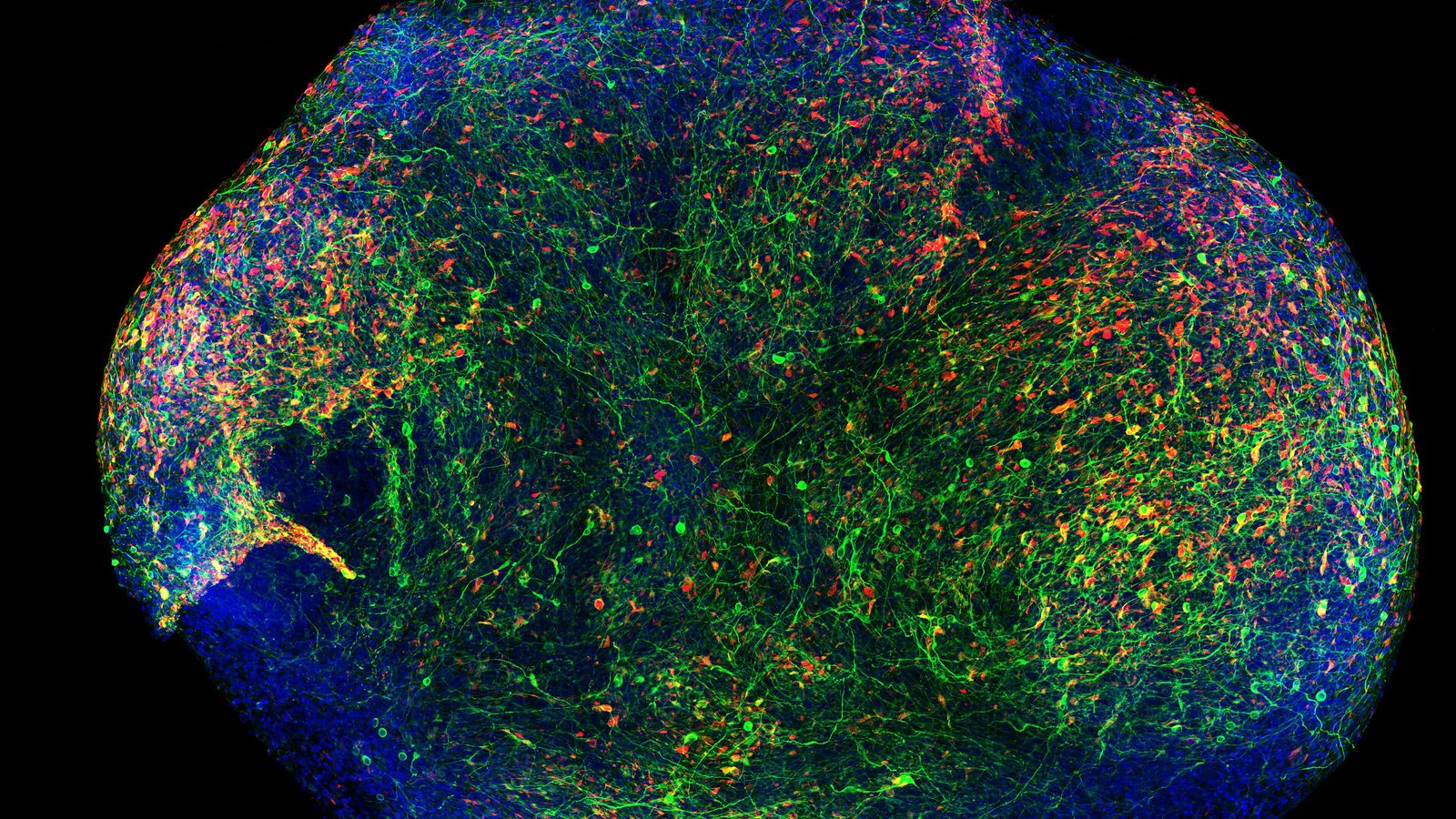
On November 20, 2026, Emory University’s Goizueta Brain Health Institute in Atlanta announced that it has been awarded a five-year, $40.1 million grant from the National Institute on Aging to establish and lead the multi-institutional TARGET-AD Consortium. The award establishes a molecular subtyping framework across six leading research centers, providing academic research offices and translational investigators with standardized multi-omics workflows, open-access biomarker libraries, and cross-institutional cellular validation pipelines to guide subtype-specific Alzheimer’s clinical trials.
Establishment of the TARGET-AD Precision Medicine Consortium
Under grant award number 1U19AG097398-01, the National Institute on Aging (NIA) has committed $40,095,570 over five years (September 1, 2026 – August 31, 2031) with a first-year allocation of $8,231,369. Emory University announced a five-year, $40.1 million grant to establish the TARGET-AD Consortium (Translational Approaches to Resolve Genotypic and Expressed Targets in Alzheimer’s Disease), serving as coordinating center across six academic medical centers.
This award expands federal investments alongside monogenic programs like the NIA $43 million grant for early-onset Alzheimer’s research at Washington University in St. Louis. TARGET-AD focuses on late-onset Alzheimer’s disease and related dementias (ADRD), which represent most clinical cases and exhibit diverse molecular pathologies. Administered under the NIH U19 cooperative agreement mechanism, the program establishes structured federal-academic governance under the distinct operational rules analyzed in grant vs contract vs cooperative agreement mechanisms.
Consortium Architecture and Multi-Omic Subproject Allocations
TARGET-AD distributes specialized responsibilities across seven dedicated components uniting Emory, Mayo Clinic, Columbia University, UTHealth Houston, Icahn School of Medicine at Mount Sinai, and Brigham and Women’s Hospital. Official records in the NIH RePORTER database delineate the budgetary allocations and deliverables across the consortium:
| Component Unit | Lead Investigator and Institution | Budgetary Allocation | Functional Scope and Deliverables |
|---|---|---|---|
| Consortium Overall and Core 1 | Nicholas T. Seyfried, PhD (Emory University) | $40,095,570 total ($618,493 Core 1 Year 1) | Consortium governance, data management infrastructure, administrative coordination, and cross-site compliance monitoring. |
| Project 1: Molecular Subtyping | Nicholas T. Seyfried, PhD (Emory University) | $1,875,000 (Year 1) | Post-mortem brain tissue profiling, deep proteomic quantification, metabolomics, and machine-learning subtype derivation. |
| Project 2: Target Validation | Philip L. De Jager, MD, PhD (Columbia University) | $1,222,269 (Year 1) | Functional validation of subtype-specific causal genes and protein networks using perturbation assays in human neural tissues. |
| Core 2: Multi-Omics Core | Mariet Allen, PhD (Mayo Clinic) | $2,731,122 (Year 1) | High-throughput genomics, transcriptomics, lipidomics, and single-nucleus RNA sequencing across cohort repositories. |
| Core 3: Data Analytics Core | Joseph Swaroop Reddy, PhD (Mayo Clinic / Emory) | $1,318,615 (Year 1) | Computational analytics hub, cross-platform harmonization, batch-effect correction, and algorithmic subtype classification models. |
| Core 4: Experimental Modeling | Tracy L. Young-Pearse, PhD (Brigham and Women’s Hospital) | $465,870 (Year 1) | Standardized human induced pluripotent stem cell (iPSC) neural lines matching distinct clinical subtypes. |
This structure ensures that Core 2 multi-omic data are harmonized by Core 3, classified under Project 1, validated in cellular models by Core 4, and functionally perturbed in tissue systems via Project 2.
Scientific Rationale: Deconstructing Alzheimer’s Biological Heterogeneity
Therapeutic development has historically approached Alzheimer’s as a monolithic entity defined by amyloid-beta plaques and tau tangles. However, neuropathological autopsies show that up to 70% of cases exhibit mixed co-pathologies, including vascular lesions, TDP-43 inclusions, and Lewy bodies, explaining divergent progression rates and variable anti-amyloid drug responses across patient cohorts.
TARGET-AD expands the framework developed by the Accelerating Medicines Partnership Alzheimer’s Disease consortium, accessible on the AD Knowledge Portal repository, which proved open-science systems biology can uncover novel targets outside canonical amyloid pathways.
This subtyping approach builds on benchmark studies in Nature Medicine, which demonstrated through deep mass spectrometry that early Alzheimer’s involves alterations in energy metabolism and glial inflammation. By analyzing thousands of co-expressed proteins across cerebrospinal fluid and brain tissue, researchers linked early metabolic dysregulation to disease progression. TARGET-AD applies this methodology across large cohorts, combining proteomics, lipidomics, and single-cell transcriptomics to establish durable molecular subtypes.
Institutional Governance, Specimen Harmonization, and Data Sharing
Operating a six-center consortium involving post-mortem tissue banks and living cohorts requires strict governance. TARGET-AD integrates specimens from NIH-funded Alzheimer’s Disease Research Centers and longitudinal studies, including the Religious Orders Study and Memory and Aging Project (ROSMAP).
Managing shared human materials requires harmonized institutional review board oversight. Participating medical centers must ensure specimen documentation aligns with open-science mandates, addressing the regulatory standards governing blanket consent vs broad consent for secondary multi-omic and stem-cell derivation research.
Additionally, sharing high-dimensional genomic, clinical, and proteomic data demands standardized compliance frameworks. Sponsored research offices are deploying agreements clarifying terms between a data sharing agreement vs data processing agreement, ensuring precompetitive release through the Synapse portal complies with NIH Data Management and Sharing policies and patient de-identification rules.
Consortium Leadership and Research Perspectives
Consortium leaders view TARGET-AD as an engine for translating molecular classifications into clinical tools. Contact principal investigator Dr. Nicholas T. Seyfried of Emory University emphasized that precision subtyping enables the discovery of targeted fluid biomarkers and therapeutic targets matched to specific disease drivers, moving beyond generalized interventions.
Dr. Allan Levey, executive director of the Emory Goizueta Brain Health Institute, noted that decades of research demonstrate Alzheimer’s is driven by complex interconnected mechanisms. Levey stated that TARGET-AD unites the technologies, cohorts, and computational tools required to translate biological drivers into targeted therapies.
National Institute on Aging Director Dr. Richard J. Hodes stated that TARGET-AD deepens federal precision-medicine commitments for dementia while creating the foundational infrastructure for future iterations of the AMP-AD partnership.
The consortium’s leadership team unites leading domain specialists: Dr. Vilas Menon (Columbia University), Dr. Rima Kaddurah-Daouk (UTHealth Houston), Dr. Panagiotis Roussos and Dr. Bin Zhang (Icahn School of Medicine at Mount Sinai), Dr. Nilüfer Ertekin-Taner (Mayo Clinic), and Dr. Tracy Young-Pearse (Brigham and Women’s Hospital), who oversee validation across independent cohort repositories.
Operational Impact on Academic Research Offices and Clinical Trials
For university research administrators, tech transfer offices, and trial sponsors, TARGET-AD introduces critical operational priorities:
- U19 Subrecipient Administration: As prime recipient, Emory University administers multi-site subawards tying funding tranches to multi-omic data milestones and quality benchmarks, requiring structured subrecipient monitoring across institutions.
- Precision Trial Stratification: Historical trial failures often stemmed from heterogeneous enrollment. Validated molecular subtypes and fluid biomarkers will enable trialists to enrich cohorts with biologically targeted participants, improving signal detection in clinical evaluations.
- Matched Brain and Plasma Biomarkers: Correlating post-mortem brain proteomics with antemortem plasma will yield blood-based diagnostic assays reflecting central neuropathology, reducing reliance on invasive lumbar punctures or costly PET scans.
- Stem Cell Repositories and IP Management: Through Core 4, standardized patient-derived iPSC lines will be distributed under clear material transfer agreements and precompetitive IP terms to enable broad academic and industry screening.
Consortium Roadmap and Next Milestones
The five-year performance period proceeds through three phases:
- Phase 1: Multi-Omic Profiling and Harmonization (Years 1–2): Standardizing proteomic mass spectrometry, lipidomics, and single-nucleus RNA sequencing across thousands of brain specimens to define molecular subtypes by 2028.
- Phase 2: Cellular Modeling and Biomarker Validation (Years 2–4): Generating subtype-representative iPSC lines and deploying CRISPR screens to validate causal gene networks while evaluating blood biomarkers in living cohorts.
- Phase 3: Target Enabling Packages and Dissemination (Years 4–5): Releasing open-access target enabling packages containing chemical probes, assays, and bioinformatic pipelines via AMP-AD to support precision clinical trials through August 2031.
Sources
- Emory University: Emory awarded $40 million NIH grant to lead major Alzheimer’s research consortium, checked 2026-11-22
- National Institutes of Health RePORTER: TARGET-AD: A Precision Medicine Framework for Alzheimer’s Disease (Project 1U19AG097398-01), checked 2026-11-22
- AD Knowledge Portal: Accelerating Medicines Partnership in Alzheimer’s Disease Program Overview, checked 2026-11-22
- Nature Medicine: Large-scale proteomic analysis of Alzheimer’s disease brain and cerebrospinal fluid reveals early changes in energy metabolism, checked 2026-11-22


