

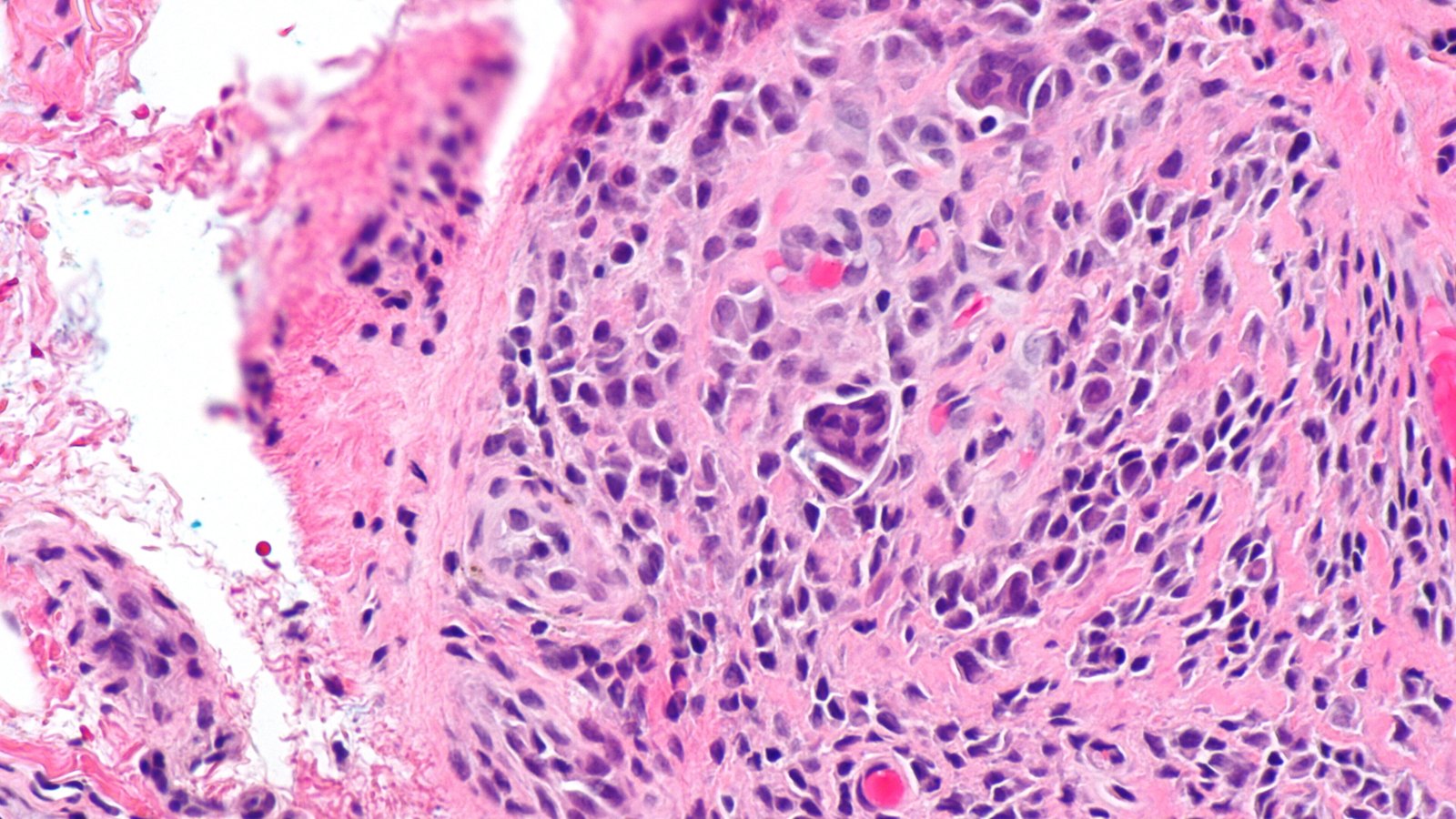
In results published in The Lancet on March 14, 2026, the international Phase 3 MANEUVER clinical trial reported that the oral CSF-1R inhibitor pimicotinib achieved a 54% objective response rate at Week 25 in patients with tenosynovial giant cell tumor, compared to 3% for placebo, delivering a major clinical benchmark for academic oncology trials, sponsor-investigator partnerships, and hospital research units managing joint-preserving systemic therapies.
Trial findings and efficacy outcomes
Primary efficacy results from Part 1 of the pivotal MANEUVER study, published in The Lancet, demonstrate that pimicotinib (also designated ABSK021) produces robust, statistically significant antitumour activity in adult patients with locally advanced, unresectable tenosynovial giant cell tumor (TGCT). Assessed at Week 25 by a blinded independent review committee using Response Evaluation Criteria in Solid Tumors (RECIST version 1.1), the objective response rate (ORR) reached 54.0% (34 of 63 patients) in the pimicotinib cohort, compared to 3.2% (1 of 31 patients) in the matching placebo group. This represents an absolute difference of 51% (95% confidence interval 33–63%, p < 0.0001).
Secondary tumour volume evaluations reinforced the primary RECIST outcome. By Tumor Volume Score (TVS)—a specialized volumetric magnetic resonance imaging metric measuring the percentage of the synovial cavity occupied by neoplastic tissue—the objective response rate among pimicotinib recipients was 61.9%, versus 3.2% among placebo recipients (p < 0.0001). Clinical outcome assessments confirmed that objective radiologic reductions translated directly into functional recovery. Patients receiving pimicotinib achieved statistically significant improvements from baseline to Week 25 in active range of motion (ROM) measured by goniometry, as well as clinically meaningful reductions in worst pain and worst stiffness on 10-point numeric rating scales.
Medical review notice: This clinical news report has been medically reviewed by Dr. Diana Nieves Castro, MD. It provides factual reporting on published clinical trial results and does not offer medical advice or treatment recommendations.
Trial design, patient population, and safety outcomes
The MANEUVER study is an international, randomized, double-blind, multicenter investigation registered on ClinicalTrials.gov (NCT05804045) and conducted across 40 specialized clinical centres in Asia, Europe, and North America. Between April 27, 2023, and March 29, 2024, clinical investigators screened 126 individuals and enrolled 94 adult participants with histologically confirmed, symptomatic TGCT for whom surgical resection would carry risk of severe joint damage or substantial functional loss. Participants were randomized in a 2:1 ratio to receive oral, once-daily pimicotinib 50 mg (n = 63) or identical placebo (n = 31) for 24 weeks in Part 1, stratified by geographic region (China versus non-China).
The safety evaluation identified a manageable tolerability profile without evidence of severe hepatotoxicity. Treatment-emergent adverse events in pimicotinib-treated participants consisted predominantly of mild, transient laboratory abnormalities and dermatologic findings, such as pruritus, facial oedema, rash, periorbital oedema, and fatigue. The sole grade 3 or 4 adverse event recorded in more than 10% of pimicotinib recipients was an asymptomatic elevation in blood creatine phosphokinase (CPK), observed in 8 of 63 patients (13%). Only 5 patients (8%) required dose reductions, and just 1 patient (2%) discontinued treatment due to adverse events.
| Trial Parameter / Endpoint | Pimicotinib 50 mg (n = 63) | Placebo Arm (n = 31) | Statistical Comparison |
|---|---|---|---|
| Primary Endpoint: ORR per RECIST v1.1 (Week 25) | 54.0% (34 / 63) | 3.2% (1 / 31) | Absolute Difference 51% (p < 0.0001) |
| Secondary Endpoint: ORR per Tumor Volume Score | 61.9% (39 / 63) | 3.2% (1 / 31) | Statistically Significant (p < 0.0001) |
| Joint Function: Active Range of Motion (ROM) | Clinically Meaningful Gain | Stable / Deteriorating | p < 0.001 vs. Placebo |
| Symptom Control: Worst Pain and Stiffness Score | Significant Score Reduction | Minimal Score Change | p < 0.001 vs. Placebo |
| Discontinuations Due to Adverse Events | 1.6% (1 / 63) | 0.0% (0 / 31) | Low Discontinuation Rate |
| Severe Hepatotoxicity / Cholestatic Injury | 0.0% (0 / 63) | 0.0% (0 / 31) | No Cholestatic DILI Observed |
| Hair / Skin Hypopigmentation | 0.0% (0 / 63) | 0.0% (0 / 31) | Absence of Pigment Loss |
Mechanistic background and previous CSF-1R therapeutics
Tenosynovial giant cell tumor is a rare, locally invasive, mesenchymal neoplasm originating in the synovial lining of joints, tendon sheaths, and bursae. The underlying biology involves a chromosomal translocation involving 1p13 that fuses the colony-stimulating factor 1 (CSF1) gene to collagen alpha-1 type III (COL6A3), leading to constitutive CSF-1 overexpression. Overexpressed CSF-1 recruits and activates non-neoplastic macrophages, histiocytes, and multinucleated giant cells expressing the CSF-1 receptor (CSF-1R), generating aggressive inflammatory synovial masses that erode cartilage and surrounding bone.
While complete surgical synovectomy was historically the standard of care, diffuse-type TGCT exhibits high recurrence rates exceeding 40% to 50%, frequently requiring repeated interventions, arthrodesis, or total joint arthroplasty. The first approved systemic CSF-1R inhibitor, pexidartinib, validated target blockade but remains constrained by serious risks of fatal cholestatic hepatotoxicity, necessitating a restrictive Risk Evaluation and Mitigation Strategy (REMS) program with frequent hepatic panel monitoring. In addition, previous therapies regularly caused prominent hypopigmentation of hair and skin. Pimicotinib was chemically engineered as a high-potency, selective small-molecule CSF-1R kinase inhibitor to avoid off-target kinase inhibition and cholestatic biliary injury.
Clinical research community and regulatory reaction
International sarcoma investigators and clinical trialists have welcomed the MANEUVER findings, highlighting that the trial achieves decisive joint preservation while bypassing the severe hepatic toxicities of older compounds. Principal study investigators noted that the depth of response at Week 25—with tumor shrinkage and rapid alleviation of pain and stiffness—demonstrates that high target selectivity can improve clinical efficacy without compromising hepatic safety. The publication of complete primary outcomes in the peer-reviewed literature, indexed in the National Library of Medicine PubMed database, provides independent scientific verification of these endpoints.
Health authorities have responded to earlier MANEUVER data packages by granting accelerated regulatory designations. Pimicotinib was granted Breakthrough Therapy Designation by both the U.S. Food and Drug Administration (FDA) and the National Medical Products Administration (NMPA) in China, and received priority medicine status under the EMA PRIME scheme in Europe. Regulators emphasized that systemic treatment options for unresectable TGCT must balance functional improvement against long-term toxicities, particularly because TGCT affects predominantly young and middle-aged adults who face decades of chronic disease management.
Implications for academic research centres and oncology trials
For university medical centers, cancer institutes, and institutional review boards, the MANEUVER trial provides critical operational lessons for the design of rare-disease trials. Conducting registrational oncology studies in non-metastatic, locally invasive conditions demands specialized surrogate measures beyond conventional survival metrics. Incorporating blinded independent review committees to adjudicate both RECIST v1.1 and volumetric Tumor Volume Scores ensures that regulatory submissions satisfy standard requirements for an Investigational New Drug (IND) application.
Academic trial offices running joint studies can draw upon established CASRAI reference standards. Research teams evaluating imaging endpoints and response assessment frameworks should consult detailed institutional guidelines on oncology clinical trials and RECIST endpoints. Furthermore, managing rare-disease recruitment across multinational consortia requires structuring ethical controls under a standardized placebo-controlled study design, particularly when planning protocol crossovers. When trials offer crossover pathways upon completing blinded primary intervals, research units must manage operational contrasts between open-label vs. double-blind trial designs to prevent unblinding biases while upholding participant retention and care ethics during a pivotal Phase 3 trial.
Next steps for regulatory filings and global access
Following publication of Part 1 data in The Lancet, the MANEUVER clinical programme is advancing into long-term follow-up phases. Patients who completed the initial 24-week double-blind period were eligible to transition into Part 2, where pimicotinib-treated patients maintain therapy and placebo-treated participants cross over to open-label pimicotinib 50 mg daily. Patients completing Part 2 are entering Part 3 for extended safety and efficacy monitoring, which will track response duration, joint preservation over multi-year intervals, and long-term musculoskeletal outcomes.
Commercialization and distribution partnerships between Abbisko Therapeutics and Merck KGaA are facilitating regulatory submissions across major jurisdictions. Marketing applications are progressing through the U.S. FDA, China’s NMPA, and the European Medicines Agency, with decisions and regional commercial rollouts scheduled across 2026. Academic centers participating in the MANEUVER trial are preparing secondary analyses evaluating patient-reported physical functioning, joint-specific goniometric trajectories, and health economic outcomes to support formulary adoption and international clinical practice guideline updates.
Sources
- The Lancet: Pimicotinib versus placebo for tenosynovial giant cell tumour (MANEUVER) — an international, randomised, placebo-controlled, phase 3 trial, checked 2026-11-22
- ClinicalTrials.gov: Study of Pimicotinib (ABSK021) for Tenosynovial Giant Cell Tumor (MANEUVER), checked 2026-11-22
- National Library of Medicine (PubMed): MANEUVER Phase 3 Trial Record (PMID 41796601), checked 2026-11-22
- European Medicines Agency: PRIME — Priority Medicines Scheme Overview, checked 2026-11-22
- U.S. Food and Drug Administration: Investigational New Drug (IND) Application Requirements, checked 2026-11-22


