
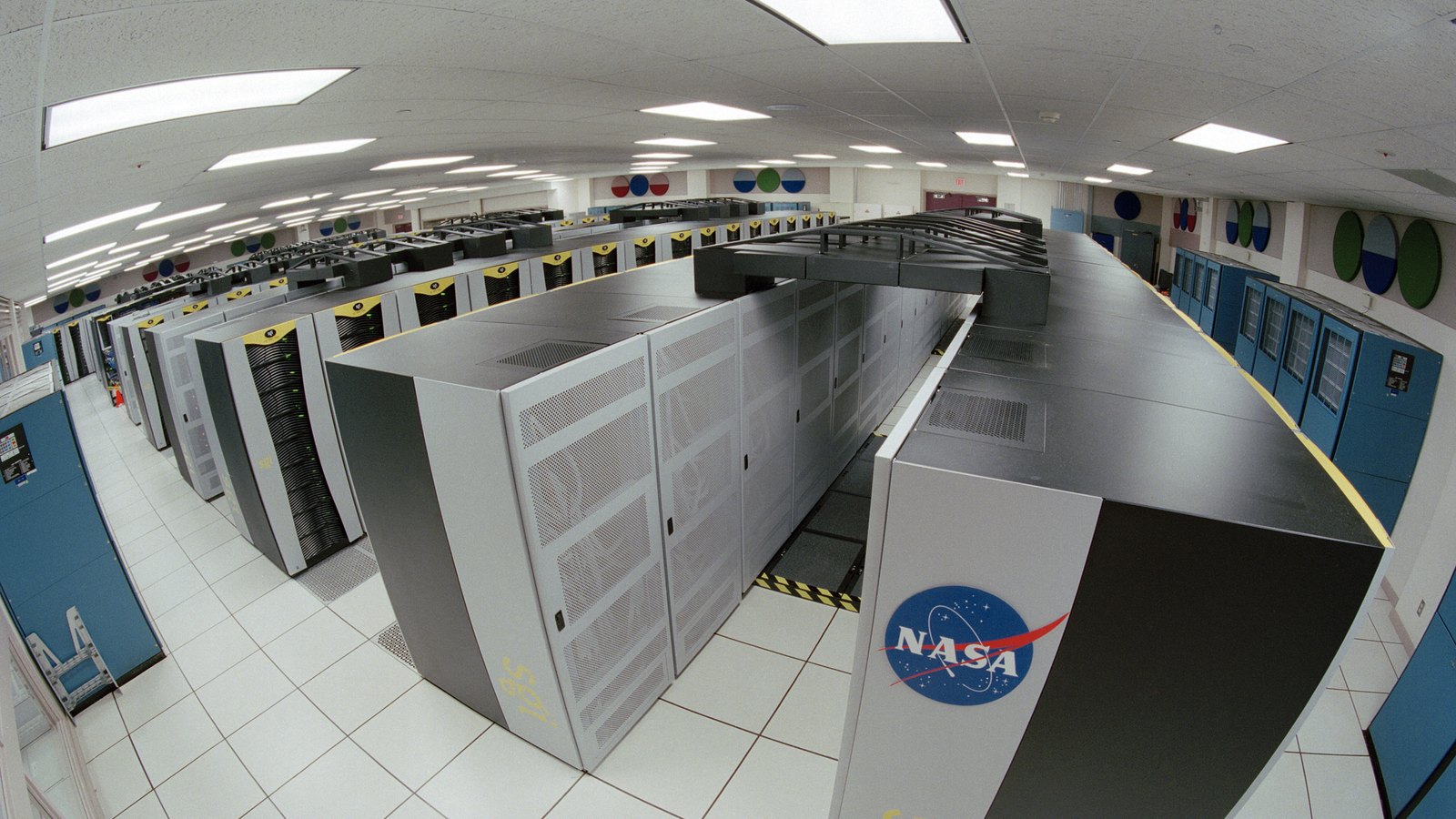
On 19 November 2026, Governor Kathy Hochul broke ground at the University at Buffalo’s North Campus on the permanent home of Empire AI, New York’s shared supercomputing project for public and private universities. The facility, called Empire AI Gamma, is expected to be completed by early 2028, according to the governor’s office, and it matters to research offices because it is a state-funded alternative to each university buying its own AI computing.
What happened
Hochul led a groundbreaking ceremony on Thursday 19 November at the University at Buffalo (UB) North Campus in Amherst, where the permanent supercomputing centre will be housed, as reported by WAMC and WIVB. The governor’s office describes Gamma as the full-scale facility that will “dramatically expand the computing power available to researchers at New York’s leading public and private universities.” Empire AI is described by WAMC as a $500 million public-private initiative involving higher education institutions throughout the state; the governor’s office puts it at more than $500 million.
“Empire AI is already giving our brightest researchers the most powerful academic AI computing resources in the country, and now we’re building the permanent home that will take this initiative to an entirely new level,” Hochul said in the release. The governor’s office also calls Empire AI the most powerful academic AI research computer in the country; that is the state’s own characterisation, not an independent ranking.
Key details
- Site and timing: UB North Campus, with completion expected by early 2028 (governor’s office; WIVB).
- Funding model: a public-private initiative of more than $500 million, first announced in Hochul’s 2024 State of the State address (governor’s office; WBNG).
- Construction: Gilbane is the construction manager (governor’s office).
- Users so far: Empire AI board chair Tom Secunda said the project has more than 1,500 registered users and hundreds of research projects under way.
- Who uses it: researchers at consortium institutions, including Columbia, Cornell, CUNY, Rensselaer Polytechnic Institute, Stony Brook, Mount Sinai, the University of Rochester, the University at Albany, Binghamton and the State University of New York, all of which were quoted in the release.
Background and context
Hochul launched the Empire AI consortium in April 2024 as a group of public and private research institutions giving academic researchers access to AI computing that, in the state’s words, no single university could afford independently. Six months later the state launched Empire AI Alpha, made possible by a philanthropic contribution from the Simons Foundation. In August 2026, Empire AI Beta, a $40 million supercomputer at UB, became fully operational, delivering 11 times the AI training capacity, 40 times the inference performance and eight times the data storage of Alpha, according to the governor’s release as republished by citybiz.
Gamma is the third stage of that build-out. It follows by a few days the launch of the New York Center for AI Responsibility and Research at Binghamton University, which the state says will bring together more than 80 scientists to study the safety, security and performance of advanced AI systems using Empire AI’s computing infrastructure. The state backed that centre with a $30 million philanthropic gift from donors led by Secunda and an initial $25 million SUNY research investment. Casrai covered the centre’s launch in New York expands independent AI safety research network.
Energy design
Gamma will be integrated into UB’s Clean Energy Master Plan, which includes a campus-wide thermal energy network. The release says the project will use clean hydropower and connect Empire AI to UB’s Baker Chilled Water Plant through neutral-temperature water pipes, geothermal wells and heat pump technology, so that heat from the supercomputer is recovered and used to warm university buildings. The wider master plan is expected to reduce energy use on North Campus by approximately 30 percent over time. SUNY Chancellor John King said the work builds on SUNY’s goal of a 40 percent cut in carbon emissions by 2030, as reported by WAMC.
Reaction
Secunda told WAMC that academia is working with less money and that private and state funders are trying to ensure New York has capacity “not just for the tool, which is what this compute is, but for the researchers and for the data,” adding that Empire AI is building a secure environment so people can share data in ways they previously could not. King said the facility gives UB students and researchers bigger datasets, larger models and more complex simulations, and helps the state attract and keep researchers.
Hochul pointed to Rensselaer Polytechnic Institute work on diagnosing lung cancer, Cornell work on prostate cancer treatments and a Columbia project to improve weather tracking, per WBNG. She also said the state is “demanding that AI be developed with appropriate safeguards.” Columbia’s Jeannette Wing said one Columbia lab uses Empire AI to build agents that keep learning from experience, and that the work could not be done without the computational capability Empire AI offers.
Economic analysis cited by the state
The governor’s office cites an independent analysis by HR&A Advisors, which it says found that widespread use of Empire AI’s computing could effectively double research and development productivity in key sectors, generating about $266 million in additional annual economic value and more than $2.7 billion over 10 years. The same analysis estimated that building the Buffalo facilities would generate about $155 million in one-time economic output and support nearly 200 jobs a year between 2024 and 2027. These are the state’s figures from a commissioned study and should be read as projections.
What it means for researchers, universities and research offices
For consortium members, Gamma extends a shared-compute model in which institutions draw on a common state-supported system instead of each funding its own cluster. Research offices at member campuses should expect more demand from faculty for allocations, and should plan how proposals describe access to Empire AI in the facilities and resources section; the casrai guide on writing the facilities and other resources section covers how those descriptions are normally structured.
For institutions outside New York, the project is a state-level example of a pattern already familiar from federal programmes. The casrai guide to NSF ACCESS allocations versus campus recharge models sets out how national allocation and campus-funded cost recovery differ, and the overview of research infrastructure funding lists the programmes that pay for equipment and facilities. The heat-recovery design is also a concrete case of what the casrai term sustainable HPC describes.
Data governance is the second practical point. Secunda’s remark about a secure environment for sharing data signals that access to compute will be paired with data-sharing infrastructure; compliance and data-protection offices at member institutions will want to follow how that environment is defined before sensitive datasets move into it.
What happens next
Construction of Gamma continues toward its early 2028 completion date. Separately, the state says its RAISE Act, which applies to large frontier AI developers, requires them to register through a new portal by 1 January 2027, with safety frameworks to be published and critical safety incidents reported beginning in January; New York’s Office of Digital Innovation, Governance, Integrity, and Trust (DIGIT) oversees it. Casrai covered the portal opening in New York RAISE Act developer registration.
Sources
- Office of Governor Kathy Hochul: Governor Hochul Breaks Ground on Permanent Empire AI Supercomputing Center, 19 November 2026
- citybiz: Governor Hochul Breaks Ground on Permanent Empire AI Supercomputing Center (republished release), 19 November 2026
- WAMC / Buffalo Toronto Public Media: Ground broken for Empire AI site on UB’s North Campus, 19 November 2026
- WBNG: New York breaks ground on EmpireAI’s permanent home in Buffalo, 19 November 2026
- WIVB: Empire AI Gamma holds groundbreaking ceremony in Amherst, 19 November 2026


