
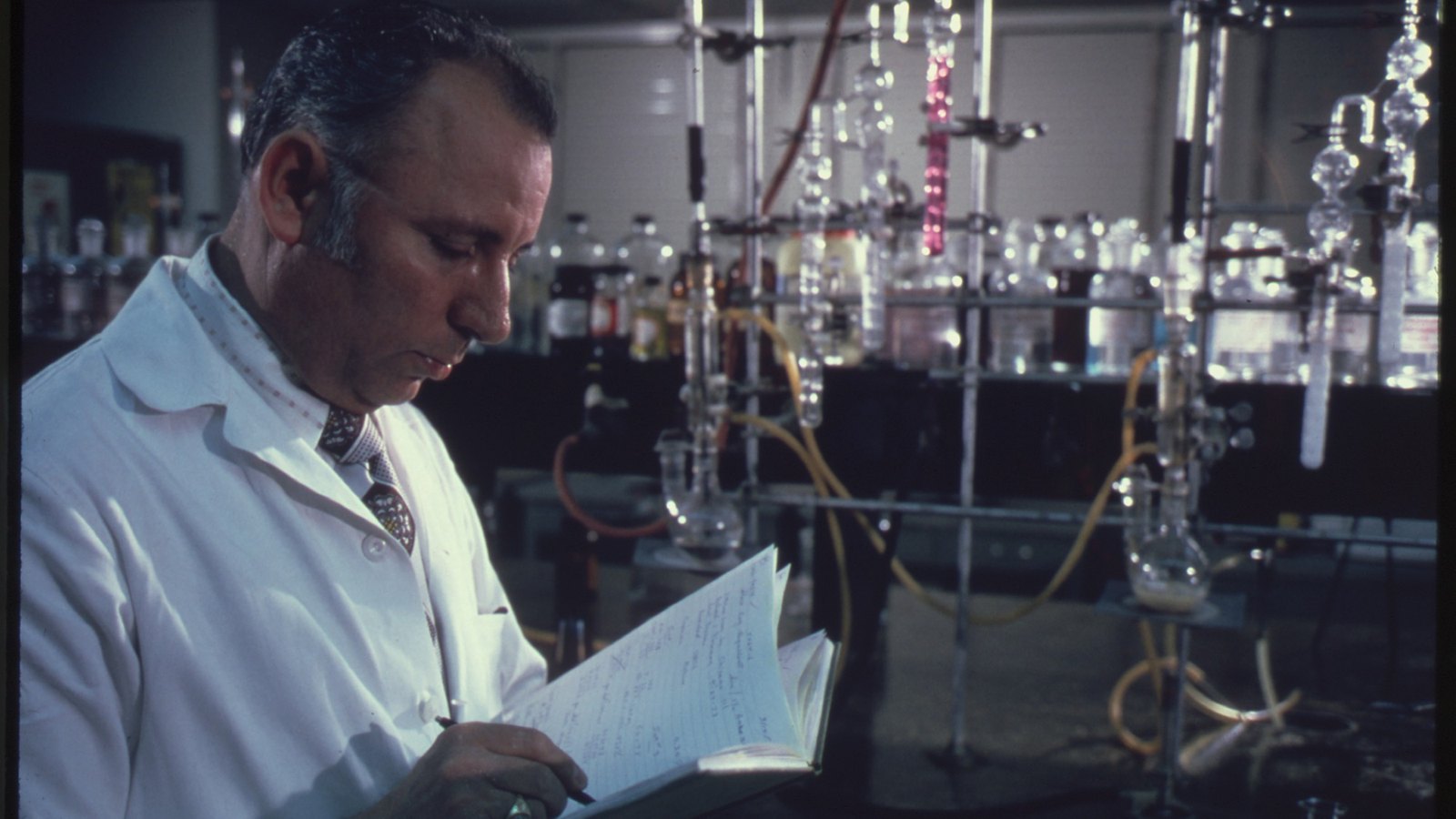
The U.S. Environmental Protection Agency submitted an Information Collection Request renewal for pesticide establishment registration and annual production reporting to the Office of Management and Budget on November 19, 2026, initiating a 30-day public comment period that directly impacts university research farms, academic chemical synthesis facilities, and agricultural laboratories across the United States.
Federal Register Notice and ICR 0160.14 Submission
In a formal regulatory notice published in the Federal Register (91 FR 74553), the Environmental Protection Agency announced the transmission of Information Collection Request (ICR) No. 0160.14 to the White House Office of Management and Budget (OMB) for statutory review and three-year extension. The ICR, registered under OMB Control No. 2070-0078 and titled “Application for Registration and Pesticide Report for Pesticide-Producing and Device-Producing Establishments,” establishes the federal paperwork mandate governing facilities that produce, formulate, package, or label pest-control agents. The publication of the official notice of submission officially triggers a 30-day public review window expiring on December 21, 2026, following an initial 60-day notice issued on July 30, 2026 (91 FR 48107). With the current administrative approval set to expire on November 30, 2026, the submission ensures ongoing administrative authorization for federal reporting systems that track domestic and foreign pesticide manufacturing entities.
Under Section 7 of the Federal Insecticide, Fungicide, and Rodenticide Act (FIFRA, 7 U.S.C. § 136e), any entity operating a facility that produces pesticides, active ingredients, or antimicrobial pest control devices must register with the EPA Administrator. The collection request encompasses both initial establishment notifications and recurring annual production reports. The submission was authorized by Courtney Kerwin, Deputy Director of the EPA Data and Enterprise Programs Division, in coordination with the EPA Office of Compliance within the Office of Enforcement and Compliance Assurance (OECA).
Reporting Requirements, Forms, and Compliance Metrics
Compliance under the renewed ICR rests on two core federal forms that capture facility data and production quantities under Title 40 of the Code of Federal Regulations (40 CFR Part 167). Entities subject to the rule submit their records through the EPA Central Data Exchange (CDX) via the electronic Section Seven Tracking System (SSTS), or alternately via regional paper filings.
- EPA Form 3540-8 (Application for Registration): A one-time initial filing required for all pesticide-producing and device-producing establishments prior to commencing production operations, establishing the unique EPA Establishment Number.
- EPA Form 3540-16 (Pesticide Production Report): A mandatory report submitted within 30 days of receiving establishment registration, and annually thereafter on or before March 1, documenting past-year production, distribution quantities, and projected production for the forthcoming year.
The EPA collection package updates the baseline estimates of national regulatory burden across 20,003 active establishments. While the revised ICR calculates a modest net decrease in total respondent hours due to refined respondent participation counts, it documents a notable increase in total annual compliance costs driven by rising hourly professional labor rates.
| Parameter | Current Renewal (ICR 0160.14) | Previous Approved ICR | Net Adjustment |
|---|---|---|---|
| Annual Respondent Entities | 20,003 | 20,668 | -665 establishments |
| Total Annual Burden Hours | 32,155 hours | 33,220 hours | -1,065 hours |
| Total Estimated Annual Cost | $2,899,331.40 | $2,735,968.14 | +$163,363.26 |
| Annual Capital & O&M Costs | $0.00 | $0.00 | $0.00 |
| Public Comment Window | 30 Days (ends Dec 21, 2026) | Standard 30-day OMB review | Final ICR renewal stage |
The quantitative metrics demonstrate that while automation within the CDX portal has trimmed aggregate preparation time, the cost of regulatory compliance per facility has increased due to elevated labor wage rates for technical specialists and compliance managers tasked with maintaining laboratory compliance frameworks.
Statutory Authority and the Central Data Exchange
The statutory backbone of federal pesticide tracking originated in the 1972 amendments to FIFRA, which mandated comprehensive cradle-to-grave oversight of pest management substances to protect public health and the environment. Section 7(a) requires registration of all establishments where chemical synthesis, formulation, blending, or relabeling occurs, while Section 7(c) authorizes mandatory production tracking. The federal regulations codified at 40 CFR Part 167 govern both commercial pesticide chemical plants and specialized facilities, establishing strict operational definitions that encompass active ingredient extraction and packaging.
To administer these requirements across thousands of registrants, the EPA launched the electronic SSTS module within its Central Data Exchange portal, as detailed on the EPA pesticide establishment registration and reporting guidance portal. Digital filing has gradually replaced regional paper submissions, allowing facility managers to verify EPA product registration numbers and submit annual sales figures electronically. Under the Paperwork Reduction Act (5 CFR 1320.03(b)), the EPA must periodically justify the paperwork burden imposed by these information collections, ensuring that the agency minimizes administrative duplication while retaining adequate data to support enforcement and biosecurity monitoring.
Legal Analysis and Enforcement Scrutiny
Environmental law practitioners and regulatory compliance consultants have highlighted that FIFRA Section 7 requirements carry disproportionate legal risk for entities that misinterpret the scope of “production.” In a legal compliance advisory published by Bergeson & Campbell, P.C. on the deadline for filing annual pesticide production reports, counsel emphasized that the statutory obligation to submit Form 3540-16 by March 1 applies unconditionally, even when an establishment had zero production, sales, or distribution during the preceding calendar year. Failing to submit a zero-production report constitutes a per se violation of FIFRA Section 12(a)(2)(L), which can result in the automatic suspension or cancellation of an establishment registration number.
Furthermore, an enforcement analysis released by Beveridge & Diamond P.C. reviewing FIFRA enforcement trends and federal priorities noted that the EPA has maintained aggressive oversight of establishment reporting violations through Expedited Settlement Agreement (ESA) programs and civil administrative proceedings. Under Section 14 of FIFRA, civil monetary penalties for failure to register an establishment or submit timely production data can exceed $20,000 per violation when adjusted for federal inflation. In addition to financial penalties, unregistered or delinquent facilities face immediate supply chain halts, as U.S. Customs and Border Protection and EPA import inspectors systematically cross-check Notice of Arrival (NOA) documentation against active SSTS registrations.
Implications for University Labs and Research Facilities
While large agricultural chemical manufacturers represent the majority of pesticide reporting entities, the FIFRA Section 7 mandate imposes critical operational obligations on university agricultural extension stations, experimental farm units, university chemical synthesis laboratories, and university pilot facilities. Under federal regulations, any academic facility that custom-synthesizes antimicrobial chemicals, formulates experimental biopesticides, repackages chemical agents for field trials, or produces antimicrobial surface devices meets the statutory definition of an establishment.
Research offices and environmental health and safety (EHS) departments must implement rigorous controls to avoid inadvertent non-compliance:
- Establishment Identification: University EHS teams must audit campus operations to determine whether pilot-scale synthesis facilities or cooperative extension sites require separate EPA Establishment Numbers under federal rules. Facilities that operate under cGMP facility standards or pilot-scale production protocols must ensure their regulatory filings match physical operations.
- Automated Chemical Tracking: Research institutions frequently deploy enterprise chemical safety software and digital inventory tools to reconcile chemical inventory movements against active pesticide registration numbers, ensuring that annual March 1 production quantities can be verified with precision.
- Aligning Integrity and Oversight: Compliance officers responsible for research integrity and compliance standards must ensure that faculty researchers conducting field-scale agricultural evaluations or developing novel pest-control devices do not distribute samples without proper Section 7 registration and Experimental Use Permits (EUPs).
- Industry Sector Classification: Multi-disciplinary academic technology transfer centers partnering with industry must classify novel chemical processes according to relevant chemical manufacturing NAICS classifications to ensure alignment between federal reporting obligations and commercial scale-up agreements.
Next Steps and Public Comment Procedures
The publication of the ICR renewal notice opens a 30-day window during which stakeholders, university research administrators, and chemical industry representatives may submit formal comments on the proposed paperwork burden. Interested parties may inspect the supporting statement and regulatory documents under Docket ID EPA-HQ-OECA-2011-0824 on the federal rulemaking docket. Public comments submitted to the EPA docket will be incorporated into the administrative record.
Simultaneously, written comments and recommendations regarding the ICR renewal may be submitted directly to the OMB Office of Information and Regulatory Affairs via the federal PRA portal at RegInfo.gov. Following the conclusion of the public comment period on December 21, 2026, the OMB will review submitted stakeholder feedback and issue an updated three-year Paperwork Reduction Act clearance, authorizing the EPA to maintain mandatory establishment registration and annual reporting protocols through late 2029.
Sources
- Office of the Federal Register: EPA Pesticide Establishment Reporting Renewal Notice (91 FR 74553), checked 2026-11-22
- U.S. Environmental Protection Agency: Pesticide Establishment Registration and Reporting, checked 2026-11-22
- Regulations.gov: Application for Registration and Pesticide Report for Establishments (Docket EPA-HQ-OECA-2011-0824), checked 2026-11-22
- Bergeson & Campbell, P.C.: Deadline for Filing Annual Pesticide Production Reports – March 1, 2026, checked 2026-11-22
- Beveridge & Diamond P.C.: FIFRA Enforcement: 2025 Year-End Roundup and Looking Forward to 2026, checked 2026-11-22


