
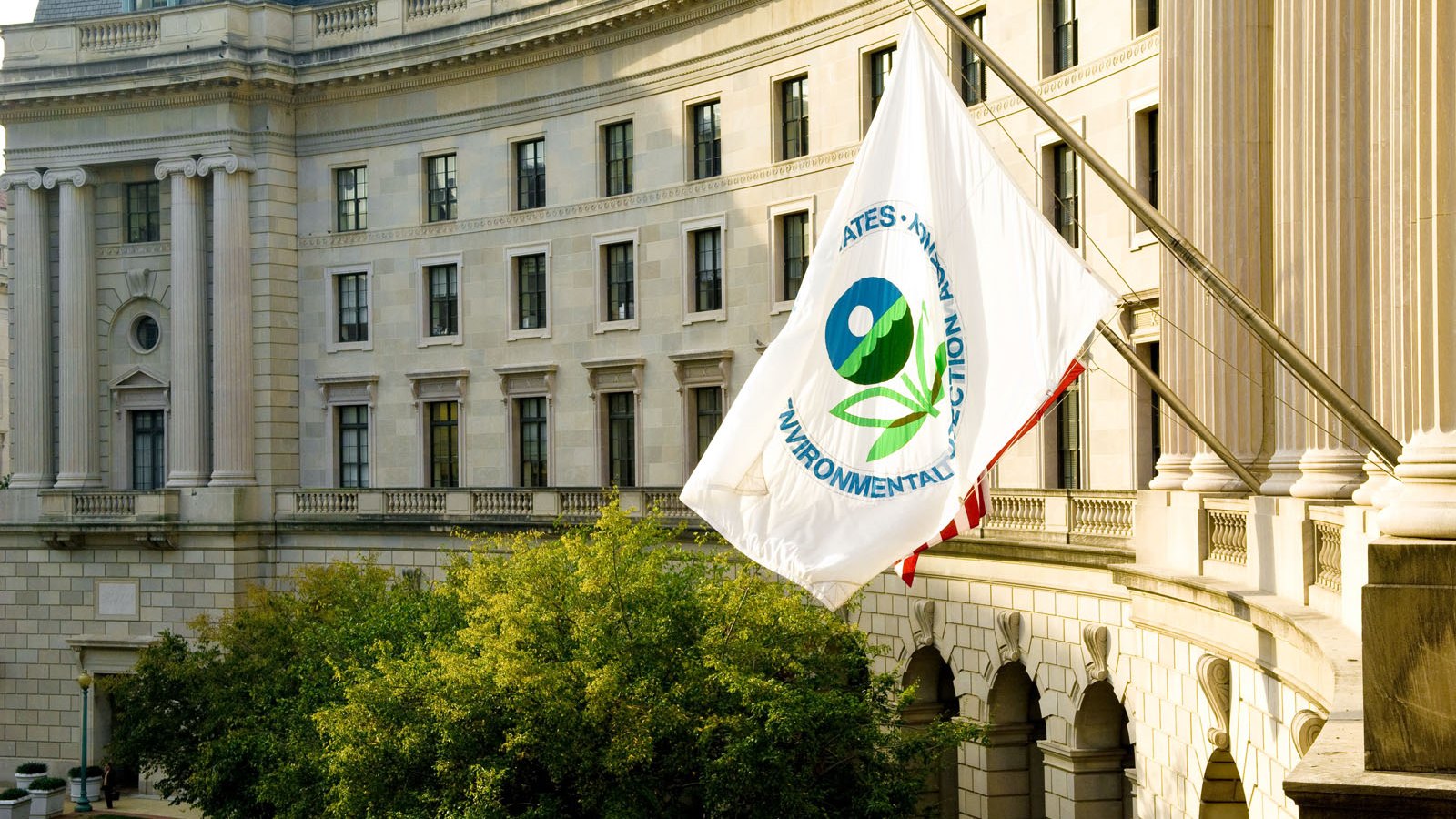
The U.S. Environmental Protection Agency proposed updating Resource Conservation and Recovery Act regulations on November 25, 2026, excluding discarded trivalent chromium leather personal protective equipment from hazardous waste rules under Federal Register Document 2026-24080, eliminating compliance uncertainties for university workshops, materials research laboratories, and academic environmental health and safety offices.
What happened
On November 25, 2026, the Environmental Protection Agency filed proposed regulatory amendments titled Reducing Complexity in Management of Leather Waste under Docket ID No. EPA-HQ-OLEM-2026-2773 and RIN 2050-AH51. The proposed rulemaking, signed by EPA Administrator Lee Zeldin and scheduled for formal publication on November 27, 2026, amends 40 CFR Part 261 by establishing an explicit hazardous waste exclusion for leather articles used as personal protective equipment (PPE).
Under current regulations governing solid waste, scrap leather generated during commercial leather tanning and product manufacturing has long been excluded from hazardous waste classification, despite containing trivalent chromium salts. However, because the existing exclusion enumerated only manufacturing scrap, end-users who purchased and wore identical leather protective articles—including welding gloves, safety boots, aprons, jackets, and protective headwear—faced potential Resource Conservation and Recovery Act (RCRA) Subtitle C hazardous waste liabilities when discarding worn items.
The agency highlighted the inconsistency of the existing framework: an off-specification leather glove damaged by a utility knife at a manufacturing plant could be discarded as ordinary non-hazardous waste, while an identical glove worn in a workshop could technically trigger hazardous waste classification upon disposal. The proposed rule resolves this contradiction by adding a new paragraph at 40 CFR 261.4(b)(6)(ii)(I) extending the exclusion to spent leather PPE articles.
Key details
Under RCRA testing regulations outlined in EPA guidance on characteristic hazardous wastes, solid materials are evaluated for toxicity characteristics using EPA Method 1311, known as the TCLP testing procedure. The regulatory threshold for total chromium is 5.0 milligrams per liter (mg/L). Because chrome tanning uses trivalent chromium (Cr III) to stabilize hides, discarded leather goods can leach extractable chromium concentrations exceeding 5.0 mg/L in laboratory tests, assigning the waste stream the hazardous code D007.
To qualify for the proposed exclusion, discarded leather PPE must satisfy three core conditions established in 40 CFR 261.4(b)(6)(i):
- Trivalent chromium speciation: The chromium present in the waste must be exclusively or nearly exclusively trivalent chromium, rather than toxic hexavalent chromium (Cr VI).
- Non-generating industrial processes: The articles must originate from manufacturing processes that utilize trivalent chromium exclusively and do not generate hexavalent chromium.
- Non-oxidizing disposal management: The waste must be typically and frequently managed in non-oxidizing disposal environments, such as municipal solid waste landfills where anaerobic reducing conditions prevent oxidation into hexavalent forms.
The proposal also establishes a strict contamination safeguard: the exclusion applies only if the discarded leather PPE does not exhibit any other hazardous waste characteristic—such as ignitability, corrosivity, or reactivity—and does not fail toxicity limits for any other regulated constituent, such as lead, cadmium, or chemical solvents. Contaminated leather articles remain fully regulated hazardous waste under Subtitle C.
| Waste Stream or Parameter | Current 40 CFR Part 261 Status | Proposed 40 CFR 261.4(b)(6)(ii)(I) Status |
|---|---|---|
| Manufacturing Scrap Leather | Excluded under 40 CFR 261.4(b)(6)(ii)(A)-(H) if criteria met | Unchanged; continues existing exclusion |
| Discarded Leather PPE Articles | Subject to D007 hazardous classification if TCLP Cr ≥ 5.0 mg/L | Explicitly excluded from hazardous waste classification |
| TCLP Chromium Limit (D007) | 5.0 mg/L threshold applies to end-of-life disposal | Testing waived for chromium if leather meets trivalent criteria |
| Chemical-Contaminated Leather PPE | Regulated under Subtitle C as characteristic or listed waste | Continues full Subtitle C regulation if contaminated by other hazards |
| Direct Federal Applicability | Governed by state-by-state guidance interpretation memos | Directly effective in non-authorized states; optional for authorized states |
Background and context
The distinction between trivalent and hexavalent chromium has formed an essential component of federal hazardous waste regulation since EPA promulgated initial RCRA standards in 1980 (45 FR 72030 and 45 FR 72037). While hexavalent chromium is a known human carcinogen with substantial environmental mobility, trivalent chromium is an essential dietary nutrient exhibiting low acute toxicity and negligible groundwater migration in standard soils. Because commercial hide tanning cannot occur with hexavalent chromium, tanners maintain strong operational incentives to exclude hexavalent compounds from their processes.
Based on empirical leaching evaluations, EPA created specific exclusions in 40 CFR 261.4 for tannery trimmings, leather shavings, buffing dust, and shoe manufacturing scrap. However, because those provisions did not enumerate finished PPE, safety officers implementing an institutional laboratory chemical hygiene plan faced uncertainty regarding the lawful disposal of worn leather gear.
To address confusion, EPA previously issued administrative interpretations, including guidance from Office of Solid Waste Director Matt Hale to the South Carolina Department of Health and Environmental Control (RCRA Online Document No. 14733), indicating that clean leather PPE met the exclusion intent. While several states adopted similar policies, the lack of codified federal text led many landfill operators to demand analytical testing before accepting leather PPE shipments.
Reaction and stakeholder perspectives
Environmental health and safety professionals, engineering facility directors, and vocational training managers have welcomed the proposed rule as an important measure to eliminate unproductive administrative friction. Research facilities frequently utilize heavy-duty leather protection for hot work, metallurgy, glassblowing, and mechanical maintenance operations where synthetic materials cannot provide adequate thermal or abrasion defense.
When selecting protective equipment using a glove compatibility chart, laboratory managers distinguish between disposable chemical barriers governed by nitrile glove chemical resistance data and heavy leather articles chosen for mechanical and thermal protection. The Occupational Safety and Health Administration requires employers to provide certified personal protective equipment under its personal protective equipment standards, making leather workwear widespread across academic physical plants and technical workshops.
Regulatory analysts observe that because the rulemaking is designated a deregulatory action under Executive Order 14192, authorized state hazardous waste programs are not mandated under RCRA Section 3006 to adopt the exclusion into state law. Nevertheless, EPA strongly urged state environmental agencies to incorporate the amendment to provide uniform national waste management rules.
What it means for researchers, universities and research offices
The proposed amendment provides meaningful regulatory relief for universities, colleges, and research institutes maintaining engineering workshops, central maintenance facilities, and research laboratories. Key administrative and compliance implications include:
- Relief from analytical TCLP testing expenses: Campus environmental safety offices will no longer need to conduct costly EPA Method 1311 extraction testing to demonstrate that spent, uncontaminated leather welding gloves and boots comply with chromium toxicity limits.
- Preservation of hazardous waste generator thresholds: Excluding heavy leather workwear from hazardous waste counts helps institutions near Small Quantity Generator (SQG) and Large Quantity Generator (LQG) thresholds avoid crossing into higher regulatory tiers based solely on discarded protective apparel.
- Refined waste segregation protocols: Institutional standard operating procedures must distinguish clean leather gear from chemical-contaminated items. Leather articles exposed to toxic solvents or listed hazardous wastes must continue to be collected and manifested as regulated hazardous waste.
- Contractual adjustments with waste haulers: Research procurement and waste coordinators can review vendor contracts to remove specialized hazardous waste surcharges previously applied to routine leather PPE disposal.
- Monitoring of state adoption timelines: Facilities operating in multiple jurisdictions must verify that state environmental regulators formally integrate the federal exclusion into local administrative codes before altering disposal practices.
What happens next
Following Federal Register publication, EPA will accept public comments for 60 days under Docket ID No. EPA-HQ-OLEM-2026-2773, with the comment window closing in late January 2027. Stakeholders may submit comments via the Federal eRulemaking Portal at Regulations.gov or through the EPA Docket Center in Washington, D.C.
Once public comments are evaluated and a final rule is promulgated, the exclusion will become immediately effective in non-authorized states (currently Iowa), U.S. territories, and tribal lands. In the 48 authorized states, the provision will take effect upon formal state-level administrative adoption. University compliance officers should track state regulatory registers throughout 2027 to ensure coordinated institutional implementation.
Sources
- Federal Register :: Public Inspection: Reducing Complexity in Management of Leather Waste, checked 2026-11-25
- eCFR :: 40 CFR Part 261 — Identification and Listing of Hazardous Waste, checked 2026-11-25
- Defining Hazardous Waste: Listed, Characteristic and Mixed Radiological Wastes | US EPA, checked 2026-11-25
- 40 CFR § 261.4 – Exclusions. | Electronic Code of Federal Regulations (e-CFR) | US Law | LII / Legal Information Institute, checked 2026-11-25
- Personal Protective Equipment – Overview | Occupational Safety and Health Administration, checked 2026-11-25






