
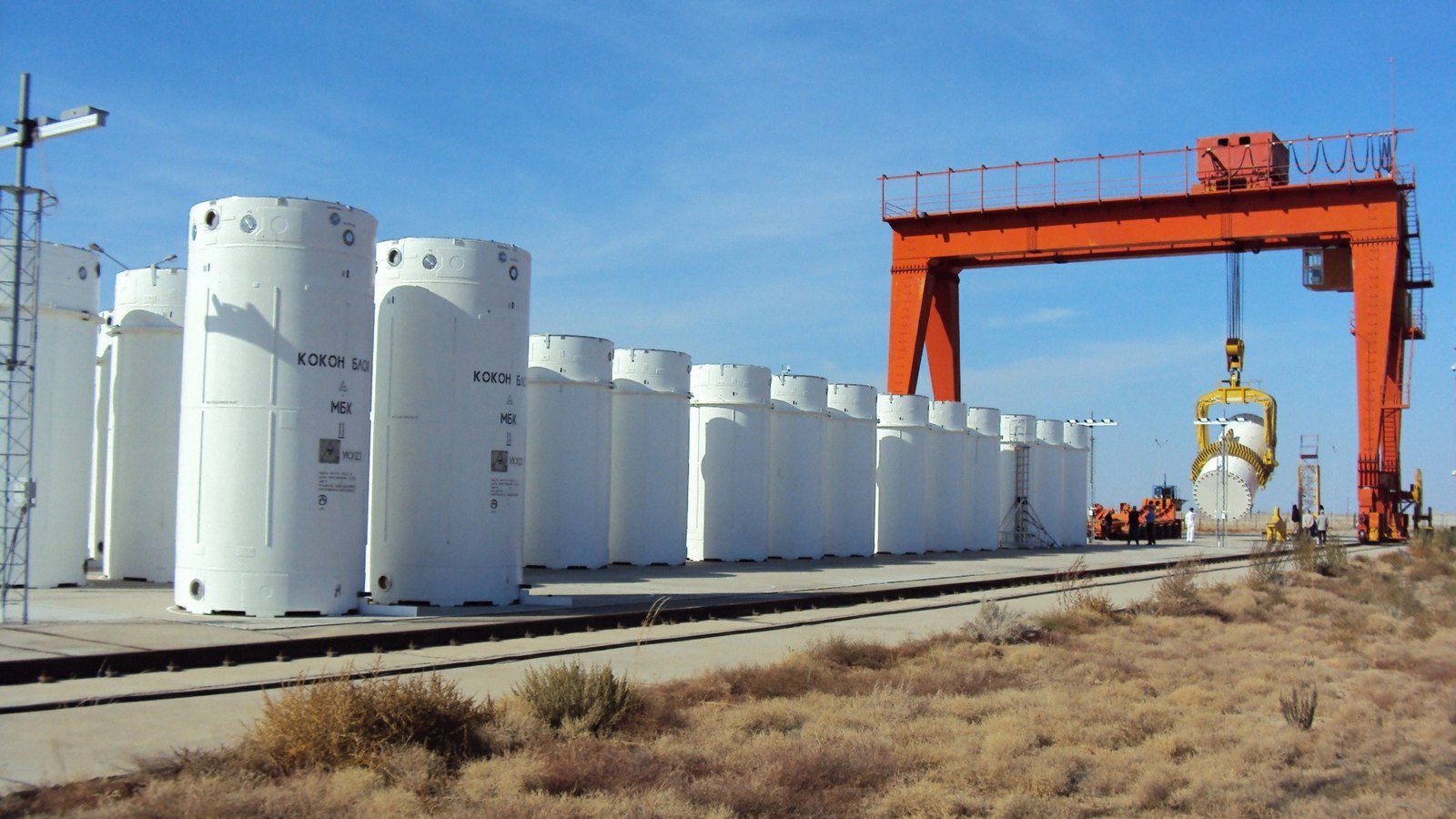
On November 25, 2026, the Nuclear Regulatory Commission published a notice for Federal Register Document 2026-24075, docketing a license amendment for the Prairie Island Independent Spent Fuel Storage Installation in Welch, Minnesota. The filing updates evaluation timelines for high-burnup dry storage fuel, directly affecting research reactors, materials scientists, and university compliance offices overseeing long-term nuclear storage data.
What happened
Northern States Power Company, an Xcel Energy subsidiary doing business as NSPM, submitted an application to amend Special Nuclear Materials License No. SNM-2506 for the Prairie Island Independent Spent Fuel Storage Installation. Transmitted by letter dated August 24, 2026 under ADAMS Accession No. ML26236A344, the application requests a revision to License Condition 26, which governs technical evaluation schedules for high-burnup nuclear fuel.
Following an administrative completeness review concluded on October 21, 2026 (ADAMS Accession No. ML26286A294), the NRC determined the application acceptable for formal technical evaluation. On November 23, 2026, Yoira Diaz-Sanabria, Chief of the Storage and Transportation Licensing Branch in the Division of Storage of Fuel, Transportation, and Environmental, Office of Nuclear Material Safety and Safeguards, executed the regulatory notice of docketing under Docket No. 72-10 and Docket ID NRC-2026-5017.
Under 10 CFR Part 72, licensees operating site-specific spent fuel installations must monitor long-term fuel performance. License Condition 26 requires two formal evaluations of stored high-burnup assemblies. The first evaluation was previously due April 4, 2028. NSPM proposes extending this milestone to within six months of the publication of an initial national demonstration research report or April 4, 2033, whichever is earlier.
Key details and technical specifications
The amendment request reflects timeline changes in the High Burnup Dry Storage Cask Research and Development Project (HDRP), a joint initiative sponsored by the U.S. Department of Energy and the Electric Power Research Institute. The HDRP generates empirical data on high-burnup fuel integrity during extended storage.
High-burnup spent nuclear fuel, irradiated past 45 gigawatt-days per metric ton of uranium, experiences elevated cladding stress, thermal loads, and hydride reorientation. To evaluate these mechanics, the national research team loaded a modified TN-32B bolted-lid storage cask with 32 high-burnup assemblies at North Anna Power Station in 2017. The demonstration cask incorporates 63 thermocouple sensors to validate thermal modeling of the TN-32B cask.
The project protocol requires periodic gas extraction to detect fission products and confirm containment boundary integrity. Recent scheduling for offsite laboratory testing and analysis of cavity gas samples showed that gas sampling and the associated EPRI report cannot be completed in time for Prairie Island’s 2028 deadline.
The following table summarizes the core provisions and regulatory parameters of the amendment application:
| Parameter | Current License Condition 26 | Proposed Revision | Technical and Compliance Basis |
|---|---|---|---|
| First High-Burnup Evaluation Due Date | April 4, 2028 | Within 6 months of HDRP report or April 4, 2033 | Accommodates delayed HDRP gas sampling and EPRI report completion |
| Empirical Benchmark Source | EPRI/DOE High Burnup Demonstration Project | EPRI/DOE High Burnup Demonstration Project | Maintains reliance on 32-assembly instrumented TN-32B cask data |
| Statutory Authority | 10 CFR Part 72 (SNM-2506) | 10 CFR Part 72 (SNM-2506) | Governs independent storage of spent nuclear fuel and high-level waste |
| Environmental Classification | 10 CFR 51.22(c)(11) Categorical Exclusion | 10 CFR 51.22(c)(11) Categorical Exclusion | No significant change in facility effluent types or total amounts |
| Intervention Filing Window | Closed (original licensing proceeding) | 60 days from Federal Register notice | Public hearing opportunity governed by 10 CFR 2.309 and 2.315 |
Background and regulatory context
Commercial nuclear generating stations store spent fuel on-site in dry casks following initial cooling in spent fuel pools. The NRC licenses these installations under 10 CFR Part 72 via general licenses or site-specific licenses. Prairie Island operates under site-specific Materials License SNM-2506, originally issued in 1993 and subsequently renewed for extended operational periods.
For renewed storage terms extending up to 60 years, federal safety reviews mandate aging management programs addressing passive components, including containment seals, radiation shielding, and fuel cladding. Because high-burnup assemblies were introduced to extend operating cycles, empirical long-term data on cladding behavior under dry storage was initially limited.
To establish empirical baselines without delaying commercial licensing, the NRC tied Prairie Island’s license conditions to national demonstration projects. Data from North Anna and national laboratory sister rod examinations inform long-term safety modeling. Similar long-term materials modeling frameworks are utilized in the development and licensing of advanced non-light-water systems, including high-temperature sodium-cooled fast reactors.
Reaction and stakeholder analysis
NRC staff emphasized that formal docketing initiates a thorough safety review rather than automatic approval. Technical reviewers will independently assess whether extending the deadline affects the licensee’s ability to identify or address cladding degradation before making statutory findings under the Atomic Energy Act.
Nuclear engineering specialists and EPRI researchers noted that synchronizing regulatory filings with empirical laboratory results preserves data integrity. Rushing evaluations with incomplete gas-sampling data would force reliance on conservative computational extrapolations rather than verified physical measurements.
The notice also outlines procedural rights for local stakeholders. The Prairie Island Indian Community is located adjacent to the plant and storage pad. Under 10 CFR 2.309(h) and 10 CFR 2.315(c), federally recognized Indian Tribes, host states, and local governmental bodies may participate as formal parties or non-party commenters.
What it means for researchers, universities and research offices
The NRC regulatory action carries direct compliance, scientific, and administrative relevance for academic institutions, nuclear engineering laboratories, and research administration offices:
- Radiation safety governance and committee oversight: University facilities operating research reactors or holding broad-scope materials licenses should engage their institutional Radiation Safety Committee to review dry storage and radioactive materials management procedures against evolving NRC aging guidance.
- Experimental data integrity and modeling standards: Academic research teams performing thermal-hydraulic simulations and fuel decay analyses must maintain strict data integrity protocols to ensure computational models conform to federally benchmarked empirical datasets.
- Subcontractor audit and materials testing protocols: Universities performing testing on irradiated sister rods or fuel surrogates must prepare for formal second-party audit inspections conducted by utility sponsors and regulatory oversight bodies.
- Export control compliance and technical data boundaries: Institutions collaborating with international researchers on advanced fuel cycle modeling or cask shielding designs must maintain compliance with international export controls, including guidelines established under the Nuclear Suppliers Group.
- Sponsored research and grant opportunities: The extended 2033 timeline for HDRP research confirms ongoing federal and industry investment in spent fuel characterization, highlighting sustained funding avenues for academic investigators in materials degradation and non-destructive examination.
What happens next
Federal Register Document 2026-24075 will be officially published on November 27, 2026, opening a 60-day window for public hearing requests and petitions to intervene under 10 CFR Part 2. The filing deadline is January 26, 2027.
Petitions must be filed electronically through the NRC E-Filing system. Participants without an NRC digital ID certificate must contact the NRC Office of the Secretary at least 10 days before the January 26, 2027 deadline to establish electronic credentials.
NRC technical staff will continue their evaluation of NSPM’s application and environmental categorical exclusion claim under 10 CFR 51.22(c)(11), documenting their findings in a formal Safety Evaluation Report. If approved, the amendment will establish a revised reporting deadline tied to EPRI’s HDRP publication prior to the April 4, 2033 backstop.
Sources
- Federal Register: Public Inspection: Licenses; Exemptions, Applications, Amendments, etc.: Northern States Power Co., Prairie Island Independent Spent Fuel Storage Installation, checked 2026-11-25
- Electronic Code of Federal Regulations: 10 CFR Part 72 — Licensing Requirements for the Independent Storage of Spent Nuclear Fuel, High-Level Radioactive Waste, and Reactor-Related Greater Than Class C Waste, checked 2026-11-25
- OSTI.GOV: Thermal Modeling of the TN-32B Cask for the High Burnup Spent Fuel Data Project (Technical Report), checked 2026-11-25
- OSTI.GOV: Analysis of Gas Samples Taken from the High Burnup Demonstration Cask (Technical Report), checked 2026-11-25
- Electric Power Research Institute: Nuclear Sector Research and Long-Term Operations, checked 2026-11-25






