
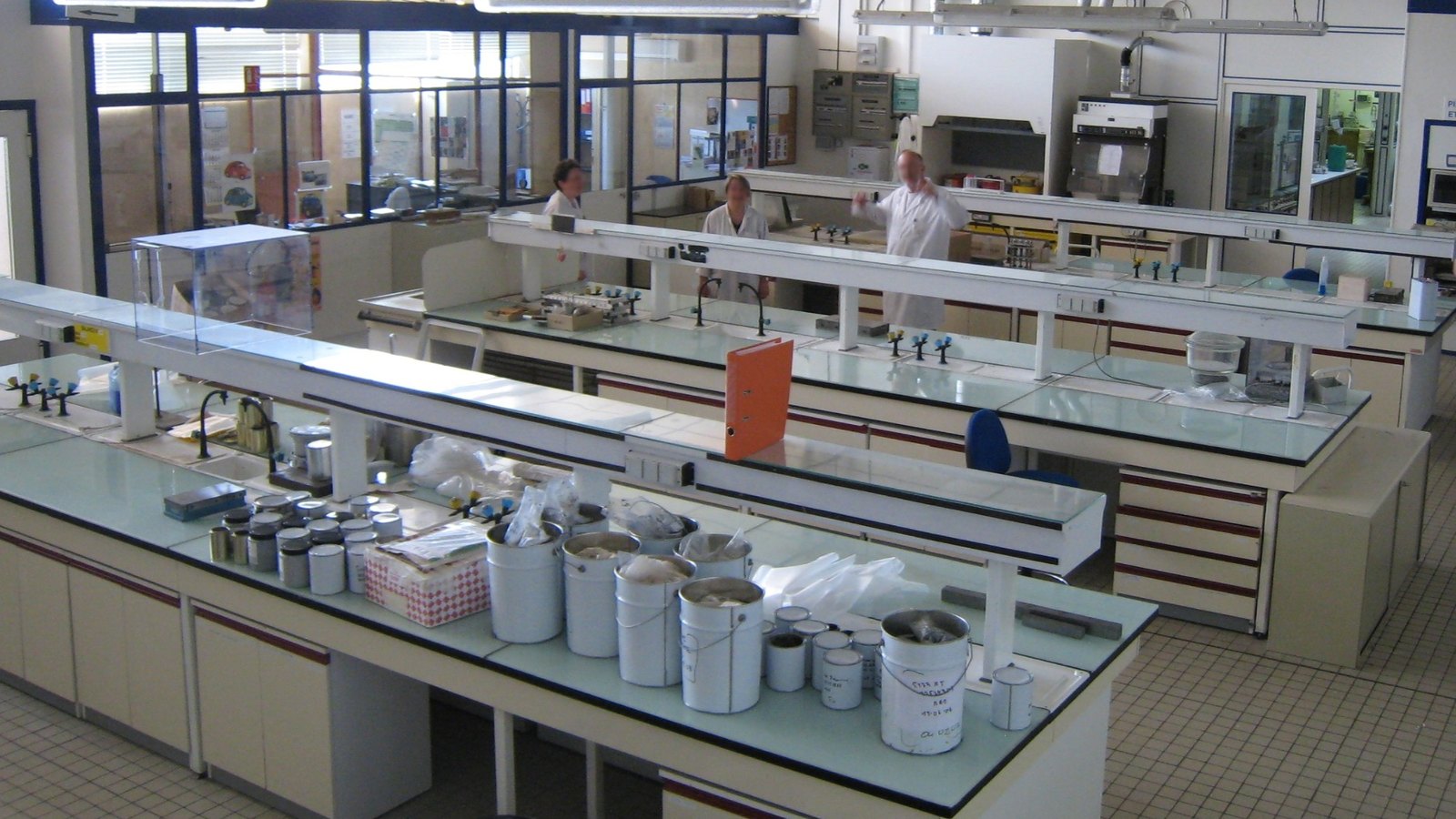
On 20 November 2026, UK Research and Innovation announced a £1.7 million joint grant from the Engineering and Physical Sciences Research Council and the Department for Environment, Food and Rural Affairs awarded to the University of Bath to scale chemical recycling technologies for acrylic plastics under the Research to advance UK recycling capabilities programme, providing a crucial model for university research offices navigating sustainability funding.
Joint EPSRC and Defra Award for Acrylic Depolymerisation
The £1.7 million award finances a multidisciplinary engineering and chemistry initiative at the University of Bath designed to bridge the gap between laboratory polymer cleavage and commercial-scale plastic recovery. Jointly funded by the Engineering and Physical Sciences Research Council (EPSRC) and the Department for Environment, Food and Rural Affairs (Defra), the project targets polymethyl methacrylate (PMMA), a durable transparent resin widely known by commercial trade names such as Perspex, Plexiglas, and Lucite. While PMMA is heavily utilized across automotive glazing, medical diagnostic equipment, architectural installations, and digital displays, UK recycling rates for acrylics have remained near zero due to thermodynamic and purity constraints.
The research consortium is directed by core members of Bath’s Institute of Sustainability and Climate Change (ISCC), uniting lead investigator Dr Simon Freakley and ISCC Research Fellow Dr Jon Husband with co-investigators Dr Sanjay Nagarajan and Dr Sam Cooper. The programme integrates researchers across the Department of Chemistry, the Department of Chemical Engineering, and the Department of Mechanical Engineering, with strategic advice from Professor Matthew Davidson, Director of the Innovation Centre for Applied Sustainable Technologies (iCAST). According to project disclosures reported by EurekAlert, the team has recruited two postdoctoral research associates and one doctoral student to execute continuous reactor scale-up.
UKRI established the joint programme to back collaborative research tackling hard-to-recycle materials. “This investment reflects our commitment to building a cleaner, more sustainable UK economy,” stated Dr Kedar Pandya, Executive Director for Strategy at EPSRC. “By funding ambitious, collaborative and impactful research into recycling technologies, we are helping to tackle some of the most complex challenges in our waste system from collection through to currently hard-to-recycle material recovery. The research being undertaken, which is jointly funded by EPSRC and Defra, will support the long-term transition to a circular economy and creates the conditions for genuine economic and environmental benefit for the UK.”
Technical Specifications and Process Comparison
The engineering objective of the programme is scaling a continuous photochemical depolymerisation process that unzips solid acrylic chains back into virgin-grade methyl methacrylate (MMA) monomer. Conventional mechanical recycling degrades PMMA severely; thermal extrusion shears polymer chains, inducing yellowing, haze, and mechanical embrittlement that prevent reused acrylic from meeting optical specifications. Conversely, commercial chemical recycling historically required pyrolysis reactors heated to between 350°C and 400°C, consuming substantial energy, producing volatile char, and often depending on hazardous halogenated reagents.
The University of Bath process overcomes these barriers by operating at low temperatures between 120°C and 180°C in an oxygen-free solvent environment. Triggered by ultraviolet light and an earth-abundant catalyst, the reaction selectively cleaves carbon-carbon bonds without requiring chlorine-based solvents. The resulting liquid monomer achieves over 99% purity, permitting endless repolymerisation without optical downcycling. Evaluating these cost benchmarks against virgin petrochemical monomers requires rigorous techno-economic analysis across early pilot operations.
| Recycling Method | Operating Temperature | Energy Intensity | Recovered Material Quality | Primary Process Constraints |
|---|---|---|---|---|
| Mechanical Remelting | 200–250°C | Low to Moderate | Downcycled (optical haze, loss of impact strength) | Incapable of producing virgin optical sheets |
| Thermal Pyrolysis | 350–400°C | High (direct thermal cracking) | Variable purity monomer requiring redistillation | High emissions, char fouling, hazardous lead/salt baths |
| Bath UV Photodepolymerisation | 120–180°C | Low (catalytic photon unzipping) | Virgin-grade methyl methacrylate monomer (>99%) | Requires controlled UV flux and feed dissolution |
Background and Earlier Discoveries at the University of Bath
The new £1.7 million grant builds directly on proof-of-concept depolymerisation chemistry developed by Dr Husband and Dr Freakley at Bath. In early 2026, the team demonstrated that chlorine-free chemical unzipping was feasible in greener organic solvents, publishing their findings in Nature Communications under the title Photo-initiated solvent-mediated depolymerization of consumer poly(methyl methacrylate) without chlorinated reagents. Prior academic dogma held that photo-induced depolymerisation of PMMA required chlorinated solvents to stabilise radical intermediates, posing prohibitive toxicity hazards that stalled industrial adoption.
By eliminating toxic reagents and optimising catalyst kinetics, the team validated the technique across diverse post-consumer specimens, including tinted automotive tail-lights and signage. As detailed in the University of Bath announcement, the recovered monomer was successfully repolymerised into pristine acrylic sheets. Regulatory analysis published by the Chartered Institute of Environmental Health emphasised that lowering depolymerisation temperatures below 200°C eliminates hazardous cracking emissions and volatile releases, aligning university research with national clean-air objectives.
Consortium Leadership and Stakeholder Reactions
Consortium researchers underscored that commercial translation requires crossing traditional academic boundaries. “This funding allows us to expand our approach from a laboratory breakthrough into a more comprehensive, scalable solution,” explained Dr Freakley. “By combining expertise across disciplines, we can address the full lifecycle of acrylic materials and move closer to truly circular use.”
Dr Husband noted the infrastructure hurdles confronting secondary plastics. “Acrylic plastics are widely used but challenging to recycle efficiently,” he stated. “This project gives us the platform to develop technologies that could significantly reduce waste and unlock long-term sustainability benefits.” Industry coverage in AZoCleantech emphasized that high embedded economic value makes PMMA an optimal candidate for chemical recycling. Concurrently, analysis in Circular Online highlighted that domestic unzipping capabilities will safeguard UK advanced manufacturing against raw-material supply shocks.
Implications for University Research Offices and Grants Management
For university research administrators, the award illustrates key funding priorities under UKRI’s Building a Green Future strategic theme. Dispatched through standard UKRI Grants mechanisms, the opportunity operates under the Full Economic Costing (fEC) model, with EPSRC funding 80% (£1.36 million) of total eligible project costs and the university underwriting the remaining institutional share. University research offices managing sustainability grants can draw concrete lessons for their grants management pipelines:
- Dual-Sponsor Environmental Alignment: Because Defra co-funds the call, applications must balance fundamental chemical engineering with policy metrics aligned with Defra’s Circular Economy Task Force, demonstrating that chemical recycling complements rather than cannibalises reuse and mechanical recovery.
- Cross-Departmental Cost Apportionment: Spanning Chemistry, Chemical Engineering, and Mechanical Engineering, the Bath award required pre-award reconciliation of space charges, technician time, and faculty overhead distributions.
- Estates and Hazardous Equipment Clearances: Transitioning from gram-scale glassware to automated flow rigs requires specialized UV containment, ventilation, and solvent management that must be vetted by institutional estates committees prior to submission.
- Technology Transfer and Commercialisation: Research development teams must liaise with institutional technology transfer offices early to secure proof-of-concept funding and protect patentable photochemical reactor IP before industrial licensing commences.
Programme Milestones and Implementation Timeline
The £1.7 million grant spans a 36-month performance period running through late 2029. Initial milestones over months 1 to 6 focus on onboarding research personnel, commissioning pilot continuous photochemical reactors within the ISCC, and sourcing commercial PMMA waste feedstocks. During months 7 to 18, the team aims to establish continuous monomer throughput exceeding 100 grams per hour while optimising solvent recycling loops to achieve 98% internal recovery. Interim stage-gate reviews by Defra and EPSRC will assess process energetics and repolymerisation quality before scaling the system toward commercial demonstration.
Sources
- UKRI: Research to advance UK recycling capabilities, checked 2026-11-21
- University of Bath: Breakthrough offers endless recycling for acrylic plastics without the environmental cost, checked 2026-11-21
- Nature Communications: Photo-initiated solvent-mediated depolymerization of consumer poly(methyl methacrylate) without chlorinated reagents, checked 2026-11-21
- EurekAlert: £1.7 million UKRI investment to advance Perspex recycling research at Bath, checked 2026-11-21
- AZoCleantech: £1.7 Million UKRI Investment to Advance Perspex Recycling Research at Bath, checked 2026-11-21
- Chartered Institute of Environmental Health: Breakthrough made in sustainable recycling of acrylic, checked 2026-11-21
- Circular Online: New method for recycling acrylic plastic in circular system developed, checked 2026-11-21


