
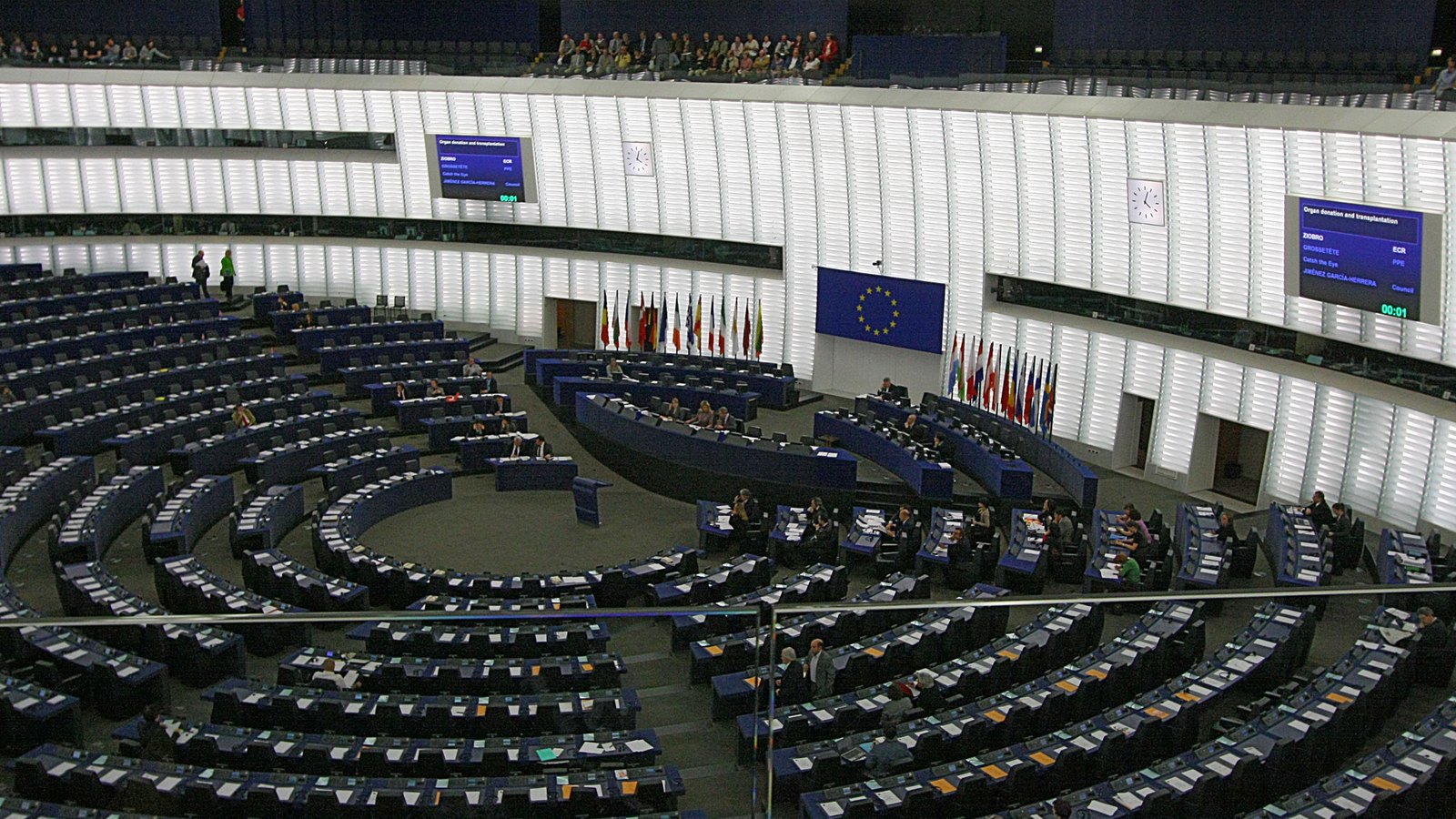
The European Parliament voted in plenary in Strasbourg on Wednesday 25 November 2026 to approve its negotiating mandate for the Horizon Europe framework programme 2028–2034 (FP10) by 458 votes to 190, with 14 abstentions, and the mandate for the European Competitiveness Fund (ECF) by 386 to 252, with 23 abstentions. The votes follow the committee decision of 10 November and set up trilogue talks with member states once the Council has its own position.
What happened
According to the Parliament’s press release of 26 November, MEPs voted on Wednesday on seven negotiating mandates after objections were raised to some committee decisions. Three further files (the Justice programme, Union support for internal security, and support for the Schengen area, border management and visas) went ahead without objection when the President announced them at the start of the Monday session. Both research-relevant files passed with clear majorities:
| File | For | Against | Abstentions |
|---|---|---|---|
| Horizon Europe framework programme 2028–2034 | 458 | 190 | 14 |
| European Competitiveness Fund, including the defence research and innovation programme | 386 | 252 | 23 |
| Global Europe | 416 | 233 | 9 |
| European Social Fund | 457 | 199 | 6 |
| Connecting Europe Facility | 451 | 173 | 38 |
| Asylum, migration and integration | 445 | 208 | 10 |
| AgoraEU 2028–2034 | 448 | 206 | 10 |
The same release says MEPs are prepared to enter negotiations with EU governments on these sectoral files once the Council has adopted its full mandate, including the overall financing levels of the next long-term budget.
Key details
Agence Europe reports that the ECF mandate was the narrowest of the seven. The Industry, Research and Energy (ITRE) Committee adopted it on 10 November, with Christian Ehler (EPP) and Dan Nica (S&D) as co-rapporteurs. On 23 November Parliament President Roberta Metsola announced that the mandate could be challenged, because a challenge from the Patriots for Europe group had gathered enough signatures. Agence Europe also reports that several Renew Europe MEPs, particularly from the French delegation, opposed the text because its defence strand is too open to third countries.
Under the mandate as Agence Europe describes it, the ECF’s defence strand could be opened to third countries through full or partial association, subject to association and financial rules. The categories run from EFTA/EEA states, Andorra, Monaco and San Marino, through acceding and candidate countries such as Ukraine and Moldova and countries covered by the European Neighbourhood Policy, to all other third countries, including the United States. French MEP Christophe Grudler (Renew Europe) said he agrees with about 90% of the fund but not its defence strand, and argued for European control over the technologies developed.
For Horizon Europe, the position rests on the compromise text ITRE adopted on 10 November. UKRI’s Horizon Europe office summarises it: Parliament proposes €200 billion for FP10, against the Commission’s €175 billion and the Council’s revised October figure of €158 billion. It aims to “preserve FP10 as an autonomous R&I programme” while strengthening its contribution to competitiveness, with FP10 and the ECF keeping separate work programmes and regular joint committee meetings.
UKRI also lists provisions on scientific independence and governance: safeguarding the autonomy and bottom-up nature of the European Research Council and the Marie Skłodowska-Curie Actions, a formal annual dialogue between the ERC President and Parliament, and a “Fast Track to Excellence” instrument for small bottom-up projects of up to €2 million. A single High Level Council of at least 30 independent experts would advise the Commission, and European Partnerships would be limited to exceptional, justified cases, capped at 35 at any one time against around 60 today. Parliament also wants FP10 to remain civilian-focused, in contrast to the Commission’s dual-use-by-default proposal.
Background and context
The plenary votes came three days after European Council President António Costa circulated a compromise on the 2028–2034 multiannual financial framework (MFF) on 21 November. Parliament’s earlier position, adopted in April, calls for a budget of 1.27% of EU gross national income (GNI), with a further 0.11% of GNI to repay NextGenerationEU debt on top. The press release says Costa’s additional cuts would take the overall budget below 0.97% of GNI against the Commission’s autumn forecast. Our earlier coverage traces the steps: the ITRE committee vote of 10 November, the Costa compromise that held research at €158 billion and the Nobel laureates’ appeal for €200 billion. For the programme’s current rules, see our Horizon Europe funding overview.
Reaction
In the Wednesday morning debate on Costa’s compromise, MFF co-rapporteur Siegfried Mureşan (EPP) said: “It is a weaker position for a weaker EU, and the European Parliament cannot support this.” Co-rapporteur Carla Tavares (S&D) said new own resources must not be traded for a budget below 1% of GNI. Budget Commissioner Piotr Serafin said the proposal makes the budget smaller as a share of GNI than the 2020 MFF and that “less is really less, less value for money, less competitiveness and less security.”
The research community had lined up behind the Parliament text before the vote. LERU’s statement of 9 November welcomed the ITRE compromise, said the Commission’s €175 billion is insufficient, and supported keeping FP10 autonomous, with the ECF complementing it by scaling up successful outcomes rather than absorbing it. LERU Secretary-General Kurt Deketelaere said: “At least €200 billion for Horizon Europe is not an excessive ambition.”
What it means for researchers, universities and research offices
The vote fixes Parliament’s opening position; it does not set FP10’s size. The research envelope will be decided in the MFF negotiation, and the current Council figures (€158 billion) sit well below Parliament’s €200 billion, so multi-year budget models for 2028 onwards should treat both as bounds, not forecasts. This is an editorial reading, not a statement from any institution.
Three design questions matter for planning. First, the relationship between FP10 and the ECF: Parliament wants separate work programmes, while the ECF’s own defence strand remains contested. Second, ERC and MSCA independence and the proposed fast-track instruments, which would shape bottom-up proposal strategies. Third, association: UKRI notes the compromise adds a fifth association category covering the UK and Switzerland, and says what it would mean in practice is unclear from the text. Offices with international partners should follow it closely, along with the civilian-focus and research-security provisions, which affect which calls partners can join.
What happens next
According to the Parliament release, negotiations on the sectoral files begin once the Council adopts its full mandate with overall financing levels. UKRI says governments hope to agree the overall 2028–2034 budget by the end of the year. Adopting the MFF itself requires unanimity in the Council and consent by an absolute majority of MEPs.
Sources
- European Parliament press release (Strasbourg, 26 November 2026), via EuropaWire: Parliament opposes Costa’s EU budget compromise and endorses seven negotiating mandates
- Agence Europe: Opening defence funds to all third countries: European Parliament mandate on European Competitiveness Fund confirmed
- UKRI Horizon Europe office: Updates to the EU Parliament proposal for Horizon Europe 2028-34 (FP10)
- LERU: European Parliament set to back ambitious FP10 as European research community launches €200 billion campaign (9 November 2026)






