
On November 27, 2026, the Export-Import Bank of the United States issued financing reviews for export loan guarantees exceeding $100 million for Papua New Guinea’s Papua LNG liquefaction facility under Document No. 2026-24279 and Boeing aircraft exports to South Korea under Document No. 2026-24204. The statutory 25-day review window sets critical procurement and compliance benchmarks for academic research offices, international trade economists, and engineering contractors.
Federal Financing Applications for Liquefied Natural Gas and Commercial Aviation
The Export-Import Bank of the United States (EXIM) published two public inspection notices in the Federal Register on November 27, 2026, opening formal public comment proceedings on separate export financing packages exceeding $100 million. Both transactions invoke Section 3(c)(10) of the Export-Import Bank Act of 1945, as amended (12 U.S.C. 635a(c)(10)), which requires public disclosure and a comment period before major financing commitments receive final consideration by the EXIM Board of Directors.
The first transaction (AP089509XX, Docket EIB-2026-0529) reviews an application for a final commitment to finance U.S. engineering services, cryogenic processing equipment, and technical support. The foreign obligor is Papua LNG Company Limited, supporting an integrated processing plant and natural gas liquefaction facility in Papua New Guinea. Principal U.S. suppliers named in the filing include Honeywell, Air Products, ExxonMobil, and Bechtel.
The companion filing (AP300316XX & AP300316XA, Docket EIB-2026-0496) in Document No. 2026-24204 reviews an export guarantee exceeding $100 million for Boeing commercial jet aircraft exported to South Korea’s Jeju Air Co., Ltd. for passenger transport. Both notices were executed by EXIM Attorney Advisor Matthew Paprocki for official publication on November 30, 2026.
Financing Terms, Technical Specifications, and Statutory Review Standards
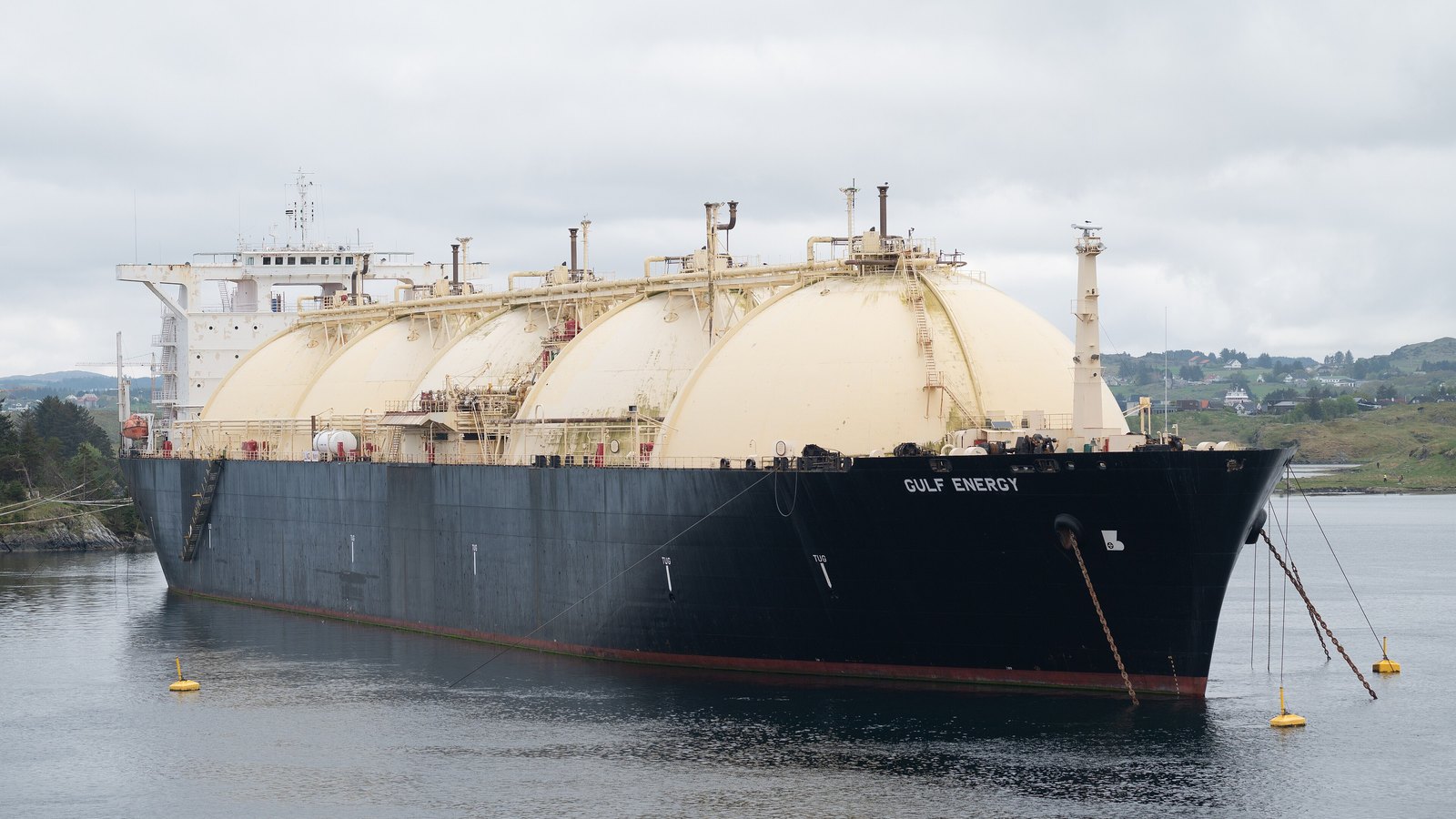
The Papua LNG development centers on an upstream gas processing plant and a 4.0 million metric ton per annum (MTPA) liquefaction facility in Papua New Guinea. Liquefaction requires specialized cryogenic heat exchangers and turbo-expanders that chill natural gas to minus 162 degrees Celsius for transport. Global natural gas baseline data compiled by the U.S. Energy Information Administration highlight the central role of proprietary liquefaction technologies licensed by American industrial firms in expanding transpacific LNG supply.
The aviation package supports Boeing jet aircraft deliveries to Jeju Air Co., Ltd. Under statutory non-competition criteria, EXIM determined the aircraft exports will not displace domestic air transport services. The table below outlines the core parameters across both transactions:
| Evaluation Parameter | Papua LNG Infrastructure Package | South Korea Commercial Aviation Package |
|---|---|---|
| Federal Register Document | Document No. 2026-24279 | Document No. 2026-24204 |
| Agency Docket Reference | EIB-2026-0529 (AP089509XX) | EIB-2026-0496 (AP300316XX & AP300316XA) |
| Financing Commitment Level | Final commitment exceeding $100 million | Final commitment exceeding $100 million |
| Foreign Obligor | Papua LNG Company Limited | Jeju Air Co., Ltd. |
| Principal U.S. Suppliers | Honeywell, Air Products, ExxonMobil, Bechtel | The Boeing Company |
| Export Scope | Cryogenic equipment, engineering and technical services | Boeing commercial jet passenger aircraft |
| Project Facility Scale | 4.0 million metric tons per annum liquefaction facility | Commercial passenger air fleet operations |
| Statutory Authority | 12 U.S.C. 635a(c)(10) and 12 U.S.C. 635i-5 | 12 U.S.C. 635a(c)(10) and 12 U.S.C. 635a-2 |
| Comment Period Duration | 25 calendar days post-Federal Register publication | 25 calendar days post-Federal Register publication |
Statutory Mandate and Environmental Due Diligence Framework
Congress enacted Section 3(c)(10) of the Export-Import Bank Act to mandate transparency for major export financing. Any long-term loan or guarantee over $100 million must undergo public notification before board approval, allowing industry, academic researchers, and civil society to evaluate sovereign credit allocations.
Environmental scrutiny is governed by 12 U.S.C. 635i-5, which requires EXIM to maintain environmental assessment procedures to mitigate ecological impacts. Under administrative protocols in EXIM and the Environment, major infrastructure projects such as LNG facilities are designated Category A projects. This designation requires Environmental and Social Impact Assessments (ESIAs), greenhouse gas accounting, and biodiversity protection reviews.
Conversely, commercial aviation transactions undergo streamlined reviews under 12 U.S.C. 635a-2, focusing on economic non-competition and international aircraft emissions standards, confirming exports do not adversely impact American industries.
Economic Impact Assessments and Interagency Scrutiny
These export reviews reflect interagency coordination between the State, Energy, and Commerce Departments under the OECD Arrangement on Officially Supported Export Credits, which establishes international standards for sovereign export financing.
Trade analysts observe that equipment orders for Papua LNG secure specialized domestic manufacturing jobs across major licensors, including Bechtel, Air Products, and Honeywell. Concurrently, environmental policy analysts and energy researchers scrutinize public financing for fossil energy, examining greenhouse gas accounting, methane management, and compliance with bilateral climate finance commitments.
Implications for University Research Offices, Procurement, and Engineering Programs
These federal financing reviews directly impact academic institutions engaged in energy transitions, aerospace engineering, and federal contract compliance. Universities collaborating with prime contractors must address key regulatory requirements:
- Export Controls: Cryogenic gas hardware and aerospace components are regulated under the Export Control Reform Act. University laboratories collaborating with corporate sponsors must maintain compliant Technology Control Plans.
- Commodity Classification: Hardware and technical data must be assigned an appropriate ECCN and verified against the ECCN Country Chart to determine licensing obligations under 15 CFR Part 738.
- Contract Provisions: University research offices negotiating subcontracts with prime vendors must ensure mandatory contract terms under 2 CFR 200 Appendix II are incorporated into agreements.
- Sustainable Procurement: Environmental disclosures from Category A projects provide empirical benchmarks for researchers studying sustainable procurement in research and supply chain decarbonization.
Public Comment Timelines, Board Review Schedule, and Implementation Deadlines
The public inspection notices filed on November 27, 2026, will be formally published in the Federal Register on November 30, 2026. The 25-calendar-day public comment window closes on December 25, 2026.
Comments on the Papua LNG financing package must be submitted through Regulations.gov under Docket ID EIB-2026-0529 (Reference AP089509XX). Comments on the aviation package must be filed under Docket ID EIB-2026-0496 (References AP300316XX & AP300316XA).
Following comment closure, EXIM staff will compile public feedback, environmental due diligence, and economic impact evaluations for presentation to the EXIM Board of Directors in early 2027, with formal decisions posted to EXIM meeting minutes.
Sources
- Federal Register: Applications for Long-Term Loans or Financial Guarantees in Excess of $100 Million (Document 2026-24279, Docket EIB-2026-0529), checked 2026-11-27
- Federal Register: Applications for Long-Term Loans or Financial Guarantees in Excess of $100 Million (Document 2026-24204, Docket EIB-2026-0496), checked 2026-11-27
- Export-Import Bank of the United States: EXIM and the Environment, checked 2026-11-27
- Legal Information Institute: 12 U.S. Code § 635i-5 – Environmental policy and procedures, checked 2026-11-27
- U.S. Energy Information Administration: Natural Gas Data, checked 2026-11-27






