
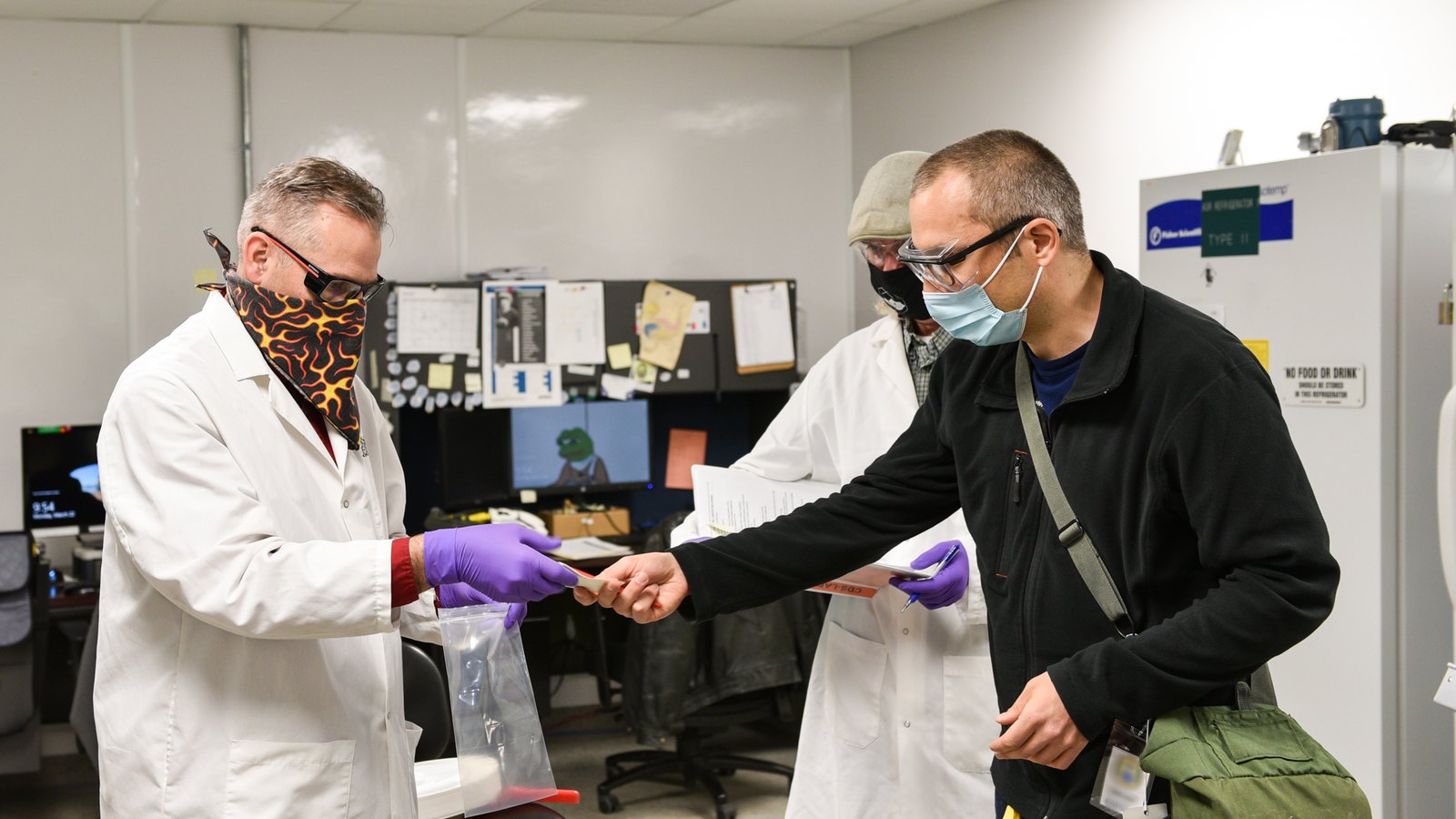
On November 26, 2026, the UK Foreign, Commonwealth and Development Office (FCDO) issued updated designation notices under the UK Chemical Weapons Sanctions Regime and refreshed the consolidated UK Sanctions List, directing university research security offices, chemical synthesis facilities, and export compliance teams to tighten oversight across dual-use precursor transfers, intangible technology sharing, and foreign researcher screening.
What happened
On November 26, 2026, the Foreign, Commonwealth and Development Office published a formal sanctions notice on the official GOV.UK chemical weapons designations and sanctions notices portal, updating the statutory register of targeted individuals and entities subject to asset freezes and trade restrictions under the Chemical Weapons (Sanctions) (EU Exit) Regulations 2019.
The updated designations apply to all UK universities, research institutes, and academic spin-outs. The FCDO coordinated the action alongside its Sanctions Directorate, publishing corresponding modifications to the centralized UK Sanctions List. This list has operated as the sole legal record for all UK sanctions designations since January 28, 2026, when the UK government retired the legacy OFSI Consolidated List of Asset Freeze Targets to eliminate discrepancies between financial and trade regimes.
Key details and statutory prohibitions
The regime operates under the Sanctions and Anti-Money Laundering Act 2018 (SAMLA) and The Chemical Weapons (Sanctions) (EU Exit) Regulations 2019 (SI 2019/618). Under Regulations 11 through 15, asset-freeze provisions mandate that no funds or economic resources may be made available, directly or indirectly, to or for the benefit of any designated person. Economic resources include laboratory-grade hardware, automated synthesis units, and specialized reagents. The regulations also prohibit technical assistance, barring the provision of training, advice, or working knowledge regarding dual-use synthesis pathways to designated entities.
The regime directly intersects with non-proliferation obligations under the Chemical Weapons Convention (CWC), administered by the Organisation for the Prohibition of Chemical Weapons (OPCW). Dual-use research compliance in the United Kingdom requires benchmarking chemical holdings, synthesis protocols, and cross-border scientific exchanges against formal verification schedules.
| Regulatory Category | Scope and Precursors | Statutory Restrictions | University Compliance Action |
|---|---|---|---|
| Schedule 1 Chemicals | Sarin, VX, Novichok agents, sulfur mustards, and ricin | Production capped under 1 kg annually; transfer limited to medical, research, or pharmaceutical uses | Advance licensing from UK CWC National Authority; annual declarations |
| Schedule 2 Chemicals | Thiodiglycol, pinacolyl alcohol, and arsenic trichloride | Precursors with limited commercial uses; transfers permitted only between CWC State Parties | Threshold declarations; Export Control Joint Unit (ECJU) license required |
| Schedule 3 Chemicals | Phosgene, cyanogen chloride, hydrogen cyanide, and thionyl chloride | High-volume dual-use industrial chemicals manufactured for polymers and pharmaceuticals | Annual facility reporting over 30 metric tons; end-user undertakings |
| Intangible Technology Transfer (ITT) | Synthesis pathways, catalytic process code, and automation data | Transfer of technical data or technical assistance by electronic transmission or video calls | Screening international research collaborations; ECJU technical assistance clearance |
| Designated Entity Asset Freeze | Sanctioned chemical institutes, procurement agents, and front entities | Prohibition on providing funds, laboratory equipment, or analytical services | Automated daily screening against the UK Sanctions List; beneficial ownership checks |
Background and statutory context
Following the UK withdrawal from the European Union, the British government established independent statutory frameworks under SAMLA 2018. SI 2019/618 transposed earlier EU measures into domestic law, expanding ministerial powers to designate entities engaged in chemical proliferation. The regime operates in tandem with the Export Control Act 2002 and Strategic Export Control Orders governing physical and intangible exports of dual-use goods.
Geopolitical tensions and proliferation risks have driven export authorities to scrutinize intangible knowledge transfers alongside physical shipments. Institutions must maintain internal controls structured around the four pillars of export control compliance, incorporating institutional governance, risk-based screening, continuous staff training, and rigorous audit trails.
The consolidation of the UK Sanctions List in January 2026 marked a pivotal operational change. Previously, institutions cross-referenced multiple databases, including the OFSI consolidated asset-freeze list and separate FCDO trade notices. The unified UK Sanctions List API now provides real-time updates across financial, trade, director disqualification, and transport sanctions, eliminating fragmented verification pathways.
Sector reaction and institutional governance
Research compliance directors and university legal counsels across the United Kingdom responded to the updated designations by emphasizing the necessity of unified vetting architectures. Compliance specialists noted that synthetic chemistry, materials science, and chemical engineering departments remain prime targets for state-sponsored intangible technology acquisition programs seeking to bypass physical export barriers.
Within major research institutions, appointed research security officers are leading comprehensive reviews of collaborative research agreements and material transfer agreements (MTAs). Institutional teams report that third-party screening systems must incorporate the November 26 designation notices immediately to verify that existing research partnerships and prospective visiting fellows do not share institutional links with newly designated entities.
Legal advisers warned that strict-liability sanctions leave institutions vulnerable to penalties even when noncompliance occurs through academic oversight. Leaders urge principal investigators in chemical synthesis laboratories to consult research security teams prior to sharing chemical samples or technical data with overseas counterparts.
What it means for researchers, universities and research offices
The updated chemical weapons designations and compliance notices require operational adjustments across university administrative and laboratory workflows. Research institutions must coordinate actions across five primary compliance domains:
- Comprehensive Party Screening: Research administration offices must screen all international academic partners, visiting scholars, postdoctoral fellows, and industrial research sponsors against the updated UK Sanctions List, verifying ultimate beneficial ownership (UBO) to ensure partner laboratories are not owned or controlled by designated persons under SI 2019/618.
- Academic Technology Approval Scheme (ATAS) Alignment: Foreign postgraduate researchers and visiting scholars working in sensitive chemical and materials science subject areas (such as CAH codes CAH07 and CAH13) must hold valid ATAS certificates. Universities must re-evaluate research proposals where project scopes touch upon dual-use precursor synthesis or flow chemistry automation.
- Material Transfer Agreements and Inventory Tracking: Chemical laboratory managers must audit stockrooms for CWC Schedule 2 and Schedule 3 compounds. Any physical transfer of chemical reagents or synthesized intermediaries to external laboratories must be governed by an approved Material Transfer Agreement (MTA) and, where necessary, accompanied by an ECJU export license.
- Intangible Technology Transfer (ITT) Controls: Institutional IT administrators must implement access controls on shared network drives and collaborative cloud environments. Electronic transmission of unpublished synthesis protocols, molecular simulation code, or purification techniques falls within the legal definition of technical assistance under the Chemical Weapons regulations.
- Integration with Institutional Security Frameworks: Universities holding central government grants or defense contracts must integrate chemical sanctions screening into their mandatory UKRI security management plan requirements. These safeguards align institutional protocols with broader research security mandates and established dual-use export control frameworks.
What happens next
The FCDO Sanctions Directorate has indicated that monitoring and designation updates under the UK Chemical Weapons regime will continue on a dynamic basis as multilateral non-proliferation intelligence evolves. Research organizations are advised to configure automated notifications from the UK Sanctions List data service to capture subsequent additions, variations, and corrections without administrative lag.
Higher education institutions must also prepare for upcoming annual Chemical Weapons Convention declarations for the 2026 calendar year. Under UK law, institutions handling scheduled chemicals or operating declarable discrete organic chemical synthesis facilities must submit statutory declarations to the UK CWC National Authority in early 2027. Exceeding statutory thresholds without proper authorization carries criminal liabilities under the Chemical Weapons Act 1996.
In parallel, the Export Control Joint Unit is expected to issue refreshed sector guidance on intangible technology transfers, offering clarified criteria for university spin-outs and academic collaborations in advanced chemical engineering. University research offices should use the remainder of the 2026 calendar year to conduct internal compliance audits, refresh faculty training modules, and verify that active international research partnerships comply with the updated designations.
Sources
- UK Foreign, Commonwealth and Development Office: Chemical weapons: list of designations and sanctions notices, checked 2026-11-26
- UK Foreign, Commonwealth and Development Office: The UK Sanctions List, checked 2026-11-26
- UK Legislation: The Chemical Weapons (Sanctions) (EU Exit) Regulations 2019, checked 2026-11-26
- Organisation for the Prohibition of Chemical Weapons: Chemical Weapons Convention, checked 2026-11-26






