
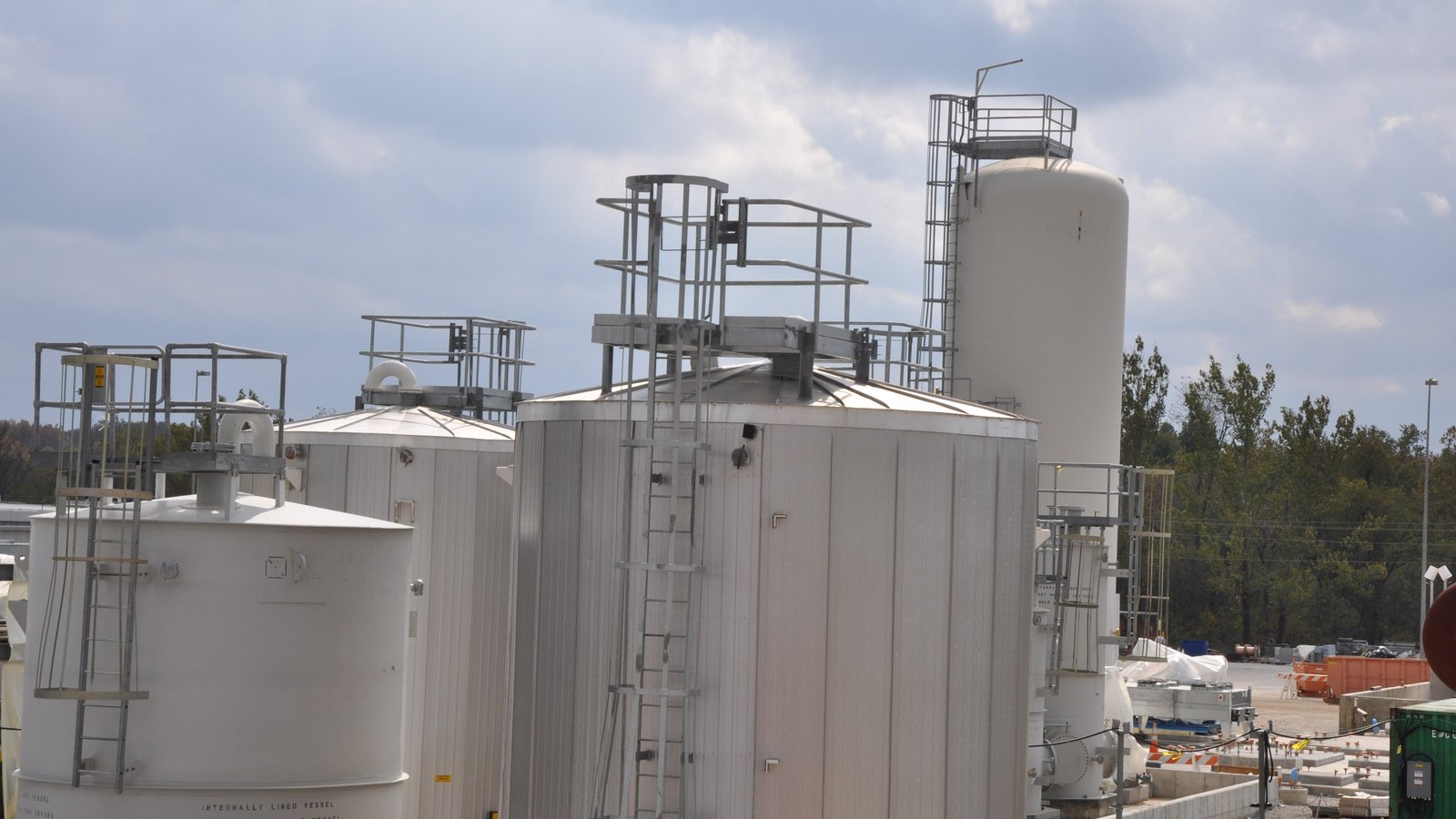
The U.S. Department of Commerce and the United States Section of the USMCA Secretariat announced on November 27, 2026, a formal Request for Binational Panel Review challenging Mexico’s final antidumping duty resolution on liquid caustic soda imports from the United States. The dispute, docketed under Chapter 10 of the United States-Mexico-Canada Agreement, carries direct cost and supply implications for North American chemical reagent pipelines supporting university research laboratories, biotechnology facilities, and industrial chemical manufacturing.
Dispute filing and binational panel request
In a scheduled Federal Register notice published on November 27, 2026 (Document No. 2026-24035, 91 FR 76751), the International Trade Administration within the U.S. Department of Commerce announced that a Request for Binational Panel Review has been entered under Article 10.12 of the United States-Mexico-Canada Agreement. Registered under docket number MEX-USA-2025-10.12-01 by the USMCA Secretariat, the proceeding challenges the final resolution in Mexico’s administrative review regarding antidumping duties on liquid caustic soda from the United States.
The request was filed with the Mexican Section of the USMCA Secretariat on June 27, 2025, on behalf of Innophos Fosfatados de México, S. de R.L. de C.V. The underlying administrative review determination was issued by Mexico’s Secretaría de Economía and published in the Diario Oficial de la Federación on May 29, 2025. The official notice was executed on November 23, 2026, by Vidya Desai, United States Secretary of the USMCA Secretariat.
Key details and procedural review schedule
Under Chapter 10 of the USMCA and federal procedural regulations codified in 19 CFR Part 356, binational panel reviews provide an independent, binding dispute resolution mechanism that replaces domestic judicial review of trade remedy decisions. Participating enterprises and authorities submit the administrative record to an independent five-member panel rather than appealing through national court systems such as Mexico’s Tribunal Federal de Justicia Administrativa.
Procedural deadlines for Case No. MEX-USA-2025-10.12-01 follow the USMCA Article 10.12 Binational Panel Rules. Key milestones, regulatory dates, and dispute parameters are detailed in the comparison table below:
| Dispute Parameter | Administrative Specification | Governing Authority and Rule |
|---|---|---|
| Case Docket Number | MEX-USA-2025-10.12-01 | USMCA Secretariat Registry |
| Federal Register Citation | 91 FR 76751 (Doc. No. 2026-24035) | International Trade Administration |
| Subject Merchandise | Liquid Caustic Soda (Aqueous Sodium Hydroxide) | Mexican Tariff Classification 2815.12.01 |
| Investigating Authority | Secretaría de Economía | Diario Oficial de la Federación (May 29, 2025) |
| Filing Party | Innophos Fosfatados de México, S. de R.L. de C.V. | Request Filed June 27, 2025 |
| Complaint Deadline | July 28, 2025 (30 days from request) | USMCA Article 10.12, Rule 44 |
| Notice of Appearance Deadline | August 11, 2025 (45 days from request) | USMCA Article 10.12, Rule 45 |
| Statutory Review Horizon | 315 Calendar Days to Final Decision | USMCA Chapter 10 Dispute Procedures |
Under Rules 40 and 44, the binational panel review is strictly limited to allegations of error of fact or law, jurisdictional challenges against the investigating authority, and legal defenses preserved in the filed complaints, evaluated under the domestic law standard of review.
Background and chemical supply chain context
Liquid caustic soda, technically designated as aqueous sodium hydroxide (NaOH), is a fundamental bulk alkaline chemical produced primarily via chlor-alkali electrolysis, which co-produces chlorine gas and caustic soda from sodium chloride brine. Industrial solutions are typically transported at 50 percent concentration for commercial and manufacturing utilization.
Liquid caustic soda serves as a core chemical reagent across heavy industry, water purification, pulp processing, and phosphate manufacturing. Innophos Fosfatados de México uses sodium hydroxide to neutralize phosphoric acid in manufacturing technical and food-grade phosphates. High-purity caustic soda is also essential for silicon wafer etching and cleaning in semiconductor fabrication, as well as downstream pharmaceutical synthesis.
North American cross-border chemical trade is governed by the United States-Mexico-Canada Agreement, which succeeded NAFTA in July 2020 and maintained Chapter 19 binational review protections under Chapter 10. Antidumping duties impose tariff surcharges on foreign goods found to be sold below normal value, increasing operational costs for importing processors.
Reaction and industrial stakeholder positions
Chemical trade associations and industrial consumers have closely followed proceedings under Case No. MEX-USA-2025-10.12-01. When import tariffs are imposed on foundational chemical commodities, downstream processors face cost pressures and logistical challenges. The filing by Innophos Fosfatados de México reflects efforts by major chemical consumers to preserve access to cost-competitive U.S. feedstocks under international trade rules.
Trade law practitioners highlight that Article 10.12 binational panels provide neutral dispute adjudication governed by binational rosters, reducing national court litigation risks, though procedural steps during panel formation can require extended administration.
What it means for researchers, universities and research offices
While trade remedy disputes originate in high-volume industrial shipments, tariff actions on foundational chemicals produce real secondary impacts on academic institutions and scientific laboratories. Sodium hydroxide is an essential reagent across university chemistry, biochemistry, and biomedical research facilities.
Academic stockrooms maintain aqueous sodium hydroxide across varied concentrations, from concentrated stock reagents to standardized titrants. In bench workflows, evaluating moles vs molarity is essential for distinguishing chemical substance quantities from solution concentrations. Researchers frequently employ online GraphPad molarity calculators to verify dilutions and buffer preparation.
Volumetric sodium hydroxide solutions are equally critical in biomedical assays and cytometry workflows where exact pH buffering controls molecular binding. Calibrated buffer adjustments correspond directly to principles used in antibody titration for flow cytometry, ensuring consistent assay performance.
From a research administration perspective, chemical tariff disputes drive supply chain price increases among major laboratory distributors such as Fisher Scientific, VWR, and MilliporeSigma. Research offices and department administrators must account for higher chemical consumable costs when budgeting sponsored grant proposals.
Additionally, handling caustic soda requires strict laboratory safety compliance. University departments must maintain a certified laboratory safety chemical hygiene plan covering corrosive alkaline hazards. Because concentrated sodium hydroxide generates significant exothermic heat upon dilution and poses severe chemical burn hazards, environmental safety teams conduct mandatory chemical hygiene plan training to enforce personal protective equipment and secondary containment standards.
What happens next
Following Federal Register Document 2026-24035, the USMCA Secretariat will finalize the five-member binational panel from the roster of trade law experts appointed by member nations. Once established, the panel will review the certified record from Mexico’s Secretaría de Economía and receive written briefs.
Operating within the 315-day review timeline, the panel will issue a binding final decision to uphold the antidumping resolution or remand it for recalculation. University procurement officers, laboratory managers, and research administrators should monitor North American trade remedy actions to maintain stable reagent procurement channels.
Sources
- Federal Register: United States-Mexico-Canada Agreement (USMCA), Article 10.12: Binational Panel Review: Notice of Request for Panel Review, checked 2026-11-26
- United States Trade Representative: United States-Mexico-Canada Agreement, checked 2026-11-26
- Electronic Code of Federal Regulations: 19 CFR Part 356 — Procedures and Rules for Article 10.12 of the United States-Mexico-Canada Agreement, checked 2026-11-26
- National Oceanic and Atmospheric Administration: Sodium Hydroxide Solution Chemical Datasheet, checked 2026-11-26






