
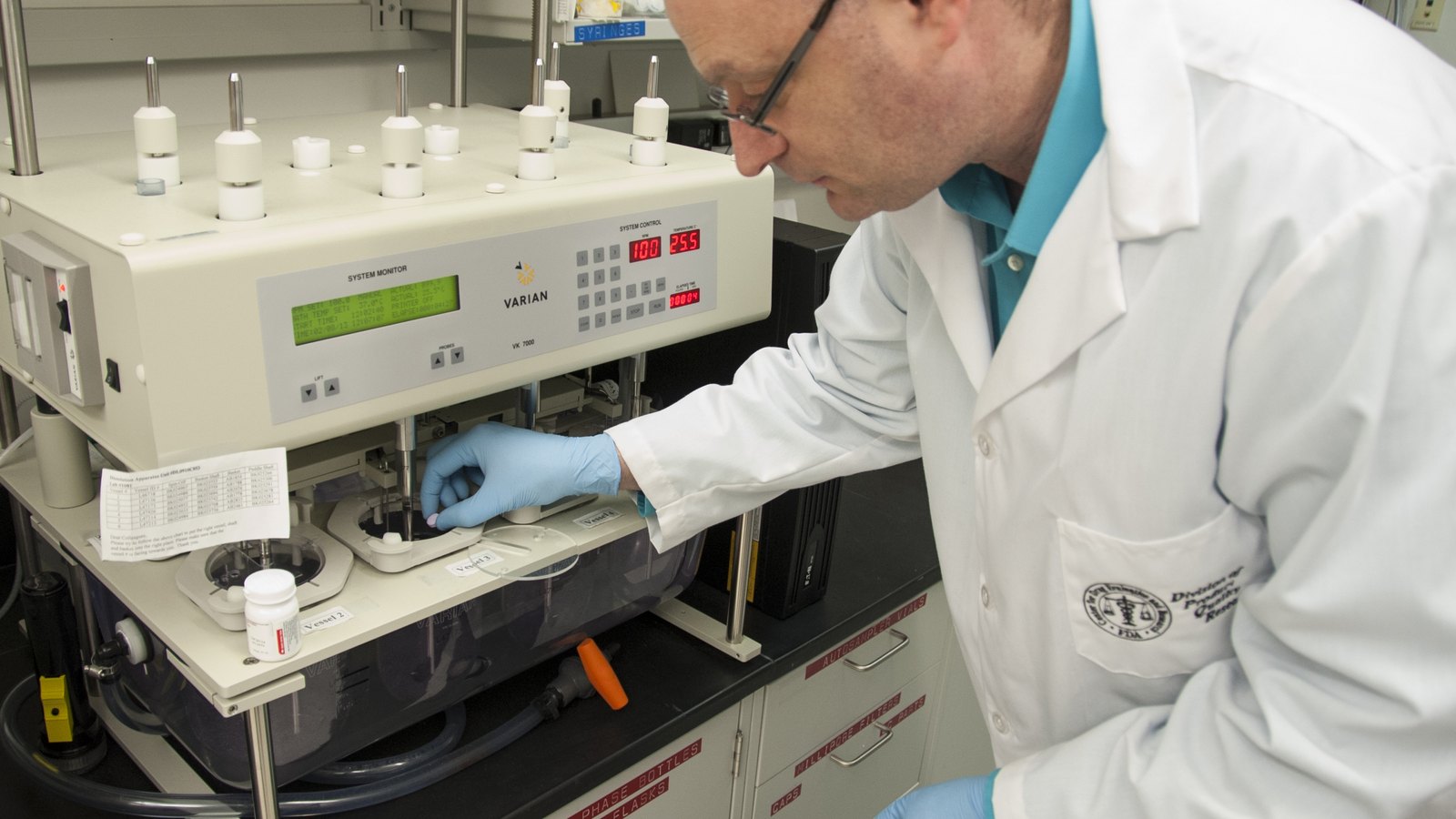
On November 27, 2026, the U.S. Food and Drug Administration updated its Generic Drug User Fee Amendments Enhanced Accountability and Reporting portal, issuing current performance metrics across Abbreviated New Drug Application assessments, Drug Master File completeness reviews, and Pre-ANDA complex product meetings. The published data tracks review cycle efficiency, first-cycle approval rates, and bioequivalence deficiency trends under statutory oversight frameworks established by Congress.
Updated Review Metrics and Performance Benchmarks
The updated reporting repository released by the Center for Drug Evaluation and Research (CDER) and the Office of Generic Drugs (OGD) consolidates operational data spanning the current fiscal year. The release fulfills transparency mandates that require the agency to publish monthly and quarterly activity summaries, tracking how user fee revenue supports generic drug assessment milestones. Under the enhanced reporting system, the agency monitors whether original Abbreviated New Drug Applications (ANDAs) achieve final approval, tentative approval, or complete response action letters within committed timeframes.
A central focus of the updated disclosure involves assessment efficiency across standard and priority original applications submitted under regulatory pathways for generic medications. The agency reported tracking review metrics across multiple application tiers, highlighting that priority review cohorts for generic drugs addressing drug shortages or lack of market competition met targeted ten-month review cycles in over 90 percent of evaluated submissions. For standard ANDAs, median review intervals and first-cycle approval outcomes continue to reflect early identification of bioequivalence discrepancies and manufacturing facility inspection readiness.
Core Reporting Categories Across ANDA Review Cycles
The enhanced accountability reporting framework tracks six primary operational categories: original ANDA assessment speed, Prior Approval Supplement (PAS) determinations, Drug Master File (DMF) completeness assessments, Controlled Correspondence turnaround times, pre-ANDA complex product development meetings, and complete response cycle counts. For Drug Master Files, the agency tracks first-cycle completeness assessment timelines, ensuring active pharmaceutical ingredient (API) documentation does not delay secondary application reviews.
Controlled correspondence metrics demonstrate agency turnaround speeds for pre-submission inquiries regarding bioequivalence study designs, inactive ingredient limits, and labeling carve-outs. Under current operational commitments, standard controlled inquiries are resolved within 60 calendar days, while complex inquiries requiring extensive scientific input from multidisciplinary review teams are evaluated within 120 calendar days.
| Program Activity | Review Target Timeline | Primary Operational Objective | Key Regulatory Focus |
|---|---|---|---|
| Original Standard ANDA | 10 months from submission | Complete first-cycle review | Assessment of bioequivalence, chemistry, and labeling |
| Priority Original ANDA | 8 to 10 months | Expedited review for critical medicines | Sole-source drugs, shortage mitigations, and public health needs |
| Prior Approval Supplement | 4 to 6 months | Review of post-approval chemistry or facility changes | Evaluation of major manufacturing modifications and site additions |
| Type II DMF Completeness | 60 days prior to ANDA date | Confirm API documentation adequacy | Active ingredient synthesis, stability, and impurity profiling |
| Standard Controlled Correspondence | 60 calendar days | Provide definitive pre-submission regulatory clarity | Bioequivalence study protocols and inactive ingredient allowances |
| Pre-ANDA Product Meeting | 30 to 120 days depending on type | Clarify complex generic product requirements | Device-constituent combination products and synthetic peptides |
The reporting data also breaks down common bioequivalence deficiencies identified during initial review cycles. Deficiencies frequently involve inadequate statistical power in pharmacokinetic studies, insufficient documentation of analytical assay validation, failure to establish critical dissolution profile similarity across physiological pH ranges, and incomplete reconciliation of reference listed drug characterization.
Legislative Origins and User Fee Framework Evolution
The statutory basis for enhanced generic drug reporting originated under the FDA Reauthorization Act of 2017 (Public Law 115-52), which reauthorized GDUFA for its second five-year cycle and created Title VIII enhanced accountability provisions. Congress mandated that the FDA provide granular reporting to ensure that fee resources directly translated into shorter review queues, reduced multi-cycle review attrition, and transparent communication with sponsors.
Prior to GDUFA, application backlogs frequently exceeded several thousand submissions, and review timelines commonly stretched past three to four years without predictable agency interaction. As detailed by the Congressional Research Service, generic drug user fee programs fundamentally restructured CDER operations by providing designated funding streams for hiring review staff, standardizing IT assessment platforms, and establishing clear performance goal commitments.
Over successive reauthorizations, Congress expanded these mechanisms to emphasize complex generics, including locally acting topical products, metered-dose inhalers, extended-release injectables, and polymeric formulations. Generic applicants preparing submissions must structure their technical dossiers in strict accordance with application content standards outlined in 21 CFR 314.50 and demonstrate that pharmaceutical chemistry and active ingredients conform to established compendial specifications. Post-approval updates and scale-up modifications require supplemental filings categorized as major or minor supplements under supplements under 21 CFR 314.70.
Stakeholder Perspectives on Review Predictability
Generic pharmaceutical trade organizations and regulatory affairs professionals have highlighted the importance of transparent metrics in forecasting commercial availability and manufacturing supply chains. Industry representatives note that while overall review timeliness has improved substantially since the inception of user fees, complete response letters (CRLs) issued during first review cycles remain a primary bottleneck. Deficiencies cited in CRLs often require sponsors to conduct additional bioequivalence trials, reformulate delivery mechanisms, or resolve facility inspection findings, extending time-to-market by 12 to 24 months.
Academic regulatory science observers and policy analysts emphasize that enhanced reporting provides crucial empirical feedback on where applicants struggle most. Detailed metric reporting allows academic investigators and industry working groups to pinpoint systemic failure modes, such as complex in vitro characterization methods or device-constituent interface verification. Regulatory scientists have pointed out that early engagement through the pre-ANDA meeting pathway significantly increases the probability of receiving first-cycle approval, especially for non-standard delivery routes.
Implications for University Drug Development Cores and Regulatory Teams
The updated review metrics carry direct practical consequences for academic medical centers, university drug discovery cores, technology transfer offices, and translational researchers seeking to out-license or advance generic formulations. Academic core facilities developing formulation technology must recognize that regulatory review teams apply rigorous scrutiny to analytical method validation and bioequivalence study designs long before commercial production begins.
For institutional research teams preparing regulatory filings or partnering with pharmaceutical licensees, compliance with applications under 21 CFR Part 314 requires meticulous dossier assembly and early risk assessment. University investigators leading Phase 1 pharmacokinetic and bioequivalence studies must ensure clinical protocols incorporate appropriate fasting and fed study arms, validated bioanalytical assays, and robust subject retention strategies that withstand regulatory inspection.
Furthermore, early-stage drug development teams working with contract manufacturing organizations must ensure that active pharmaceutical ingredient synthesis and drug product manufacturing align with manufacturing compliance standards across 21 CFR Parts 210 and 211. If an academic institution or its spin-out entity relies on a third-party API supplier, that supplier must maintain an active, fully vetted Type II Drug Master File. Identifying DMF deficiencies before filing avoids administrative review stops that freeze ANDA progression.
University technology transfer offices negotiating license agreements should incorporate milestone structures that account for realistic generic review cycles. While standard statutory review timelines target ten months, multi-cycle reviews triggered by minor or major amendments can extend timelines substantially. Institutional licensing managers should tie royalty triggers and diligence milestones to formal regulatory checkpoints, such as filing acceptance, first-cycle review actions, and final approval letters.
Upcoming Reauthorization Milestones and Reporting Timelines
Looking ahead, CDER and the Office of Generic Drugs will continue publishing monthly activity updates and quarterly performance dashboards throughout the remainder of the current user fee authorization cycle. Regulatory science working groups will meet semi-annually with industry representatives to discuss ongoing research into complex generic bioequivalence, modeling and simulation approaches, and in vitro characterization methodologies.
Preparations are also advancing for the next five-year generic drug user fee reauthorization cycle covering fiscal years 2028 through 2032. The agency has solicited public perspectives through notices published in the Federal Register, gathering input on future performance goals, digital review infrastructure investments, and international harmonization of bioequivalence standards. Public dockets remain open for stakeholder submissions detailing recommended revisions to reporting metrics, inspection coordination mechanisms, and pre-ANDA engagement tracks before legislative proposals are finalized for congressional consideration.
Sources
- U.S. Food and Drug Administration: GDUFA II Enhanced Accountability and Reporting, checked 2026-11-29
- U.S. Government Publishing Office: Public Law 115-52 – FDA Reauthorization Act of 2017, checked 2026-11-29
- Federal Register: Reauthorization of the Generic Drug User Fee Amendments; Public Meeting; Request for Comments, checked 2026-11-29
- Congressional Research Service: Generic Drugs and GDUFA Reauthorization: In Brief, checked 2026-11-29






