
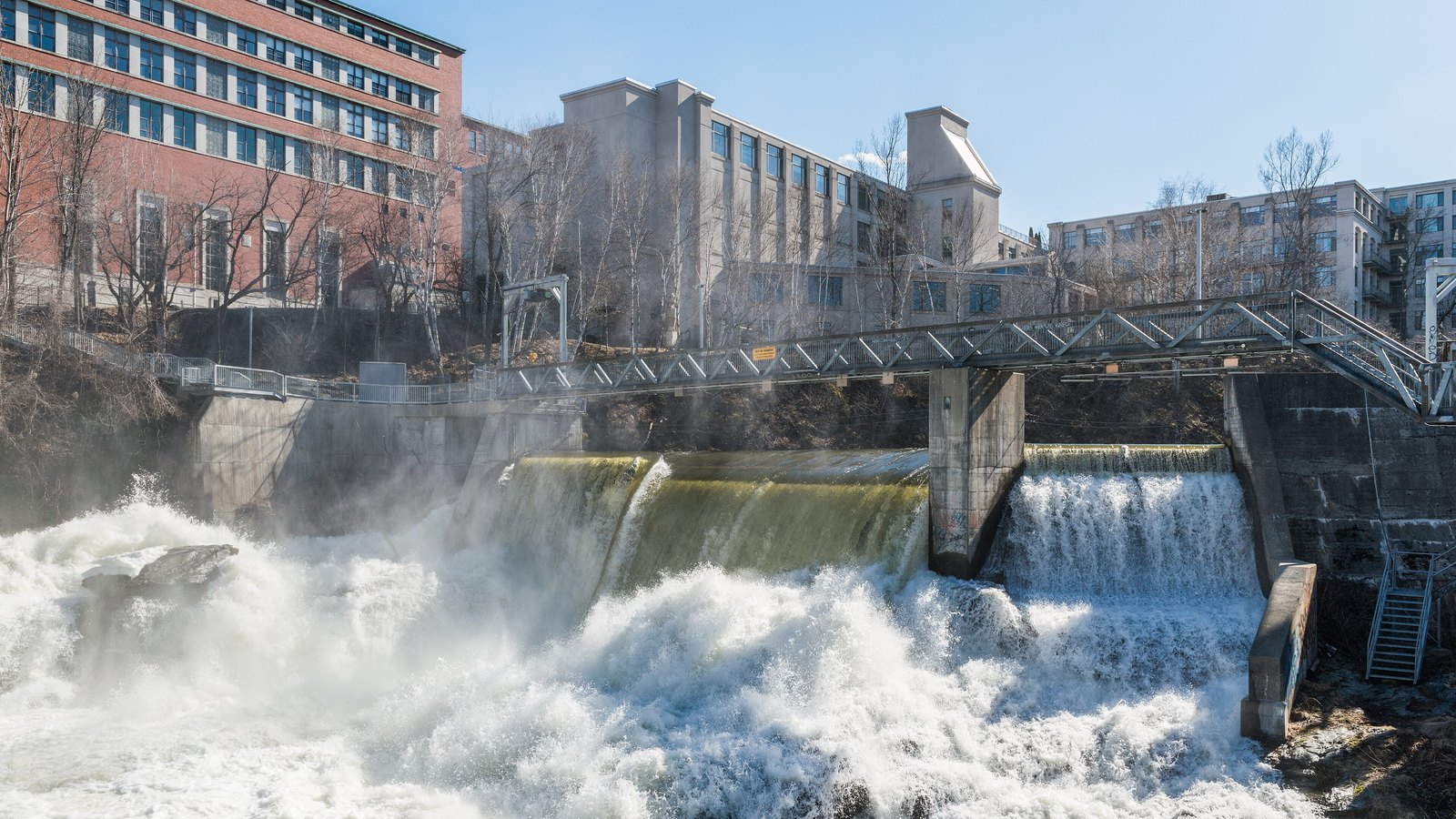
The Federal Energy Regulatory Commission formally accepted the new major license application for the Warrensburg Hydroelectric Project on the Schroon River in Warren County, New York, determining that the filing is ready for environmental analysis and establishing formal deadlines for federal and state resource agencies, academic institutions, and regional stakeholders to submit binding terms, fishway prescriptions, and scientific recommendations under the Federal Power Act.
What happened in the Warrensburg relicensing proceeding
Under a notice issued in the Federal Register (Doc. 2026-24228), the Federal Energy Regulatory Commission (FERC) determined that the major license application submitted by Boralex Hydro Operations, Inc. for the Warrensburg Hydroelectric Project (Project No. 9074-054) is ready for environmental analysis. Boralex Hydro filed its application on December 31, 2024, seeking a new long-term license to continue operating the 2.9-megawatt (MW) run-of-river facility on the Schroon River in upstate New York. The Commission’s determination triggers a formal interagency review process governing terms, conditions, and fishway prescriptions.
FERC project coordinator Erin Kimsey confirmed that intervenors, state and federal resource agencies, and interested organizations must file their comments, recommendations, terms, and prescriptions by 5:00 p.m. Eastern Time on January 25, 2027. Reply comments are due by March 9, 2027. All filings must follow Commission service requirements, ensuring copies are delivered to resource agencies whose regulatory jurisdictions intersect with the project works.
Key technical specifications and procedural timetable
The Warrensburg Hydroelectric Project consists of an established run-of-river development designed to generate baseload electricity from the natural discharge of the Schroon River. Physical project works comprise a 184-foot-long, 22.5-foot-high broad-crested concrete gravity dam fitted with nine hydraulically operated steel flashboards (each 6 feet high by 18 feet wide) and one crest gate of identical dimensions. The impoundment covers 55 surface acres at normal elevation 643.6 feet NGVD 29, holding a gross storage capacity of 500 acre-feet. Water flows through a 3-foot by 40-foot intake equipped with trash racks featuring 3.5-inch spacing into a 38-foot-high by 88-foot-wide concrete powerhouse.
The powerhouse contains a single Kaplan turbine rated at 2,900 kW (2.9 MW) operating at an average net head of 28 feet, with a maximum hydraulic capacity of 1,565 cubic feet per second (cfs) and an average annual generation of 11.7 gigawatt-hours (GWh). Outflow discharges through a 171-foot-long riprap-lined tailrace into the Schroon River. Power is delivered through a 0.7-mile, 34.5-kilovolt transmission line to the Warrensburg Chesterton circuit. The site maintains continuous minimum environmental flow releases and provides public impoundment recreation via a car-top boat launch and a 15-vehicle gravel parking area.
| Parameter / Milestone | Regulatory Specification | Administrative Authority |
|---|---|---|
| FERC Project Number | Project No. P-9074-054 | Federal Energy Regulatory Commission |
| Applicant & Licensee | Boralex Hydro Operations, Inc. | Federal Power Act Filing |
| Waterway Location | Schroon River, Warren County, New York | Navigable Waters Jurisdiction |
| Nameplate Capacity & Unit | 2,900 kW (2.9 MW) / Single Kaplan Turbine | Project Mechanical Design Records |
| Annual Electrical Output | 11.7 Gigawatt-hours (GWh) | FERC Operational Benchmark |
| Dam Dimensions & Gates | 184 ft long, 22.5 ft high; 9 flashboards, 1 gate | Commission Dam Safety Specs |
| Impoundment Extent & Storage | 55 acres at 643.6 ft NGVD 29; 500 acre-feet | Project Survey Data |
| Hydraulic Design Capacity | 1,565 cubic feet per second (cfs) | Hydrological Rating Baseline |
| Agency Terms & Comments Due | January 25, 2027 (5:00 p.m. Eastern Time) | 18 CFR § 4.34 Schedule |
| Reply Comments Due | March 9, 2027 (5:00 p.m. Eastern Time) | Commission Procedural Order |
Statutory framework and environmental review standards
The administrative processing of hydropower relicensing follows Commission procedural rules set forth in 18 CFR § 4.34. Under these regulations, the Ready for Environmental Analysis (REA) designation signals that the evidentiary record contains sufficient baseline information to solicit mandatory conditions and fishway prescriptions from federal and state agencies, and to initiate environmental document preparation under the National Environmental Policy Act.
A critical statutory component is Section 10(j) of the Federal Power Act, codified at 16 U.S. Code § 803, which directs the Commission to incorporate license conditions based on recommendations from wildlife agencies to protect, mitigate damage to, and enhance fish and wildlife populations. In parallel, Section 18 authorizes the U.S. Fish and Wildlife Service and the National Marine Fisheries Service to prescribe mandatory fishways. In New York, the project must also secure a Section 401 Water Quality Certification from the New York State Department of Environmental Conservation (NYSDEC), establishing enforceable thermal, dissolved oxygen, and anti-degradation standards.
Ecological impact and watershed resource considerations
The Schroon River is a major tributary of the Upper Hudson River basin, sustaining riverine trout habitats, native macroinvertebrate communities, and recreational fisheries. Hydropower operations can alter lotic ecology through impoundment warming, altered sediment transport, and fish turbine entrainment. Federal resource agencies focusing on habitat conservation regularly examine whether project structures disrupt migratory riverine corridors or reduce downstream habitat quality.
Operating in run-of-river mode minimizes downstream hydrological fluctuations by passing inflow directly without artificial peaking. However, resource agency biologists will evaluate whether the intake trash rack spacing of 3.5 inches provides adequate exclusion for migratory and resident fish species, or whether seasonal behavioral guidance or physical screen modifications should be mandated to minimize blade encounter risks during seasonal movements.
Institutional and sector perspective on small-scale hydropower
The Warrensburg proceeding highlights the regulatory landscape governing small-scale run-of-river hydropower across the northeastern United States. Applied research sponsored through the Department of Energy Hydropower Program demonstrates that existing small hydroelectric facilities provide critical local carbon-free generation and voltage support, but often require updated environmental engineering solutions to satisfy contemporary aquatic standards.
Hydropower operators face substantial administrative and scientific costs during relicensing proceedings, which frequently span five to seven years. Balancing clean energy baseload production against environmental protection mandates requires high-precision empirical data, enabling regulators to craft mitigation requirements that deliver tangible ecological improvements while maintaining project operational viability.
What it means for researchers, universities and research offices
For academic researchers, limnologists, and university research administration offices, the Warrensburg relicensing docket provides a rich repository of empirical hydrological, water quality, and ecological monitoring data. Relicensing filings include multi-year streamflow rating curves, continuous water temperature logs, and habitat assessments that can be integrated into regional watershed modeling. National open-access platforms like HydroSource curate comparable hydropower datasets that support comparative research on regulated river ecosystems.
University departments conducting aquatic biology and watershed management research can identify collaborative study opportunities supported by industry partnerships and organizations like the Water Research Foundation. Academic researchers investigating regional nonpoint pollution, aquatic fragmentation, and stream restoration under competitive EPA research grants can utilize Schroon River docket data to parameterize sub-basin hydrological models.
When university research teams conduct field investigations within licensed hydroelectric boundaries, sponsored programs offices must execute a formal cooperative agreement with facility operators. These agreements address instrument deployment permissions, safety protocols near hydraulic intakes, and data governance frameworks, ensuring academic researchers maintain publication rights while adhering to utility operational constraints.
What happens next in the FERC relicensing schedule
The proceeding follows a defined administrative calendar established by Commission regulations. Intervenors, federal and state agencies, and public stakeholders must file comments, recommendations, terms and conditions, and prescriptions by 5:00 p.m. Eastern Time on January 25, 2027. Submissions should be lodged through FERC’s eFiling or eComment portals citing Docket No. P-9074-054.
Boralex Hydro and other parties will have until March 9, 2027, to file reply comments responding to proposed terms and study recommendations. Following the close of the comment window, Commission technical staff will prepare an Environmental Assessment evaluating operational alternatives and cumulative watershed impacts. The resulting licensing order will incorporate final statutory conditions, governing the Warrensburg facility’s operational and environmental standards for the next 30 to 50 years.
Sources
- Federal Register: Boralex Hydro Operations, Inc.; Notice of Application Ready for Environmental Analysis and Soliciting Comments, Recommendations, Terms and Conditions, and Prescriptions, accessed 2026-11-28.
- Legal Information Institute: 18 CFR § 4.34 – Hearings on applications; consultation on terms, conditions, and fishway prescriptions, accessed 2026-11-28.
- Legal Information Institute: 16 U.S. Code § 803 – Maintenance and operation of project works, license conditions, accessed 2026-11-28.
- NOAA Fisheries: Habitat Conservation, accessed 2026-11-28.
- U.S. Department of Energy: Hydropower Program, accessed 2026-11-28.






