
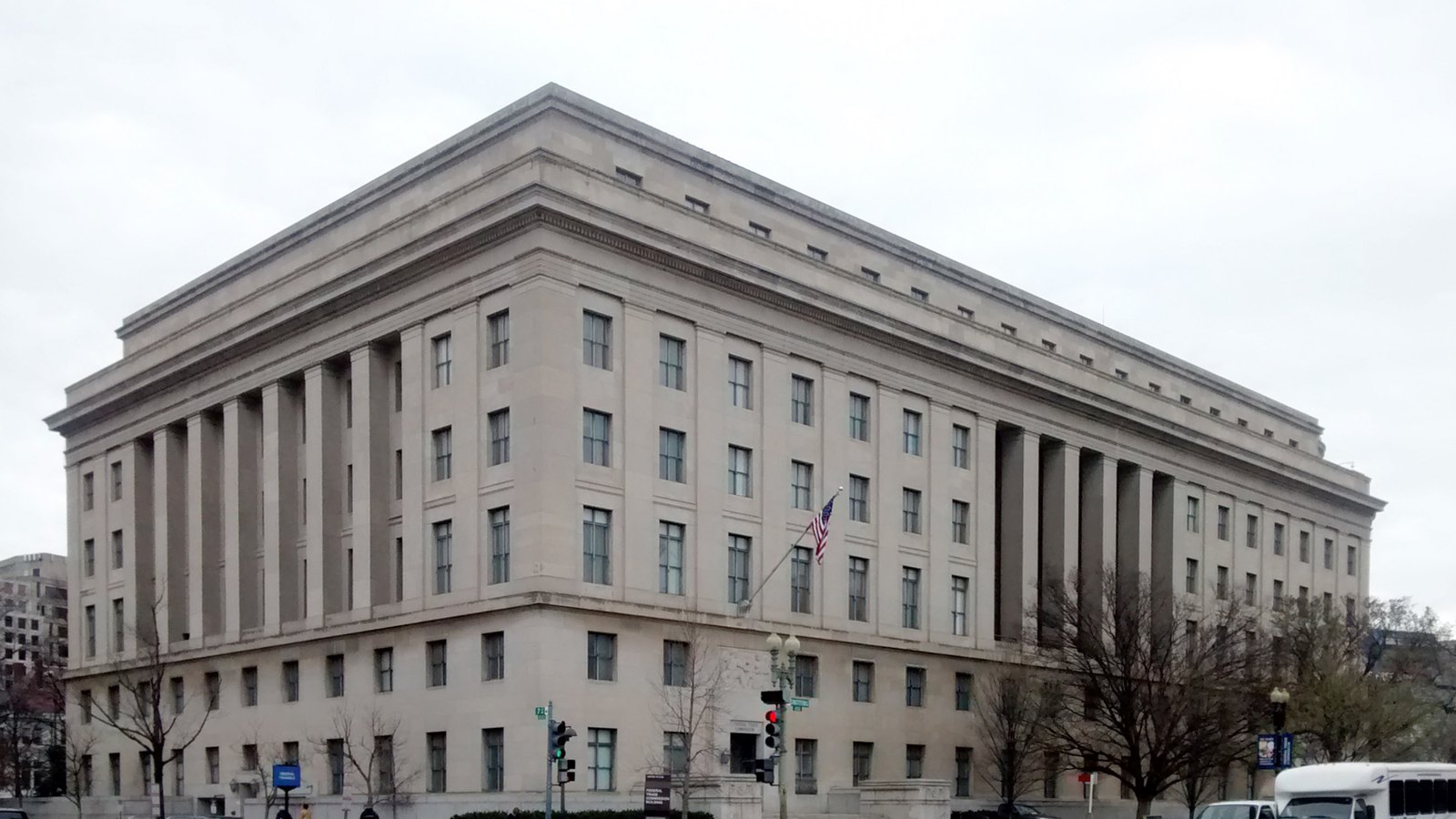
On November 27, 2026, the U.S. Federal Trade Commission published a formal notice opening a 60-day public comment period on its proposal to extend information collection and disclosure recordkeeping mandates under the Business Opportunity Rule (16 CFR Part 437, OMB Control No. 3084-0142) through February 2030, establishing empirical compliance benchmarks for regulatory economists, university tech-transfer offices, and research administrators studying commercial disclosure burdens.
Federal Trade Commission Proposes Three-Year Information Collection Extension
The Federal Trade Commission published Federal Register Notice 2026-24159 pursuant to Section 3506(c)(2)(A) of the Paperwork Reduction Act of 1995 (PRA), 44 U.S.C. 3506(c)(2)(A). Designated as FTC File No. P044403 and led by staff attorney Christine M. Todaro in the Bureau of Consumer Protection’s Division of Marketing Practices, the proceeding opens public review prior to the February 28, 2027 expiration of the rule’s current Office of Management and Budget (OMB) clearance.
Under the PRA, federal regulatory agencies must secure OMB reauthorization every three years for collections imposing reporting, disclosure, or recordkeeping requirements on ten or more entities. The FTC proposes an extension without change through February 2030. The public docket runs through January 26, 2027, inviting empirical feedback on whether the disclosure requirements remain necessary, the accuracy of the agency’s burden calculations, ways to enhance document utility, and methods to minimize compliance friction on regulated sellers.
Empirical Burden Estimates and Compliance Calculations Under Part 437
FTC staff formulated an empirical model estimating compliance costs across approximately 3,050 covered business opportunity sellers nationwide, encompassing vending machine, rack display, work-at-home, and commercial route ventures. Staff projects that 90 percent (2,745 enterprises) are established operators, while 10 percent (305 enterprises) represent new annual market entrants.
Annual paperwork hours reflect three distinct compliance activities:
- Established Seller Document Updates: 2,745 existing sellers spend approximately two hours annually updating disclosure documents, generating 5,490 burden hours.
- New Entrant Initial Document Preparation: 305 new entrants require approximately five hours to prepare initial disclosure documents, generating 1,525 burden hours.
- Annual Record Retention: All 3,050 sellers require approximately one hour to file and store compliance records for three years, adding 3,050 burden hours.
These activities yield an aggregate annual burden of 10,065 hours. Applying an attorney wage rate of $89.35 per hour, the FTC projects annual labor compliance costs of $899,308.
Non-labor costs comprise printing, distribution, and translation. Staff estimates 3,050 sellers print and distribute approximately 1,000 disclosure documents annually at $1.36 each, totaling $4,148,000, although electronic distribution increasingly reduces this baseline. For non-English marketing, 128 sellers spend $5,760 annually on ongoing translation updates (250 words each at $0.18 per word), and five new entrants spend $437 translating Appendix A into non-Spanish languages (485 words at $0.18 per word). Total non-labor costs equal $4,154,197, bringing total annual economic burden to $5,053,505.
| Compliance Category | Affected Cohort | Unit Rate / Basis | Annual Hours | Annual Cost |
|---|---|---|---|---|
| Established Seller Document Updates | 2,745 existing sellers | 2.0 hours / seller | 5,490 | $490,531.50 |
| New Entrant Initial Disclosures | 305 new entrants | 5.0 hours / entrant | 1,525 | $136,258.75 |
| Annual Recordkeeping and Filing | 3,050 total sellers | 1.0 hour / seller | 3,050 | $272,517.50 |
| Printing and Mail Distribution | 3,050 total sellers | 1,000 copies @ $1.36 | N/A | $4,148,000.00 |
| Multilingual Document Translations | 133 bilingual / non-English sellers | $0.18 / translated word | N/A | $6,197.00 |
| Total Annual Burden | 3,050 regulated sellers | Cumulative regulatory impact | 10,065 | $5,053,504.75 |
These metrics follow standardized federal regulatory accounting rules codified under OMB Circular A-4, which structures regulatory impact and paperwork evaluation.
Regulatory Architecture of Part 437 and Recordkeeping Mandates
The Business Opportunity Rule, codified at 16 CFR Part 437, governs commercial transactions where a seller solicits a buyer to start a new business, requires a payment, and promises operational support such as providing vending locations, customer accounts, or buyback agreements. Promulgated under Section 5 of the FTC Act, the rule bifurcated from the FTC Franchise Rule in 2011 to establish a streamlined disclosure model tailored to business opportunities while curbing fraudulent business setups.
Under 16 CFR 437.3, sellers must furnish a standardized, single-page disclosure document at least seven calendar days before the buyer signs a contract or pays any consideration. The document covers five mandatory items: seller identification; whether earnings claims are made; legal actions involving the seller or executives over the past ten years; cancellation and refund policies; and a list of purchasers from the prior three years (with contact details for at least ten nearby purchasers).
When sellers make earnings representations, they must possess a written reasonable basis documented in an Earnings Claim Statement provided alongside the disclosure. Furthermore, Section 437.7 mandates a three-year retention period for all disclosure copies, signed acknowledgment receipts, contracts, and earnings substantiation data. Academic and corporate research compliance teams can benchmark these requirements against institutional record retention policy standards to maintain defensible audit archives. Historical records in the OMB Control Number 3084-0142 clearance record confirm continuous three-year reauthorizations since the revised framework took effect in 2012.
Legal Analysis and Commercial Underwriting Scrutiny
Legal analyses emphasize the balance struck by the FTC between streamlined consumer disclosure and broad jurisdictional scope. In a detailed study published in The Florida Bar Journal, legal scholars observed that replacing lengthy franchise prospectuses with a single-page document reduced seller burdens while expanding regulatory coverage across remote work-at-home models and distribution ventures.
Compliance with Part 437 has also become an operational prerequisite across commercial banking and payments infrastructure. In a regulatory compliance review, merchant services provider PayKings explained that merchant acquirers and payment processors classify business opportunity sellers as high-risk merchants requiring rigorous underwriting audits. Acquirers regularly inspect merchant checkout workflows to confirm that buyers receive the disclosure and complete the mandatory seven-day cooling-off period before funds are captured. Inability to produce signed disclosure receipts or substantiation records frequently leads to payment gateway termination or rolling reserve demands.
These commercial verification mechanisms illustrate how federal disclosure rules become embedded within private financial systems, echoing the oversight practices outlined in institutional internal controls for federal compliance.
Significance for Research Administrators, Economists, and University Offices
The FTC’s notice carries actionable implications across academic research, institutional technology transfer, and compliance offices:
- Empirical Research on Disclosure Economics: The notice provides primary benchmark data for consumer protection economists and empirical legal scholars. Granular metrics on unit labor hours (two hours for recurring updates versus five hours for initial setup) and non-labor distribution costs enable empiricists to evaluate the administrative efficiency of simplified disclosures relative to complex multi-page regulatory filings.
- University Technology Transfer and Spin-Out Governance: University tech-transfer offices and campus incubators commercialize faculty discoveries, scientific software, and diagnostic toolkits. While standard patent licensing and equity spin-offs are exempt from the Rule, auxiliary commercialization structures—such as turnkey clinical assay packages, distributed analytical testing services, or lab equipment distribution networks with promised client referrals—must be structured carefully to avoid inadvertently triggering Part 437 business opportunity definitions.
- Research Data Governance and Substantiation Records: The rule’s strict three-year earnings substantiation mandate highlights the importance of verifiable audit trails for commercial claims. University research projects translating analytical tools or commercial algorithms into the marketplace can align institutional data archives with ISO 15489 records management principles to ensure scientific and commercial reproducibility.
Public Comment Timeline and Administrative Review Next Steps
The publication of Federal Register Notice 2026-24159 commenced a 60-day public comment period closing on January 26, 2027. Submissions may be filed online through Regulations.gov under docket reference FTC File No. P044403, or mailed to the Federal Trade Commission Office of the Secretary in Washington, D.C.
Following the public comment period, FTC staff will review the empirical feedback and prepare a final clearance package for the Office of Management and Budget. Under PRA procedures, the Commission will publish a second Federal Register notice providing an additional 30 days of public comment concurrent with formal OMB review. OMB approval is expected prior to the February 28, 2027 expiration date, extending Part 437 information collection authorization through February 2030.
Sources
- Federal Register: Agency Information Collection Activities; Proposed Collection; Comment Request; Extension, checked 2026-11-28
- Office of Information and Regulatory Affairs: OMB Control Number History for 3084-0142, checked 2026-11-28
- Legal Information Institute: 16 CFR Part 437 – Business Opportunity Rule, checked 2026-11-28
- The Florida Bar Journal: FTC’s New Business Opportunity Rule: Reduced Disclosure But Increased Coverage, checked 2026-11-28
- PayKings: FTC Business Opportunity Rule Explained, checked 2026-11-28






