
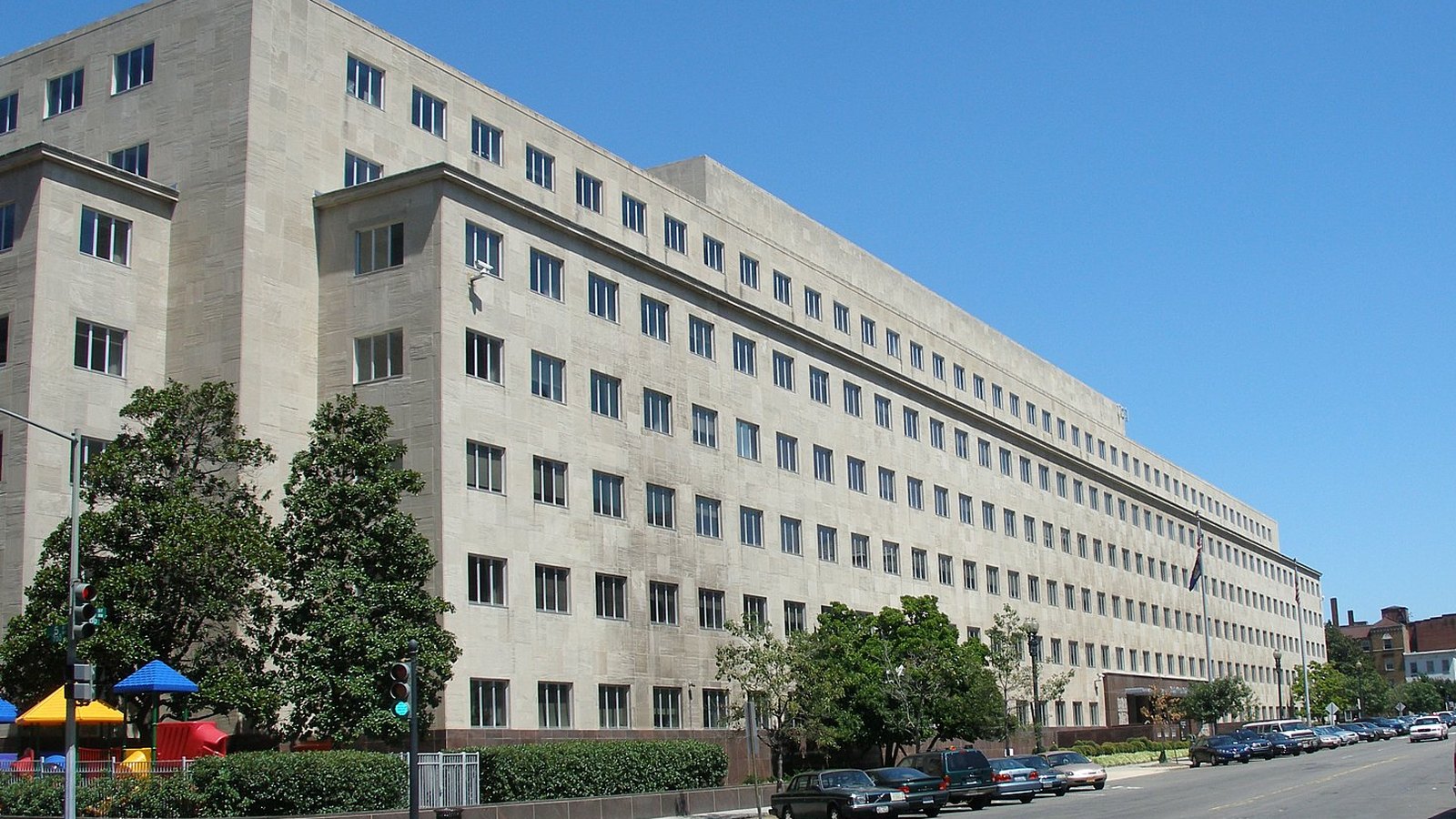
On November 24, 2026, the Government Accountability Office Personnel Appeals Board issued a comprehensive final rule in the Federal Register modernizing its adjudicatory framework under 4 CFR Part 28, establishing mandatory electronic filing, overhauling discovery scheduling, and recalibrating stay proceedings for legislative branch personnel disputes, effective December 24, 2026.
Core Structural and Procedural Amendments to 4 CFR Part 28
The final rule codifies the first major procedural modernization of the Government Accountability Office Personnel Appeals Board (PAB) regulations in recent years. Promulgated under authority granted by the General Accounting Office Personnel Act of 1980, the regulation transitions the Board away from paper-based submissions. Under revised 4 CFR § 28.20, electronic filing and service of pleadings are now mandatory for formal proceedings, establishing a digital standard across all dockets.
Under the revised framework, the Board serves the initial petition on all parties together with an official Service List designating registered email addresses. After this initial distribution, the Board no longer serves routine pleadings; parties must serve subsequent filings directly on one another by email, accompanied by an executed certificate of service. Postal delivery is retained solely as an equitable exception requiring an administrative judge’s approval for good cause.
To standardize filing windows across time zones, the Board amended 4 CFR § 28.4 to establish an explicit daily cutoff of 11:59 p.m. Eastern Time, removing the historical five-day mailing extension for electronic submissions. The rule also modernizes signature standards across 4 CFR § 28.11 and § 28.20, recognizing secure digital signatures, typed “/s/” designations, and scanned ink signatures. Crucially, the Board extended the deadline for filing a charge with the PAB Office of General Counsel under 4 CFR § 28.11(b) from 30 calendar days to 45 calendar days for discrete and continuing violations, aligning initial intake with internal controls in federal compliance environments.
Key Details and Procedural Specifications
Beyond intake mechanisms, the final rule updates motions practice, exhibit management, and interlocutory stay requests. Under 4 CFR § 28.21, responses to written motions must be filed within 20 calendar days, and procedural motions for extensions or postponements require prior consultation with opposing counsel. Detailed brief formatting, exhibit pagination, and word-count limits were shifted from regulatory text into dynamic Local Rules published on the PAB website.
The rule also refines non-EEO class action petitions under 4 CFR § 28.18(f). Filing a class petition automatically tolls individual claim deadlines; if class certification is denied, individuals have 30 calendar days to file individual petitions. For prohibited personnel practice stays under 4 CFR § 28.133, the General Counsel may request an initial 30-day stay requiring a ruling within three business days.
The following table outlines the key procedural specifications under the modernized regulations:
| Procedural Area | Prior Rule | Amended Specification | CFR Provision |
|---|---|---|---|
| Pleading Submission | Paper filing with permissive email | Mandatory electronic filing and email service | 4 CFR § 28.20 |
| Daily Deadline | Close of business at agency headquarters | 11:59 p.m. Eastern Time | 4 CFR § 28.4(d) |
| PAB/OGC Charge Intake | 30 calendar days | 45 calendar days from violation | 4 CFR § 28.11(b) |
| Discovery Commencement | Automatic 30-day clock on service list | Judge-managed after initial status conference | 4 CFR § 28.42(d) |
| Discovery Responses | 30 calendar days | 20 calendar days after service of request | 4 CFR § 28.42(d)(2) |
| Subpoena Administration | Codified Board subpoena sections | Removed; inter-agency comity and sanctions | 4 CFR §§ 28.46–28.50 |
| Briefing Formats | Rigid regulatory page limitations | PAB Local Rules with good-cause variance | 4 CFR §§ 28.9, 28.60 |
| Stay Rulings | Unstructured single-member review | 3-day initial ruling; up to 60-day extension | 4 CFR § 28.133 |
| Class Action Tolling | Unspecified individual preservation | Tolled pending certification; 30 days to refile | 4 CFR § 28.18(f) |
Statutory Authority and Legislative-Branch Civil Service Architecture
The Personnel Appeals Board occupies a unique position in federal administrative law, derived from its legislative-branch mandate. Under 31 U.S.C. § 753, Congress insulated GAO workforce oversight from executive branch control. While executive civil servants appeal adverse employment actions to the U.S. Merit Systems Protection Board under Title 5, placing legislative auditors under executive jurisdiction would compromise congressional oversight authority.
Congress resolved this structural tension by creating the PAB as an independent internal adjudicatory tribunal. The Board adjudicates adverse personnel actions, performance appraisal disputes, union grievances, and equal employment opportunity claims under 4 CFR Part 28. Although GAO is exempt from the Administrative Procedure Act, the Board voluntarily issued a proposed rule on August 7, 2026, receiving public feedback through September 8, 2026. This process reflects established records management concepts and principles that emphasize transparent administrative provenance.
Stakeholder Feedback and the Board’s Regulatory Rationale
Public comments on the proposed rule centered on discovery timelines, subpoena enforcement, and the delegation of formatting rules. The Board addressed these objections in the preamble, providing detailed legal and operational reasons for its amendments.
Commenters expressed concern regarding the repeal of 4 CFR § 28.42(d)(1), which formerly mandated that discovery begin automatically within 30 days of service list delivery. Commenters argued this change reduced protections below executive branch baselines. The Board countered that automatic discovery clocks disproportionately harm pro se employees, who often forfeit discovery by missing rigid early deadlines. Authorizing administrative judges to establish custom discovery schedules following an initial status conference protects unrepresented litigants and accommodates diverse dockets.
Commenters also opposed rescinding 4 CFR §§ 28.46–28.50 regarding subpoenas, citing statutory equivalence provisions in 31 U.S.C. § 753(e). The Board clarified that Title 5 does not grant executive administrative tribunals independent subpoena enforcement authority without judicial action. Because Congress never conferred statutory authority on the PAB to enforce subpoenas in federal court, retaining formal subpoena provisions was legally misleading. Instead, the Board relies on inter-agency cooperation among federal employers and retains sanction powers under 4 CFR § 28.24 to draw adverse inferences against non-compliant parties.
Addressing concerns about moving formatting rules to Local Rules, the Board noted that all potential petitioners receive pre-filing guidance from the PAB Office of General Counsel. Furthermore, administrative judges maintain discretion to accept non-conforming filings without prejudice.
Significance for Governance Researchers, Academic Institutions, and Research Compliance
The modernized procedural framework offers relevant insights for scholars of administrative law, public administration, and research institutional governance. As academic institutions address research security and regulatory compliance, legislative-branch adjudicatory models serve as valuable benchmarks for institutional policy design.
In university research administrations, faculty grievance procedures and misconduct hearings face operational hurdles comparable to federal personnel tribunals. The PAB’s model of active judicial case management provides a template for an effective research compliance program seeking to balance rigorous evidentiary standards with fairness for unrepresented parties.
Additionally, mandating electronic service, verified digital signatures, and standardized pleading structures aligns with broader institutional standards in research data governance. Academic research offices maintaining audit trails for compliance investigations can draw upon these codified procedures to ensure institutional integrity and defensible dispute records.
Implementation Timeline and Operational Next Steps
The final rule takes effect on December 24, 2026. Actions pending prior to that date will proceed under earlier procedural regulations unless the presiding administrative judge orders the application of the amended rules in the interest of justice.
In preparation for the effective date, the Board posted its revised Local Rules and standardized petition forms on pab.gao.gov. The PAB Office of General Counsel is providing informational briefings for employee representatives and agency management. Parties initiating appeals after December 24, 2026, must observe the 45-day intake deadline and utilize mandatory electronic filing protocols.
Sources
- Federal Register: Personnel Appeals Board; Procedural Rules, checked 2026-11-29
- eCFR: Title 4 Part 28, Procedures Applicable to Claims Concerning Employment Practices at the Government Accountability Office, checked 2026-11-29
- U.S. Merit Systems Protection Board: How to File an Appeal, checked 2026-11-29
- Legal Information Institute: 31 U.S. Code § 753 – Duties and powers, checked 2026-11-29






