
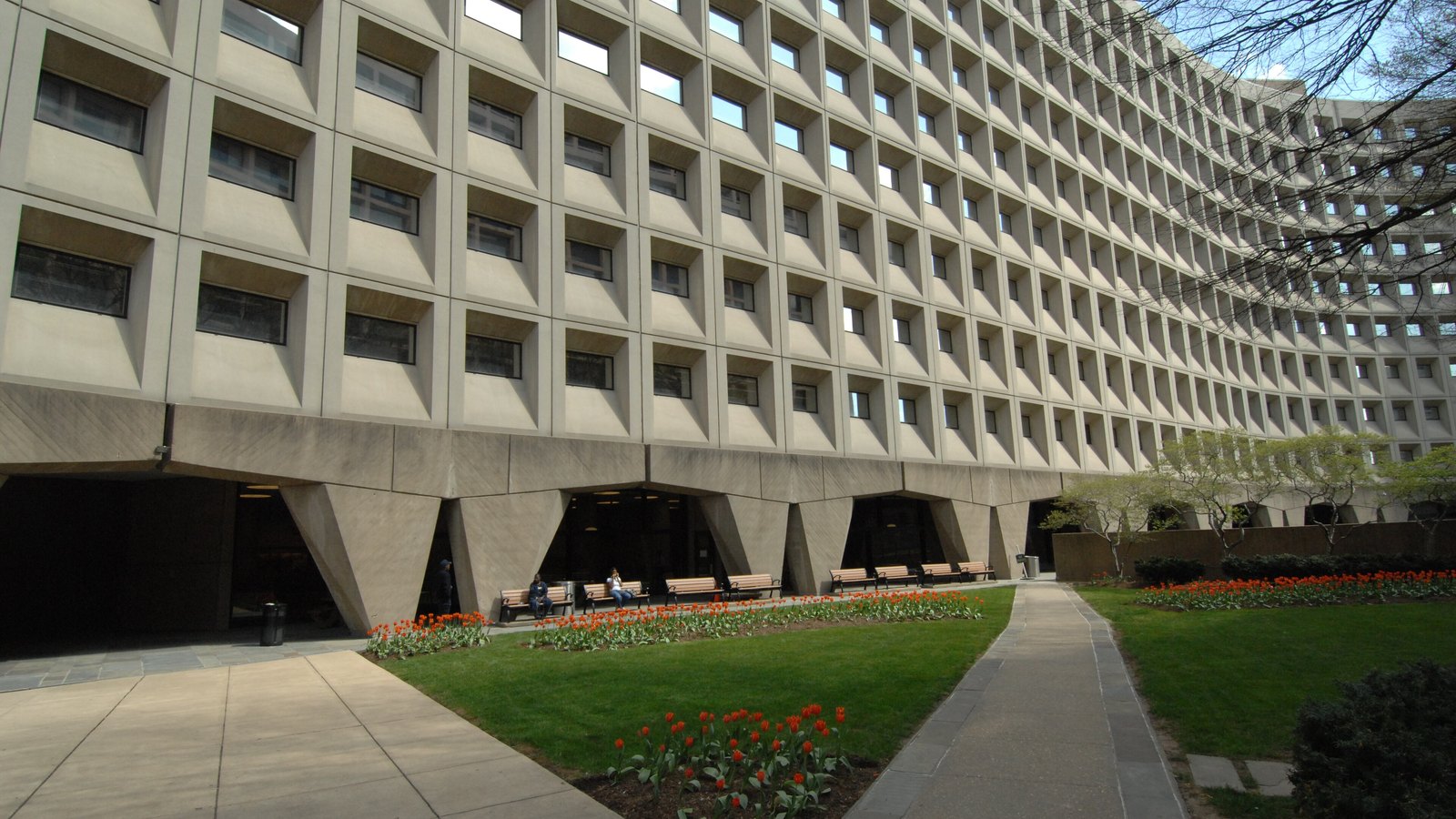
On November 23, 2026, the U.S. Department of Housing and Urban Development issued a 60-day Paperwork Reduction Act notice in Federal Register Document 2026-23864 seeking public comment on its standardized competitive discretionary grant application package under 2 CFR Part 200. The renewal covers 452,031 annual burden hours across 18,410 respondents, standardizing pre-award forms and post-award technical negotiations for university sponsored-programs offices and housing research centers.
Standardized Application Package and Paperwork Reduction Act Renewal
Under Docket No. FR-7093-N-08 and OMB Control No. 2501-0044, the HUD Office of the Chief Financial Officer published a 60-day notice requesting approval from the Office of Management and Budget for an extension and revision of its generic collection titled “Generic Solution for Solicitation for HUD’s Competitive Discretionary Funding Opportunity Announcements.” The procedural clearance establishes the agency-wide administrative framework used to solicit, evaluate, and negotiate competitive awards across HUD program divisions.
Scheduled for publication in the Federal Register on November 24, 2026, the notice estimates that an average of 45 competitive funding announcements per fiscal year fall under this generic clearance. Historical administrative data yields 18,410 active respondents and 38,570 total annual responses across mandated forms and narrative attachments. The cumulative reporting burden totals 452,031.10 burden hours annually, representing an estimated compliance cost of $20,762,213.71 based on an hourly wage rate of $45.93.
The generic clearance governs application requirements across the official U.S. Department of Housing and Urban Development grants portal, including discretionary programs administered by the Office of Policy Development and Research (PD&R) and the Office of Healthy Homes and Lead Hazard Control. Centralizing these requirements maintains consistency across Notices of Funding Opportunity (NOFOs) while updating burden calculations to match current federal wage benchmarks.
Key Collection Metrics, Standardized Forms, and Burden Breakdown
The competitive process outlined in Document 2026-23864 comprises two distinct administrative stages: initial application submission and post-selection technical negotiation. Applicants first submit standard federal forms and agency disclosures to establish organizational eligibility, project feasibility, and merit scores. Following objective merit review, selected finalists enter bilateral negotiations with HUD grant officers to refine project scopes, detailed line-item budgets, and performance milestones before award issuance.
Baseline federal application instruments originate from the government-wide Grants.gov SF-424 family forms repository, whose burden is accounted for under separate OMB clearances. The HUD-specific generic package complements these baseline forms with specialized disclosures, planning consistency certifications, and technical negotiation templates.
| Collection Component | Covered Forms | Application Stage | OMB Control No. | Administrative Purpose |
|---|---|---|---|---|
| Standard Federal Core | SF-424, SF-424A, SF-424B, SF-424C, SF-424D | Pre-Award Application | 4040-0004 through 4040-0009 | Establishes core applicant identity, budget categories, and standard federal assurances. |
| Mandatory Disclosures | SF-LLL, Lobbying Certification, Project Abstract | Pre-Award Application | 4040-0013, 4040-0019 | Discloses reportable lobbying activities and provides public project summaries. |
| HUD Program Disclosures | HUD-424B, HUD-2880, HUD-50070 | Pre-Award Application | 2501-0044 | Documents applicant accountability, financial interests, and drug-free workplace compliance. |
| Planning Consistency | HUD-2991, HUD-2996 | Pre-Award Application | 2501-0044 | Certifies alignment of proposed research and projects with local consolidated housing plans. |
| Technical Negotiation | Technical Submission, Form HUD-1044 | Post-Selection Negotiation | 2501-0044 | Finalizes project milestones, tasks, and conditions into a binding Assistance Award agreement. |
| Budget Worksheets | HUD-424-CB, HUD-424-CBW | Pre-Award / Negotiation | 2501-0044 | Provides detailed cost breakdowns by object class category and matching contribution schedules. |
| Merit Narrative Factors | Rating Factors 1–5 Narrative Attachments | Pre-Award Application | 2501-0044 | Evaluates applicant capacity, need urgency, sound project approach, and measurable outcomes. |
Across the complete portfolio, the renewal ensures that requirements for common forms—such as Form HUD-2880 for applicant disclosures and Form HUD-424-CB for cost calculations—remain standardized rather than re-invented for each individual program solicitation.
Statutory Context and Alignment with Uniform Guidance Streamlining
The generic information collection operates under two primary statutory and regulatory authorities: the Paperwork Reduction Act of 1995 (5 CFR Part 1320) and the federal grant rules set forth in 2 CFR Part 200 Uniform Administrative Requirements, Cost Principles, and Audit Requirements for Federal Awards. Under 2 CFR 200.204, federal awarding agencies must publicly announce competitive discretionary grant opportunities in a standardized format detailing eligibility, evaluation criteria, and award terms.
Furthermore, 2 CFR 200.207 directs agencies to adhere strictly to Paperwork Reduction Act regulations whenever agency-specific forms supplement or replace standard SF-424 forms. In recent revisions to the federal grant framework, the Office of Management and Budget has emphasized simplifying grant notices, eliminating redundant certifications, and shifting toward plain-language NOFO structures. HUD’s 2026 renewal advances these priorities by maintaining simplified, single-signature pre-award assurances and standardized budget templates.
This streamlining integrates directly with the broader Uniform Guidance (2 CFR 200) framework governing federal research and discretionary awards. By validating supplemental forms under OMB Control No. 2501-0044, HUD prevents program offices from introducing unapproved bespoke requirements that expand administrative burdens on recipient institutions.
Sector Perspective from Research Administration and Urban Policy Centers
University sponsored-programs leaders and academic associations that monitor federal award administration, including housing research consortia, have long tracked HUD’s application procedures. Historically, HUD solicitations have been viewed by academic institutions as carrying specialized compliance requirements compared to basic research grant mechanisms at science funding agencies.
Research administration professionals broadly support HUD’s structured two-phase solicitation model. By conducting comprehensive technical proposal negotiations only after applicants pass competitive merit review, the department prevents unsuccessful applicants from incurring the substantial legal and administrative expenses of drafting detailed subaward agreements, final workplans, and cost-allocation schedules during the open competition phase.
Academic urban policy centers and environmental health institutes also note that local coordination forms—notably Form HUD-2991 certifications of consistency with municipal consolidated plans—require sustained inter-institutional planning. Research administrators emphasize that ensuring these forms remain stable and predictable across consecutive funding cycles is critical for maintaining university-community housing research partnerships.
Practical Guidance for University Research Offices and Project PIs
For an institutional Office of Sponsored Programs (OSP) and pre-award teams, HUD’s standardized renewal provides operational clarity across several key compliance dimensions:
- Pre-Award Verification and Disclosure Audits: Pre-award staff must verify that institutional disclosures on Form HUD-2880 match central university financial systems, identifying all federal or non-federal contributions supporting the project scope.
- Subrecipient and Partner Coordination: Academic housing studies frequently incorporate local housing authorities and community organizations. Teams must structure partner commitments early, referencing 2 CFR 200 Subpart D post-award requirements to establish compliant subrecipient monitoring protocols prior to submission.
- Standardized Compliance Reviews: Proposals must be routed through an institutional federal grant compliance checklist to confirm that mandatory certifications, including drug-free workplace assurances (HUD-50070) and lobbying disclosures (SF-LLL), reflect authorized organizational representative sign-off.
- Preparation for Phase Two Technical Negotiations: Principal investigators selected as finalists should anticipate prompt technical discussions with HUD program staff. Research offices must ensure that project timelines and detailed line-item budgets in HUD-424-CB and HUD-424-CBW can be swiftly adapted into the final Form HUD-1044 award agreement.
Treating pre-award forms as structured compliance assets rather than last-minute administrative hurdles allows university research offices to minimize processing delays during award finalization.
Rulemaking Timeline, Public Comment Process, and NOFO Implementation
Publication of Document 2026-23864 initiates a 60-day public comment window under the Paperwork Reduction Act. Written comments regarding the proposed collection must be submitted within 60 days of the official Federal Register publication date (closing in late January 2027) via the Federal eRulemaking Portal at www.regulations.gov.
Interested parties may also submit formal comments by referencing Docket No. FR-7093-N-08 and OMB Control No. 2501-0044 directly to Christine Brown, Senior Management and Program Analyst, Office of the Chief Financial Officer, Department of Housing and Urban Development, 451 7th Street, SW, Room 4262, Washington, DC 20410. Written feedback and administrative inquiries can also be directed to the agency grant team by email at [email protected] or by telephone at (202) 402-2440.
Following the 60-day public comment period, HUD will evaluate stakeholder feedback, refine burden calculations, and submit the final clearance package to OMB for a subsequent 30-day review period. Throughout this renewal cycle, all active competitive NOFO solicitations published for FY 2026 and FY 2027 will continue to utilize the existing approved form inventory without disruption.
Sources
- Federal Register: Agency Information Collection Activities; Proposals, Submissions, and Approvals: Generic Solution for Solicitation for Competitive Discretionary Funding Opportunity Announcements, checked 2026-11-23
- U.S. Department of Housing and Urban Development: Grants Information and NOFO Guidance, checked 2026-11-23
- Cornell Legal Information Institute: 2 CFR Part 200 – Uniform Administrative Requirements, Cost Principles, and Audit Requirements for Federal Awards, checked 2026-11-23
- Grants.gov: SF-424 Family Forms Repository, checked 2026-11-23






