
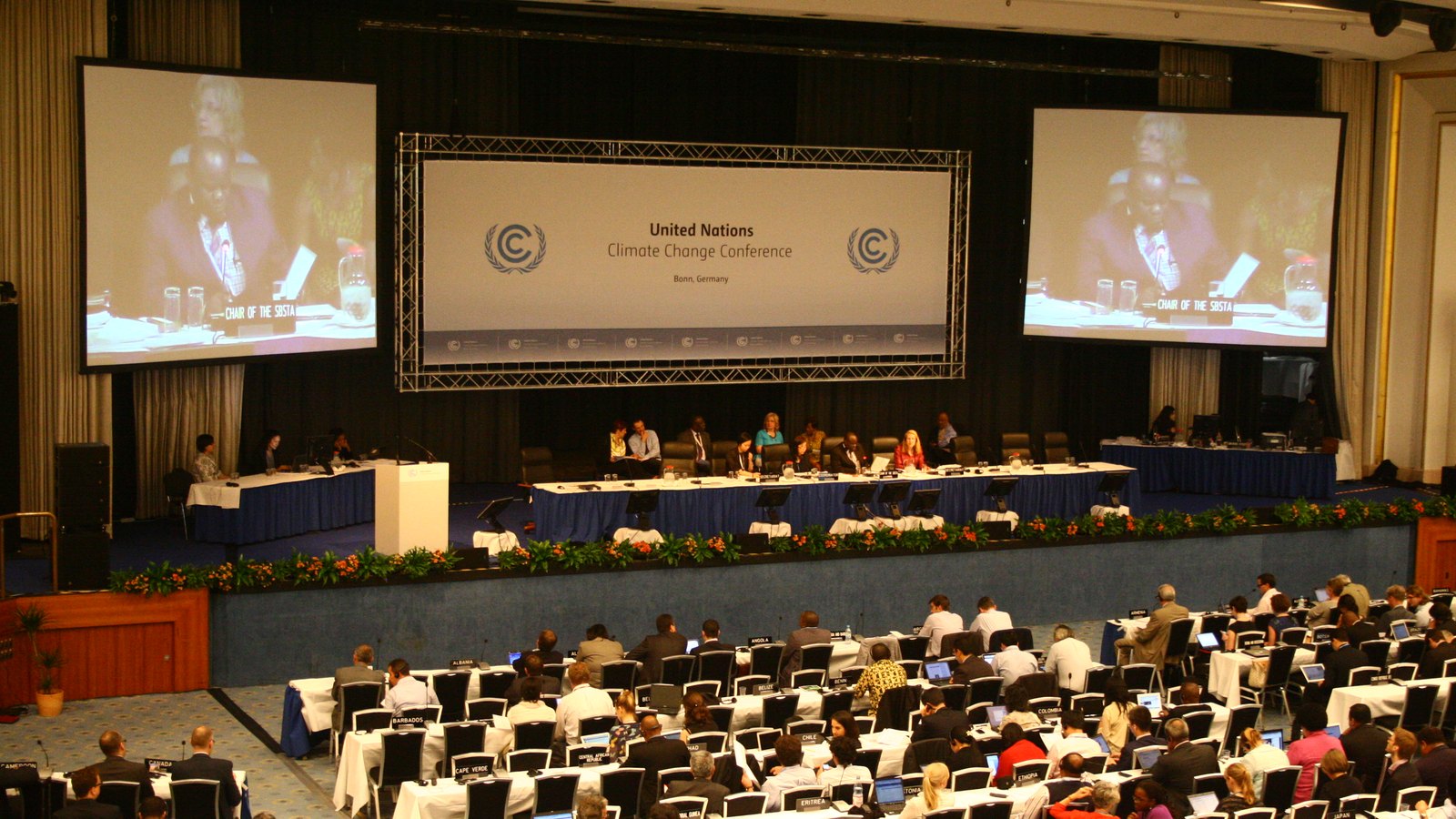
A COP31 Presidency draft published on 16 November 2026 invites the Intergovernmental Panel on Climate Change (IPCC) to deliver all three working group reports of its seventh assessment, plus the Synthesis Report, in time for the 2028 global stocktake, adding an IPCC-specific request to the final-week disputes CASRAI reported earlier. Countries remain split on the timing, and the panel’s budget is unresolved.
What happened
The first draft of the COP31 cover decision appeared on 16 November 2026, according to Carbon Brief, as a 144-paragraph text that its presidency note describes as “not intended to reflect consensus”. The unedited version carries the stamp 16/11/2026 12:40 on the UNFCCC document. Three paragraphs concern the IPCC. Paragraph 113 recognizes “the central role of the best available science and of the Intergovernmental Panel on Climate Change” and highlights the panel’s importance for the global stocktake. Paragraph 114 recognizes the value of a full range of knowledge and participation, including from developing countries, and asks that sufficient time be allowed for comprehensive and credible assessments. Paragraph 128 invites the IPCC, “while fully respecting its independence”, to provide all three working group contributions to its Seventh Assessment Report and its Synthesis Report in time to inform the second global stocktake.
Those lines have since collided with an open dispute. The Copenhagen Post, citing the Ritzau news agency on 17 November, reported that most countries, including many European states and island nations, want the report published before the 2028 review at COP33, while a smaller group including India, Saudi Arabia and China wants publication delayed until 2029, arguing that least developed countries need more time to work through thousands of pages of research. Chris Bowen, who chairs the COP31 negotiations, said that “science must remain in a prominent and central role across the negotiations at COP31”.
On 18 November UN News reported from Antalya that countries had launched the second global stocktake that day, even as ministers stayed deadlocked on several of the summit’s hardest questions. It said that several vulnerable countries want the IPCC reports completed in time to inform the process, while others, including Russia, Saudi Arabia and China, argue the schedule is too compressed and could limit meaningful participation by developing-country scientists. Climate Home News reported the same day that the Arab Group and Russia say they reject the catch-all draft, which had not yet been slimmed down.
Key details: the timeline options and the budget
The stocktake link is why the schedule matters. Carbon Brief reported on 20 October that the IPCC’s 65th session in Addis Ababa ended without a decision on the work plan for the seventh assessment, the sixth meeting running that failed to agree one, after chair Jim Skea suspended the talks on a Friday evening. The same session could not agree the panel’s budget for the rest of the cycle. The options that were before delegates, as reproduced by Carbon Brief from the IPCC work plan document, are below.
| Working group report | Option 1 (co-chairs, Sofia) | Option 2 (revisited, Lima) | Option 3 (India and Saudi Arabia submissions) |
|---|---|---|---|
| Working Group 1 (science) | May 2028, IPCC-69 | May 2028, IPCC-69 | May 2028, IPCC-69 |
| Working Group 2 (adaptation) | June 2028, IPCC-70 | July 2028, IPCC-70 | April 2029, IPCC-71 |
| Working Group 3 (mitigation) | July 2028, IPCC-71 | September 2028, IPCC-71 | July 2029, IPCC-72 |
A fourth option, proposed by Haiti, would approve Working Group 1 in April 2028, Working Group 2 in July 2028 and Working Group 3 in October 2028, Carbon Brief reported. In April, Skea told the outlet that publishing the reports by the end of 2028 would be possible only if a timeline was agreed before the end of 2026.
The budget figures are stark. According to the IPCC secretariat’s proposal, quoted by Carbon Brief, the panel needs about 33 million Swiss francs to complete the seventh assessment, contributions in 2025 were 5.3 million francs lower than in 2023, and as of the start of July only 16 countries and organisations had paid in for 2026, a total of 2.8 million francs. At the 2025 level of contributions, the secretariat warned, the trust fund would be depleted by the end of 2028. Carbon Brief added that the United States, historically the largest donor, has not contributed since 2024.
Background and context
The global stocktake is the Paris Agreement’s five-yearly review of collective progress. UN News noted that the first one, completed at COP28 in Dubai in 2023, helped spur agreements to triple renewable energy capacity and accelerate the transition away from fossil fuels in energy systems, and that the second concludes in 2028. UN climate chief Simon Stiell told delegates “We have two years”. The Copenhagen Post described the IPCC’s major assessments as bringing together findings from researchers around the world, and the secretariat’s budget, as Carbon Brief reported it, pays for author meetings and approval sessions, including support for experts from developing countries. CASRAI’s guide to IPCC author roles explains how that contribution differs from journal authorship.
The same Presidency text also proposes a work programme on the science of overshoot, which CASRAI covered in its report on the overshoot research proposal. That proposal and the IPCC paragraphs are both drafts that governments can change or delete.
Reaction
Skea described the October Addis Ababa session as a “profound disappointment” and “among the most difficult IPCC meetings”, as reported by Carbon Brief from the Earth Negotiations Bulletin. Marshall Islands climate envoy Tina Stege called it a “travesty that a handful of countries continue to delay the IPCC’s reports”, in a statement to Carbon Brief. A negotiator from Chad told the outlet that his country wants the reports ready for the stocktake so that mitigation action can be accelerated. Countries arguing for more time, including Kenya, said in Addis Ababa that publication after the stocktake “did not mean science would not inform policy”, according to the same report. UN News also said that earlier in the week scientists and climate leaders at COP31 called for the panel and its independence to be funded and defended.
What it means for researchers, universities and research offices
For institutions that release staff to write or review IPCC chapters, the immediate planning question is the approval calendar: Options 1 and 2 put all three reports in 2028, while Option 3 would stretch the last two into 2029. For funders and science ministries, the trust-fund figures show that the panel depends on voluntary contributions, and the draft’s emphasis on developing-country participation connects to a suggestion in the draft decision the IPCC secretariat put to the Addis Ababa plenary, reported by Carbon Brief, that the IPCC fund a second delegate for developing countries and economies in transition at future approval sessions. Research offices supporting climate-policy projects can treat the draft wording as a signal of intent, not an adopted decision: a recognition paragraph and an invitation to the IPCC do not by themselves fix a date or provide money. CASRAI’s guide to the US National Climate Assessment covers a separate assessment system and is no substitute for the IPCC schedule, and the dictionary entry on climate-aware funding defines research funding practices that build climate and sustainability considerations into eligibility, review and reporting.
What happens next
UN News reported that, with 21 issues unresolved, new texts on the negotiating tracks were due early on Thursday 19 November and that COP31 is set to close on Friday 20 November. Climate Home News said a fresh version of the cover decision was in preparation and the Presidency had convened a ministerial meeting on Wednesday evening to narrow differences. Bowen had said there would be at least one more draft. Whatever the final wording, the IPCC itself must still agree its work plan and budget: Carbon Brief reported in October that the suspended Addis Ababa session would be reconvened at the earliest opportunity, with no date given at that time.
Sources
- UNFCCC: COP31 Presidency draft text, cover decision (unedited version 16/11/2026 12:40), checked 2026-11-18
- UN News: COP31 deadlock persists as countries launch new ‘climate reality check’, 18 November 2026, checked 2026-11-18
- The Copenhagen Post (Ritzau): Countries at COP31 clash over whether key climate report should be ready for 2028 review, 17 November 2026, checked 2026-11-18
- Carbon Brief: Why a pivotal IPCC meeting in Ethiopia ended in ‘profound disappointment’, 20 October 2026, checked 2026-11-18
- Carbon Brief Connect: First draft cover decision lands at COP31, 16 November 2026, checked 2026-11-18
- Climate Home News: COP31 Bulletin Day 9: Crunch ministerial talks planned for Wednesday evening, 18 November 2026, checked 2026-11-18


