
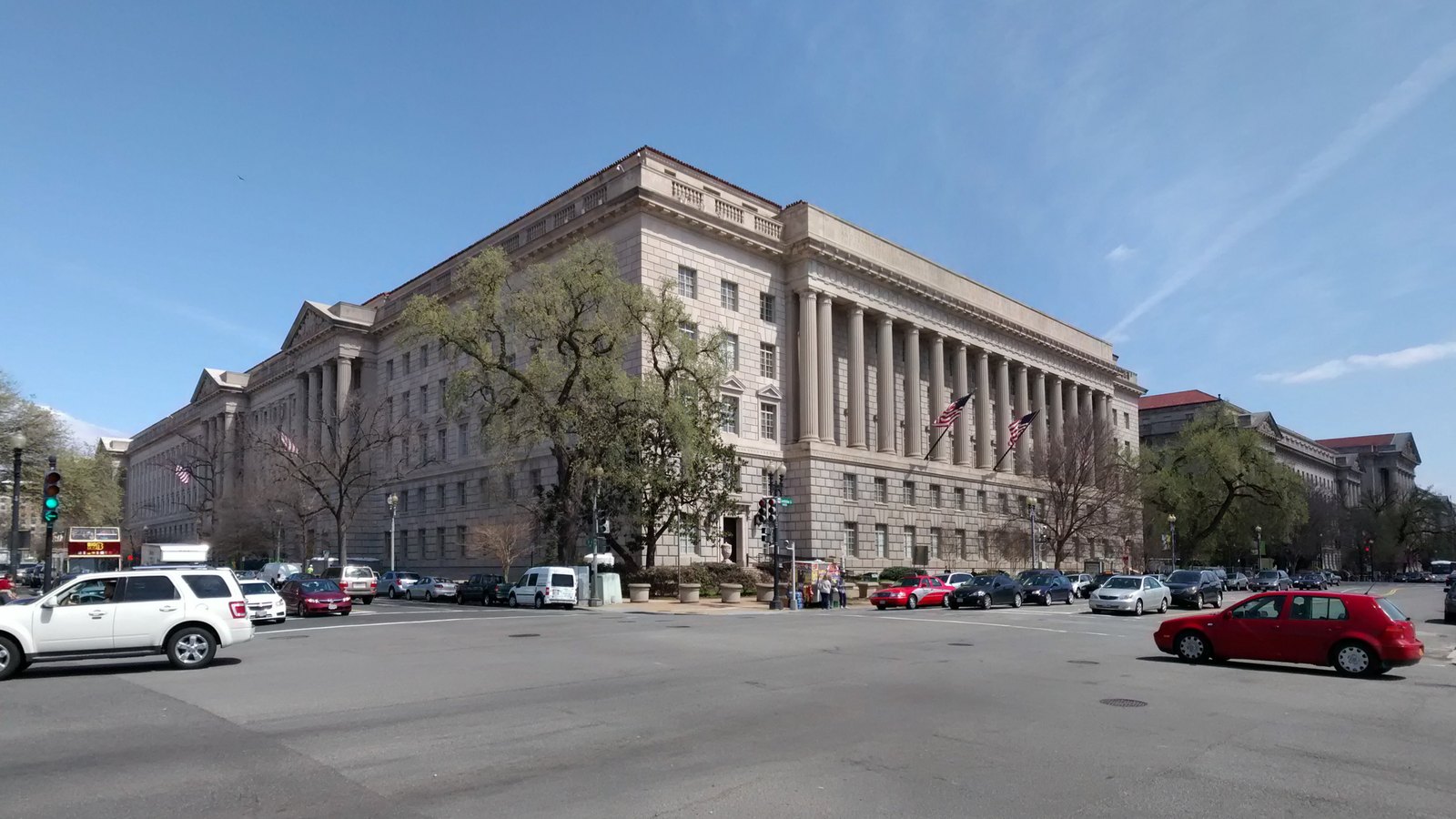
Following recent trade-remedy determinations on off-the-road tires from India, the U.S. Department of Commerce published final antidumping duty administrative review results on November 24, 2026, maintaining a 76.46 percent duty margin on passenger vehicle and light truck tires imported from China. Issued by the International Trade Administration, the determination enforces strict customs liquidation and cash deposit rules that directly affect automotive engineering test fleets, advanced mobility laboratories, and international supply chain compliance programs at U.S. research institutions.
What happened
On November 24, 2026, the International Trade Administration (ITA) within the U.S. Department of Commerce published final results for the 2024–2025 administrative review of the antidumping duty order on certain passenger vehicle and light truck tires from the People’s Republic of China. The determination was issued in Federal Register notice 2026-23939 under Docket Number A-570-016, covering imports entered from August 1, 2024, through July 31, 2025.
Signed on November 16, 2026, by Kasey O’Connor, Deputy General Counsel performing the non-exclusive duties of the Assistant Secretary for Enforcement and Compliance, the notice affirmed that reviewed exporters sold subject merchandise at less than normal value. On July 16, 2026, Commerce referred potential duty evasion to U.S. Customs and Border Protection (CBP) and published preliminary results the following day. With no interested parties submitting administrative comments, Commerce adopted its preliminary findings in full without a separate decision memorandum.
Key review determinations and tariff specifications
The proceeding examined three named Chinese tire producers: Triangle Tyre Co., Ltd., Shandong Yongsheng Rubber Group Co., Ltd., and Shandong Zhongyi Rubber Co., Ltd. Under non-market economy trade regulations codified in 19 CFR Part 351, Commerce presumes all operating entities are subject to government control unless they affirmatively establish both de jure and de facto operational independence. Because none of the three companies submitted documentation proving separate-rate eligibility, Commerce treated them as part of the unified China-wide entity.
Because no party requested an administrative review of the broader China-wide entity, its baseline rate remained unchanged at 76.46 percent ad valorem.
| Company Name | Review Role | Separate-Rate Status | Final Dumping Margin | Cash Deposit Rate |
|---|---|---|---|---|
| Triangle Tyre Co., Ltd. | Named exporter | Denied (no separate rate) | 76.46% | 76.46% (China-wide) |
| Shandong Yongsheng Rubber Group Co., Ltd. | Named exporter | Denied (no separate rate) | 76.46% | 76.46% (China-wide) |
| Shandong Zhongyi Rubber Co., Ltd. | Named exporter | Denied (no separate rate) | 76.46% | 76.46% (China-wide) |
| China-Wide Entity | Unreviewed baseline pool | Ineligible (national pool) | 76.46% | 76.46% |
| Previously Reviewed Separate-Rate Exporters | Unreviewed in this segment | Maintained from prior segment | Company-specific rate | Existing deposit rate |
Pursuant to section 751(a)(2)(A) of the Tariff Act of 1930, Commerce will issue assessment instructions to CBP no earlier than 35 days after publication, directing liquidation of entries from the three named companies at 76.46 percent. If an aggrieved party files a timely summons with the U.S. Court of International Trade within 30 days, entry liquidation will be suspended pending statutory injunction filings within 90 days.
Regulatory background and trade context
The antidumping order on passenger vehicle and light truck tires from China originated on August 10, 2015, following affirmative material injury findings by the U.S. International Trade Commission. The order covers pneumatic rubber tires designed for passenger cars, station wagons, racing cars, and light trucks. Annual administrative reviews conduct retrospective reconciliations between estimated cash deposits collected at border entry and actual dumping margins calculated across twelve-month windows.
Within Commerce, the International Trade Administration Enforcement and Compliance directorate calculates dumping margins in non-market economies by valuing production factors using surrogate market-economy inputs. Rigorous trade enforcement mirrors statutory controls under the Export Control Reform Act, aligning customs assessments and border surveillance to identify complex transshipment and tariff circumvention strategies across Asian shipping networks.
Industry and institutional perspectives
Trade remedies in the automotive rubber sector protect domestic manufacturing capacity against state-subsidized foreign pricing. According to industry metrics published in the USTMA Factbook 2026 by the U.S. Tire Manufacturers Association, domestic tire manufacturing contributes over $250 billion in national economic output and supports more than 300,000 direct and induced jobs. Federal antidumping duties help maintain capital investments in domestic tire engineering, dynamic safety testing, and sustainable compound formulations.
Operationally, these determinations impose strict verification duties on customs brokers and commercial importers under U.S. Customs and Border Protection AD/CVD priority enforcement rules. Importers must comply with 19 CFR 351.402(f)(2) by filing non-reimbursement certifications prior to entry liquidation. Failure to provide this certificate triggers a presumption of duty reimbursement, resulting in double antidumping duty assessments. Organizations managing high-value testing procurements apply systematic supplier risk assessment workflows to detect potential trade remedy liabilities before purchase contracts are finalized.
What it means for researchers, universities and research offices
While often viewed as purely commercial measures, antidumping determinations carry practical consequences for university laboratories, transportation research centres, and vehicle testing facilities. Research universities operate autonomous mobility proving grounds, chassis dynamometers, and specialized test tracks investigating tire-pavement friction acoustics, rolling resistance, and microplastic particle emissions.
Research administration offices and campus procurement teams face distinct operational considerations:
- Procurement Budgeting: Federal grants from the National Science Foundation, Department of Energy, or Department of Transportation rarely accommodate unforeseen import duty spikes. If an engineering lab procures test tire sets manufactured by unreviewed Chinese entities, the institution must pay cash deposits at 76.46 percent upon customs entry.
- Customs Entry Documentation: Logistics coordinators must navigate the formal customs clearance process, filing required reimbursement certificates to ensure shipments avoid punitive double-duty assessments.
- Prototype Collaborations: University teams receiving experimental tire compounds or wheel assemblies from international automotive partners must confirm customs declarations. Unregistered prototype tires from covered entities remain subject to duties unless entered under documented temporary importation bonds or academic tariff exemptions.
- Empirical Policy Analysis: For faculty and legal scholars studying international trade law, the review provides empirical documentation of non-market economy administrative procedures, surrogate valuation disputes, and corporate compliance burdens.
What happens next
The publication of notice 2026-23939 triggers formal administrative timelines across federal trade agencies:
- Immediate Cash Deposits: Effective November 24, 2026, CBP collects revised cash deposits at 76.46 percent ad valorem on all covered entries and warehouse withdrawals from Triangle, Yongsheng, Zhongyi, and other unreviewed Chinese producers.
- Liquidation Instructions: Commerce will transmit formal liquidation directives to CBP no earlier than December 29, 2026, exactly 35 days following publication.
- Judicial Appeals: Interested parties may challenge the final results by filing a summons with the U.S. Court of International Trade within 30 days under 19 U.S.C. 1516a, with requests for statutory injunctions due within 90 days.
- Duty Evasion Oversight: CBP’s Trade Remedy Law Enforcement Directorate will proceed with evaluating the evasion referral forwarded by Commerce on July 16, 2026.
- Subsequent Review Opportunities: Eligible exporters seeking an individual margin may petition Commerce for administrative review during the next anniversary window in August 2027.
Sources
- Federal Register: Certain Passenger Vehicle and Light Truck Tires From the People’s Republic of China: Final Results of Antidumping Duty Administrative Review; 2024-2025, checked 2026-11-29
- International Trade Administration: Enforcement and Compliance Overview, checked 2026-11-29
- U.S. Customs and Border Protection: Priority Trade Issue: Antidumping and Countervailing Duties, checked 2026-11-29
- U.S. Tire Manufacturers Association: USTMA Factbook 2026, checked 2026-11-29
- Electronic Code of Federal Regulations: Title 19 CFR Part 351 – Antidumping and Countervailing Duties, checked 2026-11-29






