
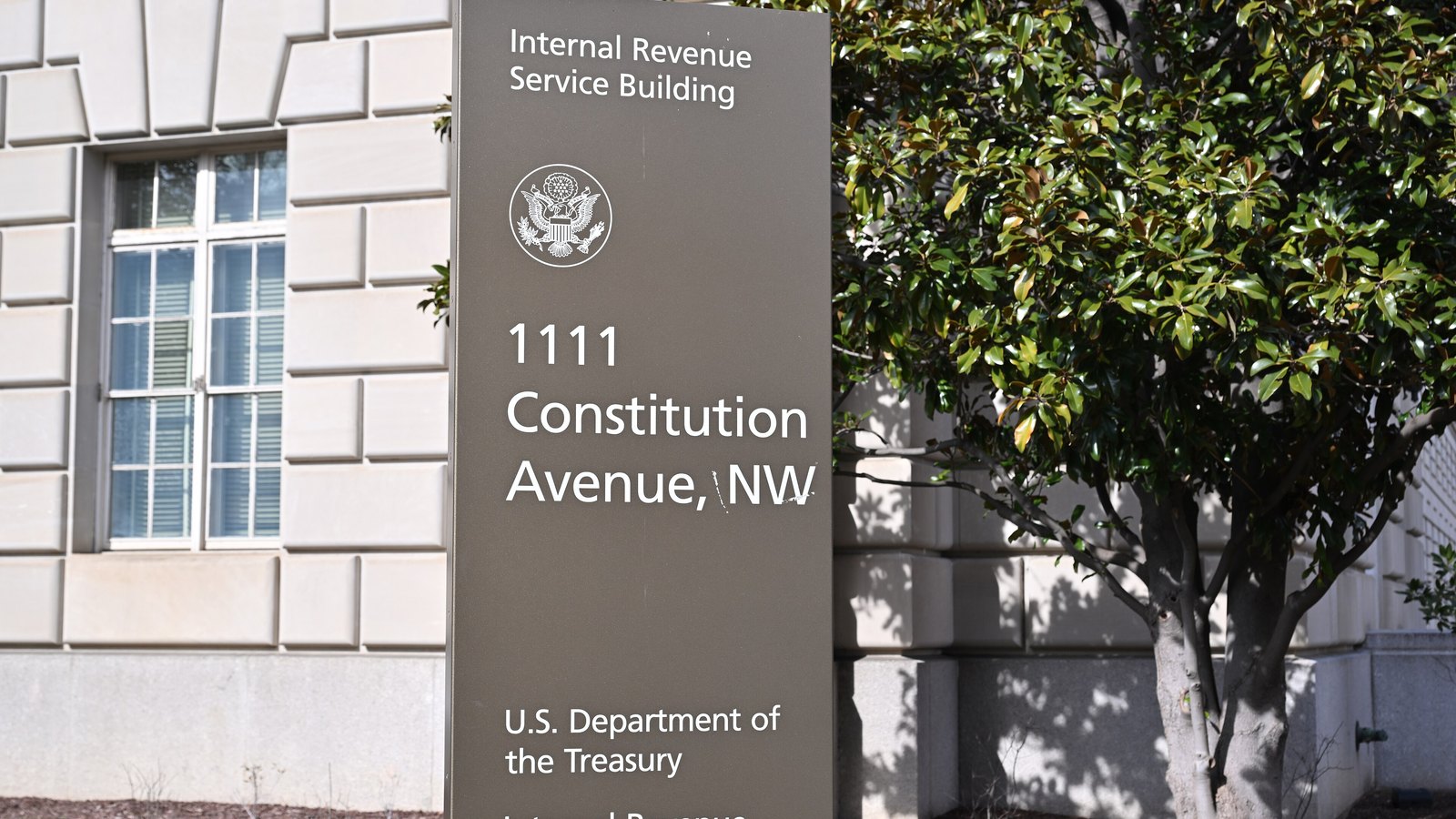
Following an earlier Treasury submission on electronic retirement plan notices, the U.S. Department of the Treasury on November 27, 2026, submitted five Internal Revenue Service information collection packages to the Office of Management and Budget for review. Formally issued in Federal Register Notice 2026-24146, the submission renews actuarial credentialing under 20 CFR Part 901 and tax-exempt oversight, establishing key compliance standards for university pension systems, actuarial science faculties, and institutional research administrators.
What happened
On November 27, 2026, the Departmental Offices of the U.S. Department of the Treasury published Notice 2026-24146 (91 FR 76881) initiating 30-day review before the Office of Management and Budget (OMB) under the Paperwork Reduction Act of 1995. The notice covers five distinct information collection requests administered by the Internal Revenue Service (IRS), addressing professional actuarial licensing, tax accounting methods, service delivery feedback, exempt organization compliance, and customer experience benchmarking.
The primary component of the submission is OMB Control Number 1545-0951, which governs regulations covering actuarial services under the Employee Retirement Income Security Act of 1974 (ERISA). The package requests an extension without change of information collections that enable the Joint Board for the Enrollment of Actuaries to license actuaries and verify mandatory triennial renewal filings. In addition, Treasury submitted collections for interest capitalization recordkeeping (OMB 1545-1265), qualitative service delivery feedback (OMB 1545-2256), exempt organization complaint referrals via Form 13909 (OMB 1545-2314), and customer experience surveys under OMB Circular A-11 Section 280 (OMB 1545-2290).
Across the five collections, Treasury projects an annual aggregate burden of 235,317 hours across 2,687,082 responses. The notice opens a 30-day public comment window closing on December 28, 2026. Treasury PRA Clearance Officer Juliana L. Pearson and clearance contact Spencer W. Clark are coordinating public submissions directed to OMB’s Office of Information and Regulatory Affairs.
Key details and information collection requirements
Under OMB Control Number 1545-0951, information collection spans initial credentialing, triennial renewal, and compliance documentation. Individuals seeking enrolled status submit Form 5434 (Application for Enrollment to Perform Actuarial Services Under ERISA), requiring approximately one hour. Actuaries seeking triennial renewal submit Form 5434-A, with an estimated burden of 30 minutes. In addition, practitioners must fulfill continuing professional education (CPE) recordkeeping obligations under 20 CFR 901.11, calculated at 15 minutes annually.
Federal rules require enrolled actuaries to complete at least 36 hours of qualifying continuing education during each three-year enrollment cycle, including at least 12 hours of core pension law and actuarial assumptions, alongside two hours of professional ethics. Practitioners and qualifying sponsors must retain completion certificates for verification, aligning with institutional record retention policies. Treasury estimates 2,482 annual responses for the actuarial collection, generating 1,025 annual burden hours.
The other four collections account for broader tax administration workflows: interest capitalization requires contemporaneous records (500,050 responses; 116,767 hours); qualitative feedback gathers user input (175,000 responses; 10,000 hours); Form 13909 processes complaints regarding tax-exempt entities (8,000 responses; 6,400 hours); and customer experience benchmarking evaluates public-facing tools (2,001,550 responses; 101,125 hours).
| OMB Control No. | Collection Title and Regulatory Citation | Affected Public | Annual Responses | Time per Response | Annual Burden Hours |
|---|---|---|---|---|---|
| 1545-0951 | Performance of Actuarial Services Under ERISA (20 CFR 901; Forms 5434 and 5434-A) | Individuals or households | 2,482 | 15 min to 1 hr | 1,025 |
| 1545-1265 | Capitalization of Interest (26 CFR 1.263A-8 through 1.263A-15) | Individuals or households | 500,050 | 2 hr 14 min | 116,767 |
| 1545-2256 | Collection of Qualitative Feedback on Agency Service Delivery | Individuals or households | 175,000 | 17.5 min | 10,000 |
| 1545-2314 | Tax-Exempt Organization Complaint (Referral) (Form 13909) | Individuals or households | 8,000 | 48 min | 6,400 |
| 1545-2290 | Improving Customer Experience (OMB Circular A-11, Section 280) | Individuals, businesses, organizations | 2,001,550 | 3 min to 90 min | 101,125 |
Regulatory background and statutory framework
Statutory authority for actuarial enrollment derives from Title III of ERISA (29 U.S.C. 1241–1242), codified in federal regulations at 20 CFR Part 901. Congress established the Joint Board for the Enrollment of Actuaries under the joint oversight of the Department of the Treasury and Department of Labor, with active liaison from the Pension Benefit Guaranty Corporation.
Under ERISA, defined benefit pension plans must engage an enrolled actuary to certify actuarial valuation schedules on Form 5500. Enrolled actuaries hold exclusive legal authority to calculate minimum funding requirements and certify funding adequacy. Operational support for the Joint Board is managed by the Internal Revenue Service Return Preparer Office, which oversees rosters and renewal applications.
Federal pension protection relies heavily on these determinations. The Pension Benefit Guaranty Corporation mandates enrolled actuary sign-offs on annual premium calculations and plan termination filings. The Paperwork Reduction Act renewal confirms that these reporting mechanisms remain authorized through 2029.
Professional standards and sector reaction
Actuarial organizations monitor Joint Board rules to ensure harmony between federal mandates and professional practice standards. The American Academy of Actuaries sets foundational practice benchmarks through its U.S. Qualification Standards, establishing education, experience, and continuing education expectations for actuaries issuing statements of actuarial opinion.
Actuarial leadership emphasizes that the 36-hour triennial education standard under 20 CFR 901.11 is vital for maintaining technical competence amid evolving statutory frameworks, including pension funding reforms under the SECURE 2.0 Act. Professional bodies actively liaise with the Joint Board to modernize examination syllabi and ensure practitioners meet both federal and professional benchmarks.
What it means for researchers and universities
The renewal of ERISA actuarial regulations directly touches higher education and institutional research administration. Academic departments designated as Centers of Actuarial Excellence align curricula with the Joint Board examination series (EA-1, EA-2F, EA-2L), while university research symposia frequently qualify as approved CPE program sponsors under 20 CFR 901.11.
At an institutional level, universities sponsoring defined benefit plans or participating in state retirement systems rely on enrolled actuaries to evaluate pension obligations and certify fringe benefit rate proposals. Inadequate documentation can trigger findings during annual Single Audit compliance reviews or complicate indirect cost rate negotiations with federal agencies.
Furthermore, the inclusion of Form 13909 in Notice 2026-24146 reinforces the importance of tax-exempt governance. As 501(c)(3) entities, universities must maintain rigorous institutional internal controls to manage unrelated business income and research commercialization activities, as Form 13909 serves as the primary intake mechanism for IRS investigations into exempt entity violations.
What happens next
The public comment period for Notice 2026-24146 remains open through December 28, 2026. Academic institutions, plan sponsors, and professional actuarial bodies may submit comments to OMB’s Office of Information and Regulatory Affairs via reginfo.gov, citing OMB Control Number 1545-0951 or related collection numbers.
Upon concluding its review, OMB will issue formal clearance actions extending the information collections for up to three years. Practicing actuaries should verify CPE documentation ahead of upcoming renewal deadlines, while institutional administrators should review internal compliance files to maintain alignment with federal standards.
Sources
- Federal Register: Agency Information Collection Activities; Submission for OMB Review; Comment Request; Multiple Internal Revenue Service Information Collection Requests, checked 2026-11-29
- Internal Revenue Service: Enrolled Actuaries, checked 2026-11-29
- Electronic Code of Federal Regulations: 20 CFR Part 901 – Regulations Governing the Performance of Actuarial Services Under the Employee Retirement Income Security Act of 1974, checked 2026-11-29
- American Academy of Actuaries: U.S. Qualification Standards, checked 2026-11-29
- Legal Information Institute, Cornell Law School: 20 CFR Part 901 – Regulations Governing the Performance of Actuarial Services, checked 2026-11-29
- Pension Benefit Guaranty Corporation: Enrolled Actuaries Meetings – Blue Books, checked 2026-11-29






