
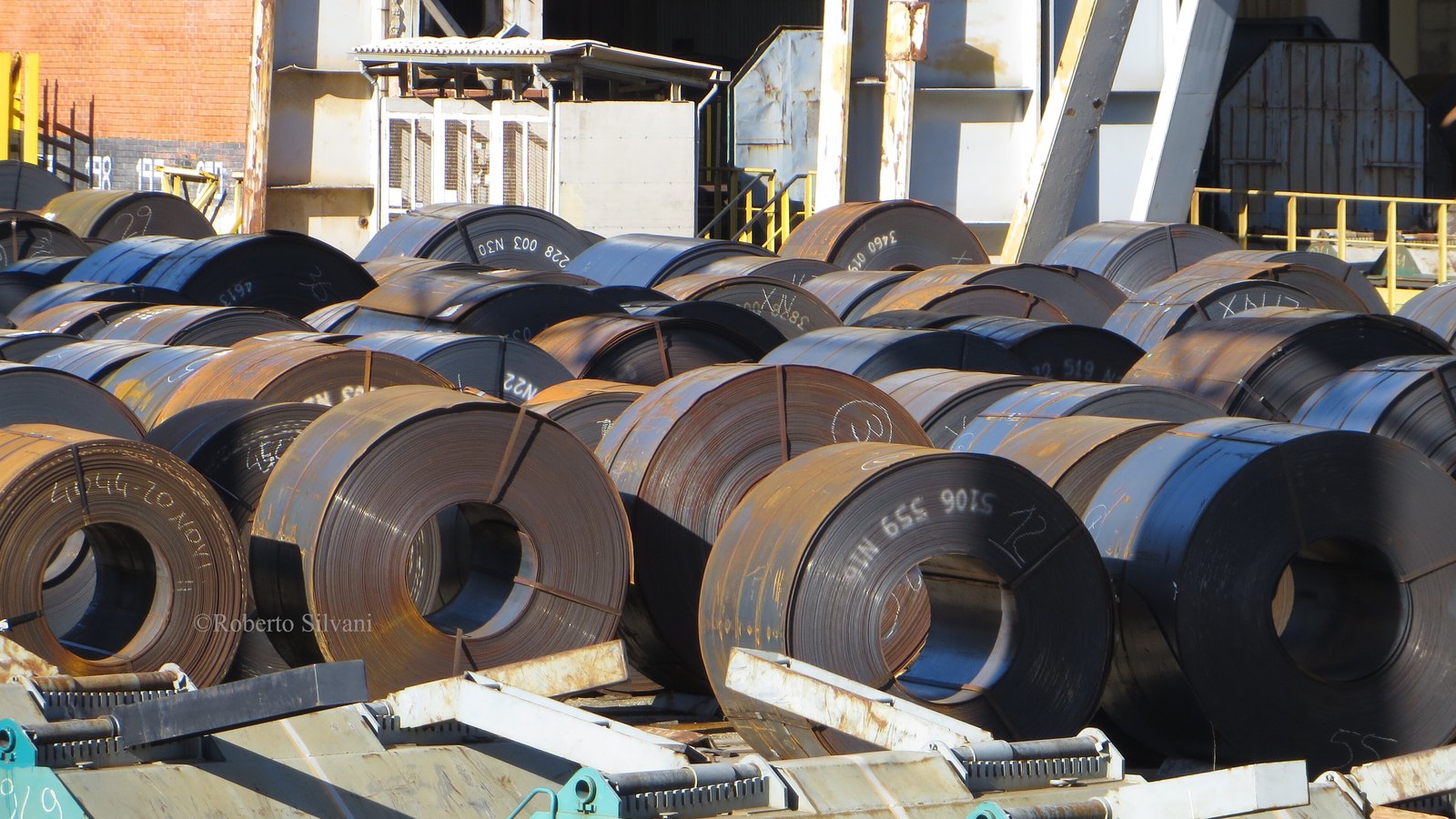
In contrast to affirmative rulings on Chinese steel wheels finished in Vietnam, the U.S. Commerce Department issued preliminary determinations on November 24, 2026, ruling that corrosion-resistant steel completed in Indonesia does not circumvent anti-dumping duty orders. The decision prevents tariff shocks across supply chains that provide coated steel for cleanroom enclosures, ventilation systems, and university laboratory construction.
Commerce issues negative circumvention findings for Indonesian steel
The International Trade Administration of the U.S. Department of Commerce published companion preliminary determinations in the Federal Register concluding that corrosion-resistant flat-rolled steel completed in Indonesia does not evade U.S. trade remedies. The primary notice addresses imports completed in Indonesia using hot-rolled or cold-rolled steel substrate originating in China under antidumping order A-570-026 and countervailing duty order C-570-027. Under a companion circumvention notice on Vietnamese substrate, Commerce reached an identical negative conclusion for corrosion-resistant steel completed in Indonesia utilizing cold-rolled substrate from Vietnam under orders A-552-843 and C-552-844.
Both determinations were issued on a country-wide basis following extensive preliminary inquiries initiated on March 25, 2026. Because Commerce made negative preliminary findings of circumvention, the agency is not instructing U.S. Customs and Border Protection to suspend liquidation of entries or collect cash deposits on imports of corrosion-resistant steel products exported from Indonesia. Deputy General Counsel Kasey O’Connor signed the formal findings on November 19, 2026, upholding the uninterrupted importation of qualified Indonesian-finished coated steel while the agency prepares for on-site verification.
Statutory value-added criteria and manufacturer inquiries
Commerce conducted its inquiry pursuant to section 781(b) of the Tariff Act of 1930, codified at 19 U.S. Code 1677j(b), which governs merchandise completed or assembled in a third country prior to importation into the United States. To extend existing antidumping and countervailing duty orders to third-country processing, the statute requires Commerce to determine whether the manufacturing or assembly process in the intermediate country is minor or insignificant. Under the statutory framework, federal examiners evaluate five mandatory factors: the level of capital investment, the extent of research and development, the nature of the production process, the scale of manufacturing facilities, and whether the value added in the foreign country represents a small proportion of the final product value.
Implementing regulations set forth in 19 CFR 351.226 also require examiners to scrutinize patterns of trade, commercial relationships between substrate suppliers and finishing mills, and historical export volumes. Commerce evaluated operations across a multi-year period of inquiry covering January 1, 2021 through December 31, 2025 for Chinese-origin inputs, and the 2025 calendar year for Vietnamese-origin inputs. Examiners issued quantity and value questionnaires to four primary Indonesian steel producers: PT. AM/NS Indonesia, PT NS BlueScope Indonesia, PT. Sunrise Steel, and PT. Tata Metal Lestari, alongside voluntary data submitted by PT Aluminium Extrusion Indonesia.
| Manufacturer | Substrate Evaluated | Inquiry Period | Preliminary Ruling | Duty Impact |
|---|---|---|---|---|
| PT. AM/NS Indonesia | China (HRS/CRS) and Vietnam (CRS) | 2021–2025 (China), 2025 (Vietnam) | Negative Circumvention | No Cash Deposit Required |
| PT NS BlueScope Indonesia | China (HRS/CRS) | 2021–2025 | Negative Circumvention | No Cash Deposit Required |
| PT. Sunrise Steel | China (HRS/CRS) and Vietnam (CRS) | 2021–2025 (China), 2025 (Vietnam) | Negative Circumvention | No Cash Deposit Required |
| PT. Tata Metal Lestari | China (HRS/CRS) and Vietnam (CRS) | 2021–2025 (China), 2025 (Vietnam) | Negative Circumvention | No Cash Deposit Required |
Commerce determined that continuous hot-dip galvanizing, continuous annealing, and specialized metallic coating performed at these Indonesian facilities represent substantial capital investment and complex metallurgical transformation rather than minor assembly. The resulting corrosion-resistant products differ fundamentally in chemical resistance, mechanical durability, and surface morphology from raw unpickled substrate coils.
Background of trade remedies on corrosion-resistant steel
The underlying trade disputes date back to July 2016, when Commerce finalized affirmative antidumping and countervailing duty orders on corrosion-resistant steel products from China following deep market distortions caused by non-market state subsidies. Similar trade remedy orders on Vietnamese corrosion-resistant steel took effect in December 2025. Domestic steel producers subsequently filed petitions alleging that foreign producers had established transshipment and light finishing networks across Southeast Asia to bypass steep tariff barriers.
Corrosion-resistant steel encompasses flat-rolled carbon steel coated with zinc, aluminum, or nickel-iron alloys to prevent oxidation and environmental degradation. The material is essential for industrial fabrication, cleanrooms, and architectural enclosures. International trade tracking by initiatives like the Global Trade Alert demonstrates how trade remedy investigations increasingly focus on third-country transformation thresholds to differentiate between genuine industrial relocation and circumvention schemes. While simple assembly operations regularly trigger affirmative findings, high-temperature coating lines requiring sophisticated chemical bath controls have consistently tested the boundaries of substantial transformation doctrines.
Industry reaction and trade policy debate
The preliminary determination drew close scrutiny from domestic manufacturers and international trade bodies. Domestic advocacy organizations, including the American Iron and Steel Institute, maintain that circumvention enforcement remains vital to preserving the integrity of U.S. trade remedy orders against cross-border subsidization. Domestic steelmakers argued that permitting imported substrate to clear customs after regional coating operations risks undermining hard-won tariff remedies.
Conversely, Southeast Asian exporters and global supply chain analysts argued that imposing punitive duties on legitimate manufacturing operations would disrupt established industrial networks. They emphasized that the capital expenditures, technical workforce training, and quality assurance protocols operating in Indonesian mills align with international trade standards established under the World Trade Organization. The negative determination affirms that foreign facilities investing in full continuous galvanizing infrastructure can maintain access to the U.S. market even when sourcing competitive substrate from countries subject to trade remedy orders.
Implications for laboratory infrastructure and university procurement
Although trade remedy cases primarily focus on industrial commodity flows, their outcomes directly govern procurement pricing for specialized campus research facilities. University capital projects, high-containment laboratories, and cleanroom installations rely heavily on coated flat-rolled steel for structural enclosures, HVAC air handlers, and architectural wall systems. In microelectronics and biotechnology facilities, strict protocols governed by cleanroom maintenance standards demand continuous, non-flaking, corrosion-resistant surfaces to prevent particulate contamination and maintain environmental sterility.
The negative circumvention ruling brings immediate operational stability to institutional procurement offices and construction project managers:
- Cost Certainty for Capital Projects: Institutional contractors will not face unexpected 100% to 200% tariff adjustments or supply halts on HVAC components and architectural panels fabricated with Indonesian-finished steel.
- Supply Chain Transparency: Research administrators managing capital expansions should align procurement due diligence with institutional supply chain frameworks, such as those detailed in CASRAI’s analysis of the semiconductor supply chain, ensuring that tier-one mechanical contractors document the exact provenance of coated steel supplies.
- Audit Readiness: University procurement officers should require vendors to supply mill test certificates showing Country of Melt and Pour alongside third-country processing records, guaranteeing documentation compliance during federal research facility grant audits.
Verification timeline and next regulatory steps
Commerce underscored that its country-wide negative circumvention findings remain preliminary. In accordance with 19 CFR 351.307, the agency will conduct on-site verification of the factual submissions and accounting records provided by PT. AM/NS Indonesia, PT NS BlueScope Indonesia, PT. Sunrise Steel, and PT. Tata Metal Lestari before drafting final determinations.
Following the completion of verification reports, Commerce will publish a briefing schedule through the Antidumping and Countervailing Duty Centralized Electronic Service System. Interested parties will have an opportunity to submit case briefs, followed by rebuttal briefs due within seven calendar days. Under agency procedural rules, executive summaries for each contested issue are restricted to 450 words. Public hearings may be requested to review technical claims, with final country-wide determinations scheduled for completion in early 2027.
Sources
- Federal Register: Certain Corrosion-Resistant Steel Products From the People’s Republic of China: Preliminary Negative Determination of Circumvention of the Antidumping Duty and Countervailing Duty Orders, checked 2026-11-24
- Federal Register: Certain Corrosion-Resistant Steel Products From the Socialist Republic of Vietnam: Preliminary Negative Determination of Circumvention of the Antidumping Duty and Countervailing Duty Orders, checked 2026-11-24
- Legal Information Institute: 19 U.S. Code § 1677j – Prevention of circumvention of antidumping and countervailing duty orders, checked 2026-11-24
- Electronic Code of Federal Regulations: 19 CFR 351.226 – Circumvention inquiries, checked 2026-11-24
- American Iron and Steel Institute: Trade Public Policy and Remedy Enforcement, checked 2026-11-24
- World Trade Organization: Anti-Dumping Agreement and Technical Gateway, checked 2026-11-24






