
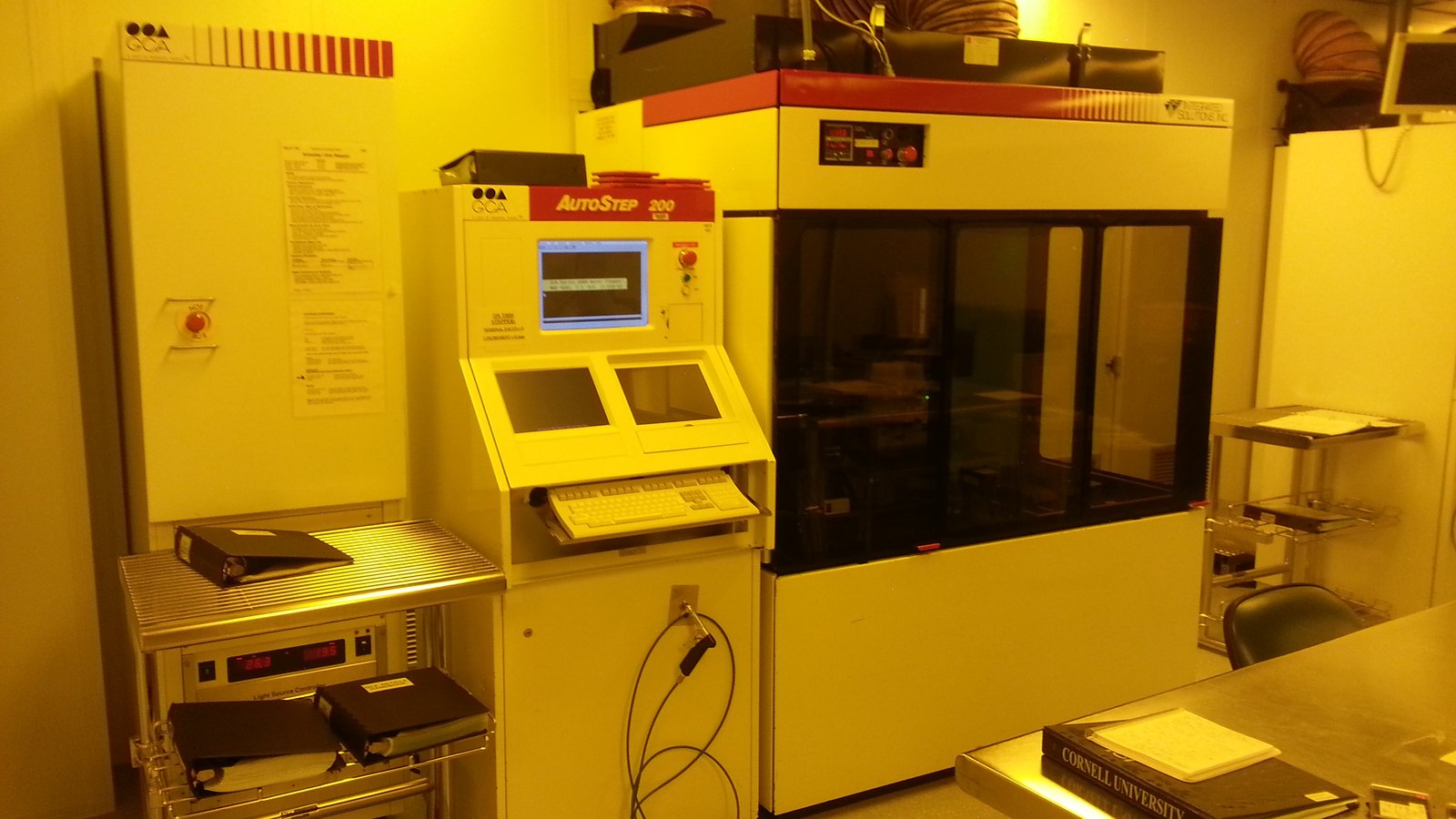
Dutch Prime Minister Rob Jetten said on Friday, 27 November 2026, that he will raise the US MATCH Act with President Donald Trump at next month’s G20 summit in Miami, a day after trade minister Sjoerd Sjoerdsma told parliament the Netherlands is working with the European Commission, Germany and France to block it. The bill would extend US controls on chipmaking tools and their servicing, with consequences for universities and research offices that work with Chinese partners.
What happened
Jetten’s plan was reported by Asia Times, which paraphrased him as calling the bill disproportionate and unacceptable and as saying it was in Washington’s interest for ASML to keep its strong position. The report gives Miami as the summit location and says only that the meeting falls next month; it quotes no exact G20 dates.
The remarks follow a debate in the Dutch parliament on Thursday, 26 November. According to Reuters, Sjoerdsma said the Netherlands will ask Washington not to enforce the act if it is adopted. “We will not simply be told what to do,” he said. “If the act is adopted, our message to the US administration will be to not enforce it.” He told lawmakers the bill would hurt ASML, which Reuters describes as Europe’s most valuable listed company, and the technology sectors of other European countries.
Sjoerdsma added that the Netherlands and the EU would explore bilateral and European options, including whether other instruments are needed. The Next Web reports that he called the proposal one that goes “way too far”, warned that it could leave Europe at “an unacceptable disadvantage” and said Europe “cannot afford to fall behind in semiconductors”.
The development adds to the Dutch position described in our earlier report on the Dutch parliamentary pressure and ASML chief executive Christophe Fouquet’s warning. The new elements are the prime minister’s decision to take the issue to the leaders’ level and the minister’s statement that the Netherlands will ask the US not to enforce the act.
Key details of the bill
The Multilateral Alignment of Technology Controls on Hardware (MATCH) Act is Senate bill S. 4281 in the 119th Congress. The introduced text published by the US Government Publishing Office shows Senator Pete Ricketts as sponsor with Senators Andy Kim, Jim Risch and Chuck Schumer as cosponsors, referred to the Banking, Housing, and Urban Affairs Committee. Its official title is “To provide for export restrictions on certain semiconductor manufacturing equipment and components therefor, and for other purposes.”
| Provision in S. 4281 as introduced | What the text says |
|---|---|
| Chokepoint list (Sec. 3(a)) | Within 60 days of enactment, and annually after, Commerce and State must identify covered equipment and covered facilities, report to Congress and publish notice in the Federal Register. |
| Allied alignment (Sec. 3(c)(2)) | Within 150 days, the agencies must certify for each allied supplier country whether it has adopted equivalent countrywide controls and licensing. |
| One-time extension (Sec. 3(c)(4)) | The 150-day deadline can be extended by up to 90 days, with concurrence from the Secretaries of Defense and Energy and a report to Congress. |
| If an ally does not match (Sec. 3(c)(3)) | Commerce must issue regulations that apply US controls to the ally’s covered equipment and require licences for servicing in covered facilities, with a policy of denial. |
| Covered equipment (Sec. 3(g)(10)) | Includes at a minimum deep ultraviolet immersion photolithography machines, through-silicon-via deposition and etch tools, cryogenic etch equipment and cobalt deposition equipment. |
| Servicing (Sec. 3(g)(13)) | Defined as in-person or remote work including installation, calibration, repair, testing, diagnosing, software or firmware updates and training. |
The Senate Foreign Relations Committee release announcing the bill describes it as closing servicing and entity-specific loopholes in current controls. Under Sec. 3(e) of the text, Commerce may terminate or modify the controls on a country that later adopts equivalent measures. TNW says allies with large chip industries, including the Netherlands and Japan, would have 150 days to align; Asia Times reports that a House version passed the House Foreign Affairs Committee by 36 votes to 8 on 22 April.
Background and context
The Netherlands restricted exports of some deep ultraviolet machines to China in 2023 under US pressure, and Asia Times reports that rules took effect on 1 January 2024. TNW notes that the Dutch government introduced its own controls on ASML’s advanced machines in 2023 and has tightened them several times since. It also reports that the Dutch government has lobbied against the bill for months, and that China was once ASML’s second-largest market.
Asia Times cites estimates from the Washington-based CTS think tank that about 343 ASML immersion deep ultraviolet systems had been imported into China cumulatively by early 2026. The outlet stresses this is a cumulative import estimate, not a count of machines still running. Reuters reports that ASML expects China to account for about 20% of its sales this year, and that Fouquet warned the previous week that the proposed curbs would likely accelerate China’s development of rival technology.
Congress is negotiating whether to attach the MATCH Act to the annual defence authorisation bill. Reuters says a decision could come next month, Asia Times places it in mid-December, and TNW reports that no vote date has been set. Our coverage of Speaker Johnson’s backing for AI chip export bills in the FY2027 defence bill covers the wider legislative vehicle.
Reaction
Dutch Foreign Minister Tom Berendsen visited Beijing on Wednesday, 25 November, where, according to Reuters, China and the Netherlands said they were committed to bilateral talks on export controls. Asia Times quotes him as saying the Netherlands “would always make its own independent decisions on export controls.” Reuters adds that China has previously condemned the MATCH Act and warned of countermeasures.
Sanne van der Lugt, director of the China programme at the Global Trade Policy Observatory, told Reuters the EU should consider using its Blocking Statute if the act is enacted, and that Europe would need to expect retaliation from Washington.
What it means for researchers, universities and research offices
The bill text contains no provision that specifically addresses universities or academic research, and the reporting concerns commercial fabs and ASML tools. The relevance for research offices is indirect but concrete in two places. First, the definition of a covered facility in Sec. 3(g)(9) reaches an entity that has a “joint development or research agreement” with a listed entity such as Huawei or Hua Hong. A university or institute that signs such an agreement should expect its partner’s status to matter for any equipment, components or servicing involved.
Second, the definition of servicing includes remote work, testing and training. Research groups that rely on foreign-built semiconductor tools in shared facilities, or that train visiting engineers, should ask their export compliance staff whether any activity would count as servicing if the covered-facility list reaches a collaborator. This is an editorial reading of the text, not a statement by any of the sources.
Export compliance teams already working under the Export Control Reform Act and, in Europe, the EU dual-use export control regulation will find that the dispute is about whose law governs the same equipment. Research security offices tracking research security obligations and procurement staff who depend on the semiconductor supply chain can use the Dutch position as a signal that a European non-enforcement stance is possible, though nothing is enacted. Nothing in the bill takes effect until it is passed, and the timelines above run from enactment.
What happens next
Jetten will raise the bill at the G20 summit in Miami in December. Asia Times reports that Xi Jinping and Trump are set to meet on the summit’s sidelines on 14 and 15 December, with chip controls among the topics. Lawmakers are expected to decide on the defence-bill attachment in December, according to Reuters and Asia Times. Sjoerdsma told parliament that the Netherlands and the EU will explore bilateral and European measures if the act is adopted.
Sources
- US Government Publishing Office: S. 4281, Multilateral Alignment of Technology Controls on Hardware (MATCH) Act, introduced text, 119th Congress
- US Senate Committee on Foreign Relations: Risch, Ricketts, Kim Introduce MATCH Act, April 2026
- Reuters via WSAU: Netherlands will ask Washington not to enforce MATCH Act, minister says, 26 November 2026
- The Next Web: Dutch minister says US chip curbs bill puts Europe at a disadvantage, 27 November 2026
- Asia Times: US MATCH Act may idle ASML’s DUV machines in China, November 2026






