
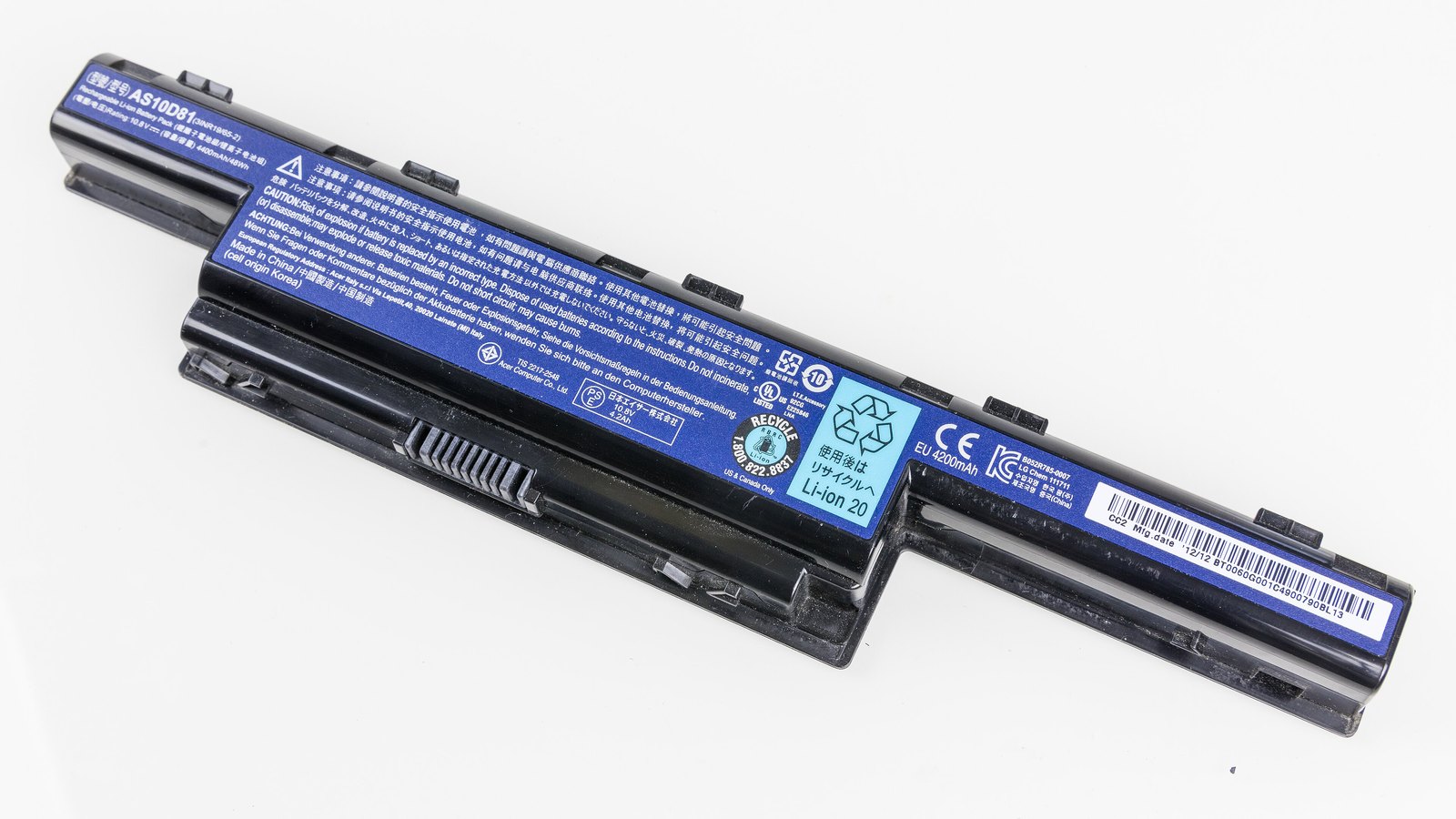
On 28 November 2026, Nature Communications published a peer-reviewed review entitled Engineering electrolyte ion solvation structures for next-generation batteries, detailing how tuning molecular coordination shells across cation-anion-solvent complexes links nanoscale chemical interactions directly to cell-level performance in high-energy lithium-metal, sodium-ion, and aqueous battery systems. Authored by Dr. Hongtao Sun at The Pennsylvania State University, the study establishes unified physical principles connecting primary solvation architectures to interfacial passivation, desolvation kinetics, and wide-temperature electrochemical resilience.
Coordination Shell Architectures and Ion Pairing Regimes
Traditional battery electrolytes rely on dilute solutions where high-dielectric carbonate solvents fully dissociate lithium salts, creating solvent-separated ion pairs (SSIPs) in which cations are enveloped by four to six coordinated solvent molecules. While dilute configurations offer high ionic conductivity at ambient temperatures, uncoordinated solvent molecules and solvent-dominated inner Helmholtz layers suffer thermodynamic instability when exposed to reducing lithium metal anodes or high-voltage nickel-rich cathodes. Under polarization, solvent decomposition drives parasitic reactions, capacity fade, and transition-metal dissolution.
The review delineates a paradigm shift toward tailoring cation-anion-solvent coordination chemistry to manipulate the primary solvation sheath. By shifting equilibria from solvent-separated ion pairs toward contact ion pairs (CIPs) and extended aggregate clusters (AGGs), electrochemical engineers can compel inorganic anions into direct coordination with working cations. When anions occupy the inner coordination shell, their lowest unoccupied molecular orbital (LUMO) energy levels shift downward, promoting preferential anion reduction at the electrode surface during the initial formation cycle. This preferential decomposition yields robust, conductive inorganic solid-electrolyte interphase (SEI) phases, principally lithium fluoride (LiF), sodium fluoride (NaF), and metal oxides, which suppress dendritic metal electrodeposition and mitigate continuous solvent consumption across extended cycling.
Advanced Electrolyte Design Paradigms and Formulation Strategies
To balance the benefits of anion-rich coordination against transport constraints, researchers have pioneered diverse formulation paradigms. High-concentration electrolytes (HCEs), typically formulated at salt-to-solvent molar ratios exceeding 1:2 (concentrations above 4 M), substantially eliminate free solvent molecules. However, the resulting severe increases in dynamic viscosity and material costs have hindered commercial adoption. To resolve this bottleneck, localized high-concentration electrolytes (LHCEs) introduce inert, non-coordinating fluorinated diluents—such as 1,1,2,2-tetrafluoroethyl 2,2,3,3-tetrafluoropropyl ether (TTE) or bis(2,2,2-trifluoroethyl) ether (BTFE)—that preserve the local aggregate solvation network while lowering bulk viscosity and enhancing electrode wettability.
Simultaneously, weakly solvating electrolytes (WSEs) utilize solvents with low dielectric constants and minimal donor numbers, such as fluorinated linear carbonates or fluorinated ethers. In these systems, weak cation-solvent coordination energies facilitate spontaneous anion entry into the primary coordination shell even at conventional salt concentrations (1 M to 2 M). By evaluating phase equilibria and potential boundaries using Pourbaix phase-stability diagrams, electrochemists can predict the operational thermodynamic stability windows of tailored aqueous and non-aqueous electrolyte solutions, preventing premature solvent breakdown at extreme cathodic and anodic potentials.
Spectroscopic, Operando, and Computational Diagnostic Workflows
Elucidating dynamic solvation structures requires an integrated characterization infrastructure spanning spectroscopy and multi-scale modeling. Because solvation complexes undergo rapid exchange on picosecond timescales, single-technique methods fail to capture the full coordination landscape. Academic research protocols increasingly combine Raman spectroscopy—which detects vibrational frequency shifts corresponding to free anions, contact pairs, and aggregates—with multinuclear nuclear magnetic resonance (NMR) spectroscopy. Pulsed-field gradient NMR (PFG-NMR) provides quantitative self-diffusion coefficients for cations, anions, and solvent molecules, yielding apparent transport numbers and ion correlation factors under variable thermal regimes.
Computational electrochemistry complements these experimental techniques by resolving spatial coordination distributions and electronic structures. Classical and ab initio molecular dynamics (AIMD) simulations map radial distribution functions (RDFs) and coordination numbers around metallic cations. Researchers carry out high-precision density functional theory calculations and benchmark transition states using quantum chemical calculations using Gaussian 16 to determine desolvation activation energies and decomposition pathways. These kinetic insights correlate directly with electrochemical kinetics and interfacial charge transfer, allowing researchers to separate electrostatic desolvation overpotentials from electronic transfer resistance at low temperatures.
Comparative Metrics Across Solvation Engineering Strategies
Different electrolyte formulations impose distinct trade-offs between bulk transport properties, interfacial kinetics, and practical cost. The following table compares key operational parameters across established solvation engineering architectures evaluated in contemporary research programs:
| Electrolyte Category | Predominant Coordination Regime | Dominant SEI Composition | Desolvation Activation Barrier | Room-Temperature Ionic Conductivity | Operational Temperature Window |
|---|---|---|---|---|---|
| Conventional Dilute (1.0 M LiPF6 in EC/DMC) | Solvent-separated ion pairs (SSIPs) | Organic carbonates (ROCO2Li, (CH2OCO2Li)2) | High (approx. 50–65 kJ/mol) | High (8.0–11.5 mS/cm) | Moderate (-10 °C to 45 °C) |
| High-Concentration Electrolytes (HCE, >4.0 M) | Contact ion pairs (CIPs) and aggregates (AGGs) | Inorganic fluorides and oxides (LiF, Li2O, SOx) | Moderate (approx. 35–45 kJ/mol) | Low (0.5–2.5 mS/cm) | Constrained by high viscosity (-5 °C to 55 °C) |
| Localized High-Concentration (LHCE) | Localized aggregates in diluent matrix | Inorganic fluoride-rich (LiF, Li3N, NaF) | Moderate (approx. 30–40 kJ/mol) | Moderate (3.5–7.0 mS/cm) | Wide (-40 °C to 60 °C) |
| Weakly Solvating Electrolytes (WSE, 1.2–1.8 M) | Anion-dominated contact pairs | Dense, microcrystalline LiF/NaF | Low (approx. 20–30 kJ/mol) | Moderate (2.0–5.5 mS/cm) | Ultra-wide (-50 °C to 55 °C) |
| Water-in-Salt Aqueous (WiSE, >21 m) | Cation-anion aggregates, constrained water | Anion-derived fluoride and hydroxide phases | Variable (approx. 30–50 kJ/mol) | High (6.0–10.0 mS/cm) | Constrained by salt precipitation (0 °C to 65 °C) |
As summarized in the data matrix, reducing the desolvation activation barrier is essential for maintaining sub-zero charge transfer and high-rate capability. However, formulations that optimize desolvation through heavily fluorinated salts and diluents incur economic premiums and density penalties that academic teams must balance against volumetric energy density targets.
Alignment With Public Battery Programs and Global Roadmaps
The mechanistic advances highlighted in the review directly align with performance targets established by national and international funding bodies. In the United States, the Department of Energy Vehicle Technologies Office manages battery programs aimed at decreasing electric vehicle battery pack costs to below $100 per kilowatt-hour while enabling 15-minute extreme fast charging, as detailed in the Department of Energy: Batteries initiative. Meeting these goals without inducing dangerous lithium plating during rapid high-current pulses requires electrolytes that minimize cation desolvation overpotentials.
In the United Kingdom, university consortia supported by The Faraday Institution: Research Projects – The Faraday Institution actively pursue multiscale modeling and electrode-electrolyte interface stabilization across lithium-sulfur, sodium-ion, and solid-state demonstrators. Similarly, the European Union battery ecosystem has prioritized predictive electrolyte engineering through the Battery 2030+: The Roadmap – Battery 2030+ initiative, which emphasizes chemistry-neutral digital twin modeling and accelerated materials discovery to deliver self-healing battery interfaces. At the measurement level, standardized baseline characterization protocols developed by the NIST: Materials Science and Engineering Division provide reproducible thermodynamic property measurements and phase boundary verification critical for calibrating predictive solvation models.
Operational Protocols and Infrastructure in Academic Laboratories
Implementing advanced electrolyte research places stringent demands on university laboratory infrastructure and safety protocols. Formulating weakly solvating and localized high-concentration electrolytes requires handling sensitive fluorinated imide salts, such as lithium bis(fluorosulfonyl)imide (LiFSI) and lithium bis(trifluoromethanesulfonyl)imide (LiTFSI). Because these salts are hygroscopic and can hydrolyze to release corrosive hydrofluoric acid upon moisture exposure, facilities must maintain inert-atmosphere argon gloveboxes with moisture and oxygen levels certified below 0.5 parts per million.
Departmental environmental health and safety managers must update standard operating procedures under the OSHA chemical hygiene plan protocols to account for volatile hydrofluoroether diluents and specialized non-aqueous solvents. Furthermore, academic testing laboratories conducting battery benchmarking must implement quality management systems aligned with ISO/IEC 17025 testing and calibration standards. Rigorous calibration of multichannel potentiostats, environmental thermal chambers, and gas chromatography-mass spectrometry (GC-MS) outgassing analyzers ensures that coulombic efficiency measurements, electrolyte consumption rates, and cycling degradation profiles remain reproducible across multi-institutional collaborative networks.
Translational Trajectories and Characterization Standardization
Bridging the gap between laboratory coin cells and commercial pouch cell formats represents the next major milestone for solvation engineering. Laboratory studies frequently evaluate electrolytes using excess electrolyte volumes (lean electrolyte-to-capacity ratios exceeding 10 grams per ampere-hour) and thick lithium metal foils (250 to 500 micrometers), which obscure progressive electrolyte dry-out and consumption. Translational success hinges on demonstrating stable cycling under realistic industrial boundary conditions: electrolyte-to-capacity ratios below 3.0 g/Ah, thin lithium anodes (under 50 micrometers), high cathode areal loadings (greater than 4.0 mAh/cm²), and cell compression exceeding 50 psi.
Accelerated characterization consortia are integrating operando synchrotron X-ray diffraction, small-angle neutron scattering (SANS), and automated dispensing robotics to systematically map multi-component phase diagrams. By establishing open-access databases of coordination binding energies, donor numbers, and desolvation barriers, academic and industrial electrochemists are shifting battery development from empirical trial-and-error blending toward predictive, physics-informed molecular design of energy storage interfaces.
Sources
- Nature Communications: Engineering electrolyte ion solvation structures for next-generation batteries, checked 2026-11-28
- Department of Energy: Batteries, checked 2026-11-28
- The Faraday Institution: Research Projects – The Faraday Institution, checked 2026-11-28
- Battery 2030+: The Roadmap – Battery 2030+, checked 2026-11-28
- NIST: Materials Science and Engineering Division, checked 2026-11-28






