
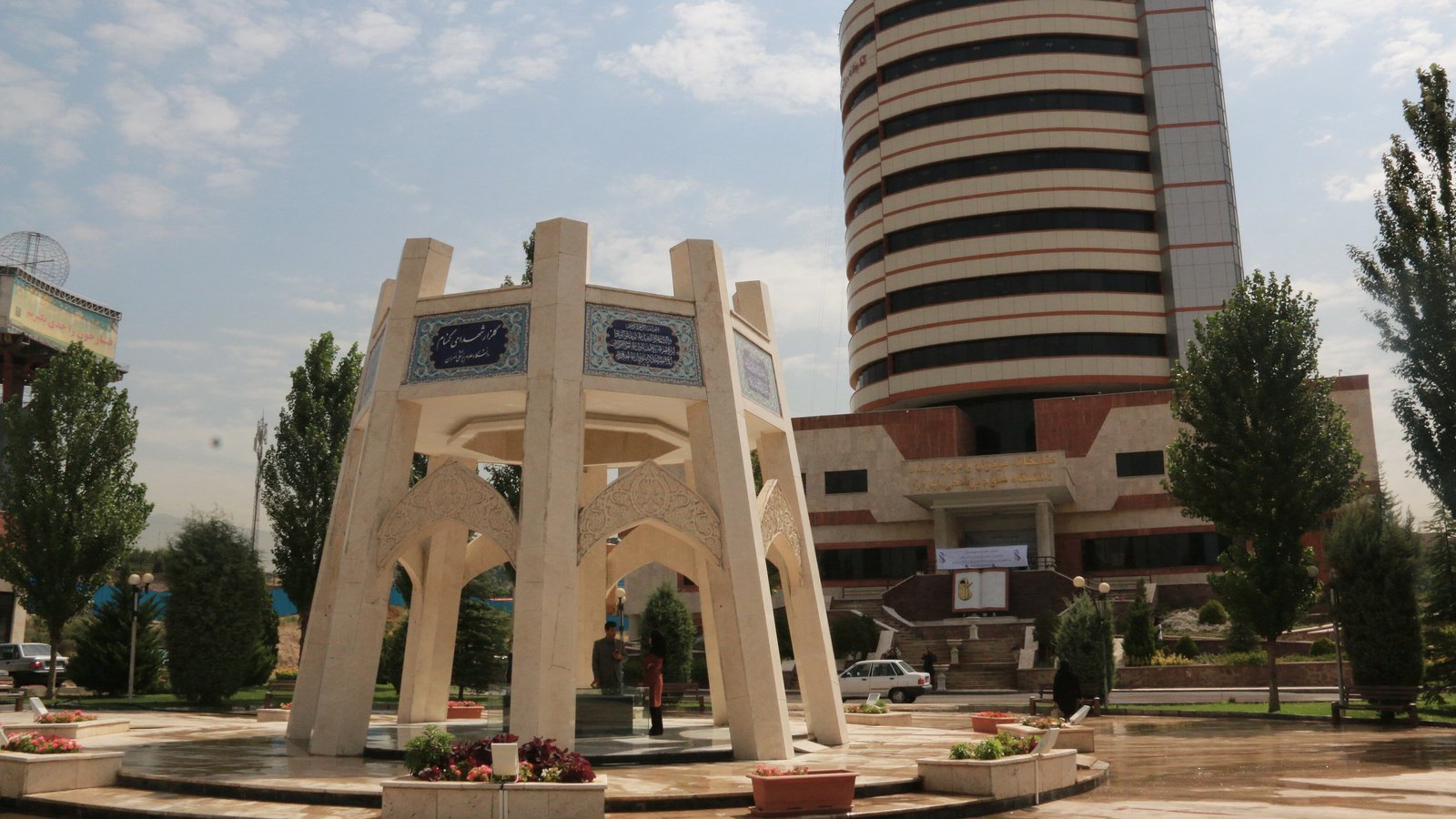
On November 28, 2026, the peer-reviewed journal npj Science of Learning published a quasi-experimental study detailing the quantifiable cognitive scars of war on university undergraduates during the 2025 Iran-Israel conflict. Led by researcher Esmaeil Jafari at Shahid Beheshti University in Tehran, the investigation tracked acute declines in working memory, sustained attention, and metacognitive regulation among students directly exposed to urban air-defence activations and blast waves, demonstrating how acute geopolitical conflict structurally degrades executive cognitive function and end-of-term academic performance.
Empirical Findings from the 2025 Conflict Natural Experiment
The investigation, titled “Cognitive scars of war: undergraduate cognition and academic performance in the 2025 Iran-Israel conflict,” leveraged a rare natural experiment created by the sudden 12-day military confrontation between Iran and Israel in 2025. While conflict research frequently relies on retrospective surveys conducted months or years after hostilities conclude, Jafari had gathered baseline cognitive and academic assessments from university cohorts exactly two months prior to the escalation. This pre-existing data infrastructure provided a rigorous empirical baseline rarely available in crisis settings.
Working within the Department of Higher Education at Shahid Beheshti University in Tehran, Jafari established a difference-in-differences quasi-experimental design. The treatment cohort comprised undergraduate students enrolled at universities across Tehran who experienced the direct auditory, psychological, and physical impact of air-defence interceptor engagements and blast waves. The comparison group consisted of undergraduates matriculated at universities situated in non-targeted provinces outside Tehran, where daily institutional routines proceeded without direct kinetic disruption.
The initial experimental enrollment captured 412 undergraduate participants (152 treatment, 260 control). Following quality screening and verification of uninterrupted geographical residency throughout the conflict period, the final analytical sample retained 370 undergraduates: 138 in the directly exposed Tehran group and 232 in the comparison cohort. The study was peer-reviewed through the npj Science of Learning editorial workflow, receiving submission on April 15, 2026, formal acceptance on October 22, 2026, and open-access publication under a Creative Commons Attribution 4.0 International licence.
Quantitative Cognitive Deficits and Academic Mediation
The empirical findings revealed pronounced and statistically robust decrements across all three evaluated cognitive domains among students exposed to the military crisis. Using standardized computerized testing paradigms aligned with established clinical and neurocognitive frameworks such as Cogstate digital batteries, the researchers measured executive functioning immediately after the cessation of active bombardment.
Working memory capacity exhibited a sharp differential decline among exposed undergraduates relative to controls, registering an effect size of Cohen’s d = 0.92 (95% CI [0.71, 1.13], p ≤ 0.002). Sustained attention showed even steeper vulnerability under acute war conditions, deteriorating by Cohen’s d = 1.18 (95% CI [0.79, 1.57], p ≤ 0.002). Metacognitive regulation—encompassing task planning, comprehension monitoring, and error correction during complex study—contracted by Cohen’s d = 0.66 (95% CI [0.45, 0.87], p ≤ 0.002).
| Cognitive Domain | Sample Metric | Acute Effect Size (Cohen’s d) | 95% Confidence Interval | Statistical Significance | 6-Month Trajectory |
|---|---|---|---|---|---|
| Sustained Attention | Continuous performance signal detection | d = 1.18 | [0.79, 1.57] | p ≤ 0.002 | Substantial functional rebound |
| Working Memory | Digital n-back and span maintenance | d = 0.92 | [0.71, 1.13] | p ≤ 0.002 | ~90% baseline recovery; d = 0.34 gap |
| Metacognitive Regulation | Monitoring and strategic self-direction | d = 0.66 | [0.45, 0.87] | p ≤ 0.002 | Protracted deficit; d = 0.43 gap |
| Academic Examination | Standardized end-of-term course grades | Total effect = -0.53 | [-0.68, -0.38] | p ≤ 0.001 | Persistent grade suppression |
To determine how these cognitive impairments translated into formal educational outcomes, Jafari executed parallel mediation analyses using end-of-term standardized academic examinations administered shortly after the conflict. The total estimated negative effect of conflict exposure on academic examination scores reached -0.53 standard deviations. In the mediation decomposition, working memory impairment emerged as the single strongest indirect driver of academic decline (ab = -0.18, 95% CI [-0.28, -0.09]), confirming that diminished capacity to retain and manipulate analytical information directly degraded exam performance. The study evaluated these multivariate effects using robust variance estimation techniques detailed in contemporary guides on ANOVA and hypothesis testing.
Six-Month Follow-Up and Incomplete Recovery Trajectories
A crucial dimension of the Shahid Beheshti University study was its longitudinal assessment wave conducted six months following the ceasefire. While educational administrators often assume student cognition resets promptly after active hostilities end, Jafari’s follow-up tracking demonstrated uneven neurocognitive recovery.
Working memory demonstrated meaningful recovery, returning to approximately 90% of pre-war baseline levels. Nevertheless, a statistically significant deficit persisted relative to unexposed control undergraduates (Cohen’s d = 0.34, 95% CI [0.13, 0.55]). In contrast, metacognitive regulation showed alarming persistence of impairment, exhibiting minimal spontaneous recovery and maintaining a deficit of Cohen’s d = 0.43 (95% CI [0.22, 0.64]) relative to comparison students. While basic attentional focus rebounded, higher-order strategic planning and self-regulated learning remained encumbered months after physical safety had been restored.
Exploratory moderator analyses revealed that cognitive decrements were heavily amplified by two specific environmental factors: high frequency of social media exposure during bombardment and acute sleep fragmentation caused by nocturnal sirens and blast acoustics. These findings align with experimental cognitive science documented in the Journal of Experimental Psychology: Learning, Memory, and Cognition regarding the destructive impact of acute stress-induced insomnia on executive control.
Broader Evidence on Crisis and Student Cognition
The findings from npj Science of Learning corroborate a growing body of regional and international literature examining how armed conflict reverberates through tertiary education ecosystems. Research published on PubMed Central documenting acute psychological distress following the Iran-Israel conflict identified widespread sleep disruption, acute anxiety, and somatic distress among health professions students and nursing cohorts in the immediate aftermath of missile strikes, illustrating severe disruption to university learning environments.
Methodological scholarship reflected in the International Journal of Educational Research has consistently cautioned that evaluating student cohorts solely on conventional grading curves during regional crises produces systematic distortion. When external trauma suppresses cognitive processing speed and working memory, evaluation systems that treat student outcomes as reflections of baseline scholastic aptitude commit serious measurement errors.
International higher education governance bodies emphasize institutional resilience during humanitarian and geopolitical emergencies. Policy directives from UNESCO on higher education in emergencies mandate that universities protect academic trajectories through flexible credit arrangements and trauma-informed pedagogy. Similarly, sector guidance from the World Bank on tertiary education underscores that preserving tertiary educational human capital during regional instability requires proactive university governance, subsidized academic safety nets, and systemic investments in student mental health.
Implications for Higher Education Governance and Assessment
The empirical demonstration of quantifiable cognitive scars carries urgent policy implications for university leadership, academic senates, research deans, and assessment committees. Institutional responses to campus emergencies have historically treated academic accommodations primarily as administrative deadlines or logistical postponements. The Jafari study proves that war exposure induces measurable neurocognitive deficits that directly impair complex reasoning and examination outcomes.
Academic institutions operating in crisis-affected environments must fundamentally reconsider high-stakes summative evaluations. When students undergo severe acute stress, testing working memory capacity under strict time limits does not measure mastery of curriculum; it measures physiological exposure to trauma. Responsible assessment regimes require universities to deploy alternative assessment mechanisms, including open-book synthesizing projects, portfolio evaluations, and non-penalizing grade-deferral policies until executive functions stabilize.
Furthermore, research administrators and institutional review boards must recognize the logistical and ethical complexities of crisis-zone cognitive research. The study at Shahid Beheshti University received no specific external grants from public or commercial agencies, operating through institutional support. Research oversight bodies must establish expedited ethical review protocols that allow cognitive scientists to establish baseline registries without exploiting vulnerable student populations during active security emergencies.
Methodological Bounds and Research Priorities
In detailing the empirical findings, the author explicitly articulated several methodological boundaries that must contextualize causal interpretations. First, the investigation lacked fine-grained geolocated sensor data measuring individual blast overpressure and acoustic decibel exposure, relying instead on municipal university attendance and residency records. Second, because the military confrontation unfolded rapidly, the study could not formally evaluate multi-period parallel trend assumptions prior to the pre-war baseline wave. Finally, as with all natural experiments in field settings, unmeasured psychological, familial, and economic confounding variables could not be completely ruled out.
Future research agendas across international cognitive science networks must prioritize longitudinal tracking that monitors whether metacognitive regulation deficits persist across full undergraduate degree cycles. Additionally, institutional psychology clinics require controlled trials testing whether structured metacognitive re-training, digital cognitive remediation tools, and targeted sleep rehabilitation programs can accelerate the recovery of executive functions among conflict-exposed scholars.
Sources
- npj Science of Learning: Cognitive scars of war: undergraduate cognition and academic performance in the 2025 Iran-Israel conflict, checked 2026-11-28
- Nature Portfolio: npj Science of Learning, checked 2026-11-28
- PubMed Central: Retrospectively Reported Psychological Distress Among Nurses and Nursing Students Following the War Between Iran and Israel: A Cross‐Sectional Study, checked 2026-11-28
- UNESCO: Higher education, checked 2026-11-28
- World Bank Group: Tertiary Education, checked 2026-11-28






