
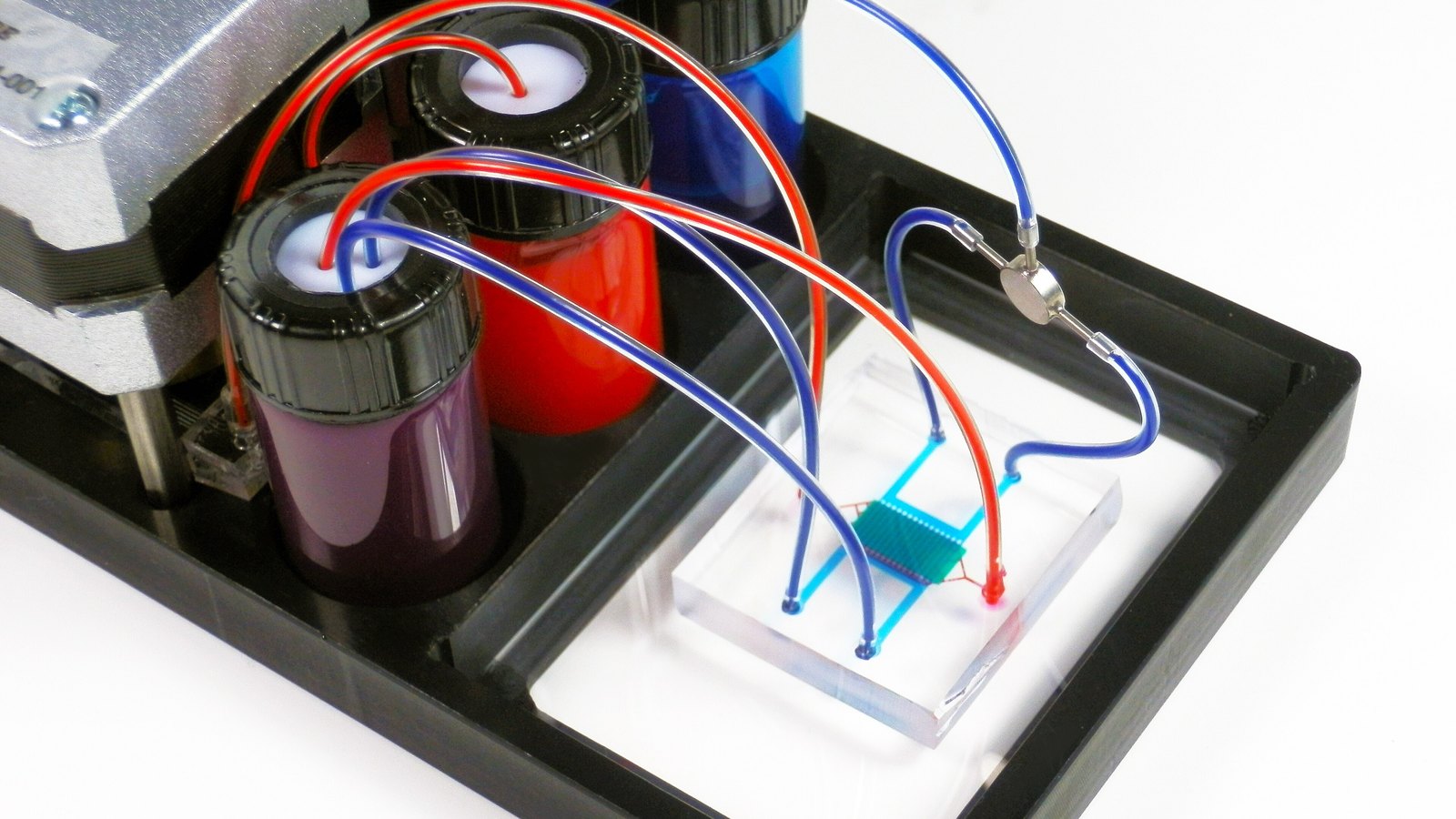
The National Institutes of Health (NIH) has finalised a reorganisation of the National Center for Advancing Translational Sciences (NCATS) that turns one of its intramural laboratories into a branch dedicated to human-based, non-animal research models. A Statement of Organization, Functions, and Delegations of Authority, published in the Federal Register on 19 November 2026 (Vol. 91, No. 222, 91 FR 74591), renames the Chemical Genomics Branch the Translational Models Branch and abolishes two offices in the NCATS Office of the Director.
What happened
The notice, document 2026-23537, was filed on 18 November 2026 and appeared on 19 November in the Notices section, pages 74591 and 74592. It amends Part N, the NIH section of the Department of Health and Human Services Statement of Organization and Functions, and is signed by the HHS Secretary, Robert F. Kennedy, Jr. Its summary says NCATS “has modified its organizational structure.” The cited authority is 44 U.S.C. 3101.
The notice makes three changes:
- The Chemical Genomics Branch (N924) in the Division of Preclinical Innovation (N92) is retitled the Translational Models Branch, with a new functional statement.
- The functional statement of the Office of Special Initiatives (N917) in the NCATS Office of the Director (N91) is revised.
- Two offices are removed from the Office of the Director: the Office of Drug Development Partnership Programs (N918) and the Office of Translational Medicine (N919).
Key details
| Unit | Change in the notice |
|---|---|
| Chemical Genomics Branch (N924), Division of Preclinical Innovation | Retitled Translational Models Branch (code N924 unchanged); new functional statement |
| Office of Special Initiatives (N917), Office of the Director | Functional statement revised; office continues |
| Office of Drug Development Partnership Programs (N918) | Removed |
| Office of Translational Medicine (N919) | Removed |
The notice lists seven functions for the Translational Models Branch. It is to develop and advance human-based non-animal models (NAMs) as drug discovery and biomedical research tools; accelerate therapeutic discovery and regulatory science for rare and common diseases, and target discovery, using predictive human model systems; establish the predictive value and usefulness of human-based NAMs as pharmacology and toxicology assessment tools “to reduce reliance on animal models”; generate high-quality human biological data to enable AI-driven predictive modelling of drug efficacy and toxicity; integrate stem cells, tissue engineering, functional genomics, toxicology and data science into a single human-based translational research effort; and serve as an NIH-wide resource for human-based models research and technologies.
The revised Office of Special Initiatives statement has four elements: extramural programmes that address barriers to pre-clinical and clinical translation; development and dissemination of novel technologies and approaches that remove obstacles to translational research; expansion of the therapeutic landscape for rare and chronic diseases through new targets; and partnerships with government, industry and academia to advance innovation in early-stage clinical trials.
The published notice does not state a separate effective date, and it does not alter any funding opportunity, award term or review rule. It is an organisational statement.
Background and context
The change was previewed in the Federal Register on 10 September 2026. A notice of a public online roundtable (91 FR 57621), dated 2 September 2026 and signed by NCATS Director Joni L. Rutter, announced a one-hour public forum on 9 October 2026 at which the public could review and comment on the proposed changes. It described the same four steps and gave their purpose: to “consolidate program components within the NCATS Office of the Director and align one of the Center’s intramural research branches with efforts to create non-animal models of disease.” It added that the NIH Reform Act of 2006 (42 U.S.C. 281(d)(4)) requires public notice of proposed reorganisation plans, and that the announcement and forum served as that notice.
The branch’s new mission follows an NIH-wide shift announced in 2025. According to the Federation of American Societies for Experimental Biology (FASEB), which reported on a joint NIH-FDA workshop held on 7 July 2025, NIH said it would stop issuing funding calls that specify animal model systems and would instead publish notices of funding opportunity open to all methodologies, with some possibly excluding animal use entirely. FASEB also reported that a new NIH office, the Office of Research Innovation, Validation, and Application (ORIVA), would coordinate the development, validation and adoption of new approach methods with the FDA and other agencies, and that NIH planned to train grant reviewers and regulatory staff and to report publicly on research spending to track the shift.
Reaction
The Physicians Committee for Responsible Medicine (PCRM), an advocacy group that favours human-based methods, wrote on 6 March 2026 that Dr Rutter had hosted a virtual roundtable in December 2025 and that PCRM had then submitted a public comment to the NCATS Advisory Committee ahead of its January 2026 meeting. PCRM urged NCATS to widen the pool of reviewers with human-based method expertise, saying their integration “is crucial” so that such projects are reviewed fairly, and to work with other NIH institutes to expand infrastructure for non-animal methods. That article predates the reorganisation and does not discuss it.
What it means for researchers, universities and research offices
- Intramural and collaborating scientists. Groups that worked with the Chemical Genomics Branch should expect the same laboratory to operate under the Translational Models Branch name and mission. Its stated role as an “NIH-wide resource” for human-based models points collaborators to it for tools such as organ-on-a-chip systems and organoids.
- Partnership and translational-programme staff. Two offices named for drug development partnerships and translational medicine no longer exist in the structure; the revised Office of Special Initiatives statement now carries the language on extramural programmes and partnerships with industry and academia. Research offices that cite an NCATS office in agreements, reports or contact lists should check that the office still exists under that name.
- Applicants and animal-care committees. The notice itself changes no application rules. Offices tracking the broader shift should read it together with NIH’s funding-opportunity changes (see our guide to NIH funding opportunity changes), the 3Rs framework for replacement, reduction and refinement and the definition of new approach methodologies, since validation of human-based models is now an explicit, named task at NCATS.
- Understanding NCATS. For what the Center funds and how it is organised, see our explainer on NIH NCATS.
What happens next
The structural changes are set out in the 19 November 2026 notice, which carries no further dates. Whether and how NCATS publishes new funding programmes under the Translational Models Branch or the revised Office of Special Initiatives will be announced through NIH’s usual channels, such as the NIH Guide for Grants and Contracts and the NCATS website, and will be covered here if it is.
Sources
- Department of Health and Human Services, National Institutes of Health, Statement of Organization, Functions, and Delegations of Authority, Federal Register, 19 November 2026 (91 FR 74591, FR Doc. 2026-23537).
- National Center for Advancing Translational Sciences, Notice of Public Online Roundtable, Federal Register, 10 September 2026 (91 FR 57621, FR Doc. 2026-18440).
- FASEB, New NIH policy announced at joint FDA-NIH workshop on reducing animal testing, Washington Update, 24 July 2025.
- Physicians Committee for Responsible Medicine, Physicians Committee engages NIH center on strategies to support human-based research, 6 March 2026.


