
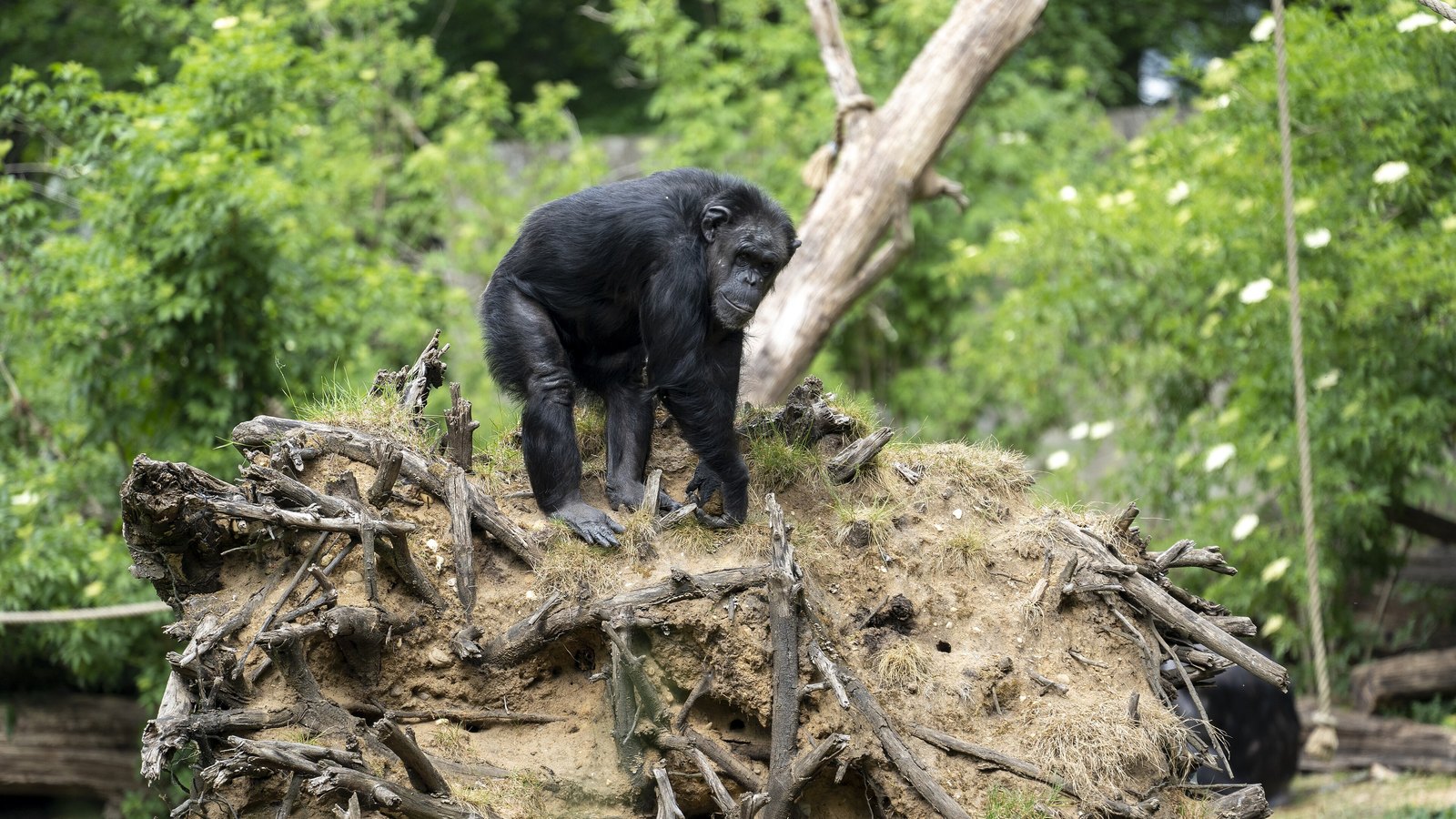
The National Institutes of Health said on 18 November 2026 that it will relocate the last NIH-owned chimpanzees, which live at the Keeling Center for Comparative Medicine and Research in Bastrop, Texas, to the federal sanctuary run by Chimp Haven in Keithville, Louisiana. Transfers are expected to begin in early 2027 and, once complete, will close out a retirement commitment NIH made in November 2015.
What happened
NIH Director Jay Bhattacharya announced the decision in a statement published on the NIH website. He wrote that these are the last NIH-owned chimpanzees awaiting transfer to the federal sanctuary program and that completing their transfers will fulfil the commitment NIH announced in November 2015 to retire all NIH-owned chimpanzees to sanctuary.
The statement says NIH leadership revisited potential Keeling Center transfers after the agency’s experience moving chimpanzees from the Alamogordo Primate Facility to the federal sanctuary. After “careful analysis and internal consultations”, it says, NIH leadership decided to proceed, consistent with the agency’s obligations under the Chimpanzee Health Improvement, Maintenance, and Protection (CHIMP) Act.
Key details
| Item | Detail |
|---|---|
| Who decided | NIH, announced by Director Jay Bhattacharya on 18 November 2026 |
| Where the animals are now | Keeling Center for Comparative Medicine and Research, Bastrop, Texas |
| Where they will go | The federal sanctuary operated by Chimp Haven, Inc., in Keithville, Louisiana |
| When | Transfers expected to begin in early 2027 |
| Legal basis cited | NIH’s obligations under the CHIMP Act |
| Number of animals | Not stated by NIH; KATU reports 33 citing Science and Humane World for Animals, and PETA says 34 |
NIH says the timing of each transfer will be guided by the chimpanzees’ health, welfare and social groupings, and that their health conditions increase the risk of adverse events during transport and adjustment to life at the sanctuary. NIH, the Keeling Center and Chimp Haven will coordinate the relocations, and Bhattacharya thanked the center’s veterinary and animal care staff for their longstanding care of the animals.
According to KATU, which carried a National News Desk report, Science reported that the chimpanzees range in age from their 30s to late 50s and live in nine social groups. KATU adds that Chimp Haven’s president told Science the animals are expected to move in batches, with a goal of completing the transfers by the end of 2027. The Keeling Center chimpanzees had been used in research on AIDS and other infectious diseases, KATU reports, and Chimp Haven’s grounds include more than 80 hectares (about 200 acres) of forested land.
Background and context
The decision follows years of dispute over whether older or medically fragile chimpanzees should be moved. KATU reports that NIH cited health risks when it delayed earlier transfers, while animal welfare groups argued that federal law required the animals’ retirement. In 2015, KATU notes, the agency ended its support for biomedical research involving chimpanzees.
Humane World for Animals, formerly the Humane Society of the United States, published a timeline alongside its response. It dates the CHIMP Act (Public Law 106-551), which set up a federal sanctuary system for government-owned chimpanzees no longer needed in research, to 2000, and the Chimp Haven is Home Act (Public Law 110-170), which barred retired chimpanzees from being returned to laboratories, to 2007. It says the US Fish and Wildlife Service ended the “split listing” of chimpanzees in 2015 by listing all chimpanzees, including captive ones, as endangered, which effectively ended invasive research on them in the United States.
The same timeline records that NIH announced in 2019 that some chimpanzees at Alamogordo would remain in the laboratory for life, and in 2021 that the Keeling Center chimpanzees would stay at that facility. A lawsuit was filed over Alamogordo in 2021. In 2022 a federal judge ruled that NIH violated the CHIMP Act by denying sanctuary retirement to the Alamogordo chimpanzees, according to both Humane World for Animals and KATU, and those animals moved to Chimp Haven in 2025, when the Alamogordo laboratory closed.
Reaction
Kitty Block, president and chief executive of Humane World for Animals, said in the organisation’s release: “This is an extraordinary moment for chimpanzees owned by the federal government and used in experiments, and we applaud NIH for giving them the chance to finally experience sanctuary.” Sara Amundson, president of Humane World Action Fund, thanked NIH for “helping end a dark period in our government’s history of animal experimentation”.
PETA Senior Vice President Kathy Guillermo said in a statement that PETA thanks NIH “for keeping its promise to move the last chimpanzees still confined in a laboratory to a sanctuary”, and added that NIH “has much work to do to end the use of monkeys in experiments”.
What it means for researchers, universities and research offices
The announcement concerns NIH-owned animals, not a new rule for grantees. NIH ended its support for biomedical research involving chimpanzees in 2015, so the decision closes the housing question for the remaining government-owned animals rather than changing what NIH-funded laboratories may do. Humane World for Animals estimates, according to KATU, that as many as 100 privately owned chimpanzees remain in US laboratories, and NIH did not provide a count of those animals.
For animal care and use programmes, the story is a reminder of how federal obligations shape decisions about long-lived research animals. Casrai’s entries on OLAW, the PHS Policy and the Animal Welfare Act explain the main oversight frameworks, and the 3Rs entry covers the replacement, reduction and refinement principles. PETA’s statement says NIH still has “much work to do” on the use of monkeys in experiments, which keeps primate research on the advocacy agenda.
What happens next
NIH expects the first transfers in early 2027, with each move scheduled around the health, welfare and social groupings of the chimpanzees. Chimp Haven’s president told Science, as reported by KATU, that the animals are expected to travel in batches and that the aim is to finish by the end of 2027. If the plan holds, no NIH-owned chimpanzees will remain in US laboratories.
Sources
- National Institutes of Health: NIH to relocate remaining NIH-owned chimpanzees at Keeling Center to federal sanctuary, 18 November 2026
- KATU: After decades in research labs, the last NIH-owned chimpanzees are headed to sanctuary, 18 November 2026
- PETA: NIH Moves Last Chimpanzees to Sanctuary: PETA Statement, 18 November 2026
- Humane World for Animals: Historic victory: Last government-owned chimpanzees to begin new lives at sanctuary, 18 November 2026


