
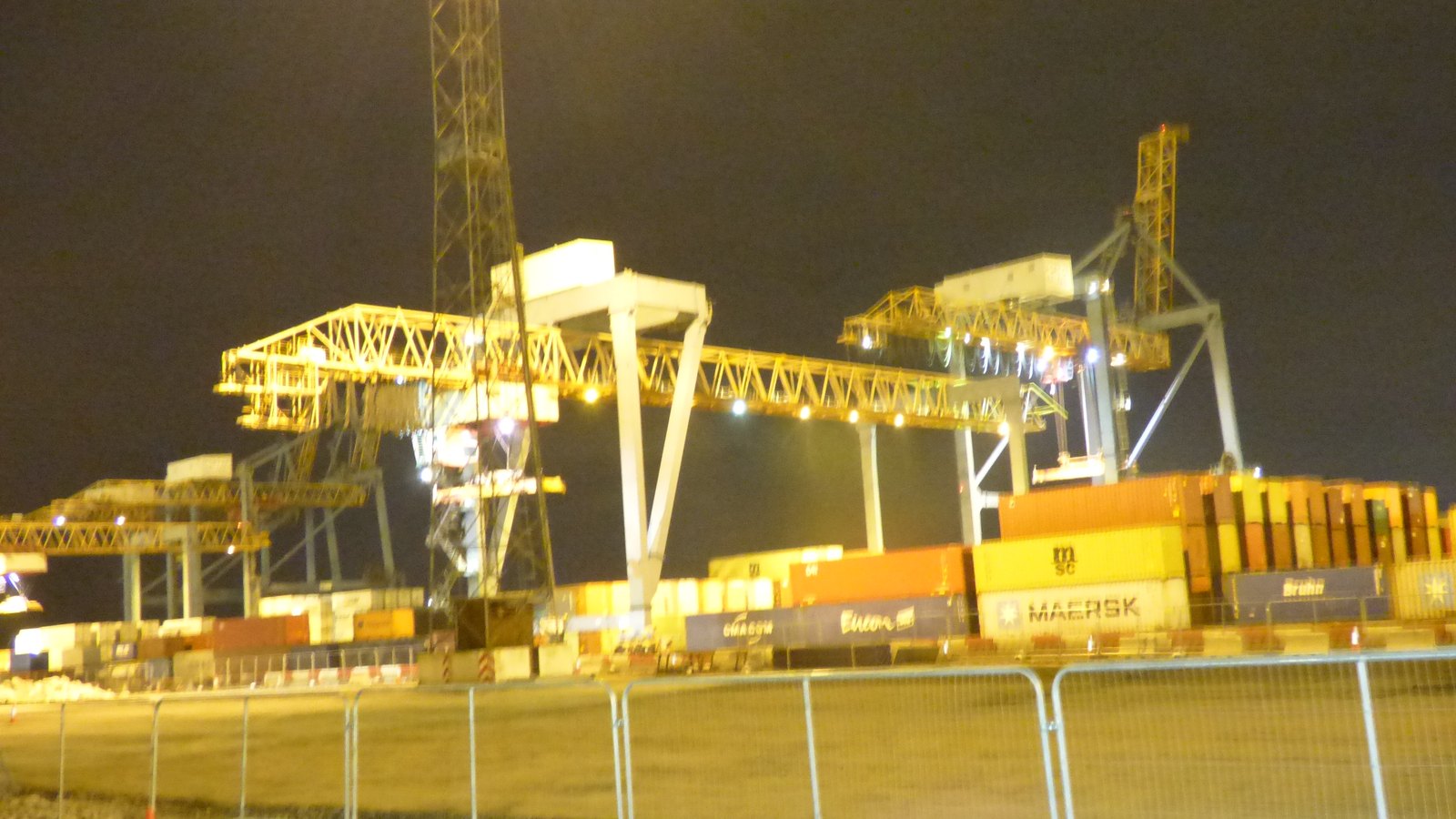
On 26 November 2026, the Northern Ireland Statistics and Research Agency released accredited National Statistics showing that total sales by Northern Ireland businesses reached £116.8 billion in 2025, alongside a £47.5 billion approximate Gross Value Added footprint. The dual release provides crucial empirical baselines for university research offices, regional economic scholars, and cross-border research consortia evaluating supply chains, post-Brexit regulatory alignments, and regional innovation funding under the Windsor Framework.
Official 2025 Trade and Business Inquiry Results
The Northern Ireland Statistics and Research Agency (NISRA) published the provisional results of the official Northern Ireland Economic Trade Statistics 2025 release alongside the companion Results from the Northern Ireland Annual Business Inquiry 2025. Both statistical collections represent accredited National Statistics designated under the UK Statistics Authority Code of Practice for Statistics, confirming compliance with rigorous standards of trustworthiness, methodological quality, and public value.
According to NISRA’s headline economic data, total sales generated by non-financial businesses in Northern Ireland rose by 5.5% over the survey year, climbing from a revised £110.7 billion in 2024 to £116.8 billion in 2025. Internal commerce within Northern Ireland remained the core anchor of commercial activity, generating £75.5 billion (64.7% of all turnover), an increase of 6.1% over the prior year. Trade with external markets outside Northern Ireland accounted for the remaining £41.3 billion in revenue, reflecting steady engagement across both the UK internal market and international destinations.
The Annual Business Inquiry (NIABI) reported that approximate Gross Value Added (aGVA) at basic prices across Northern Ireland’s non-financial business economy reached £47.5 billion in 2025. This figure represents an increase of £3.9 billion, or 9.0%, compared with 2024. The aGVA metric measures the net wealth generated by local businesses after deducting the operational costs of goods, materials, and services, reflecting the foundational economic pool from which academic research spin-outs, industrial payrolls, and corporate capital reinvestments are sustained.
Key Trade Figures and Structural Economic Dimensions
The 2025 statistical release marks an analytical milestone for regional economic measurement by introducing country-level import and purchase tracking alongside export accounts, funded through HM Treasury Windsor Framework resources. External sales to Great Britain reached £22.3 billion in 2025, representing 19.1% of total business sales and an expansion of 6.3% over 2024. Cross-border exports to Ireland expanded by 5.1% to reach £10.3 billion, securing Ireland’s status as Northern Ireland’s largest international trading partner outside the United Kingdom.
In total external trade outside the United Kingdom, Northern Ireland businesses achieved an international trade surplus of £8.6 billion, exporting £19.0 billion in goods and services while importing £10.4 billion. Goods continued to dominate external commerce, representing £14.3 billion (75.3%) of all foreign exports and £9.3 billion (89.3%) of all foreign purchases.
| Trading Partner | 2024 Total Sales | 2025 Total Sales | Sales Growth (%) | 2024 Total Purchases | 2025 Total Purchases | Purchases Growth (%) |
|---|---|---|---|---|---|---|
| Northern Ireland (Internal) | £71.2 billion | £75.5 billion | +6.1% | £40.8 billion | £43.7 billion | +7.1% |
| Great Britain | £20.9 billion | £22.3 billion | +6.3% | £16.6 billion | £16.7 billion | +0.4% |
| Ireland (Cross-Border) | £9.8 billion | £10.3 billion | +5.1% | £3.9 billion | £3.9 billion | 0.0% |
| Rest of European Union | £3.5 billion | £3.5 billion | +1.9% | £2.7 billion | £2.7 billion | +0.6% |
| Rest of World | £5.3 billion | £5.1 billion | -2.9% | £4.2 billion | £3.8 billion | -10.9% |
| All Markets (Total) | £110.7 billion | £116.8 billion | +5.5% | £68.2 billion | £70.7 billion | +3.7% |
Sectoral growth within the Annual Business Inquiry revealed that the manufacturing sector served as the primary engine of value generation. Manufacturing aGVA expanded by £1.6 billion (24.6%) between 2024 and 2025, driven by high-technology engineering, pharmaceuticals, and agrifood processing. The wholesale and distribution sector also recorded strong performance, increasing its aGVA contribution by £1.3 billion (12.7%) to reach £11.6 billion.
Methodological Modernisation and Governance Context
The statistical series published by NISRA has undergone structural modernisation over the past decade. The trade inquiry was previously conducted under the name Broad Economy Sales and Exports Statistics (BESES), as documented on the NISRA Broad Economy Sales and Exports Statistics portal. The UK Statistics Authority accredited the series as National Statistics in March 2022 following a comprehensive audit against the statutory Code of Practice for Statistics. The inquiry measures economic activity across approximately two-thirds of the Northern Ireland economy, sampling non-financial businesses across production, construction, distribution, and service sectors, while excluding public sector bodies and financial institutions.
Statutory authority for Northern Ireland’s economic reporting and civil administration derives from the Northern Ireland Act 1998, which established the devolved governance architecture and operational parameters for Northern Ireland departments. The statistical outputs adhere to modern Reproducible Analytical Pipeline (RAP) principles, utilizing automated code notebooks, standardized data dictionaries, and open formats to ensure full auditability. This approach prevents data manipulation and ensures that university investigators examining longitudinal macroeconomic trends can reliably replicate published aggregates.
Stakeholder Perspectives and Economic Analysis
Economic analysts and statistical regulators emphasized that the 2025 results illustrate Northern Ireland’s unique structural position under post-EU withdrawal market arrangements. In technical documentation accompanying the release, NISRA statisticians noted that the implementation of country-level imports analysis provides unprecedented visibility into business supply networks, allowing public bodies to trace cross-border reliance in key manufacturing inputs.
NISRA’s methodological commentary also highlighted the continuing influence of general macroeconomic conditions, pointing out that because an appropriate set of economic deflators does not exist to produce inflation-adjusted figures across specialized subsectors, all statistics are reported in current prices. The Office for Statistics Regulation (OSR), which oversees statistical compliance across the UK civil service, affirmed that the methodological transparency embedded within the RAP-based reporting framework provides essential public confidence for regional policymaking and academic scrutiny.
Implications for Researchers, Universities, and Research Offices
The publication of accredited trade and business inquiry data carries direct operational significance for university research administrators, principal investigators, and regional innovation centres:
- Substantiating Research Grant Proposals: Principal investigators developing regional development, industrial strategy, or supply chain proposals can utilize these verified figures to satisfy UK Research and Innovation (UKRI) and Horizon Europe requirements for empirical regional context. Institutional proposal writers can benchmark regional grant applications using research grant funding statistics to quantify economic relevance and demonstrate regional alignment in competitive funding rounds.
- Supply Chain and Procurement Due Diligence: University procurement officers and laboratory facility directors managing cross-border equipment acquisitions must navigate Windsor Framework protocols for dual-market goods. Research institutions increasingly deploy specialized regulatory compliance software to track supplier origin documentation, customs clearance requirements, and export control classifications for advanced scientific hardware moving between Great Britain, Northern Ireland, and the European Union.
- Open Data Governance and Reproducibility: Because NISRA transitioned the NIETS collection into a Reproducible Analytical Pipeline with structured data downloads, academic econometricians must uphold corresponding standards for secondary data curation. Research data management teams must ensure that datasets derived from official repositories are properly archived as verifiable research data in institutional repositories, with complete version control and persistent digital object identifiers.
- Institutional Integrity Commitments: Higher education institutions utilizing official civil statistics within public policy analyses are governed by national integrity frameworks. Research offices should audit data preservation and open methodology workflows against the principles articulated in the UK Concordat on Open Research Data, ensuring that all published findings derived from governmental statistical releases are fully auditable and accessible for peer verification.
Next Steps and Future Statistical Releases
NISRA has scheduled revised final estimates for the 2025 trade data alongside provisional 2026 reporting for release in late November 2027. Ahead of that release, NISRA’s Economic and Labour Market Statistics branch will conduct scheduled user consultations in mid-2027 to refine the country-level imports analytical dashboard and evaluate business survey burden across small and medium-sized enterprises.
In early 2027, companion regional economic indicators, including detailed local district council labour market breakdowns and the Northern Ireland Composite Economic Index (NICEI), will be released to provide quarterly economic trajectory estimates. University economic research groups and regional enterprise partnerships will monitor these subsequent publications to assess whether manufacturing value added and export surplus margins sustain their momentum through subsequent fiscal quarters.
Sources
- GOV.UK: Northern Ireland Economic Trade Statistics 2025, checked 2026-11-27
- GOV.UK: Results from the Northern Ireland Annual Business Inquiry 2025, checked 2026-11-27
- Northern Ireland Statistics and Research Agency: Broad Economy Sales and Exports Statistics, checked 2026-11-27
- UK Parliament: Northern Ireland Act 1998, checked 2026-11-27






