
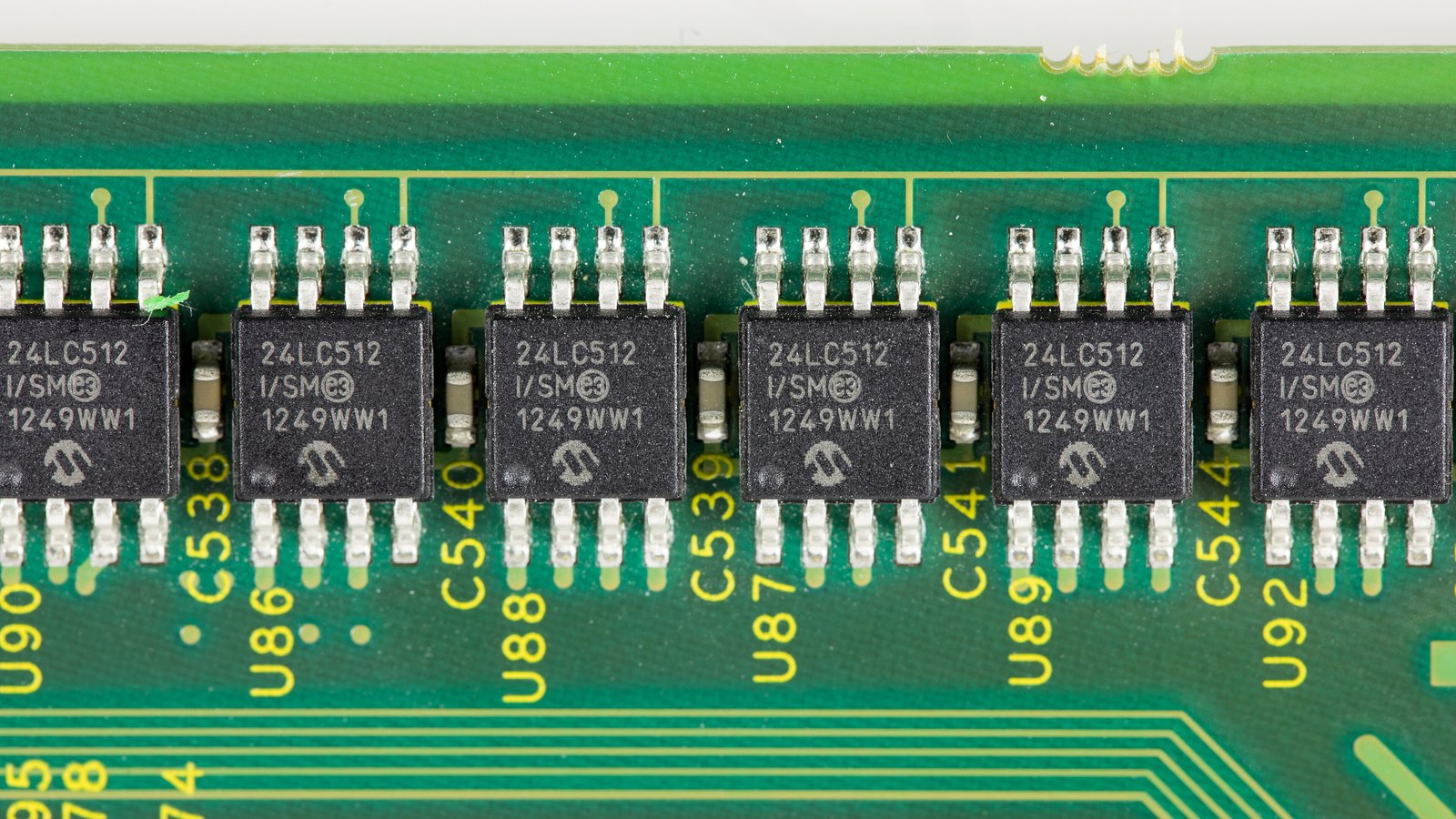
On 25 and 26 November 2026, UK Research and Innovation and Innovate UK announced the opening of a £32 million funding competition, the AI Hardware Challenge: Increasing Energy Efficiency of AI Systems, designed to accelerate the commercial deployment of energy-efficient artificial intelligence hardware and compute architectures by 2030.
Two-Strand Funding Architecture and Capital Allocations
The £32 million initiative is delivered by Innovate UK under the Economic Growth Mission of the UKRI R&D Missions Accelerator Programme. Addressing the escalating energy demands of modern AI models and data centers, the challenge provides non-dilutive grant funding divided across two complementary competition strands tailored to technological readiness.
Strand 1 supports emerging technologies through staged feasibility and prototyping. Applicants can request £100,000 to £500,000 in grant funding for Phase 1 feasibility studies lasting up to nine months in financial year 2027–2028. Projects that meet technical milestones can then compete for Phase 2 prototyping awards of up to £3 million. The call is administered via the Strand 1 Innovation Funding Service competition portal.
Strand 2 offers direct prototyping acceleration for mature concepts with established technical feasibility. As outlined in the Strand 2 UKRI opportunity announcement and the Strand 2 competition overview, awards range from £1 million to £3 million per project. These direct awards fund engineering and subsystem validation lasting 24 to 33 months, spanning financial years 2027–2028 to 2029–2030. Unlike open funding rounds such as Innovate UK smart grants, this challenge requires a clear route to market by 2030.
| Funding Parameter | Strand 1: Emerging Feasibility and Prototyping | Strand 2: Direct Prototyping Acceleration |
|---|---|---|
| IFS Competition Identifier | Competition 2623 | Competition 2624 |
| Primary Technical Scope | Early-stage feasibility studies with staged prototype progression | Direct prototype development and multi-rack subsystem validation |
| Grant Allocation per Project | £100,000 to £500,000 (Phase 1); up to £3,000,000 (Phase 2) | £1,000,000 to £3,000,000 |
| Project Delivery Duration | Up to 9 months (Phase 1 feasibility) | 24 to 33 months |
| Mandatory Project Start Date | By 1 June 2027 | By 1 June 2027 |
| Project Completion Deadline | Phase 1 concludes by 29 February 2028 | Concludes by 28 February 2030 |
| Applicable Financial Years | FY 2027–2028 (Phase 1) | FY 2027–2028 through FY 2029–2030 |
| Eligible Lead Organisations | UK SMEs, start-ups, spin-outs, universities, and RTOs | UK SMEs, start-ups, spin-outs, universities, and RTOs |
Five Technical Themes Spanning the AI Compute Stack
To qualify, proposals must address power and efficiency bottlenecks across one or more of five technical themes defined by UKRI and Innovate UK:
- Theme 1: Compute — Novel low-power architectures, specialized accelerators, analog computing, compute-in-memory, and neuromorphic processors delivering major reductions in energy per operation.
- Theme 2: Photonic Interconnects and Data Movement — Optical interconnects, co-packaged optics, and silicon photonics designed to reduce power consumed when moving data between chips and racks.
- Theme 3: Sensing — Low-power neuromorphic sensors, event cameras, and edge perception processors that execute inference directly at the sensing interface.
- Theme 4: Power and Energy Systems — Board-level power delivery networks, 800V DC server architectures, dynamic voltage scaling, and integration with advanced liquid cooling.
- Theme 5: Semiconductor Enabling Technologies — Heterogeneous 2.5D/3D chiplet packaging, compound semiconductors, and advanced materials reducing thermal dissipation.
Targeting efficiency at the silicon and packaging layers directly addresses the growing compute carbon footprint associated with large-scale artificial intelligence workloads.
Commercialisation Mandate for Academic Institutions and RTOs
A core requirement of the competition is commercial translation. While higher education institutions and Research and Technology Organisations (RTOs) can apply as single entities or consortium leads, they must submit a clear, credible plan to commercialise outputs by 2030 through an academic spin-out company or commercial licensing.
Where universities pursue spin-out pathways, pre-award teams should align intellectual property rights and founder equity vesting schedules early to support private co-investment before later prototyping stages.
Consortium rules require that an RTO-led collaborative bid partner with at least two businesses, including at least one UK-registered SME claiming grant funding. Across collaborative projects, non-economic research organisation costs are capped at 30% of total eligible costs. Proposals already receiving funding from Frontier AI or other overlapping UKRI AI calls are ineligible. Historical Innovate UK competition benchmarks indicate a success rate of roughly 20%.
Strategic Alignment with National AI and Semiconductor Policy
The £32 million challenge aligns directly with recommendations in the UK Government AI Opportunities Action Plan, published by the Department for Science, Innovation and Technology (DSIT), which identified computing infrastructure and power constraints as critical risks to AI growth.
The initiative also complements national infrastructure evaluated in the DSIT baseline evaluation of the AI Research Resource, where systems such as Dawn and Isambard-AI highlight the substantial power requirements of cutting-edge AI clusters. Funded teams will also gain access to the Scaling Inference Lab in partnership with CommonAI for independent benchmarking and multi-rack testing.
What the Challenge Means for Research Offices and Innovators
The competition introduces specific operational requirements for university research offices and commercialisation teams:
- Portal Mechanics — Submissions run through the Innovate UK Innovation Funding Service rather than the standard academic UKRI Funding Service portal, requiring business finance formats and SME partner registrations.
- Consortium Cost Rules — Research offices must ensure collaborative projects adhere to the 30% cap on non-economic research organisation costs.
- IP and Licensing Agreements — Tech transfer offices must establish background and foreground IP terms supporting licensing or spin-out incorporation well ahead of the 2030 target.
- Overlap Screening — Teams must verify that proposed work does not duplicate existing awards under concurrent UKRI AI competitions.
Application Timelines and Key Milestones
The competition opened on Tuesday 24 November 2026 (Strand 1 at 9:00am; Strand 2 at 9:30am UK time), with official notices published on 25 and 26 November 2026.
Applications close on Wednesday 20 January 2027 at 11:00am UK time. Following assessment, funding decisions will be issued in spring 2027, with projects required to start by 1 June 2027 to achieve commercial deployment by 2030.
Sources
- UK Research and Innovation: Increasing energy efficiency of AI systems strand one, checked 2026-11-27
- UK Research and Innovation: AI hardware: Increasing Energy Efficiency strand 2, checked 2026-11-27
- GOV.UK Innovation Funding Service: Competition 2623 Overview — Increasing Energy Efficiency of AI Systems Strand 1, checked 2026-11-27
- GOV.UK Innovation Funding Service: Competition 2624 Overview — Increasing Energy Efficiency of AI Systems Strand 2, checked 2026-11-27
- UK Department for Science, Innovation and Technology: AI Opportunities Action Plan, checked 2026-11-27






