
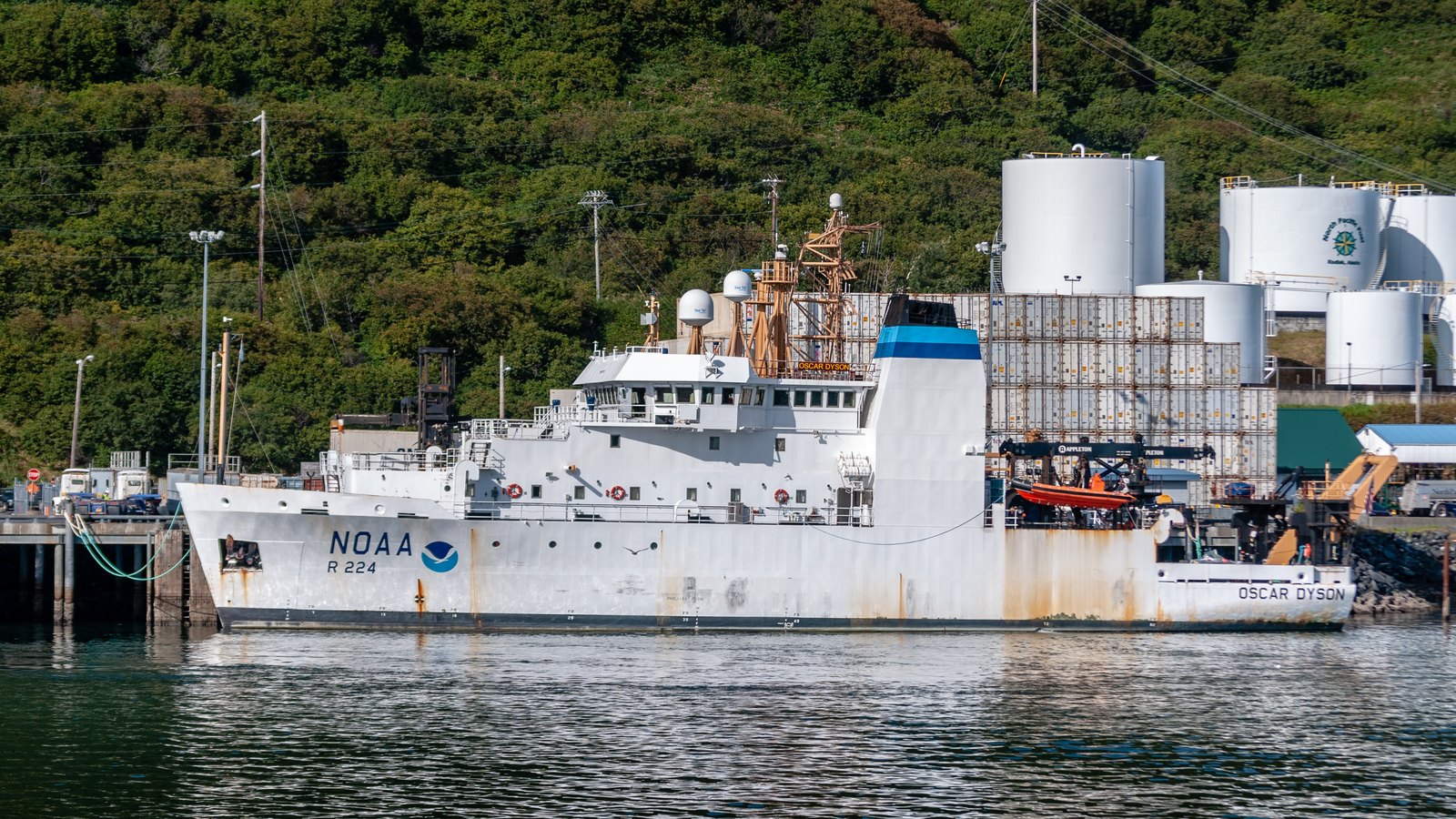
On November 25, 2026, NOAA Fisheries filed official temporary rules on Federal Register public inspection prohibiting directed fishing for Pacific ocean perch in the Eastern Aleutian District and Atka mackerel across the Bering Sea subarea and Eastern Aleutian District of the Bering Sea and Aleutian Islands management area. The emergency in-season closures protect marine stock-assessment thresholds while underscoring essential compliance frameworks, observer data-collection requirements, and scientific research permit exemptions for university oceanographic investigators and marine research offices.
Closure Determinations for Pacific Ocean Perch and Atka Mackerel
The National Marine Fisheries Service (NMFS), operating within the National Oceanic and Atmospheric Administration (NOAA) under the Department of Commerce, issued the closures after in-season monitoring established that commercial harvests reached their assigned statutory allowances. Specifically, the agency prohibited directed commercial fishing for Pacific ocean perch (Sebastes alutus) by vessels participating in the Bering Sea and Aleutian Islands (BSAI) trawl limited access sector in the Eastern Aleutian District (EAI). Simultaneously, under a companion rule issued as Federal Register Document 2026-23989, NMFS closed directed fishing for Atka mackerel (Pleurogrammus monopterygius) in both the Bering Sea subarea and Eastern Aleutian District (BS/EAI) for the same commercial trawl fleet.
Both actions took operational effect at 1200 hours, Alaska local time (A.l.t.), on November 23, 2026, and remain active through 2400 hours A.l.t. on December 31, 2026. Agency administrators invoked authority under the Magnuson-Stevens Fishery Conservation and Management Act to waive prior notice and public comment. Regulators documented that catch data finalized as of November 20, 2026, showed directed fishing allowances would be exceeded without immediate closures. While directed trawling is halted, vessels may retain incidental catches within Maximum Retainable Amount (MRA) percentages.
Harvest Allocations, Species Limits, and In-Season Thresholds
The commercial directed fishing allowances derive from harvest specifications codified under 50 CFR Part 679, governing fisheries of the Exclusive Economic Zone off Alaska. Annual Total Allowable Catch (TAC) limits are apportioned between sectors, including the Amendment 80 fleet, community development quota groups, and the BSAI trawl limited access sector. When an allocated sector reaches its seasonal allowance, NMFS executes district closures to prevent fleet-wide overharvesting and protect groundfish reserves.
The table below summarizes the regulatory benchmarks, allocation volumes, and operational parameters for the November 2026 closures:
| Regulatory Parameter | Pacific Ocean Perch (EAI) | Atka Mackerel (BS/EAI) |
|---|---|---|
| Federal Register Document | Document 2026-23993 (RTID 0648-XG090) | Document 2026-23989 (RTID 0648-XG091) |
| Management Subarea | Eastern Aleutian District (Area 541) | Bering Sea Subarea and Eastern Aleutian District |
| Target Sector | BSAI Trawl Limited Access Sector | BSAI Trawl Limited Access Sector |
| 2026 Directed Fishing Allowance | 539 metric tons | 3,647 metric tons |
| Statutory Basis | 50 CFR 679.20(d)(1)(iii) | 50 CFR 679.20(d)(1)(iii) |
| Data Cutoff Determination | November 20, 2026 | November 20, 2026 |
| Effective Duration | Nov 23, 2026 (12:00 A.l.t.) – Dec 31, 2026 (24:00 A.l.t.) | Nov 23, 2026 (12:00 A.l.t.) – Dec 31, 2026 (24:00 A.l.t.) |
Vessels continuing groundfish operations in adjacent waters must maintain strict catch accounting. Under 50 CFR 679.20(e) and (f), retainable incidental catch of Pacific ocean perch or Atka mackerel is calculated as a fixed percentage of other open target groundfish retained onboard. Catches beyond MRA limits must be discarded, with catch rates tracked through vessel monitoring systems and electronic logbooks.
Stock-Assessment Models, FMP Authorities, and Survey Science
The scientific framework behind these closures is established in the Fishery Management Plan for Groundfish of the Bering Sea and Aleutian Islands Management Area, overseen by the North Pacific Fishery Management Council (NPFMC). The Council establishes annual Overfishing Limits (OFL), Acceptable Biological Catch (ABC), and Total Allowable Catch (TAC) levels based on peer-reviewed assessments compiled by the Alaska Fisheries Science Center. The harvest control system applies statistical catch-at-age models synthesizing biological trawl surveys, commercial catches, and oceanographic data.
For Pacific ocean perch, a rockfish species with lifespans exceeding 90 years, stock assessment scientists model biomass using bottom-trawl survey data and age-structure matrices from otolith collections. Because rockfish exhibit localized canyon populations, district-level quotas prevent localized depletion. Similarly, Atka mackerel assessments rely on acoustic biomass modeling and age-structured projections. Atka mackerel serve as key forage for northern sea lions, whales, and predatory groundfish. As codified in the NOAA Fisheries Alaska Groundfish Harvest Specifications, TAC allocations remain calibrated below biological limits to preserve forage reserves across subarctic marine food webs.
Management Perspectives and Monitoring Data Integrity
Fisheries scientists note that timely in-season closures demonstrate the effectiveness of adaptive marine resource governance. Catch monitoring relies on the North Pacific Observer Program, where commercial vessels carry certified biological observers or deploy tamper-resistant Electronic Monitoring video arrays. Observers sample trawl hauls to quantify species composition, measure lengths, record maturity stages, and verify bycatch rates.
Field data collection requires auditing procedures comparable to a structured second-party audit, where certified observers validate self-reported vessel logs against objective haul sampling. Catch accounting systems aggregate observer tallies with processor landing receipts (eLandings), allowing NMFS analysts in Juneau to project closure milestones with high precision and safeguard spawning biomass.
Implications for Marine Scientists, Research Permits, and Compliance Offices
While commercial directed fishing is prohibited, federal statutes provide explicit exemptions for scientific investigations. Under 50 CFR 600.745 and 50 CFR 679.6, bona fide scientific research conducted aboard public or chartered vessels is exempt from commercial closures, provided investigators hold an approved Scientific Research Permit (SRP) or Exempted Fishing Permit (EFP) issued by the NMFS Regional Administrator. These provisions protect long-term oceanographic survey transects from unexpected interruption.
Academic institutions, including the University of Alaska Fairbanks College of Fisheries and Ocean Sciences, routinely conduct hydrographic cruises, larval dispersal studies, and benthic mapping in Aleutian waters. For university research administrators and principal investigators, maintaining compliance requires several concrete steps:
- Research Permit Protocol: Investigators chartering commercial vessels for research cruises must submit detailed scientific cruise proposals to NOAA Fisheries at least 60 days in advance to verify scientific non-commercial status under 50 CFR 600.745.
- Data Management and Archiving: Marine survey projects must establish a comprehensive data management plan (DMP) detailing how catch records, specimen vouchers, and oceanographic measurements will be archived and deposited in public repositories.
- Laboratory Digital Systems: Laboratories processing otoliths, tissue specimens, and environmental DNA should deploy a validated scientific data management system (SDMS) to ensure tamper-evident audit trails and specimen tracking.
- Automated Compliance Monitoring: Research offices are adopting AI for research compliance tools to track dynamic fishery closures, verify vessel charter terms, and monitor federal reporting deadlines.
Regulatory Milestones and Upcoming Fisheries Science Cycles
The temporary closures for Pacific ocean perch and Atka mackerel expire automatically at 2400 hours A.l.t. on December 31, 2026. Following year-end reconciliations, NMFS will publish finalized catch accounting reports, analyzing total retained catch, discards, and sector performances to update future biomass projections.
In early December 2026, the North Pacific Fishery Management Council meets in Anchorage, Alaska, where its Scientific and Statistical Committee reviews updated groundfish stock assessment and fishery evaluation (SAFE) reports. The Council will finalize harvest specification recommendations for the 2027 and 2028 fishing seasons, setting new OFL, ABC, and TAC thresholds. Research fleets and commercial operators should monitor NOAA Alaska Region bulletins for upcoming harvest specifications ahead of the January 2027 season opening.
Sources
- Federal Register: Public Inspection: Fisheries of the Exclusive Economic Zone off Alaska: Pacific Ocean Perch in the Eastern Aleutian District of the Bering Sea and Aleutian Islands Management Area, checked 2026-11-25
- Federal Register: Public Inspection: Fisheries of the Exclusive Economic Zone off Alaska: Atka Mackerel in the Bering Sea Subarea and Eastern Aleutian District of the Bering Sea and Aleutian Islands Management Area, checked 2026-11-25
- NOAA Fisheries: Alaska Groundfish Harvest Specifications, checked 2026-11-25
- North Pacific Fishery Management Council: BSAI Groundfish Fisheries In Alaska, checked 2026-11-25
- Electronic Code of Federal Regulations: 50 CFR Part 679 — Fisheries of the Exclusive Economic Zone off Alaska, checked 2026-11-25
- University of Alaska Fairbanks College of Fisheries and Ocean Sciences: Research Overview, checked 2026-11-25






