
On November 25, 2026, the National Oceanic and Atmospheric Administration published dual public inspection notices scheduling Southeast Data, Assessment, and Review technical webinars in December 2026 for South Atlantic red snapper and Caribbean fisheries, establishing critical computational benchmarks for academic marine biologists, university fisheries laboratories, and institutional research offices tracking federal stock modeling protocols.
Federal Register Filings Schedule Red Snapper and Caribbean Stock Modeling Sessions
The National Marine Fisheries Service, an operating agency of NOAA, officially filed two administrative notices through the Office of the Federal Register outlining upcoming technical modeling proceedings. The primary action, detailed in Federal Register Document 2026-24150, schedules Assessment Webinar 14 for the Southeast Data, Assessment, and Review 90 benchmark examining South Atlantic red snapper. Concurrently, NMFS issued Federal Register Document 2026-24151, convening Assessment Application Webinar 2 under SEDAR 103 to evaluate alternate assessment methods across the United States Caribbean region.
Both regulatory documents were authorized under Document Control Numbers RTID 0648-XG213 and RTID 0648-XG214 by Rey Israel Marquez, Acting Deputy Director of the Office of Sustainable Fisheries at NMFS, with formal publication scheduled for November 27, 2026. For university departments specializing in earth, environmental, and marine sciences, these notices signal key opportunities to examine federal stock assessment models and verify empirical survey inputs before management advice is finalized.
Session Timelines, Regulatory Parameters, and Technical Agendas
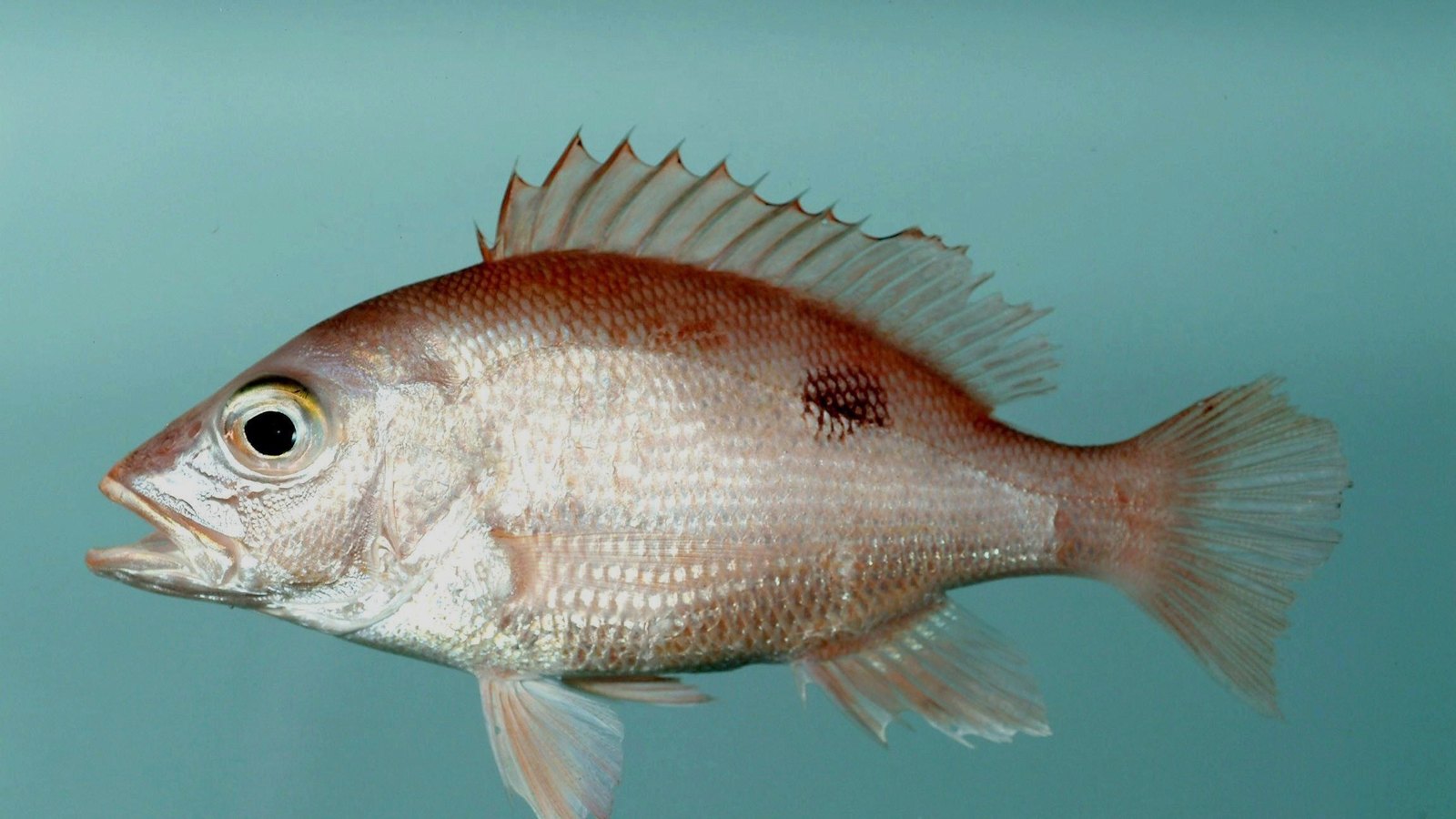
The scheduled proceedings address distinct biological assemblages and analytical challenges in southeastern coastal waters. Under the SEDAR 90 assessment framework, Assessment Webinar 14 is set for December 17, 2026, from 9:00 a.m. to 12:00 p.m. Eastern Daylight Time. Participants will review technical recommendations developed during Webinar 13 and resolve ongoing modeling questions regarding South Atlantic red snapper (Lutjanus campechanus), focusing on statistical catch-at-age formulations and recreational release mortality rates governed under the South Atlantic Fishery Management Council Snapper-Grouper Fishery Management Plan.
In parallel, SEDAR 103 Assessment Application Webinar 2 will convene on December 16, 2026, from 3:00 p.m. to 5:00 p.m. Eastern Daylight Time. This initiative evaluates non-traditional, data-limited assessment techniques across Puerto Rico, St. Thomas, St. John, and St. Croix, testing empirical harvest control rules and length-converted catch curves to support island-based fishery management plans.
| Notice / Docket ID | Assessment Identifier | Target Fishery Scope | Webinar Session | Scheduled Date and Time | Primary Analytical Focus |
|---|---|---|---|---|---|
| FR Doc. 2026-24150 (RTID 0648-XG213) | SEDAR 90 | South Atlantic Red Snapper | Assessment Webinar 14 | December 17, 2026, 9:00 a.m. – 12:00 p.m. EDT | Statistical catch-at-age modeling and discard mortality curves |
| FR Doc. 2026-24151 (RTID 0648-XG214) | SEDAR 103 | U.S. Caribbean Reef Complex | Assessment Application Webinar 2 | December 16, 2026, 3:00 p.m. – 5:00 p.m. EDT | Data-limited assessment models and length-based benchmarks |
Administrative coordination is centered at SEDAR headquarters in North Charleston, South Carolina. The public webinars will operate online, and requests for auxiliary aids or sign language interpretation must reach the Council office at least five business days prior to each meeting.
Evolution of SEDAR Frameworks and Southeast Regional Fishery Governance
The Southeast Data, Assessment, and Review process was established pursuant to the Magnuson-Stevens Fishery Conservation and Management Act (16 U.S.C. 1801 et seq.) as a cooperative partnership between the Gulf of Mexico, South Atlantic, and Caribbean Fishery Management Councils, NOAA Fisheries, and interstate marine fisheries commissions. SEDAR standardizes stock evaluation through three distinct sequential phases: a Data Stage compiling catch and survey records, an Assessment Stage constructing population models, and an independent Review Stage.
During the Review Stage, independent panels conduct rigorous scientific peer review to ensure stock status determinations and acceptable biological catch recommendations rest on sound scientific foundations. According to the NOAA Fisheries red snapper species profile, South Atlantic red snapper has posed persistent management challenges: while strict rebuilding plans reduced directed commercial harvests, expanding recreational encounters led to high discard mortality, making precise quantitative modeling vital for conservation decisions.
Stakeholder Perspectives and Scientific Advisory Priorities
The scheduling of these sessions follows sustained efforts by coastal stakeholders and academic institutions to refine federal population data. In response to commercial and recreational sector concerns regarding discard estimates, Congress and NOAA supported the South Atlantic Red Snapper Research Program, a $3.3 million multi-institutional initiative administered through the South Carolina Sea Grant Consortium to deliver independent regional abundance estimates.
University investigators participating in regional surveys have highlighted the value of integrating advanced tagging, video transects, and acoustic telemetry into federal models. In Caribbean waters, regional scientists have similarly championed empirical indicators, noting that multi-species tropical fisheries cannot be effectively evaluated using data-heavy stock assessment models. By conducting open assessment webinars, NMFS upholds methodological reproducibility, enabling academic and independent analysts to evaluate model convergence, sensitivity runs, and parameter selection in real time.
Implications for Academic Marine Biologists and Institutional Research Offices
The SEDAR 90 and SEDAR 103 proceedings present direct operational relevance for university researchers, marine laboratories, and sponsored research offices. Extramural awards from NOAA Fisheries, the Saltonstall-Kennedy Grant Program, and regional Sea Grant consortia frequently fund the life-history studies, otolith microchemistry, and reproductive maturity schedules utilized in SEDAR assessments.
Research administration offices supporting marine science faculties should note several key areas:
- Extramural Solicitation Alignment: Analytical gaps identified during SEDAR webinars inform upcoming funding priorities issued by NOAA Fisheries and regional management councils, allowing research development teams to position faculty for future award cycles.
- Data Management Compliance: Datasets submitted to federal stock assessments must satisfy strict provenance criteria, reinforcing the need for robust institutional data management plans covering survey indices and biospecimen repositories.
- Advisory Panel Participation: Qualified university researchers can seek appointment to Scientific and Statistical Committees and SEDAR peer-review panels, elevating institutional visibility and providing vital expert service to federal fisheries governance.
- Quantitative Modeling Innovations: Methodological discussions in SEDAR 103 offer academic statisticians and quantitative ecologists expanded scope to publish and apply novel length-based and data-limited stock assessment models.
Next Steps in the SEDAR Assessment Pipeline and Public Participation Deadlines
The immediate milestones will take place in mid-December 2026. The SEDAR 103 Caribbean Alternate Assessment Methods Webinar 2 will convene on December 16, 2026, followed by the SEDAR 90 South Atlantic Red Snapper Assessment Webinar 14 on December 17, 2026. Stakeholders and researchers planning to participate should register online through the SEDAR portal. Auxiliary accommodation requests must be submitted to the Council office at least five business days in advance, setting effective deadlines of December 9, 2026, for the Caribbean webinar and December 10, 2026, for the South Atlantic webinar.
Following these sessions, assessment teams will incorporate final revisions and prepare documentation for independent peer-review workshops scheduled for early 2027. Once approved by the respective Scientific and Statistical Committees, the assessment results will guide the South Atlantic and Caribbean Fishery Management Councils in setting annual catch limits and rebuilding schedules for future seasons.
Sources
- Federal Register: Fisheries of the South Atlantic; Southeast Data, Assessment, and Review; Public Meeting (Document 2026-24150), checked 2026-11-25
- Federal Register: Fisheries of the Caribbean; Southeast Data, Assessment, and Review; Public Meeting (Document 2026-24151), checked 2026-11-25
- Southeast Data, Assessment, and Review: SEDAR 90 South Atlantic Red Snapper Assessment Overview, checked 2026-11-25
- South Atlantic Fishery Management Council: Snapper Grouper Fishery Management Plan, checked 2026-11-25
- South Carolina Sea Grant Consortium: South Atlantic Red Snapper Research Program (SARSRP), checked 2026-11-25
- NOAA Fisheries: Red Snapper (Lutjanus campechanus) Species Profile and Management, checked 2026-11-25






