
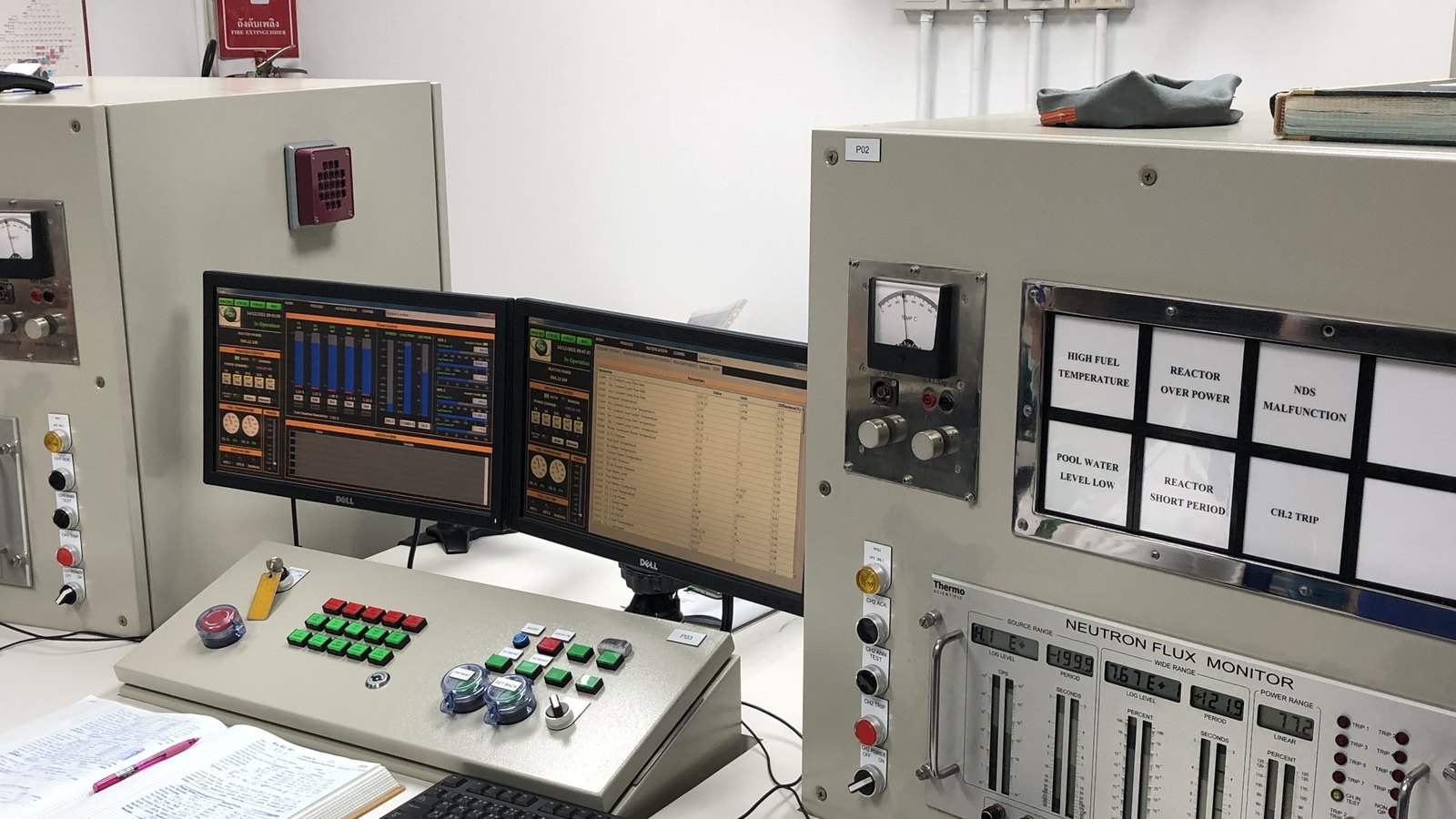
On November 20, 2026, the U.S. Nuclear Regulatory Commission released draft revisions to Regulatory Issue Summary 2002-22 and its Supplement 1 in Washington, D.C., proposing to eliminate long-standing regulatory barriers that have hindered civilian nuclear facilities and university research reactors from executing digital instrumentation and control upgrades under existing facility change processes without prior license amendments.
What happened
The Nuclear Regulatory Commission published a notice in the Federal Register under Docket ID NRC-2026-5248 announcing draft revisions to Regulatory Issue Summary (RIS) 2002-22 and RIS 2002-22, Supplement 1. The agency is formally requesting public comment on the revisions through December 21, 2026. The action addresses a chronic challenge across the nuclear power sector and university-operated research reactors: modernizing legacy analog instrumentation and control (I&C) systems under the facility change evaluation criteria of 10 CFR 50.59.
Originally issued in November 2002, RIS 2002-22 endorsed industry guidance developed by the Electric Power Research Institute and the Nuclear Energy Institute, specifically report EPRI TR-102348, Revision 1 (NEI 01-01). While intended to provide a predictable screening framework, cautionary language in the endorsement led licensees to conclude that modifications to higher safety-significant systems—notably the Reactor Protection System (RPS) and Engineered Safety Features Actuation System (ESFAS)—could rarely be performed under 10 CFR 50.59 without a formal license amendment request.
Under the draft revisions signed by Marc Ferdas, Acting Director of the Division of Reactor Inspection Support, the NRC is systematically excising that restrictive text. The revisions remove perceived barriers against using 10 CFR 50.59 for digital safety systems, enabling licensees to evaluate upgrades through modernized qualitative assessments.
Key regulatory provisions and technical updates
The draft revisions introduce three primary technical updates designed to establish regulatory certainty for engineering teams, facility managers, and compliance officers.
First, the NRC is removing language that created a presumption against 10 CFR 50.59 implementation for safety systems. Excised passages include statements that modifications to RPS and ESFAS were likely to require staff review, as well as text stating Supplement 1 was not directed toward digital replacements of reactor protection or actuation logic. Removing these restrictions clarifies that licensees may perform digital upgrades on safety systems without prior NRC staff approval when 10 CFR 50.59(c)(2) criteria are satisfied.
Second, the revisions replace broad terms like “failure” and “failure of a proposed digital modification” with the specific term “software common-cause failure” (software CCF). This aligns qualitative assessments strictly with concurrent software defects across redundant trains.
Third, the guidance directs licensees to contemporary industry consensus standards and Standard Review Plan (NUREG-0800) updates, moving beyond the 1997 baseline used when NEI 01-01 was first evaluated.
Official records on GovInfo for Federal Register Volume 91 confirm that draft revision text is accessible in ADAMS under Accession No. ML26155A154 for RIS 2002-22 and Accession No. ML26155A155 for Supplement 1.
| Regulatory Provision | Original RIS 2002-22 Baseline | Proposed 2026 Draft Revision Framework |
|---|---|---|
| RPS and ESFAS Scope | Presumed prior NRC review required for reactor protection logic | Permits 10 CFR 50.59 evaluations for RPS and ESFAS upgrades across all safety tiers |
| Failure Characterization | Used broad terms “failure” and “digital modification failure” | Standardizes on “software common-cause failure” (software CCF) for qualitative screening |
| Reference Standards | Anchored to 1997 Standard Review Plan and 2001 consensus standards | Directs licensees to apply contemporary endorsed consensus standards and updated guidance |
| Licensing Mechanism | De facto requirement for formal 10 CFR 50.90 license amendments | Enables facility change reviews under 10 CFR 50.59 when qualitative assessments show low CCF likelihood |
| Public Comment Period | Superseded prior interim staff guidance batches | Open through December 21, 2026, under Docket ID NRC-2026-5248 |
Background and regulatory context
Operating nuclear reactors and university research facilities have relied on analog electronics, pneumatic controllers, and electro-mechanical relays since initial commissioning. As component obsolescence accelerates, replacement parts have become increasingly difficult to acquire.
Guidance developed by the Electric Power Research Institute on digital upgrade licensing guidelines established the foundation for analog-to-digital conversions. That work produced EPRI TR-102348 and NEI 01-01, creating failure modes and effects analyses to evaluate safety margins. However, microprocessors introduced potential software common-cause failures, where latent coding defects could disable redundant channels simultaneously.
To navigate these issues, licensees apply established change control processes and impact assessment frameworks that govern facility modifications. In 2018, the NRC issued Supplement 1 to RIS 2002-22 to clarify qualitative assessments for software CCF, but retained caveats that kept higher safety-significant systems constrained. Technical analyses compiled by the Office of Scientific and Technical Information on NRC digital modernization pathways have detailed how regulatory ambiguity created cost barriers that slowed modernization across the nuclear fleet.
Industry reaction and technical perspectives
Nuclear engineering specialists and plant operators have long sought guidance harmonized with modern systems engineering. The primary objective has been establishing clear qualitative assessment thresholds demonstrating when software CCF is sufficiently unlikely, allowing upgrades without protracted license amendments.
Modern digital controllers offer substantial safety improvements, including automated self-testing, drift-free calibration, and continuous diagnostics that mitigate spurious scrams. However, deploying digital systems requires adherence to data integrity standards and software assurance protocols to prevent firmware corruption or configuration drift.
Federal cybersecurity standards, such as the National Institute of Standards and Technology guide to operational technology security, emphasize defensive architectures for control rooms. By updating RIS 2002-22 to reference modern standards, the NRC provides an integrated structure where physical safety, software reliability, and cybersecurity are evaluated concurrently.
Implications for university research reactors and compliance offices
The revised guidance carries substantial implications for university research reactors and academic nuclear science laboratories. More than two dozen university research reactors operate nationwide, supporting nuclear engineering education, medical radioisotope production, and materials irradiation experiments.
Unlike commercial utilities, university facilities operate with limited administrative budgets. Submitting a license amendment request under 10 CFR 50.90 for an instrumentation console upgrade often incurs significant review fees and years of administrative delays. Clarifying that digital upgrades can proceed under 10 CFR 50.59 offers academic institutions a viable modernization pathway.
To leverage the revised framework, university research offices must maintain comprehensive documentation. Implementing digital instrumentation requires structured installation qualification protocols and verification records to demonstrate environmental and electromagnetic compatibility. Furthermore, facility managers must update every standard operating procedure governing console operations, surveillance testing, and technician training.
Public comment timeline and next steps
The NRC will accept public comments on the draft revisions through December 21, 2026. Submissions must reference Docket ID NRC-2026-5248 and may be filed via Regulations.gov or mailed to the Office of Nuclear Material Safety and Safeguards in Washington, D.C.
Following the comment period, the NRC Office of Nuclear Reactor Regulation will evaluate stakeholder input from industry, universities, and public safety advocates before issuing the final Regulatory Issue Summary revisions in 2027.
Sources
- Office of the Federal Register: Draft Revisions to Regulatory Issue Summary and Supplement: Use of EPRI/NEI Joint Task Force Report, Guideline on Licensing Digital Upgrades: EPRI TR-102348, Revision 1, NEI 01-01, checked 2026-11-23
- U.S. Government Publishing Office: Federal Register Volume 91, Issue 225, Docket NRC-2026-5248, checked 2026-11-23
- Electric Power Research Institute: Guideline on Licensing Digital Upgrades: EPRI TR-102348, Revision 1, NEI 01-01, checked 2026-11-23
- Office of Scientific and Technical Information: How the NRC modernized its digital I&C infrastructure and where it goes from here, checked 2026-11-23
- National Institute of Standards and Technology: SP 800-82 Rev. 3, Guide to Operational Technology (OT) Security, checked 2026-11-23






