
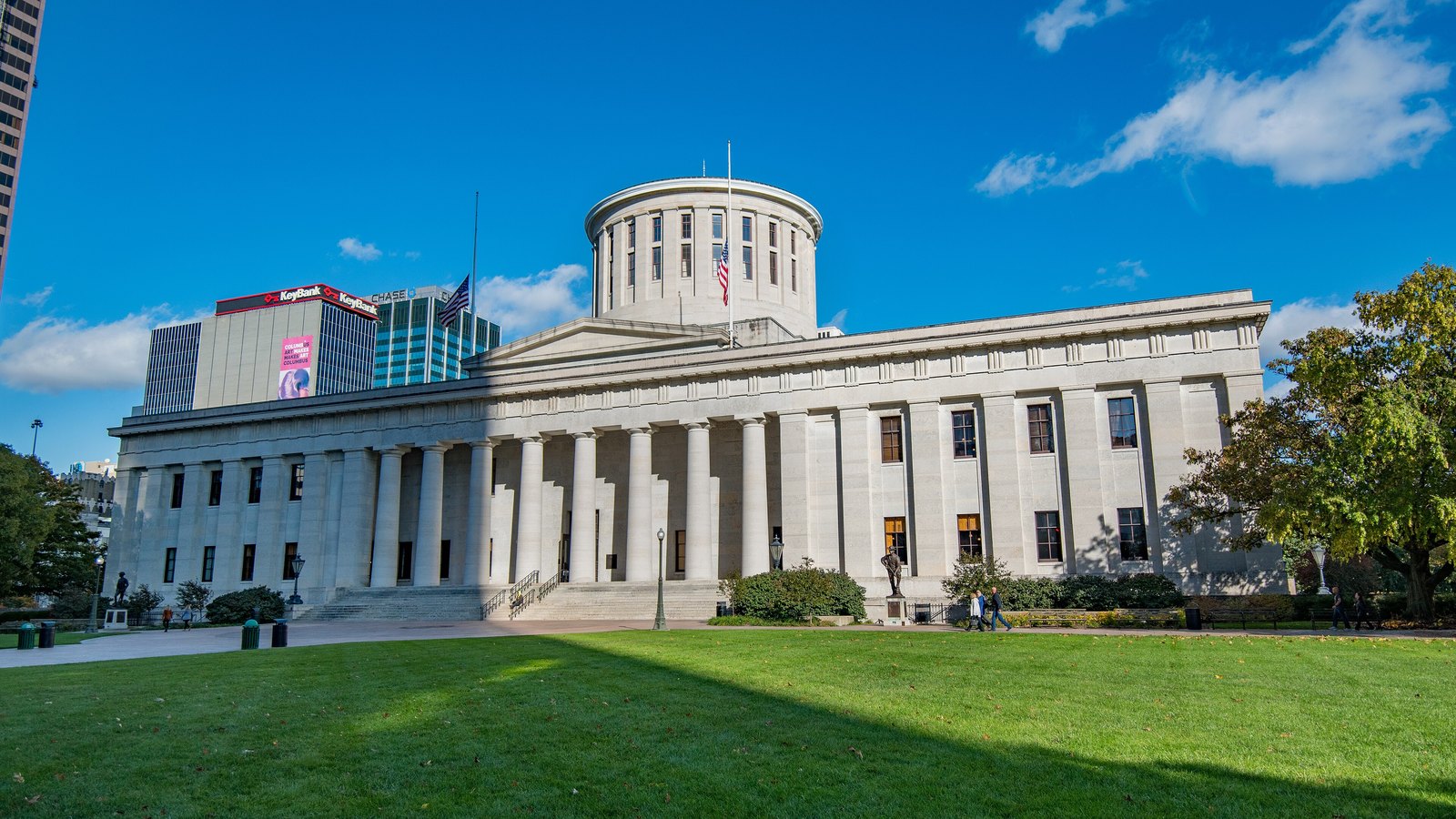
In November 2026, the Ohio Senate Higher Education Committee held hearings on Senate Bill 461, the Strengthening Ohio Civics Act, sponsored by State Senator Jerry Cirino to elevate state-mandated university civics centers into standalone colleges. The measure grants center leaders independent authority over faculty hiring, tenure, and curriculum, fundamentally restructuring academic governance across Ohio public universities.
Legislative Hearings Open on Senate Bill 461
State Senator Jerry Cirino, a Republican from Kirtland, formally introduced Senate Bill 461 in the 136th Ohio General Assembly to expand the statutory authority and legal autonomy of academic civics centers across five state universities. Committee hearings commenced in late 2026 during the Ohio Senate’s post-election legislative session. According to a sponsor statement from the Ohio Senate, the bill establishes consistency and operational clarity for the centers, eliminating perceived administrative roadblocks that legislative proponents assert have been used by campus leaders to constrain center directors.
The legislation applies to five public institutions established under previous state budget packages: Ohio State University’s Salmon P. Chase Center for Civics, Culture, and Society, Cleveland State University’s Center for Civics, Culture, and Society, the University of Toledo’s Institute of American Constitutional Thought and Leadership, Miami University’s Center for Civics, Culture, and Society, and Wright State University’s Center for Civics, Culture, and Workforce Development. Senate Bill 461 elevates each entity to an independent academic unit possessing all the rights and privileges of a standalone college within its university, equivalent to independent law or business colleges.
Key Provisions of the Strengthening Ohio Civics Act
Senate Bill 461 enacts significant amendments to the Ohio Revised Code, separating center faculty governance from traditional departmental review structures. Center directors receive autonomous authority over faculty recruitment, ranks, salaries, and tenure evaluations. The statutory text explicitly mandates that no faculty body outside the center may block center hires or participate in promotion and tenure reviews without the director’s consent.
The bill also restructures university financial flows, requiring institutions to pass through all tuition and course fees generated by center offerings, subject only to campus-wide indirect cost assessments applied to all academic units. Furthermore, host universities are barred from reducing institutional center funding below the highest annual appropriation previously enacted in state operating budgets.
The table below outlines the statutory reorganization, personnel mandates, and institutional coverage across the five university sections amended by Senate Bill 461:
| Host Institution | Revised Code Section | Statutory Entity Name | Reorganization Milestone | Faculty Provisions |
|---|---|---|---|---|
| Ohio State University | R.C. 3335.39 | Salmon P. Chase School for Civics, Culture, and Society | January 1, 2027 (Director redesignated as Dean) | Minimum 15 tenure-track positions allotted |
| Miami University | R.C. 3339.06 | Miami Center for Civics, Culture, and Society | Independent College Status | Autonomous faculty tenure housing |
| Cleveland State University | R.C. 3344.07 | CSU Center for Civics, Culture, and Society | Independent College Status | Autonomous faculty tenure housing |
| University of Toledo | R.C. 3364.07 | Institute of American Constitutional Thought and Leadership | Independent College Status | Autonomous faculty tenure housing |
| Wright State University | R.C. 3352.16 | WSU Center for Civics, Culture, and Workforce Development | Independent College Status | Autonomous faculty tenure housing |
At the statewide level, the measure creates the Ohio Civics Board under Revised Code section 3345.58, composed of the center directors serving ex officio. The board oversees curriculum standards for mandatory undergraduate American civic literacy. At the five host institutions, students must fulfill graduation civics requirements exclusively through center courses, guaranteeing a captive student audience and predictable instructional credit hours.
Background: From Senate Bill 117 to College Status Expansion
The push for Senate Bill 461 builds directly on earlier legislative interventions. In 2023, Ohio lawmakers passed Senate Bill 117 within the state biennial budget, allocating $24 million across the five universities to establish the initial civics centers, followed by roughly $34 million in subsequent appropriations. Proponents framed the centers as vehicles to foster intellectual diversity and teach the founding principles of the American constitutional order.
As reported by Higher Ed Dive, Ohio’s expansion reflects a broader national trend across Republican-led state legislatures, including Florida, Texas, North Carolina, and Iowa, where lawmakers have created specialized campus institutes to counter perceived institutional bias. In Ohio, tensions escalated when faculty senates and academic departments sought to retain standard oversight over civics curricula, prompting legislative sponsors to draft revisions establishing direct reporting lines from center directors to university presidents and boards of trustees.
Faculty Senates and Academic Unions Challenge Shared Governance Bypass
Faculty organizations across Ohio testified forcefully against Senate Bill 461, characterizing the legislation as an unprecedented erosion of shared governance. The Ohio State University chapter of the American Association of University Professors and the Faculty Alliance of Miami warned that eliminating peer committee review for tenure creates an unaccountable personnel track answerable primarily to political appointees.
Reporting from Open Campus underscored faculty apprehensions regarding long-term university financial liabilities during a period of statewide enrollment pressures and department contractions. Faculty witnesses testified that mandatory university funding floors and tuition retention rules confer extraordinary financial privileges on civics centers while forcing traditional academic disciplines to shoulder campus deficit reductions.
According to Signal Ohio, Senator Cirino countered these criticisms during committee proceedings, noting that the bill caps university funding obligations during an initial four-year transition window. Institutions will not be compelled to provide operational funding beyond actual state appropriations during that period, while center-managed endowments will be established to build private philanthropic revenue streams.
Implications for University Governance, Faculty Appointments, and Compliance
For provosts, faculty senates, and academic administrators, Senate Bill 461 alters baseline tenure protocols. While university departments routinely utilize tools like the academic analytics faculty productivity benchmarking platform to assess scholarly output across standard disciplinary cohorts, civics center faculty would evaluate appointments and promotions within a self-contained administrative silo.
Research administration offices and compliance officials must also adapt oversight mechanisms. Under independent college status, compliance coordination often shifts from centralized departments to unit leaders. Compliance monitors operating under the institutional official IO role must ensure center researchers adhere strictly to institutional oversight policies, including human research protections and effort certification. Furthermore, substantial private donations and endowment agreements managed by civics centers necessitate rigorous adherence to campus rules for conflict of interest disclosure in scholarly publication to safeguard academic integrity.
These governance transformations also intersect with institutional research priorities. As major research universities manage strategic enterprise efforts, such as the Ohio State Microsoft AI research partnership, campus leadership must maintain cohesive research governance across both traditional colleges and newly created statutory units.
Legislative Outlook and Upcoming Implementation Milestones
Senate Bill 461 continues through committee evaluation in the Ohio Senate Higher Education Committee, with additional hearings slated for late 2026 before advancing toward potential floor consideration. If enacted by the General Assembly, statutory restructuring begins on defined milestones. Ohio State’s Chase Center is scheduled to officially transition into the Salmon P. Chase School for Civics, Culture, and Society on January 1, 2027, with its director elevated to dean status. Subsequent curriculum rules and exclusive civics course requirements developed by the Ohio Civics Board would take full effect ahead of the 2027–2028 academic year.
Sources
- Ohio Legislature: Senate Bill 461 (136th General Assembly) – Strengthening Ohio Civics Act, checked 2026-11-20
- Ohio Senate: Cirino Announces Strengthening Ohio Civics Act, checked 2026-11-20
- Higher Ed Dive: Ohio bill would broaden power of university civics center directors, checked 2026-11-20
- Open Campus: Civics centers created to combat perceived liberal biases at Ohio universities could gain more power, checked 2026-11-20
- Signal Ohio: Civics centers created to combat perceived liberal biases at Ohio universities could gain more power under SB 461, checked 2026-11-20


