
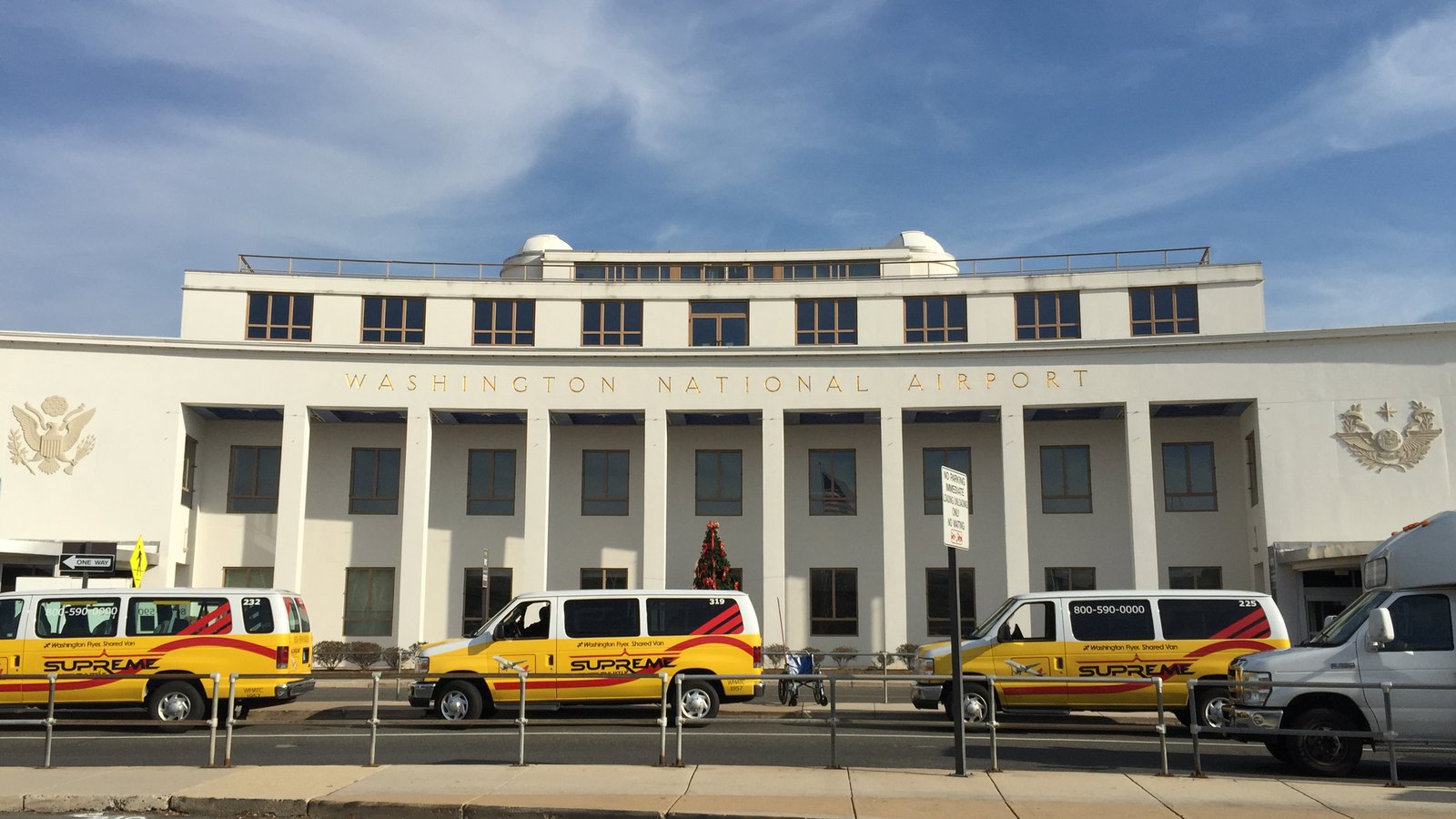
U.S. Immigration and Customs Enforcement detained Eva Yi Xie, a third-year neuroscience doctoral researcher at Princeton University, on November 19, 2026, at Ronald Reagan Washington National Airport following the Society for Neuroscience meeting, triggering an emergency federal habeas corpus petition and heightening travel scrutiny for international academic scholars.
Detention at Ronald Reagan National Airport
Eva Yi Xie, a 24-year-old doctoral candidate at the Princeton Neuroscience Institute, was taken into custody by federal immigration agents on November 19, 2026, at Ronald Reagan Washington National Airport in Arlington, Virginia. Xie was returning to New Jersey after presenting her research poster on decision-making neural circuits at the Society for Neuroscience (SfN) annual meeting in Washington, D.C. As she prepared to board a domestic flight, U.S. Immigration and Customs Enforcement (ICE) officers intercepted her inside the terminal concourse.
Before her mobile phone was confiscated, Xie sent an emergency Slack message alerting colleagues in her research group that she was being detained. As reported by WHYY: Princeton doctoral student detained by ICE, enforcement agents transported Xie to an ICE field detention facility in Chantilly, Virginia. The airport apprehension occurred without prior administrative notice, prompting immediate concern among laboratory peers and university officials regarding domestic travel risks for foreign-born researchers.
Immigration Proceedings and Case Parameters
Xie entered the United States from Shanghai, China, in 2016 as a high-school student dependent, and her family filed an affirmative asylum application with U.S. Citizenship and Immigration Services (USCIS) within one year of arrival. Her case was referred to the Executive Office for Immigration Review (EOIR), where an individual merits hearing before an immigration judge is scheduled for January 2028. During the pendency of her proceedings, Xie maintained an unblemished legal record with no criminal history and held a valid USCIS Employment Authorization Document (EAD).
| Legal and Institutional Parameter | Documented Case Status | Regulatory Governance and Standard |
|---|---|---|
| Current Academic Appointment | Third-year Ph.D. Candidate, Brody Laboratory | Princeton Neuroscience Institute Graduate Program |
| Pending Immigration Application | Affirmative Asylum Petition pending before EOIR | Immigration and Nationality Act § 208; 8 CFR Part 208 |
| Merits Hearing Schedule | Individual Hearing Scheduled for January 2028 | U.S. Department of Justice Immigration Court Docket |
| Work and Study Authorization | Valid USCIS Employment Authorization Document (EAD) | 8 CFR § 274a.12(c)(8) Asylum Applicant Category |
| Enforcement Custody Facility | ICE Field Office Facility, Chantilly, Virginia | DHS / ICE Enforcement and Removal Operations (ERO) |
| Federal Court Action | Habeas Corpus Petition, U.S. District Court (EDVA) | 28 U.S.C. § 2241 (Writ of Habeas Corpus) |
Federal regulations permit asylum applicants with pending EOIR court proceedings and valid EAD cards to reside, study, and work in the United States. Nonetheless, immigration officers arrested Xie without a judicial warrant, illustrating the legal precarity international trainees face during domestic travel.
Academic Profile and Research Mobility Context
Before matriculating at Princeton, Xie demonstrated exceptional quantitative aptitude in computational neuroscience. As detailed by The Tech: BREAKING: Eva Xie ’24, Princeton Ph.D. candidate, detained by ICE, Xie attended the Bronx High School of Science in New York and graduated from the Massachusetts Institute of Technology (MIT) in 2024 with a double major in computer science and mathematics.
At Princeton, Xie conducts doctoral research in the laboratory of Professor Carlos Brody, an investigator with the Howard Hughes Medical Institute (HHMI). Her scientific work uses electrophysiological recordings, behavioral paradigms, and computational models to study how neural circuits accumulate sensory evidence to guide decisions. Her participation at SfN was supported by standard departmental conference funding. Her arrest emphasizes how institutional protocols on campus immigration enforcement procedures must address domestic travel vulnerabilities beyond university boundaries.
University Leadership and Faculty Responses
Princeton University administrative leadership acted swiftly following news of Xie’s detention. Late Thursday night, Princeton Graduate School Dean Rodney Priestley issued an official message to the graduate student community. As covered by Princeton Alumni Weekly: Neuroscience Doctoral Student Detained by ICE, Dean Priestley described the detention as distressing, confirmed that the university arranged legal representation for Xie, and affirmed ongoing support for her family and colleagues to help her resume her studies.
Faculty and laboratory colleagues expressed outrage over the enforcement action. In comments to The Transmitter: ‘Shock and pain’ after ICE detains Princeton neuroscientist, Professor Carlos Brody characterized Xie’s detention as wildly unfair and cruel, emphasizing that she is an exemplary, law-abiding scholar whose arrest creates widespread alarm across academic research institutions that depend on foreign scientific talent.
Emergency Habeas Corpus Challenge in Federal Court
To secure Xie’s release, her legal defense team filed an emergency petition for a writ of habeas corpus in the U.S. District Court for the Eastern District of Virginia (Alexandria Division). According to The Guardian: Princeton doctoral student reportedly detained by ICE on way back from conference, immigration attorney Kerry Doyle—a partner at Green and Spiegel and former Principal Legal Advisor for ICE—argued that the detention violates Fifth Amendment due process protections.
The habeas petition asserts that ICE lacked statutory authority under the Immigration and Nationality Act to detain Xie without establishing that she poses a flight risk or danger to the community, given her pending immigration court hearing and valid work authorization. Following the emergency filing, a federal district judge issued an order barring ICE from transferring Xie outside the Eastern District of Virginia and set an expedited government response schedule.
Operational Guidance for University International Scholar Offices
Xie’s detention underscores the operational risks international scholars confront when traveling domestically for academic conferences. While higher education compliance often concentrates on concerns regarding foreign research collaborations, administrative enforcement during domestic transit presents acute disruptions. University International Scholar and Student Offices (ISSO) and research leadership should implement several concrete protective measures:
- Domestic Travel Documentation Protocols: Academic departments must advise non-citizen scholars with pending asylum, adjustment of status, or visa extension petitions to carry physical original documents, including Form I-797 receipt notices, unexpired passports, and valid EAD cards rather than relying solely on state-issued driver’s licenses.
- Emergency Legal Response Retainers: Research universities should establish dedicated 24-hour legal helplines with experienced immigration counsel capable of filing immediate federal habeas petitions if scholars are detained during academic travel.
- Alignment with Institutional Compliance Teams: Campus compliance officers overseeing institutional research security and assessing undue foreign influence guidelines must coordinate with international scholar advisors to ensure domestic academic mobility is supported with comprehensive legal safeguards.
- Contingency Funding and Academic Continuity: Graduate divisions must formalize emergency payroll and tuition bridge policies so doctoral trainees remain in good institutional standing during unforeseen administrative detentions.
Federal Court Deadlines and Next Procedural Steps
The immediate trajectory of the case depends on federal court filings in Virginia. Under the presiding judge’s scheduling directive, the Department of Homeland Security and the U.S. Attorney’s Office must submit their formal response to the habeas petition within five business days, detailing the statutory basis for Xie’s detention. Xie’s defense counsel will file a reply, leading to an expedited hearing on her release.
Concurrently, Princeton University and her legal team are pursuing administrative release options with ICE Enforcement and Removal Operations (ERO), including humanitarian parole or an order of supervision. Favorable resolution would allow Xie to return to her neuroscience laboratory at Princeton while awaiting her January 2028 immigration court hearing, establishing an important reference point for international researcher protection nationwide.
Sources
- Princeton Alumni Weekly: Neuroscience Doctoral Student Detained by ICE, checked 2026-11-20
- The Transmitter: ‘Shock and pain’ after ICE detains Princeton neuroscientist, checked 2026-11-20
- WHYY: Princeton doctoral student detained by ICE, checked 2026-11-20
- The Tech: BREAKING: Eva Xie ’24, Princeton Ph.D. candidate, detained by ICE, checked 2026-11-20
- The Guardian: Princeton doctoral student reportedly detained by ICE on way back from conference, checked 2026-11-20


