
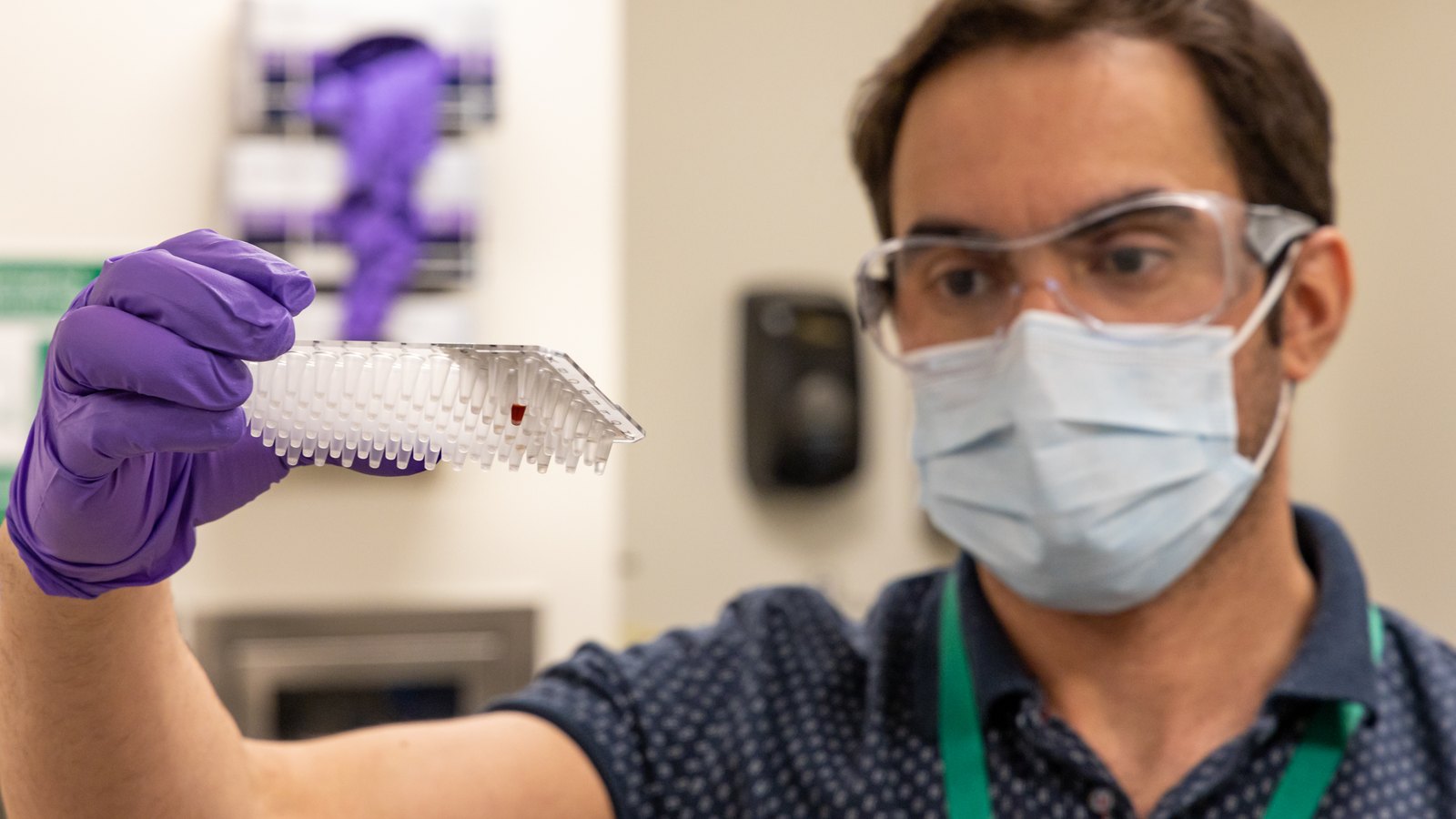
On 24 November 2026 OpenAI published a preprint and an announcement saying its GPT-6 models can design protein structures and sequences using reasoning and general-purpose code, and reported that 35 of 322 minibinders tested in the laboratory with partner Onava bound their intended targets. The work matters to protein-design labs, core facilities and research offices because it is a wet-lab result from an AI developer, with OpenAI’s own caveats attached.
What happened
In its announcement, “GPT-6 models demonstrate intrinsic protein-design capabilities”, OpenAI introduced a preprint titled “GPT-6 as a Universal Foundation Model for Protein Biology: Beyond Specialized Models” (PDF on OpenAI’s site). OpenAI says its GPT-6 family has intrinsic capabilities for designing new proteins, without calling specialised biology models. Onava, the research partner, made and tested the proteins in the lab.
The headline experiment tested 322 minibinders, small designed proteins, against five targets. OpenAI reports that 35 (10.9%) bound their intended target. MLQ and AlphaSignal both report the same totals and per-target counts, and AlphaSignal notes that the preprint has not been peer reviewed.
Key details
| Experiment (as reported by OpenAI) | Result |
|---|---|
| Minibinders designed from 3D structures, five targets | 35 of 322 bound (10.9%): IL-17A 18, VEGF-A 8, PD-L1 5, IL-7Rα 3, TrkA 1 |
| New sequences for existing shapes: MDM2 | 75 of 88 bound (85%) |
| New sequences for existing shapes: VEGF-A | 26 of 42 bound (62%) |
| New sequences for existing shapes: PD-1 | 8 of 59 bound (14%) |
| Three unpublished shapes (two PD-L1, one IL-7Rα) | 14 of 107 bound (13.1%) |
| Six VHH antibody fragments against IL-4Rα, redesigned | 128 of 182 designs bound (70%) |
| Five therapeutic antibodies against PD-1 or PD-L1, redesigned | 179 of 272 fragments bound the original target (66%) |
OpenAI also reports computational benchmarks. On 30 MotifBench motif-scaffolding challenges, an internal model scored 43.7% against 27.8% for RFdiffusion. On PoseBusters ligand docking, GPT-6.2 reached 93% against 50% for DiffDock-L. Structure prediction from sequence remained weak: mean TM-score was 0.16 for GPT-5.6, 0.26 for GPT-6.2 and 0.38 for the internal model, against 0.93 for ESMFold2. OpenAI calls this uneven profile “the jagged capability frontier”. AlphaSignal and The Terminal note that the top scores come from an unreleased internal model rather than a released one.
Background and context
The laboratory pipeline was not the language model alone. OpenAI lists SolubleMPNN as the source of sequences for the first experiment, and says other specialised protein models helped select candidates predicted to fold as designed and bind at the intended site. Boltz-2, OpenDDE and ESMFold2 are named as tools used to filter candidates. OpenAI states that its results “do not yet establish” that its models can generate de novo minibinders end-to-end without that help.
OpenAI also says the original RFdiffusion study reported higher hit rates, and that hit rates depend on how strict the filtering is and how binding is defined, so the figures are not directly comparable across studies. It adds that some high benchmark scores may reflect memorisation or patterns in how the structures were generated, and that binding is only one step: specificity, stability, activity, safety and efficacy still need study. OpenAI’s wider science work, including its earlier GPT-6.2 Astra and Sol release and its science blog launch, is covered in earlier casrai posts.
Reaction
Early coverage has largely restated OpenAI’s materials. MLQ (25 November) summarised the caveats OpenAI itself listed, including that binding is an early step. AlphaSignal (24 November) said the pipeline is hybrid, so hit rates reflect a combined system, and that existing predictors remain useful as independent checks. The Terminal (26 November) described the Onava tests as OpenAI’s own results, not an independent replication.
What it means for researchers, universities and research offices
- Protein-design and structural-biology labs: the hit rates sit alongside, not in place of, established tools. Because OpenAI says candidate filtering used structure predictors such as ESMFold2 and Boltz-2, a lab evaluating GPT-6 for design would be testing a workflow, and should record which models handled shape, sequence and filtering.
- Core facilities and assay groups: the definition of a “hit” drives the percentage. OpenAI says rates depend on how binding is defined, so anyone benchmarking a model should fix the assay and threshold before comparing it with published RFdiffusion-style results.
- Research offices and integrity officers: a preprint from an AI developer, with an industry partner running the lab work and an unreleased internal model behind the best numbers, raises reproducibility questions that a replication study would address. Institutions that cite such results in grant applications should name the preprint status and the models used.
- Biosafety committees: OpenAI states that “the same capabilities that help scientists design proteins for new medicines could also be misused”, and says it assesses these risks under its Preparedness Framework. Local oversight of biosafety and biosecurity and dual-use research of concern remains the institution’s own responsibility.
What happens next
The preprint is the current public record of the work, and AlphaSignal describes it as not yet peer reviewed, with independent replication pending. OpenAI’s announcement also says it assesses misuse risk under its Preparedness Framework and tests safeguards to reduce it.
Sources
- OpenAI, “GPT-6 models demonstrate intrinsic protein-design capabilities”, 24 November 2026
- OpenAI, “GPT-6 as a Universal Foundation Model for Protein Biology: Beyond Specialized Models” (preprint PDF), 24 November 2026
- MLQ.ai, “OpenAI says its GPT-6 models designed working proteins with reasoning and code alone”, 25 November 2026
- AlphaSignal, “OpenAI’s GPT-6.2 designs real proteins that bind drug targets in the lab”, 24 November 2026
- The Terminal, “OpenAI GPT-6 protein design: 35 of 322 minibinders bound”, 26 November 2026






